Military Fiber Network Solutions & Optical Network Equipment
Military fiber network solutions are optical communications architectures that move high-bandwidth, low-latency data across defense infrastructure, tactical networks, and mission platforms. These systems support C2, ISR, radar, electronic warfare, data center, and platform computing traffic across fixed sites, command posts, shelters, ships, ground vehicles, and aircraft.
This page showcases leading suppliers of optical network equipment and fiber optic network solutions, including optical transceivers, media converters, switches, network interface cards, multiplexers, cabling, connectors, splitters, and attenuators.
If you design, build or supply Fiber Optic Network Equipment, create a profile to showcase your capabilities and connect with visitors who have an active requirement for your solutions.
Optical fiber measurement tool for tactical network verification
Optical fiber measurement tool for tactical network verification
...ol is a rugged opticalfiber measurement tool designed to verify performance in tactical... ...o conventional optical power meters. It measures serially connected cable reels, including while...
Overview of Military Fiber Network Solutions & Optical Network Equipment
Overview by
Eleanor Widdows
Updated:
Introduction to Military Fiber Network Solutions & Optical Network Equipment
Military fiber network solutions are deployed across tactical communications architectures, where high bandwidth, low latency, and resistance to electromagnetic interference are mission-critical. Optical networks distribute command-and-control (C2) data, ISR sensor outputs, radar, and electronic warfare system feeds, as well as platform mission computing traffic, across fixed installations and forward-deployed operational environments.
Compared with copper-based systems, these fiber-optic networking supports longer transmission distances, improved signal integrity, and greater immunity to electromagnetic interference. This makes fiber optic networks well-suited to backbone distribution, platform-level mission networks, hardened data centers, and tactical infrastructure.
Fiber Network Applications in Defense Communications
Military fiber networks support fixed, mobile, and rapidly deployable architectures across defense communications environments. They are used to move high-volume data between command locations, operational platforms, sensors, shelters, gateways, and processing systems, while maintaining low latency and strong resistance to electromagnetic interference.
Headquarters, Command Posts & Wide Area Networks
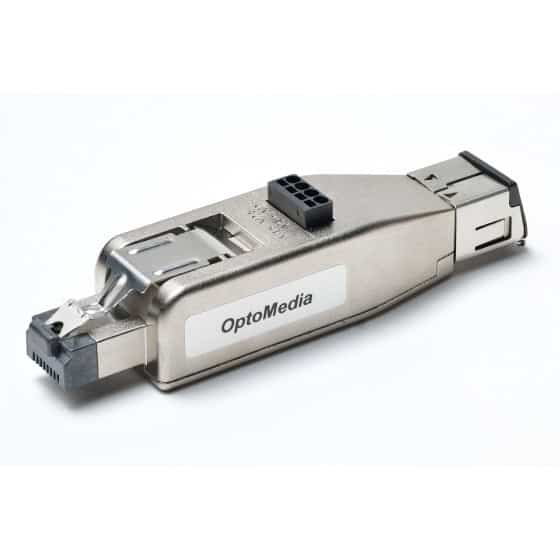
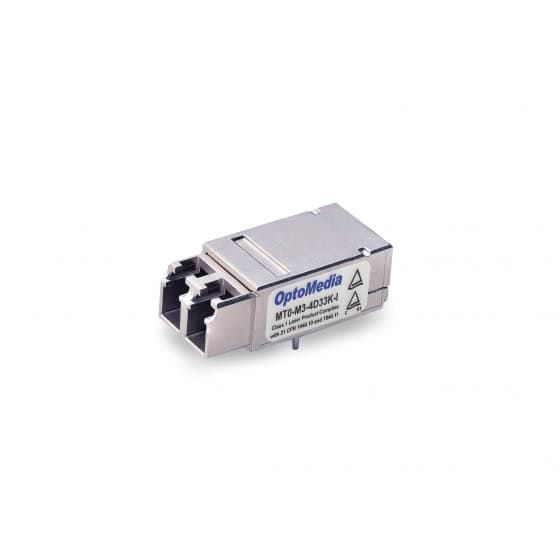
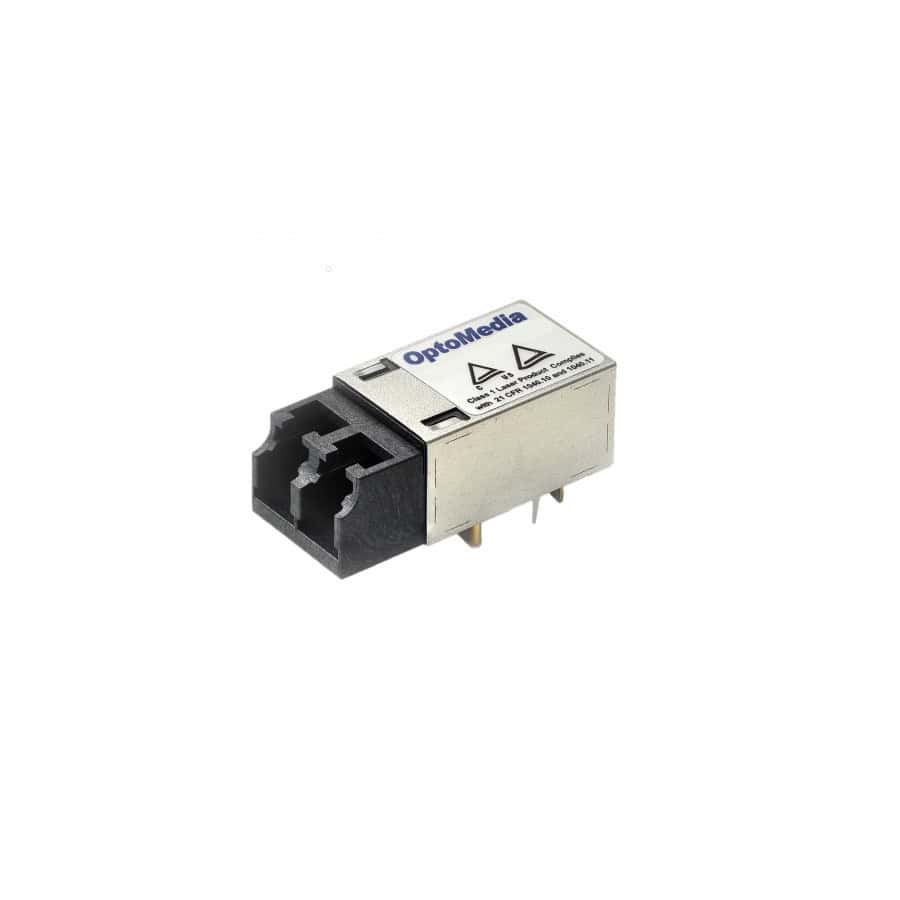
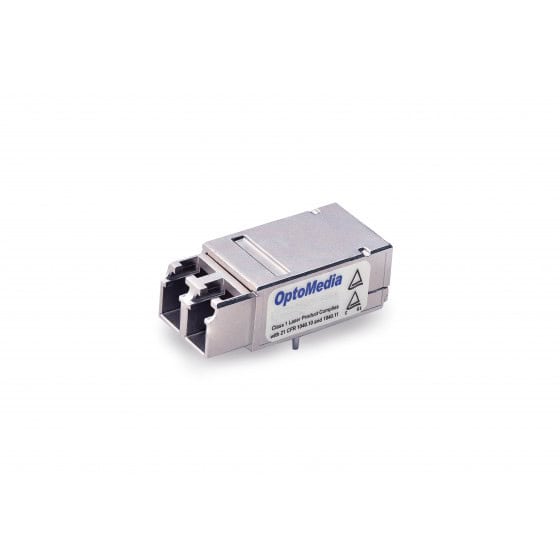
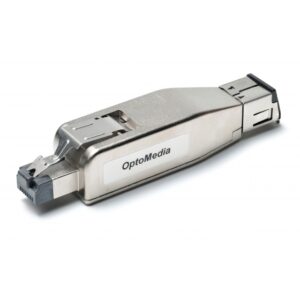
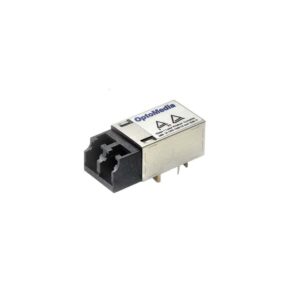
1.25G Multi-Mode Mini SFF fiber optic network optical transceiver by OptoMedia Technology
Fiber network infrastructure is widely used across headquarters, command posts, campus-scale defense sites, and telecommunications networks. These systems support operational connectivity between facilities, enabling secure data exchange across local area networks, wide area networks, and wider command-and-control environments.
For fixed and deployable installations, optical network equipment may be used to connect shelters, operations centers, communications nodes, and network management systems. Typical requirements include high-speed data transmission, redundant link paths, low latency, and compatibility with existing network infrastructure deployment plans.
Platform Networks for Ships, Vehicles & Aircraft
Fiber optic networks are also integrated onboard ships, ground vehicles, and aircraft to support mission systems data exchange. These platform networks may connect sensors, computers, displays, communications equipment, electronic warfare systems, and control interfaces within a single vehicle or across distributed subsystems.
In these environments, fiber networks offer advantages where space, weight, electromagnetic interference, and data throughput are critical design factors. Ruggedized optical network products can support reliable operation in vibration, shock, temperature variation, and other demanding military conditions.
Optical Backbones, Sensor Links & Data Center Connectivity
Optical backbone links provide high-capacity connectivity between shelters, sensors, gateways, processing nodes, and tactical infrastructure. These links are particularly important where radar, ISR, video, acoustic, and electronic warfare data must be moved quickly between collection systems and analysis or command nodes.
Military fiber network solutions are also used in hardened data centers and optical transport networks, where high-throughput workloads require scalable bandwidth and resilient communications. In these applications, network equipment must support reliable data routing, redundancy, and integration with existing defense IT and communications architectures.
Core Types of Fiber Optic Networking Equipment
Fiber-optic network equipment encompasses active optical devices and passive optical infrastructure. Common hardware groupings include:
Optical Transceivers and Optical Modules
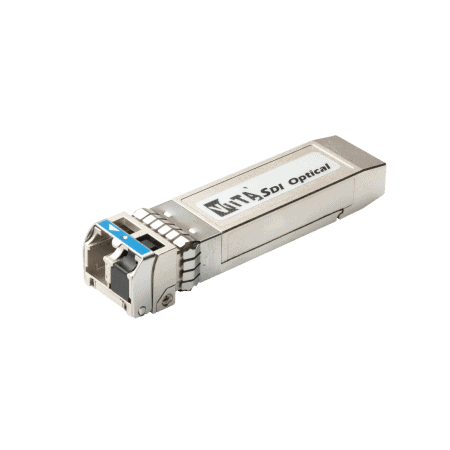
Optical transceivers provide the optical interface for routers, switches, and network interface cards. Selection is driven by reach, data rate, wavelength, and form factor. In defense communications, compatibility, temperature range, and supply chain traceability often receive increased scrutiny.
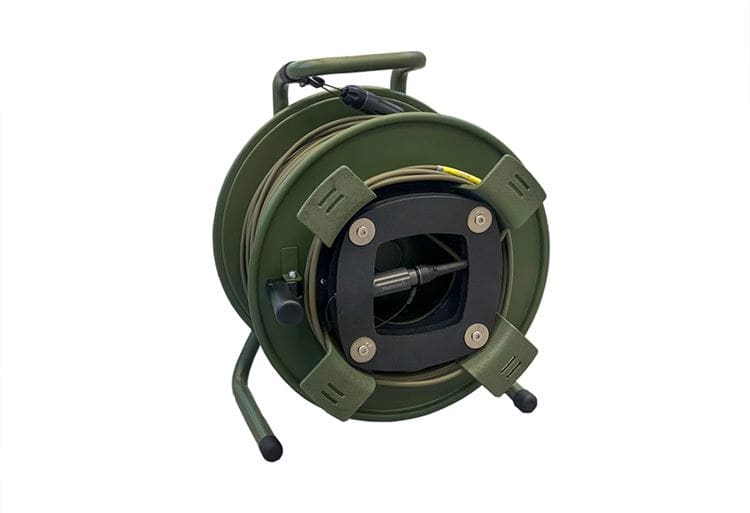
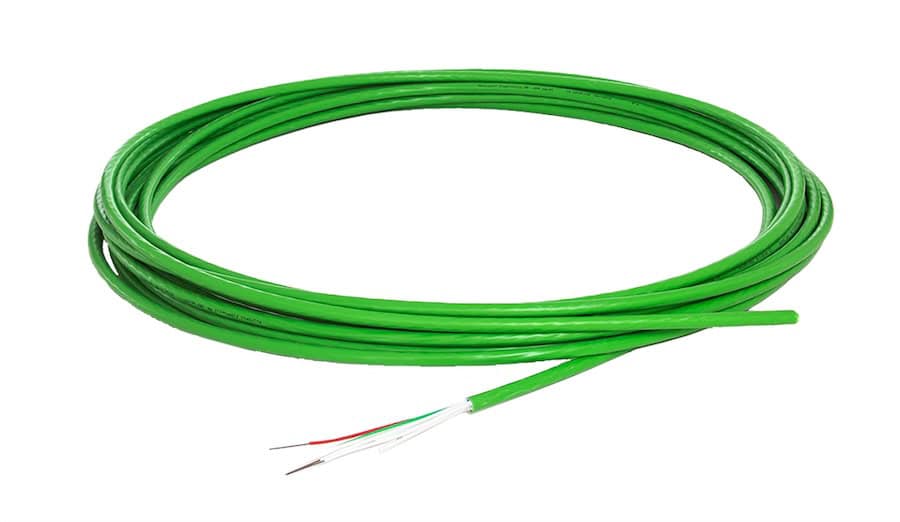
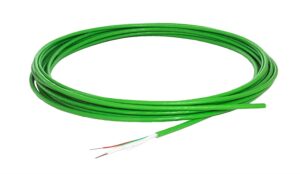
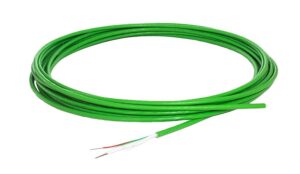
Custom & COTS fiber optic cables by Micropol Fiberoptic
Media Converters and Ethernet Media Converters
Media converters bridge copper-to-fiber and fiber-to-fiber segments, enabling mixed networks during modernization. They are frequently used at the edge for legacy integration and to extend Ethernet over longer distances in fiber-optic cabling systems.
Optical Switches and Network Interface Cards
Optical switches and NIC cards support aggregation and distribution across tactical and enterprise segments. Considerations include port density, throughput, buffering behavior, timing requirements, and support for security architectures. For constrained platforms, size, weight, and power can be as important as raw bandwidth.
Optical Transport Network Equipment and Multiplexing
Optical transport network (OTN) systems enable resilient long-haul, metropolitan, and backbone networking. Optical multiplexers and wavelength-division multiplexers (WDM) systems increase capacity over a limited fiber by carrying multiple channels on a single fiber pair. Optical demultiplexers and optical amplifiers support channel separation and reach extension where needed.
Passive Components and Fiber Infrastructure
Passive parts establish physical-layer reliability and serviceability:
Fiber optic cables, including fiber patch cables and fiber patch cable assemblies
Optical splitters for optical distribution networks and passive optical networks
Optical attenuators for link power balancing, plus optical link management accessories
Fiber Optic Network Architectures & Approaches
Single-Mode vs Multi-Mode Fiber Optic Networks
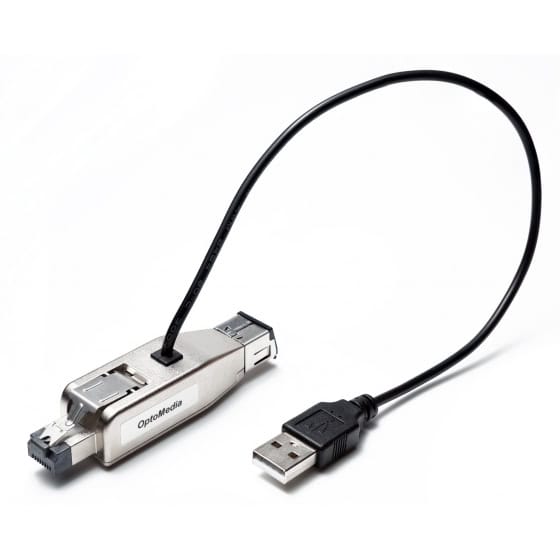
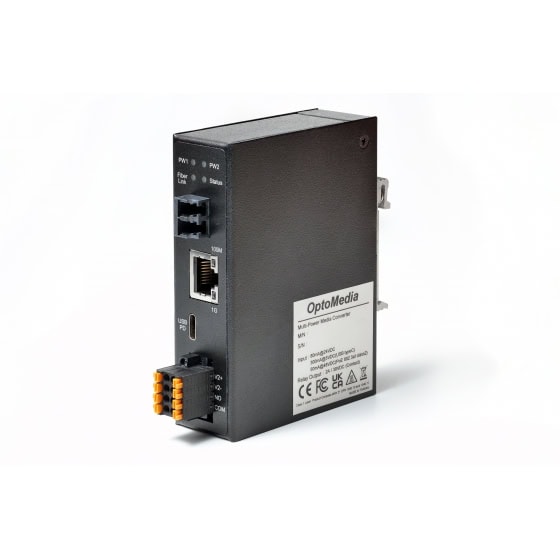
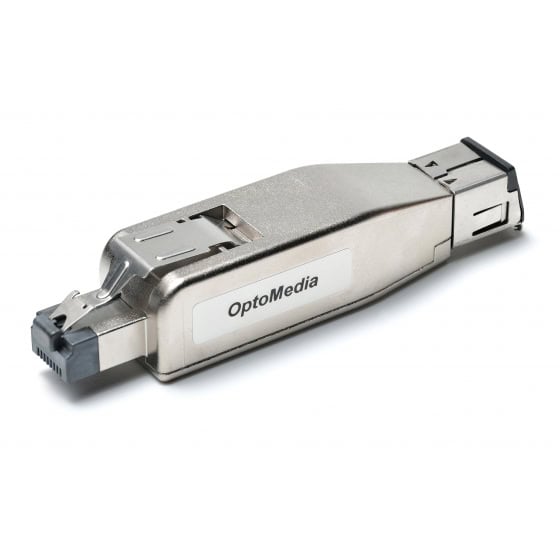
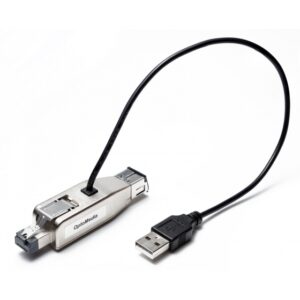
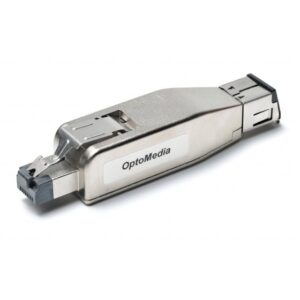
1G RJ45-to-Fiber Dongle with PoE fiber optic media converter by OptoMedia Technology
Single-mode fiber is typically selected for long-haul communications, backbone links, and optical transport networks due to reach and bandwidth potential. Multi-mode is often used for shorter runs, such as data center interconnects or within facilities where reach requirements are modest.
Point-to-Point vs Passive Optical Network
Point-to-point optical networking provides dedicated paths and straightforward troubleshooting, making it a preferred choice for critical links. Passive optical network approaches reduce active equipment in the field and can simplify campus-scale access networks, but require careful power budgeting and splitter planning.
OTN and SONET in Context
SONET networks may still be present in legacy defense infrastructure, whereas optical transport networking is typically adopted in modernization programs that require higher capacity and improved operational management. Interfacing between generations often relies on optical modules, media converters, and gateway devices.
Key Selection Factors for Military Optical Networking
Military fiber optic network hardware is commonly evaluated against:
Environmental tolerance for shock, vibration, temperature, humidity, and salt exposure, where applicable
Link budget, optical power levels, and acceptable loss across connectors, splices, and splitters
Security requirements tied to secure communications, segmentation, and controlled configuration
Interoperability with existing telecommunications infrastructure and staged upgrades
Standards & Compliance Considerations
Defense programs frequently align fiber-optic network equipment with environmental and test requirements defined by MIL-STDs relevant to the platform and operating environment. For allied interoperability and coalition operations, STANAG alignment can affect interfaces, deployment practices, and operational constraints. Broader industry alignment may also include optical transport network standards and legacy synchronous optical network practices that are still in service.
Micropol Fiberoptic’s OptiScan is a rugged optical fiber measurement tool for rapid multi-channel verification of tactical communication links before, during, and after deployment in demanding operational environments
Micropol outlines the evolution and operational advantages of fiber optic communication, highlighting its reliability, bandwidth, and security benefits for defense applications
Micropol Fiberoptic outlines step-by-step cleaning for expanded beam connectors, ensuring optimal performance by removing dirt, oils, and debris from the optical interface
Micropol’s has introduced OptiScan at DSEI 2025, a rugged fiber measurement tool enabling rapid, accurate network verification in demanding tactical communication environments
Micropol Fiberoptic outlines how adherence to MIL-DTL-83526 20/21 standards through its FALCON and PROCON connectors ensures reliable performance in harsh, mission-critical environments
Micropol Fiberoptic is expanding its tactical communications capabilities with a new high-capacity production facility strategically located along Sweden’s E6 highway in Halmstad
The order from the Swedish Defence Material Administration (FMV) is valued at 69 MSEK and includes field tactical fiber optic communication systems and related accessories
Micropol Fiberoptic outlines how its expanded beam connectors provide a durable, low-maintenance alternative to traditional fiber optic connectors, enabling reliable performance for military applications
The latest defense technology news, straight to your inbox.
Get our weekly roundup of technology developments, new products and industry news.
THANK YOU FOR SIGNING UP
Thanks for joining us. Check your inbox.
We've sent you an email. Click the confirmation link to complete your subscription to the weekly eBrief. In the meantime, explore the latest news, suppliers and technologies on DA.
Advancing Defense Capability Through Strategic Collaboration
Defense Advancement works with major OEMs to foster collaboration and increase engagement with SMEs, to accelerate innovation and drive defense capabilities forward.