
Showcase your capabilities
If you design, build or supply Optical Transceivers, create a profile to showcase your capabilities and connect with visitors who have an active requirement for your solutions.




Rugged optical transceivers are defense-grade fiber networking modules that convert electrical data signals into optical signals for transmission over fiber optic cable, supporting high-speed and low-latency links between sensors, mission computers, Ethernet switches, VPX/OpenVPX systems, command networks, and secure infrastructure.
This page showcases leading fiber optic transceiver manufacturers with solutions for airborne, shipboard, ground vehicle, and fixed-site applications.
Read the Technology Overview


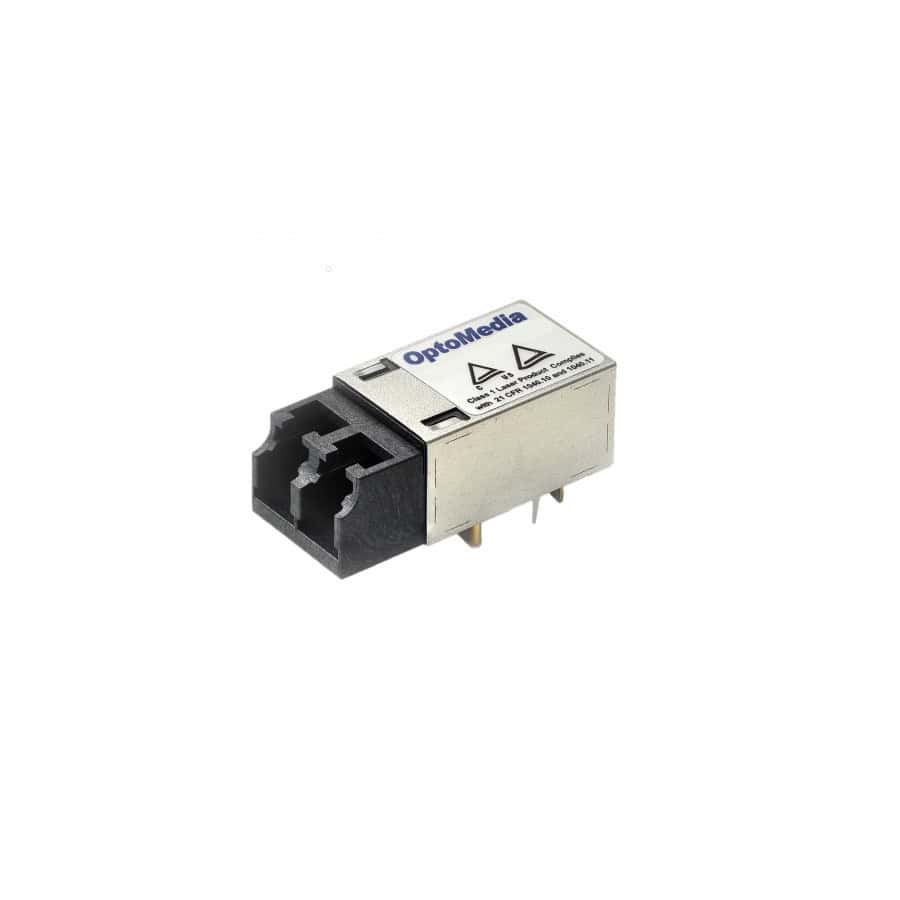
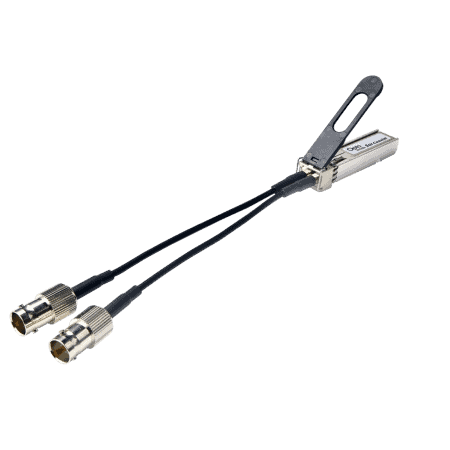
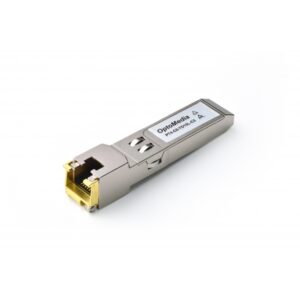
Compact, Lightweight, Rugged Fiber-Optic Modules for Defense Communications

If you design, build or supply Optical Transceivers, create a profile to showcase your capabilities and connect with visitors who have an active requirement for your solutions.

Optical transceivers convert electrical network signals into light for transmission through fiber optic cable, and then convert received optical signals back into electrical data. In defense communications systems, this function provides high-speed, low-latency data movement between sensors, processors, Ethernet switches, mission computers, and command networks. It supports infrastructure where electromagnetic noise, physical separation, security protocols, and bandwidth requirements limit the effectiveness of standard copper cabling.
For defense integrators, these components simplify the creation of resilient digital backbones across platforms such as aircraft, ships, and ground vehicles. Utilizing standardized pluggable form factors, such as the Small Form-Factor Pluggable (SFP) transceiver, allows a single host device to support various fiber types, wavelengths, and distances. This modularity gives system designers operational flexibility through a compact, field-replaceable interface.
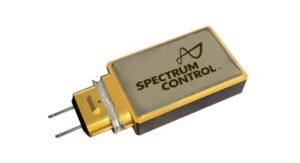
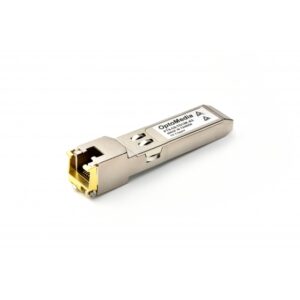
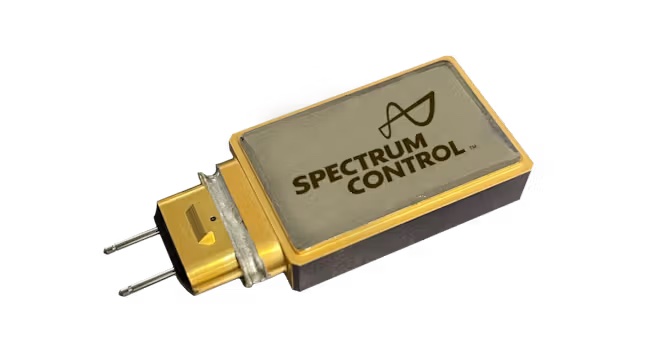
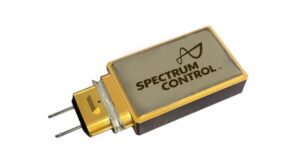
Optical Transceivers by Spectrum Control
Optical transceivers allow tactical switches, routers, and processing nodes to exchange high-rate data over fiber while reducing susceptibility to electromagnetic interference along the transmission path. They may also be integrated into media converters to connect copper Ethernet equipment with fiber optic links. This provides vital isolation in dense tactical environments where high-power radio transmitters, electronic warfare systems, and vehicle power grids operate in close proximity.
Modern radar arrays, EO/IR turrets, sonar processors, and RF over fiber optic transceiver links rely on rapid movement of sensor outputs to computing hardware. A rugged optical transceiver may be used in these links to preserve timing, synchronization, and data integrity over the intended fiber length without adding unnecessary mass to the platform.
Intelligence, surveillance, and reconnaissance systems place heavy demands on data transport by moving high-resolution video and radar products simultaneously. Implementing high-performance fiber optical transceivers delivers the necessary throughput while helping to reduce cable weight on aircraft, UAVs, and payload pods.
In VPX and OpenVPX architectures, optical connectivity may be implemented through front-panel transceivers, rear transition modules, or optical backplane interfaces aligned with VITA 66 standards. These optical interconnects can reduce backplane routing congestion and isolate sensitive processing electronics from noisy payload subsystems.
Rugged optical transceivers form the underlying physical fabric that links tactical servers, encryption devices, and communication gateways. In mobile headquarters or command-and-control vehicles, these optical links bypass the distance and EMI limitations of copper to support mapping, voice, and live video.
MIL/aero optical transceivers support long cable runs through metallic ship compartments, help reduce cable mass in aerospace frames, and support rugged connectivity in armored ground vehicles. Each platform dictates unique transceiver requirements, balancing corrosion control, thermal stability, shock and vibration tolerance, and dust resistance.
Fiber optical transceivers are foundational elements in secure briefing rooms and segmented network topographies because fiber optic cabling does not radiate signals in the same way as copper cabling and is generally more difficult to tap without detection. In high-assurance cross-domain environments, they provide clear physical demarcation along the trusted data path.
Military optical transceivers are available in multiple data rates, optical modes, and form factors, from compact SFP modules to higher-density QSFP interfaces. A military optical transceiver may be selected according to host compatibility, fiber type, wavelength, reach, thermal performance, and environmental qualification requirements. Related terminology such as fiber optical transceiver, fiber optic transceivers, optical fiber transceiver, and optical fiber transceivers may also be used across supplier documentation and procurement specifications.
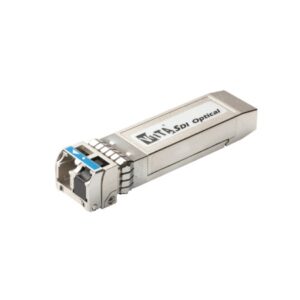
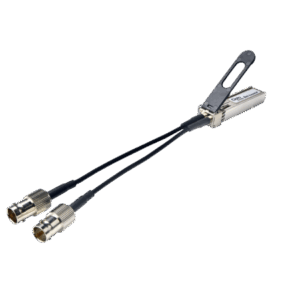
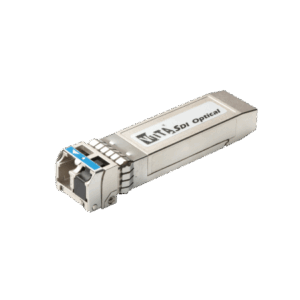
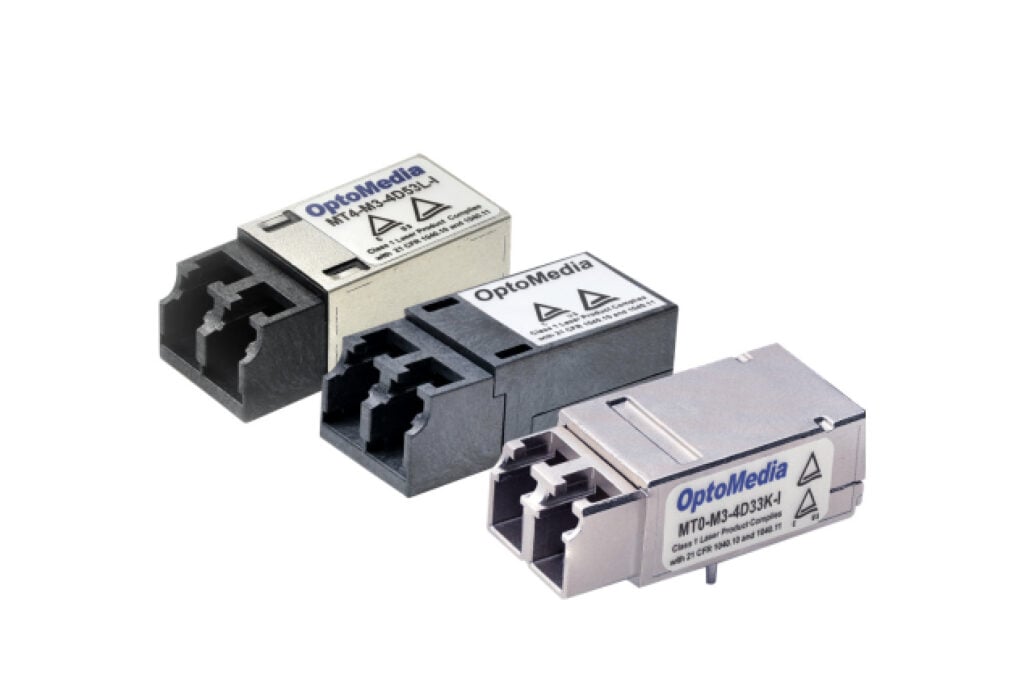
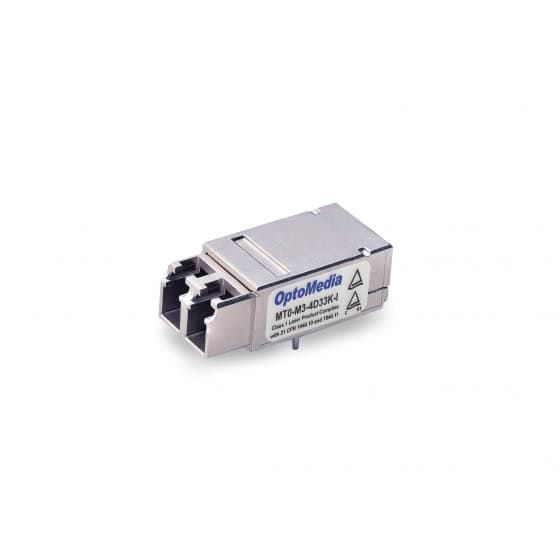
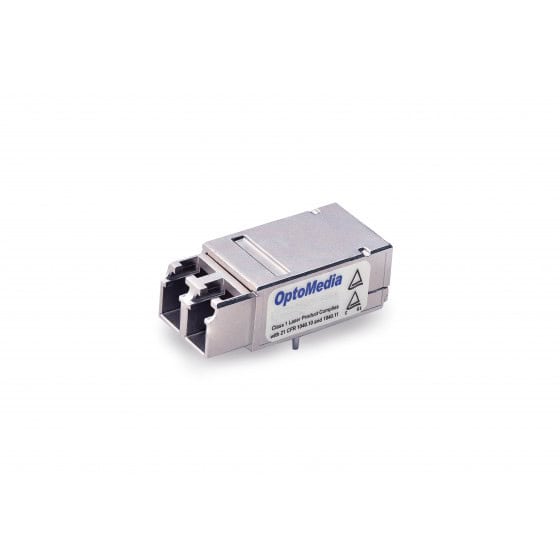
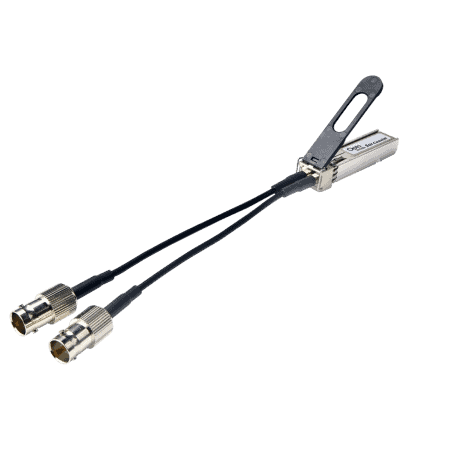
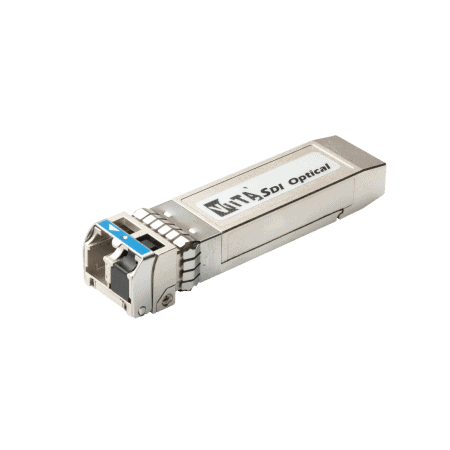
3G-SDI Optical SFP Modules by OptoMedia Technology
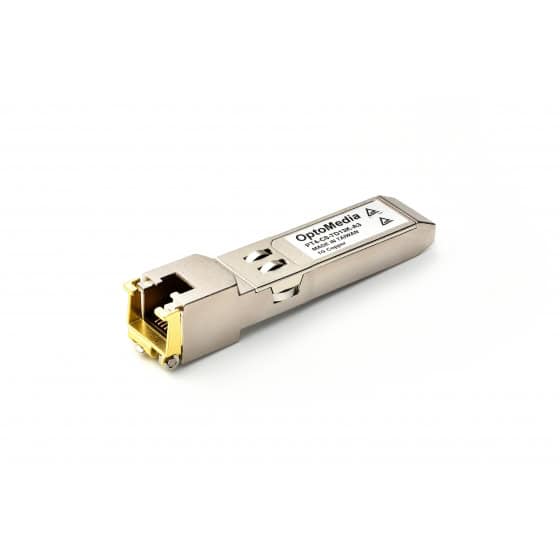
The standard 1G SFP fiber optic transceiver, also described as an SFP fiber optic transceiver or fiber optic SFP transceiver, is widely used for out-of-band management networks, legacy tactical switches, and radio interfaces where reliability is prioritized over high throughput. The format is favored for its low power consumption, hot-swappable utility, and broad compatibility with rugged host equipment.
When data requirements exceed 1G limitations, 10G SFP+ modules are integrated into ruggedized switches, tactical storage networks, and forward-deployed ISR units. Designers select between short-reach multimode fiber modules for intra-chassis links and single mode fiber optic transceiver variants for long-distance applications.
The SFP28 form factor scales the single-channel architecture of the SFP family up to 25 Gbps to increase bandwidth without expanding the front-panel footprint. In defense systems, a 25G fiber optic transceiver module can support advanced ISR payloads while avoiding more complex multi-lane parallel cabling.
Quad Small Form-Factor Pluggable (QSFP) modules achieve high throughput by using four independent channels within a single interface to link tactical data centers, high-performance processing nodes, and airborne processing pods. Integrating these high-speed modules requires careful attention to conduction cooling and thermal management pathways.
Bidirectional (BiDi) transceivers utilize wavelength-division multiplexing to transmit and receive data over a single strand of optical fiber. This design cuts the required physical fiber count in half, which is helpful when retrofitting older platforms where cable routing pathways or connector pins are limited.
CWDM and DWDM transceivers multiply fiber capacity by splitting data across multiple wavelengths on a single optical path. For military communications, this technology can expand throughput across bases, ranges, vessels, and fixed-site infrastructure without forcing the physical installation of new fiber cables.
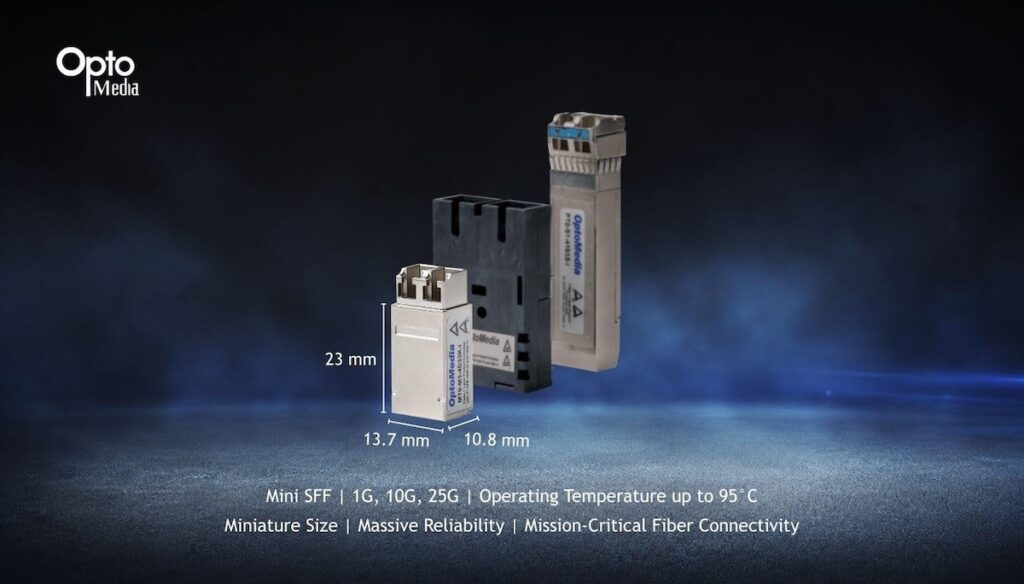
To operate reliably in harsh aerospace and combat environments, small form-factor transceivers may need to meet strict military qualification protocols.
Integrators must evaluate these standards at the subsystem level to ensure the selected hardware meets all operational mandates.
Modern optical transceiver technology is evolving from simple network connectivity into a critical enabler of advanced processing architectures.
These technological milestones help forward-deployed communication networks maintain data integrity and throughput in unpredictable operating environments.


 Searching Companies & Products