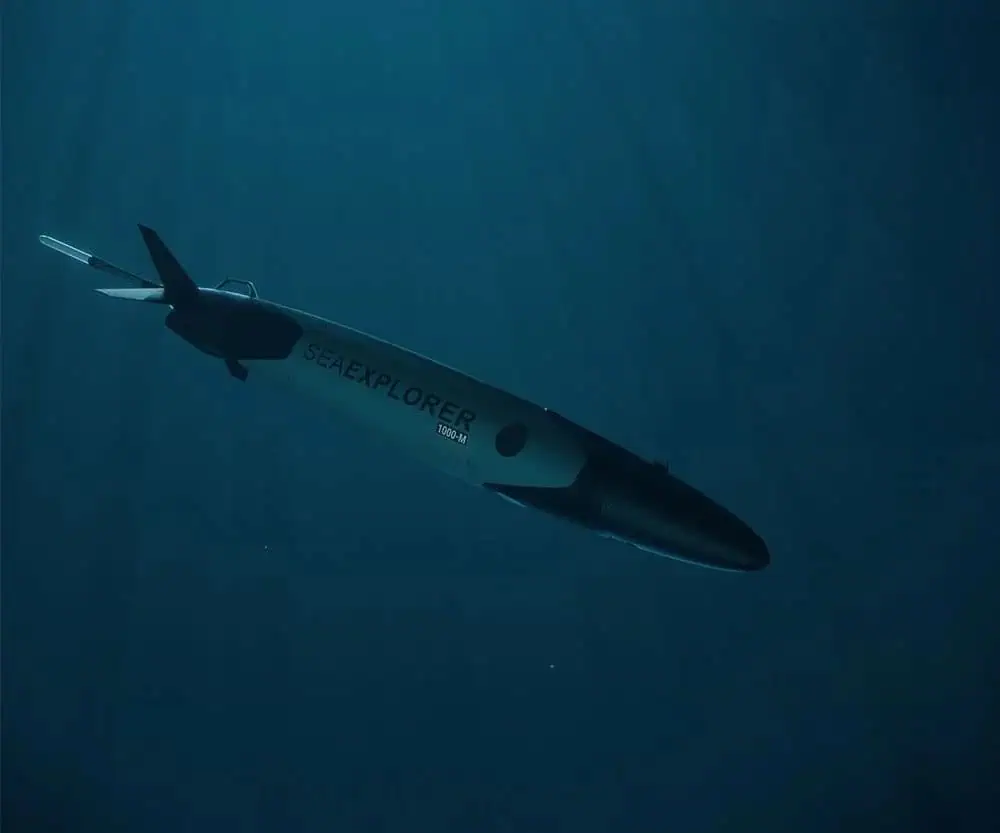
Showcase your capabilities
If you design, build or supply Buoyancy Modules, create a profile to showcase your capabilities and connect with visitors who have an active requirement for your solutions.




Find specialist defense suppliers of AUV and ROV buoyancy modules. These flotation systems support underwater vehicles operating in demanding naval environments, providing controlled buoyancy, pressure resilience, and stability for mission-critical subsea tasks.
Read the Technology Overview
Advanced Naval Defense Solutions & Services for Marine & Submarine Applications

If you design, build or supply Buoyancy Modules, create a profile to showcase your capabilities and connect with visitors who have an active requirement for your solutions.

AUV and ROV Buoyancy modules provide essential flotation for defense unmanned underwater vehicles and other underwater platforms performing surveillance, inspection, mine countermeasures, and deepwater missions. These systems use high-density syntactic foam or composite structures that maintain consistent buoyancy at depth while withstanding extreme hydrostatic pressure. Defense users rely on robust buoyancy configurations that support modular payloads, trim stability, and efficient hydrodynamics during extended mission durations.
Underwater Vehicle Buoyancy Solutions by ALSEAMAR
AUVs conducting persistent surveillance depend on buoyancy modules that stabilize depth control and support low-speed navigation for sensor sweeps and acoustic monitoring.
ROVs used for harbor inspection and threat detection require maneuverability around piers, hulls, and underwater structures. Buoyancy ensures stable operation in confined or cluttered environments.
EOD craft need rugged ROV buoyancy modules that support manipulators, detection instruments, and tools. Predictable flotation ensures positional stability near hazardous objects.
Distributed buoyancy modules support tethered acoustic arrays and underwater monitoring systems used for domain awareness in strategic maritime regions.
Deepwater-rated buoyancy systems enable underwater vehicles to conduct prolonged seabed observation, infrastructure inspection, and situational assessment under high hydrostatic pressure.
ROVs assisting with undersea cables, moorings, and marine infrastructure require stable flotation to enable precision handling and reduce tether strain.
These solid flotation blocks provide primary buoyancy for autonomous underwater vehicles and compact ROVs. Their dimensional stability and low water absorption support long-range surveillance, environmental assessment, and tactical operations.
Segmented flotation units mounted along vehicle frames or tether systems support mission flexibility. This configuration allows operators to adjust buoyancy distribution when integrating new sensors or payloads.
Enhanced-pressure syntactic foams support deepwater missions involving seabed observation, subsea monitoring, and infrastructure assessment where hydrostatic loads are elevated.
Some defense operations require buoyancy for tethered sensors, vertical structures, or subsea networks. These modules support stable positioning and reduce load on cables or risers.
Defense buoyancy modules must maintain performance through pressure cycles, shock loading, and long-duration immersion. Material properties such as compressive strength, thermal stability, and resistance to impact or abrasion are critical. Hydrodynamic shaping helps reduce drag, enabling more efficient transit for AUVs on extended-range missions. Durability under salinity variation, temperature gradients, and biological growth is also essential for operational readiness.
Integration requires alignment with vehicle geometry, sensor placement, and mission configuration. Essential factors include trim balancing, clearance for thrusters and communication systems, attachment methods, and compatibility with onboard monitoring equipment. Modular buoyancy simplifies rapid mission changes, enabling operators to adapt flotation setups for specific payloads or environmental conditions.
Recent developments include improved microsphere formulations for increased compressive strength, reduced-density syntactic foams for high-endurance missions, hydrodynamic shaping for drag reduction, and hybrid flotation materials for combined structural support and buoyancy. These advances support evolving requirements across underwater drones, tethered vehicles, and autonomous platforms deployed for subsea monitoring and defense operations.


 Searching Companies & Products