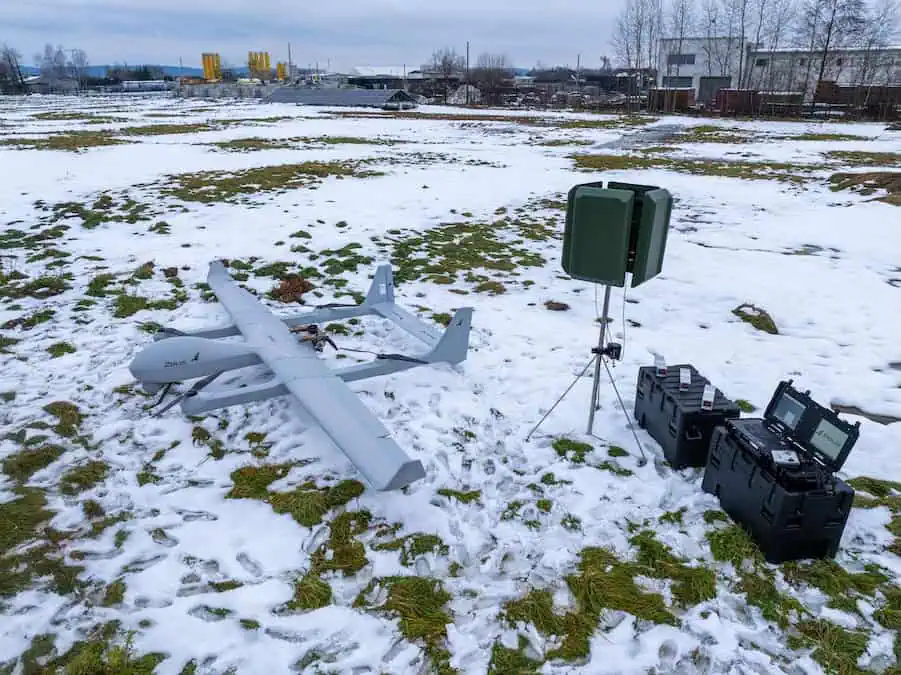

Showcase your capabilities
If you design, build or supply Drone Autopilots, create a profile to showcase your capabilities and connect with visitors who have an active requirement for your solutions.




Drone autopilots ensure precision navigation, stability, and autonomous decision-making in tactical and surveillance Unmanned Aerial Vehicle (UAV) missions. These systems integrate high-reliability processors, inertial sensors, and advanced control software to maintain flight authority even in contested or GPS-denied environments.
This page showcases leading suppliers of military drone autopilot systems for critical defense missions, including solutions for fixed-wing, rotary-wing, and multirotor UAV platforms.
Read the Technology Overview



Ultra-Reliable & Mission-Proven Rugged Computing Solutions for Demanding Defense & Security Applications

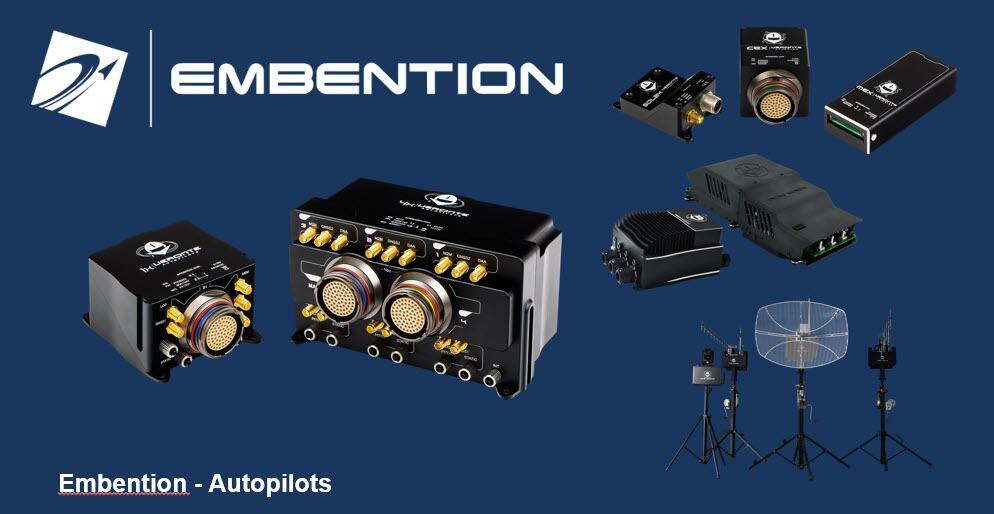
State-Of-The-Art Flight Control & GNSS-Denied Navigation Technologies for Tactical UAV Platforms

Thermal Imaging Solutions Featuring Cutting-Edge Intelligent Sensing & Threat Detection Technologies

State-Of-The-Art NDAA-Compliant Electronic Hardware Components for Mission-Critical Drone & Robotics Platforms. Made in the USA.


Bespoke Drone & Robotics Software Solutions for the Defense & Security Industries

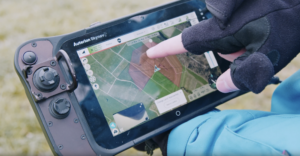
NDAA-Compliant Software-Defined Ecosystem For Next-Generation Robotics & Autonomous Vehicle Platforms

If you design, build or supply Drone Autopilots, create a profile to showcase your capabilities and connect with visitors who have an active requirement for your solutions.

Military drone autopilots deliver the essential flight control and decision-making intelligence required for modern Unmanned Aerial Vehicles (UAVs). At their most fundamental level, these systems stabilize the aircraft and execute pilot commands. In contemporary defense applications, a drone autopilot serves as a highly sophisticated embedded controller managing navigation, mission execution, and sensor coordination.
In military UAVs, the autopilot system is a deeply integrated component of an architecture comprising mission computers, payload systems, and encrypted communication links. Its reliability is paramount, directly governing platform safety and mission success in contested airspaces where manual intervention may be impossible.
Every autopilot for drone platforms provides continuous stabilization by managing the aircraft’s attitude (roll, pitch, and yaw) through high-frequency feedback from onboard sensors such as tactical-grade Inertial Measurement Units (IMUs) and gyroscopes.
These systems utilize closed-loop control mechanisms where sensor data is constantly measured against desired flight parameters. Control laws, typically implemented as PID (proportional-integral-derivative) or advanced adaptive algorithms, calculate the precise actuator inputs needed to maintain stability. In defense systems, these loops must operate with deterministic timing to ensure predictable handling during high-dynamic maneuvers or heavy turbulence.
Redundancy is a core requirement for drone autopilot hardware. Fail-safe modes, including return-to-base (RTL), loiter, or controlled descent, activate automatically during system faults or communication loss. More resilient architectures utilize fail-operational designs, allowing the mission to continue even after a partial hardware failure.
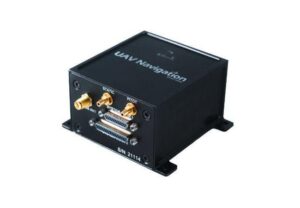
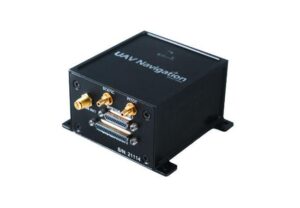
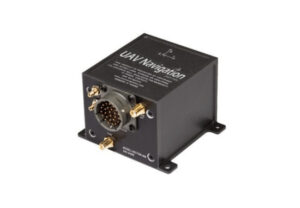
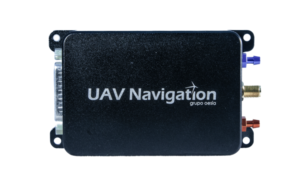
VECTOR-600 Drone Autopilot from UAV Navigation.
Navigation capabilities allow a platform to determine its position and trajectory in real time. UAV autopilot systems fuse data from Global Navigation Satellite Systems (GNSS) receivers with Inertial Navigation Systems (INS) to ensure uninterrupted positioning. This remains effective even when satellite signals are jammed or degraded in GPS-denied environments.
Waypoint navigation enables mission planners to define precise flight paths with specific altitude profiles and geofenced boundaries. Beyond basic tracking, a UAV navigation autopilot can incorporate terrain-following and terrain-avoidance (TF/TA) capabilities. These use real-time LiDAR or radar inputs to maintain safe clearance over complex topography.
Modern units provide autonomous navigation systems for military UAVs that significantly reduce operator workload. While traditional systems rely on fixed logic, newer architectures integrate AI autopilot capabilities to enable adaptive behaviors such as dynamic rerouting in response to threats or autonomous target tracking. In multi-UAV operations, autopilots facilitate swarm coordination, allowing multiple platforms to share data and coordinate movements without a centralized controller.
The autopilot flight controller acts as the central hub for multiple onboard sensors, including air data systems, magnetometers, and Electro-Optical/Infrared (EO/IR) payloads.
Through real-time data fusion, the drone autopilot system synthesizes these inputs into a coherent understanding of the aircraft’s state. This improves accuracy and enables a professional autopilot to interface with mission computing systems, ensuring flight behavior remains aligned with the tactical objectives of the payload.
Military drone autopilots are engineered to support various operational roles, each with unique performance demands:
A fixed-wing UAV autopilot prioritizes aerodynamic efficiency and endurance. These systems manage complex flight profiles and energy consumption to optimize fuel or battery life during long-range beyond visual line of sight (BVLOS) missions.
VTOL drones and rotary configurations present complex control challenges. An autopilot for UAV platforms in this category must manage inherently unstable dynamics, particularly during hover and the transition between vertical and forward flight.
Smaller tactical units often utilize an FPV drone autopilot or integrated modules that emphasize portability. Even at this scale, a professional autopilot must deliver robust performance in contested environments with limited data links.
The hardware foundation of a drone autopilot is the flight control computer (FCC). These ruggedized systems integrate CPUs for control logic alongside FPGAs for low-latency signal processing, connecting to sensors and actuators via high-speed digital buses.
Autopilot software architecture determines how the unit manages resources. Real-time operating systems (RTOS) provide the deterministic scheduling required for time-critical control loops.
While many defense systems utilize proprietary code, there is an increasing shift toward open-source drone autopilot foundations for rapid development. For example, PX4 autopilot software is often used as a baseline for modular development, aligning with the Modular Open Systems Approach (MOSA) preferred by defense agencies.
Security starts at the firmware level. Secure boot mechanisms ensure only authenticated software is executed, while encryption protects command and control (C2) links from interception or manipulation.
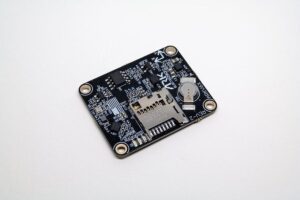
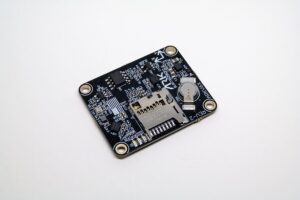
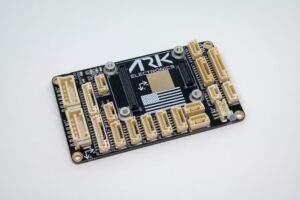
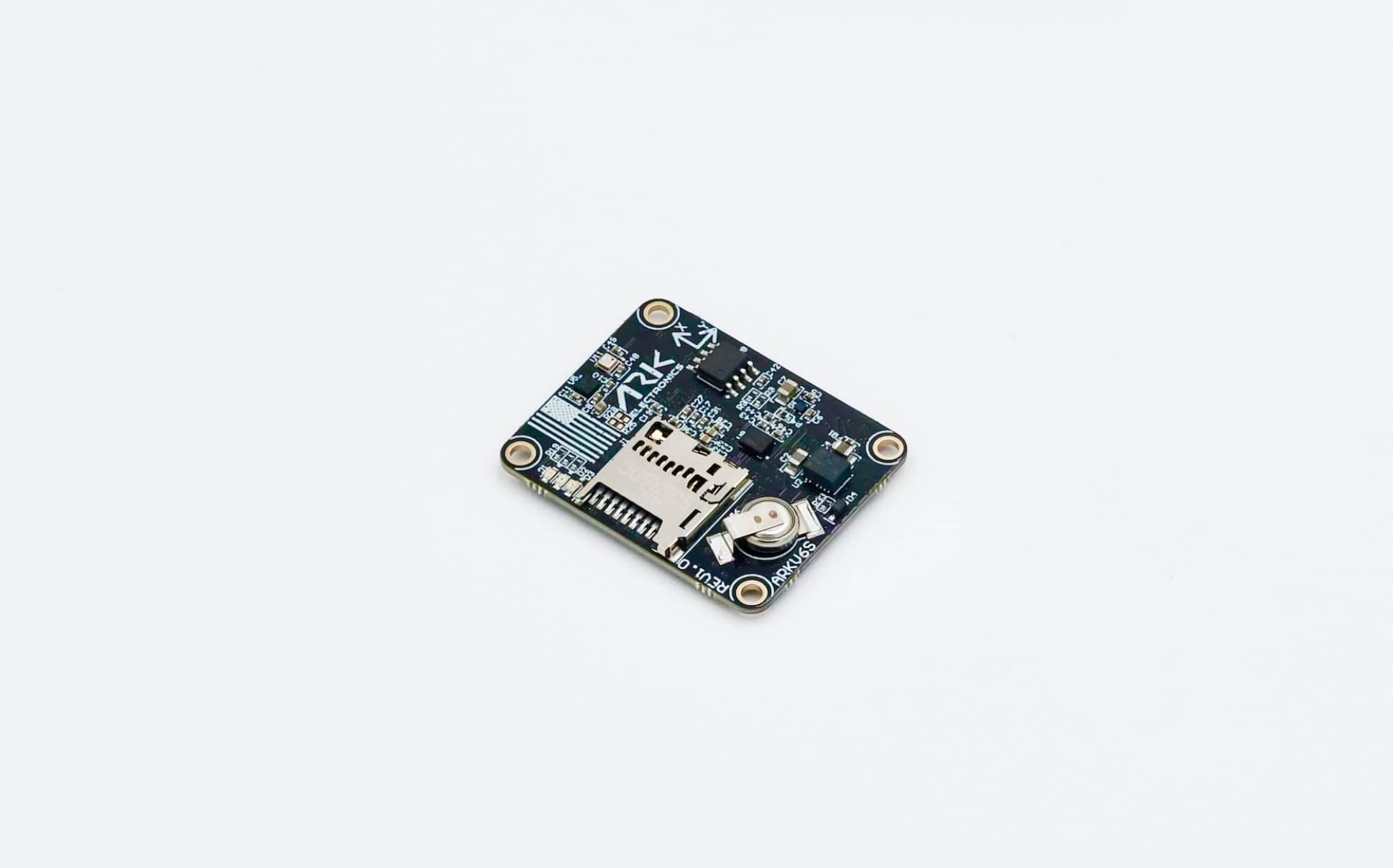
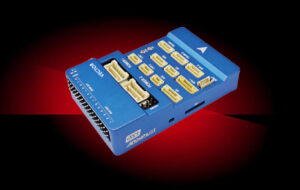
ARKV6X Drone Autopilot Flight Controller from ARK Electronics.
Military UAV autopilot systems must function in contested electromagnetic environments. They incorporate resilience measures like GNSS anti-jamming and multi-sensor fusion (visual odometry or star trackers) to maintain control when primary navigation signals are lost.
UAV autopilot systems must adhere to rigorous global standards:
The industry is seeing autonomous navigation systems for military UAV providers move toward edge processing. Advances in onboard computing allow for real-time analysis without relying on a constant drone autopilot app connection or satellite link. Furthermore, swarming technologies are evolving the UAS autopilot from a simple flight controller into a component of collaborative intelligence, where platforms coordinate autonomously to achieve complex mission goals.


 Searching Companies & Products