Laser Electronic Components for Military & Defense Systems
Laser electronic components comprise the power regulation, control, and signal processing subsystems that enable reliable operation of military laser systems. In defense platforms, these electronics manage current delivery, pulse timing, modulation, stabilization, and safety interlocks for both continuous wave and pulsed lasers.
This category features leading suppliers of military laser electronics for applications including targeting, rangefinding, LiDAR, directed energy systems, and optical communications.
If you design, build or supply Laser Electronic Components, create a profile to showcase your capabilities and connect with visitors who have an active requirement for your solutions.
......providing a flexible and efficient solution for OEM integration in advanced defenselaser... ... CW and Pulsed Laser Diode Driver provides precise current regulation for continuous wave and pulsed...
Laser Electronic Components for Military & Defense Systems
Overview by
William Mackenzie
Updated:
Introduction to Military Laser Electronic Components
Laser electronic components provide the essential power regulation and control logic necessary to operate modern military laser systems. While optics shape and direct the beam, it is the electronic subsystems that govern how a laser is powered, controlled, modulated, stabilized, and safely integrated into a wider platform. In defense applications, laser electronics are mission-critical, as they determine accuracy in rangefinding, stability in target designation, reliability in LiDAR sensing, and survivability in high-energy laser and countermeasure systems.
Laser electronics for defense systems must operate predictably under extreme environmental stress, strict electromagnetic compatibility requirements, and demanding Size, Weight, and Power (SWaP) constraints. They must also integrate seamlessly with fire control systems, mission computers, and secure networks, often forming part of a closed loop weapon or sensing chain where latency and determinism are non-negotiable.
Key Types of Laser Electronic Components
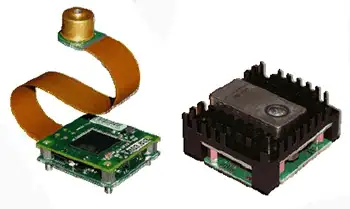
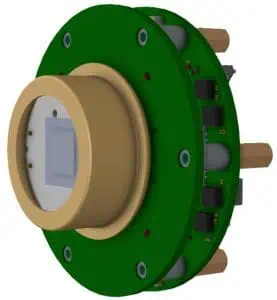
Receiver electronics convert faint optical returns into usable electrical signals to determine target proximity or extract encoded data. These assemblies typically integrate avalanche photodiodes, transimpedance amplifiers, and timing discriminators optimized for low noise and fast response. Their performance directly governs detection range and measurement accuracy.
The following hardware categories represent the primary building blocks of a defense laser system:
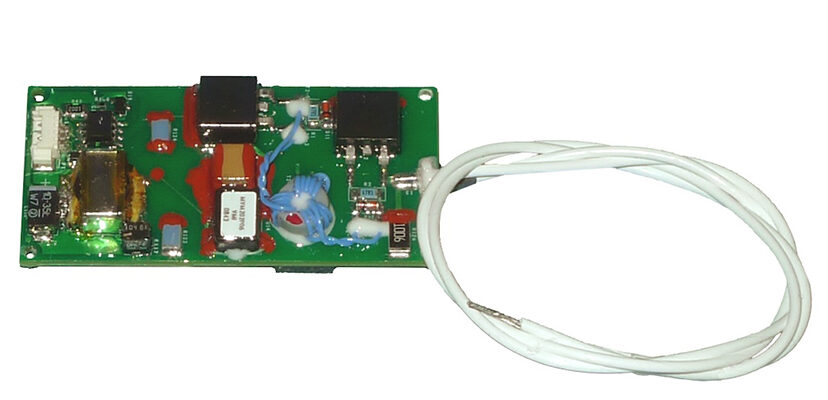
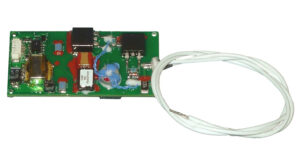
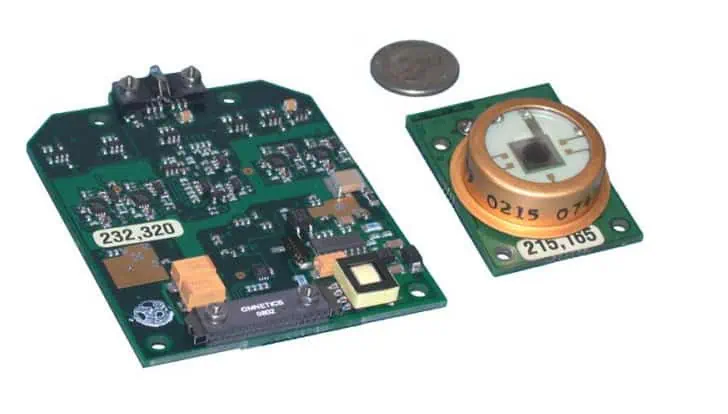
Laser Diode Drivers: Precision regulators protect the laser source from overcurrent and transients while enabling fast pulse generation and monitoring.
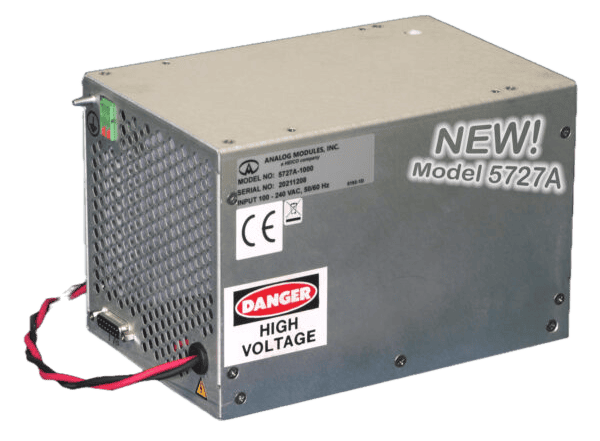
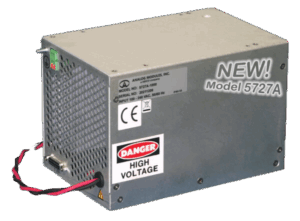
Laser Power Supplies: Stable isolated units provide power to drivers while suppressing electromagnetic interference under dynamic load conditions.
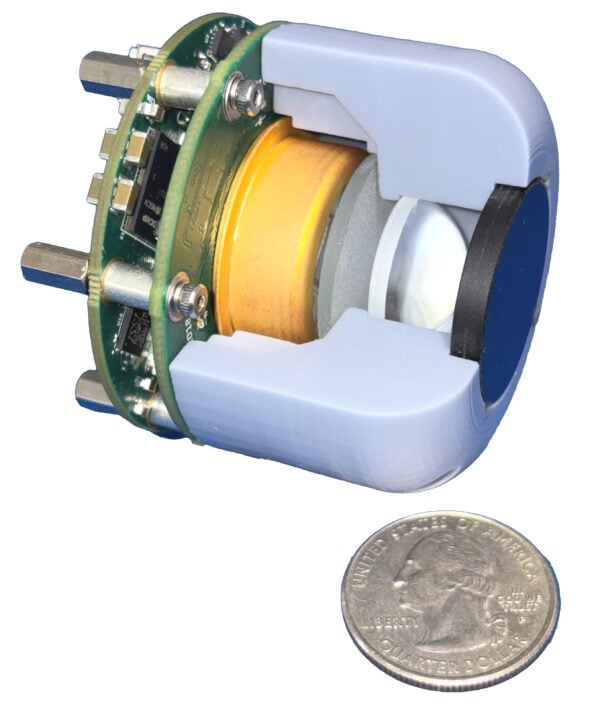
Laser Spot Trackers: Specialized signal processors analyze reflected laser energy to determine target position and movement for semi active guidance.
Pockels Cell Drivers: High-voltage modulators generate fast rise pulses for Q switching and pulse shaping in high-peak power systems.
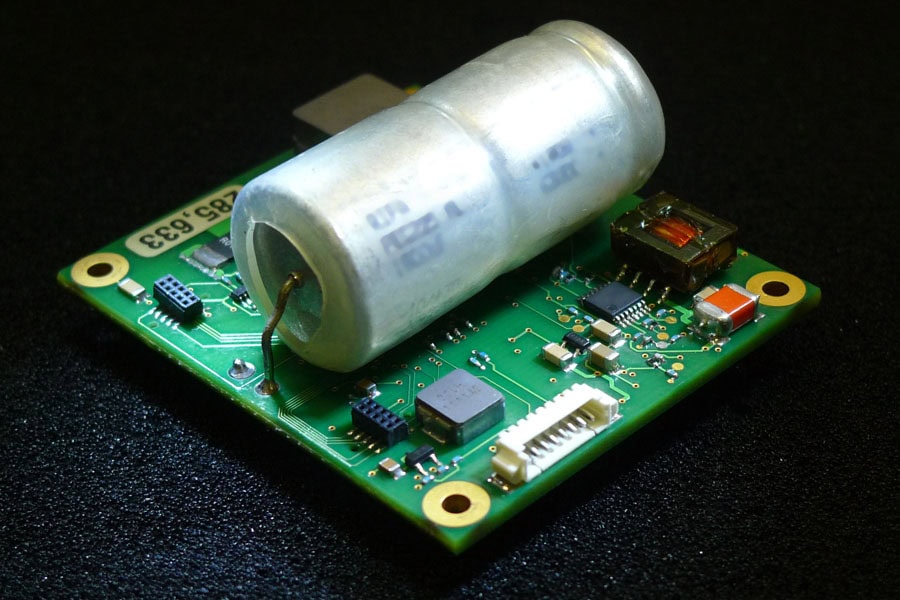
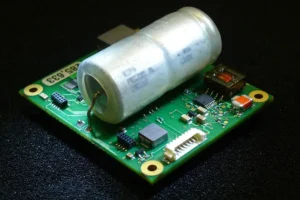
Capacitor Charging Power Supplies: High-speed charging units replenish energy storage capacitors between pulses to enable high repetition rates.
VCSELs: High-efficiency semiconductor sources support short-range sensing and communication with an emphasis on low power and high bandwidth.
These components must be selected based on their ability to maintain performance specifications across the full military temperature range.
Defense Applications of Laser Electronic Components
Targeting, Designation, and Rangefinding
Laser rangefinders and target designators depend on fast, high-energy pulsed lasers and extremely sensitive receiver electronics. Laser drivers, capacitor charging power supplies, and timing circuits work together to generate short, repeatable pulses, while receiver electronics measure time of flight with sub-nanosecond precision. Tight integration with fire control systems ensures that range and designation data are synchronized with ballistic calculations and weapon release logic.
LiDAR and Active Sensing Systems
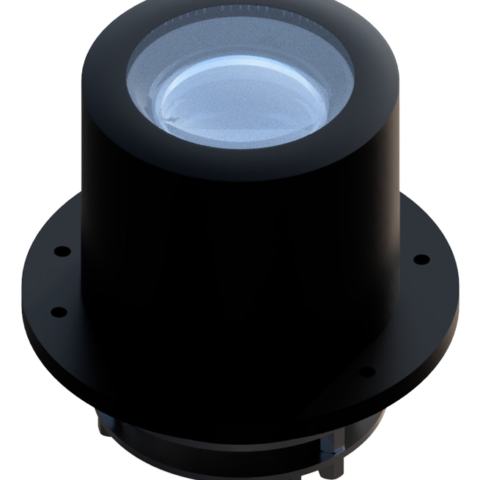
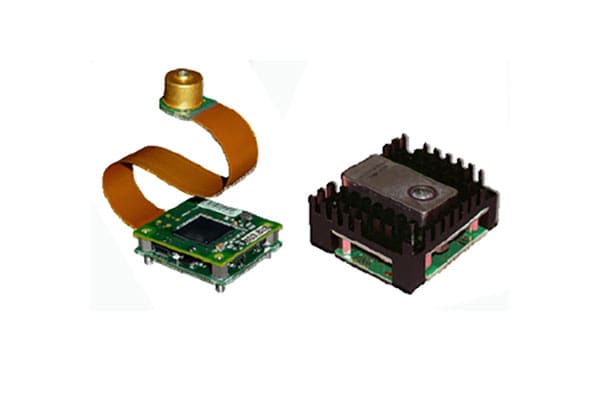
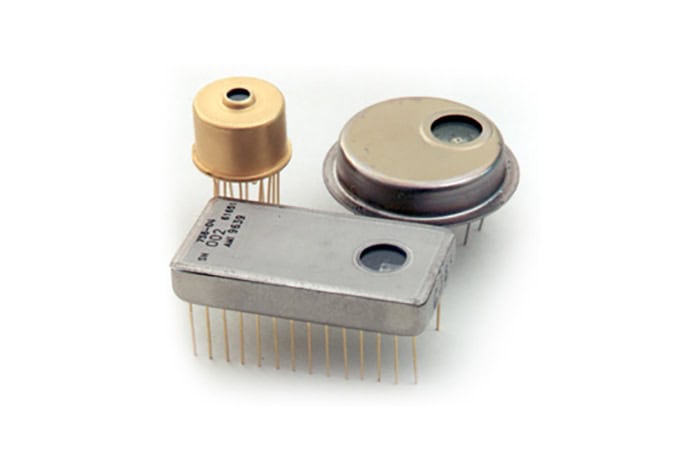
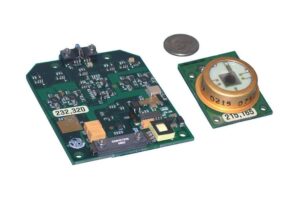
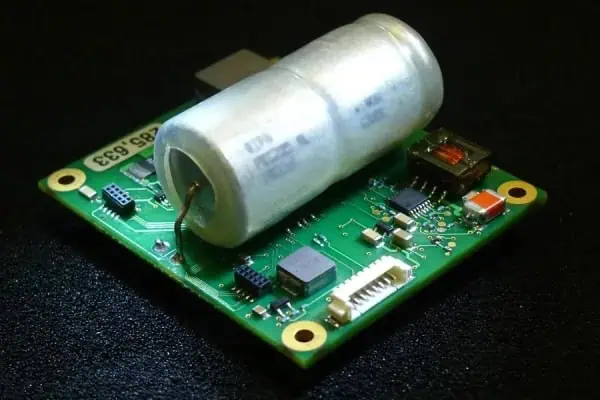
Laser Spot Tracking Electronic Components by Analog Modules
In defense LiDAR systems, laser electronics support rapid pulse repetition rates, precise modulation, and real-time synchronization with scanning optics and detectors. These systems underpin ISR payloads, autonomous navigation, terrain mapping, and obstacle avoidance across airborne, ground, and naval platforms. Electronics must balance peak power capability with long-term reliability, particularly in continuous surveillance roles.
Directed Energy and Countermeasure Systems
High-energy laser systems place extreme demands on electronic subsystems. Power conditioning units, laser diode drivers, and control electronics must manage kilowatt-class electrical loads while enforcing multiple layers of safety interlocks. Beam control electronics coordinate with sensors and tracking systems to maintain aimpoint stability, while fault monitoring circuitry ensures safe shutdown under abnormal conditions.
Secure Optical Communications
Free space optical communication systems rely on laser electronics capable of high-speed modulation and precise wavelength control. In defense contexts, these links offer low probability of intercept and immunity to RF jamming. Electronic control of modulation depth, timing, and beam alignment is critical to maintaining link integrity under platform motion and atmospheric disturbance.
Integration Within Laser Subsystems
Laser Transmitter Modules
Laser transmitter modules combine sources, drivers, control electronics, and monitoring circuits into tightly integrated assemblies. Defense designs prioritize ruggedization, minimal interconnects, and predictable thermal paths to ensure repeatable performance over long service lives. These modules are often designed for modular replacement within larger sensor or weapon pods.
Receiver and Detector Interface Electronics
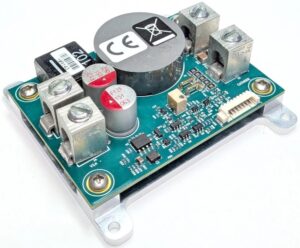
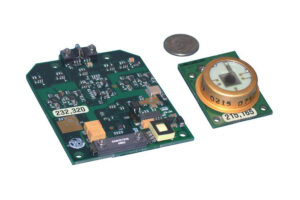
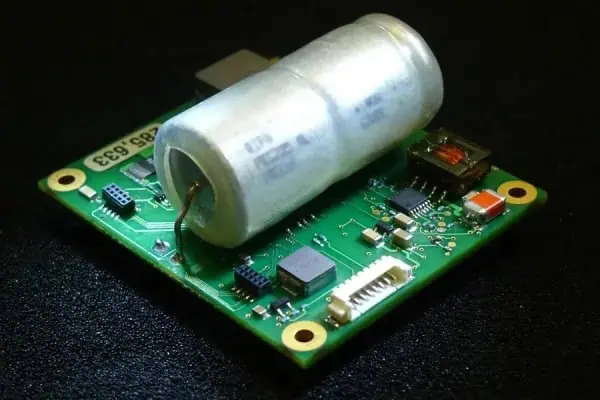
Laser Diode Drivers by Analog Modules
Front-end electronics for photodiodes and avalanche photodiodes focus on noise reduction, gain stability, and bandwidth optimization. Shielding and layout discipline are essential to prevent electromagnetic interference from degrading sensitivity, particularly when co-located with high-power laser drivers. Proper impedance matching at this stage is critical for maintaining signal integrity.
Embedded Control and Interfaces
Modern laser systems employ embedded controllers, field programmable gate arrays, or system-on-chip devices to manage timing, health monitoring, and external interfaces. Support for standard defense interfaces such as Ethernet, CAN, RS 422, and MIL STD 1553 ensures seamless integration with mission systems and fire control architectures. These digital backbones allow for advanced diagnostic reporting.
Emerging Trends in Laser Electronic Components
Advances in semiconductor materials, packaging, and power electronics are enabling higher output powers within smaller form factors. Improved efficiency reduces thermal load and expands deployment options for high-performance laser systems. Digital control architectures allow adaptive adjustment of laser parameters based on operating conditions, while AI assisted monitoring is emerging as a means of predicting component degradation.
Future platforms will require the following advancements in electronic design:
Power Density: New wide-bandgap semiconductors achieve higher electrical throughput without increasing the physical footprint of the driver.
Software Defined Parameters: Programmable logic allows the laser pulse characteristics or modulation to be adjusted via firmware to meet changing mission requirements.
Cyber Resilience: Hardened control interfaces protect the internal laser logic against electronic warfare threats and unauthorized access.
Laser electronic components will continue to evolve from discrete subsystems into fully networked, intelligent elements of the modern defense landscape.
Analog Modules' Model 742DP laser spot tracker combines adaptive signal processing, sunlight tolerance, and 1.06μm optimization for missile and platform applications
Analog Modules, Inc.’s AMI Series rangefinder receivers and processors deliver highly accurate, corrected range data for defense laser rangefinding and targeting systems
Analog Modules, Inc. is set to highlight its next-generation 744DP Laser Spot Tracker Module and advanced laser electronics solutions at XPONENTIAL 2026 / MDEX in Detroit
Analog Modules advances switch mode laser diode driver design through multiphase architectures that improve efficiency, reduce size, and maintain precise current control in defense applications
Analog Modules examines the evolution of high current laser diode driver designs, outlining key trade-offs, component limitations, and the advantages of advanced switching architectures for military systems
Analog Modules Inc. provides laser range receiver and spot tracker modules informed by operational feedback, supporting integration into defense platforms operating under challenging environmental and countermeasure conditions
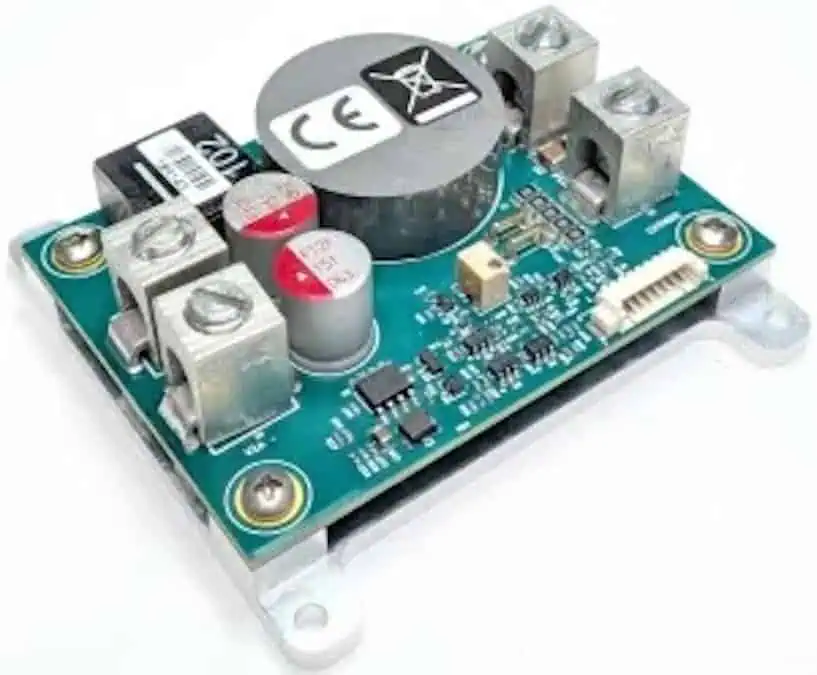
Analog Modules has introduced the Model 789 OEM CW and pulsed laser diode driver, a high-efficiency, current-regulated buck converter delivering up to 50 Amps with integrated protection features
The latest defense technology news, straight to your inbox.
Get our weekly roundup of technology developments, new products and industry news.
THANK YOU FOR SIGNING UP
Thanks for joining us. Check your inbox.
We've sent you an email. Click the confirmation link to complete your subscription to the weekly eBrief. In the meantime, explore the latest news, suppliers and technologies on DA.
Advancing Defense Capability Through Strategic Collaboration
Defense Advancement works with major OEMs to foster collaboration and increase engagement with SMEs, to accelerate innovation and drive defense capabilities forward.