UAV parachute recovery systems enhance the safety, survivability, and recoverability of unmanned aerial vehicles during flight failures or mission aborts. These systems protect high-value assets and ensure compliance with aviation safety standards.
If you design, build or supply UAV Parachute Recovery Systems, create a profile to showcase your capabilities and connect with visitors who have an active requirement for your solutions.
Counter-UAS net capture & drone interception solutions
Counter-UAS net capture & drone interception solutions
...f net delivery systems designed for different operational requirements, including handheld,... ...ironments. The system is designed to support rapid deployment and flexible integration across a...
Drone recovery systems are engineered safety devices designed to enable the safe descent and recovery of unmanned aerial vehicles (UAVs) following a malfunction, emergency, or mission abort.
Integrating a parachute recovery system serves multiple roles: it minimizes the impact energy of a falling drone, prevents total loss of high-value equipment, reduces the risk of injury or collateral damage, and supports compliance with global aviation and safety standards. These systems are especially critical for military-grade UAVs, which often operate in unpredictable environments and carry sensitive payloads.
As UAVs become more sophisticated and valuable, with extended ranges, increased payload capacities, and autonomous functionalities, the need for reliable UAV rescue parachutes grows correspondingly. These systems also help address growing regulatory pressures and insurance requirements, particularly for operations in urban airspace or overpopulated areas.
Applications and Operational Use Cases
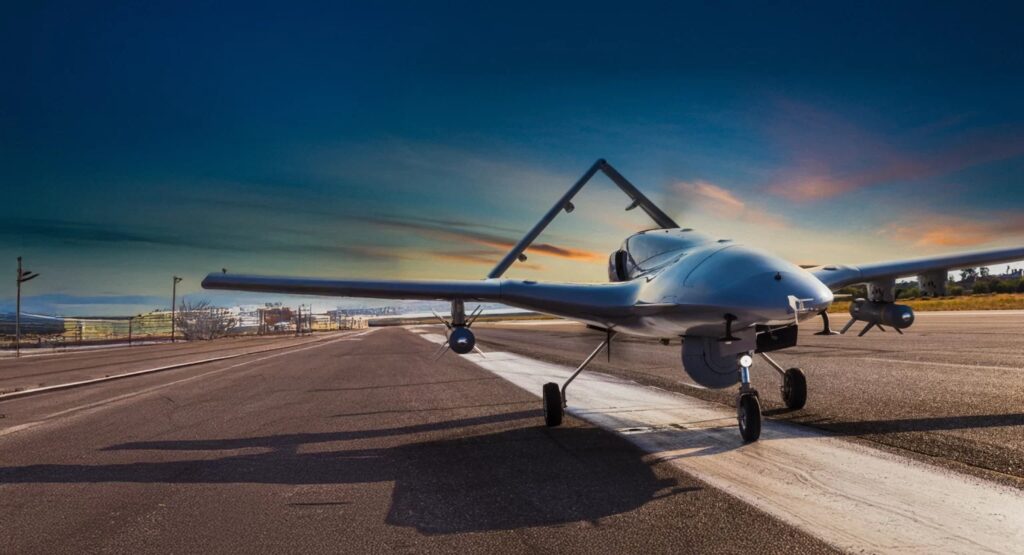
Military drone recovery
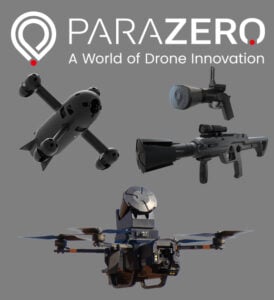
UAV parachute recovery systems, SafeAir, by ParaZero Technologies.
The operational value of UAV parachute recovery systems spans multiple domains and mission types. In military and defense sectors, they are often deployed on tactical and strategic UAV platforms to:
Enable Recovery in Contested Zones: Parachutes facilitate recovery even when traditional landing is impossible due to hostile fire, terrain, or power loss.
Protect Intelligence Payloads: In intelligence, surveillance, and reconnaissance (ISR) missions, drone parachutes can prevent the destruction or unauthorized acquisition of sensitive sensor suites or classified data.
Support Multi-Sortie Operations: These systems enable faster redeployment and mission continuity by reducing the turnaround time required after a crash or loss.
Enhance Personnel and Infrastructure Safety: Safe descent mitigates risks posed to ground personnel, equipment, or nearby installations.
Commercial drone recovery
Commercial and civil drone operators use UAV parachute recovery systems to:
Comply with Aviation Safety Regulations: Regulatory frameworks such as FAA Part 107 require UAVs flying over people to incorporate safety mechanisms like parachutes.
Meet Insurance Standards: Many insurers mandate drone parachutes as part of risk mitigation strategies, especially for high-value flights.
Safeguard Public and Private Property: In the event of a power failure or navigation error, parachutes reduce the risk of UAVs damaging cars, buildings, or critical infrastructure.
Recover Payloads in Remote Areas: UAVs used in agricultural, environmental, and energy sectors often operate in hard-to-reach areas; parachutes allow recovery even in rugged terrain.
Types of Drone Parachute Recovery Systems
UAV parachute recovery systems vary significantly in design, complexity, and deployment method. System selection is typically based on UAV weight class, mission type, flight altitude, and safety requirements. The primary categories include:
Ballistic Parachute Systems
These systems use a small explosive charge or compressed gas to eject the parachute forcefully. Advantages include rapid deployment, independence from UAV power systems, and suitability for larger drones or high-altitude flights. Ballistic mechanisms are standard in military drones, where speed and reliability are essential.
Mechanical Spring-Loaded Systems
Non-ballistic recovery systems rely on pre-tensioned springs or mechanical energy to deploy the parachute. They are generally lighter, reusable, and do not require special handling or storage. These are preferred for smaller UAVs or in regions with restrictions on explosive devices.
Modular Add-On Units
These are self-contained parachute systems that can be retrofitted onto existing UAV platforms without significant design changes. They offer operational flexibility and are especially valuable for fleets comprising varied UAV models.
Integrated Recovery Systems
Designed as part of the UAV’s airframe, integrated systems provide minimal aerodynamic drag and seamless deployment. These systems are ideal for UAVs with built-in safety architectures, offering more automation and integration with onboard avionics.
Deployment Mechanisms and Safety Features
Effective deployment is critical to the performance of a parachute recovery system. Advanced systems integrate real-time sensor data to determine the optimal time for deployment. Key components include:
Flight Termination Units (FTUs): These disconnect the UAV’s propulsion system before parachute deployment to prevent entanglement or canopy damage.
Trigger Algorithms: Sophisticated software monitors parameters such as pitch, roll, altitude, battery health, and GPS signal strength to determine failure conditions.
Sensor Fusion Technology: Modern systems combine accelerometers, gyroscopes, and barometric sensors to detect free fall or flight anomalies.
Failsafe Redundancies: Redundant triggering systems are included to ensure deployment even if the primary method fails, enhancing mission safety.
Parachute Launchers: Physical enclosures housing the parachute system, designed to withstand environmental exposure and rapid activation.
Parachute systems must be regularly tested to ensure deployment reliability and canopy integrity. Certification and compliance often require manufacturers to perform hundreds of test cycles under varying flight conditions.
System Performance Metrics
Evaluating a UAV parachute recovery system involves assessing several performance metrics:
Deployment Time: The speed at which the parachute fully inflates after activation, typically within milliseconds to a few seconds.
Descent Rate: Final descent velocity, usually specified in meters per second. Slower rates indicate better energy absorption and safer impact.
Impact Energy Absorption: Maximum force transferred to the UAV and payload during landing.
Minimum Deployment Altitude: The lowest altitude from which the parachute can successfully deploy and slow descent.
System Weight: Total mass of the parachute system, which affects flight endurance and payload capacity.
Reusability: Whether the system can be repacked and reused after deployment, which impacts operational cost.
Comparison With Other Drone Recovery Techniques
Drone recovery methods vary based on mission profile, terrain, and platform. UAV parachute recovery systems offer several distinct advantages when compared to alternative recovery methods:
Recovery Method
Pros
Cons
Parachute Recovery
Passive, reliable, doesn’t require pilot input
Prone to wind drift, altitude-dependent
Net Capture Systems
Controlled capture, used in naval environments
Requires bulky ground infrastructure
VTOL Transitioning
Enables vertical landing
Complex control systems, limited by UAV type
Glide-to-Recovery
Suitable for fixed-wing UAVs
Requires operator skill and clear airspace
Crash-Cushioning Skids
Simplistic, durable for short drops
Offers little control, ineffective at height
For defense applications, parachute systems often serve as the only viable solution in hostile or GPS-denied environments.
Compliance With Military and Civil Standards
UAV parachute recovery systems used in defense and civilian airspace are subject to multiple standards and certifications. These include:
MIL-STD-810: Governs environmental testing, shock, vibration, and temperature thresholds for military hardware, including parachute systems.
STANAG 4671: Establishes UAV system airworthiness requirements for NATO members, guiding parachute integration and testing.
FAA Part 107 and Part 91: Mandate operational safety guidelines for drones in U.S. airspace; parachutes are often required for waivers involving flight over people or beyond visual line of sight (BVLOS).
ASTM F3322-18: Standard test method for verifying the reliability and performance of parachute systems on small UAVs.
Compliance ensures system reliability and aids operators in acquiring waivers, mission approvals, and insurance certifications.
Trends and Market Outlook
The market for UAV parachute recovery systems is expanding in tandem with UAV proliferation across defense and commercial sectors. Notable trends include:
High-Altitude Long-Endurance (HALE) Recovery Needs: Growth in HALE platforms demands parachutes that function at extreme altitudes and temperatures.
Advanced Materials: Lightweight, high-strength fabrics like aramids and ultra-high-molecular-weight polyethylene (UHMWPE) enable stronger, more compact systems.
AI-Driven Fail Detection: Embedded AI algorithms are improving the reliability of failure detection and deployment decisions.
Cross-Platform Compatibility: Systems are being developed for interoperability across UAVs, USVs, and UGVs under unified command architectures.
Insurance-Driven Adoption: The rising cost of UAVs and payloads is increasing demand for parachute systems to satisfy insurers and mitigate liability.
Analysts forecast continued growth in the drone parachute recovery systems market, driven by increased regulatory scrutiny, rising drone valuations, and expanding defense investment in unmanned technologies.
UAV Propulsion Tech supplies advanced propulsion, control, and mission hardware from leading global manufacturers, providing proven Commercial Off-The-Shelf and custom UAV solutions for defense and aerospace applications
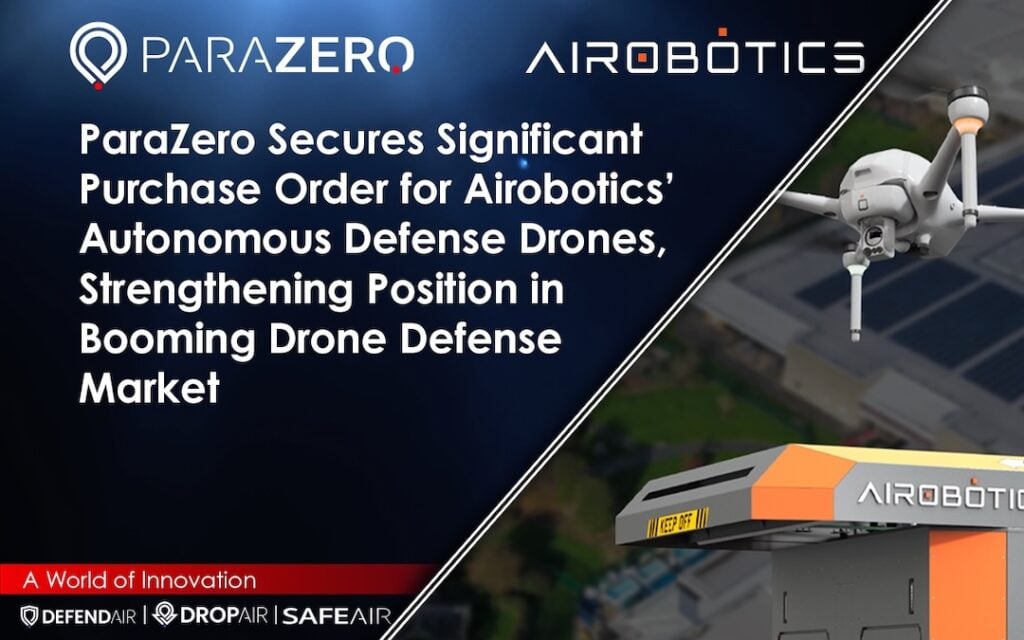
ParaZero Technologies has received a new order for its advanced safety systems, which will be integrated into Airobotics’ autonomous defense and security drones as part of the companies’ ongoing collaboration
The latest defense technology news, straight to your inbox.
Get our weekly roundup of technology developments, new products and industry news.
THANK YOU FOR SIGNING UP
Thanks for joining us. Check your inbox.
We've sent you an email. Click the confirmation link to complete your subscription to the weekly eBrief. In the meantime, explore the latest news, suppliers and technologies on DA.
Advancing Defense Capability Through Strategic Collaboration
Defense Advancement works with major OEMs to foster collaboration and increase engagement with SMEs, to accelerate innovation and drive defense capabilities forward.