Showcase your capabilities
If you design, build or supply Fiber Optic Connectors, create a profile to showcase your capabilities and connect with visitors who have an active requirement for your solutions.




Military fiber optic connectors are ruggedized optical interconnect solutions engineered to maintain secure, high-bandwidth data transmission across defense and aerospace platforms. Designed to meet the demands of harsh operational environments, MIL SPEC fiber optic connectors support avionics, naval systems, ground vehicles, ISR payloads, C4ISR infrastructure, and tactical communications networks.
This page showcases leading military fiber optic connector manufacturers offering leading solutions in contact and expanded beam configurations, with compact, lightweight, and environmentally sealed designs help optimize SWaP requirements.
Read the Technology Overview

State-Of-The-Art Passive Fiber Optics Technologies for the Military, Defense & Security Industries

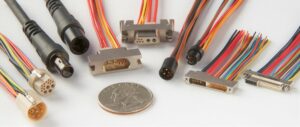
MIL-Spec Connectors for Military & Army Applications - MIL-STD Electrical Connectors

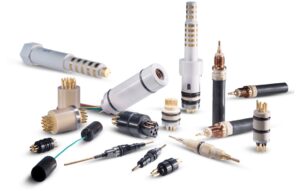
Advanced Sealing, Composite & Connector Solutions for Defense Environments

If you design, build or supply Fiber Optic Connectors, create a profile to showcase your capabilities and connect with visitors who have an active requirement for your solutions.

Military fiber optic connectors are specialized, ruggedized optoelectronic interconnect solutions designed to maintain secure, high-bandwidth optical paths across defense and aerospace architectures. Unlike commercial components, MIL SPEC fiber optic connectors are engineered to withstand extreme environmental and mechanical trauma, including severe shock, continuous structural vibration, electromagnetic exposure, fluid submersion, and rapid thermal cycling, while preserving sub-micron fiber alignment.
As combat environments become network-centric, traditional copper cabling creates data bottlenecks due to throughput limitations, weight penalties, and vulnerability to electronic jamming or interception. Fiber optics provide the hardware foundation necessary to support the high data loads of modern tactical operations, enabling sensor fusion, embedded mission computing, advanced radar processing, and adaptive electronic warfare.

FALCON Fiber Optic Connector by Micropol Fiberoptic.
Commercial-off-the-shelf components are inadequate for the mechanical and environmental stresses of the battlespace. Military grade fiber optic connectors are engineered from the ground up to prevent optical discontinuity while enduring severe dynamic loads.
The external shell of a military fiber connector provides the primary mechanical barrier against structural deformation. Shells are manufactured from aluminum alloys for standard aviation applications, stainless steel for aggressive maritime fluid immersion, titanium for deep-submergence systems, or advanced composites to reduce mass.
Surface finishes like zinc-nickel or hard-coat anodizing prevent galvanic corrosion and chemical etching from fuel or hydraulic fluid. Specialized threaded, bayonet, or push-pull coupling mechanisms feature self-locking anti-decoupling ratchets to maintain secure connectivity under extreme vibration profiles.
At the core of any physical contact interface is the ferrule, which positions the optical fiber with sub-micron precision. Industry designs rely on zirconia ceramic ferrules due to their thermal expansion match to silica, extreme hardness, and low friction, which prevents galling over repeated mating cycles.
Metal ferrules are occasionally substituted in heavy-duty multi-mode systems where mechanical impact resistance takes priority. Precision split alignment sleeves ensure precise concentric core alignment across the mating interface, shielding the link from signal attenuation caused by continuous vibration and thermal stress.
The geometry of the polished fiber endface directly dictates optical return loss, which measures the amount of light reflected back toward the source. Minimizing these reflections is critical for preventing laser instability and signal degradation in high-frequency RF-over-Fiber and dense wavelength division multiplexing architectures.
Connector selection depends on bandwidth requirements, optical sensitivity, and overall system architecture. High-performance ISR, radar, and RF-over-fiber applications often favor APC designs for maximum signal integrity.
| Endface Polish Type | Geometry Profile | Typical Return Loss | Primary Military Application |
|---|---|---|---|
| PC (Physical Contact) | Slightly spherical radius to eliminate air gaps | ≈ -35 dB to -40 dB | Legacy tactical comms, low-bandwidth data links |
| UPC (Ultra Physical Contact) | Extended, high-precision spherical polish | ≈ -50 dB to -55 dB | Digital avionics networks, high-speed command shelters |
| APC (Angled Physical Contact) | Endface polished at an 8° angle | ≥ -65 dB | High-performance radar, ISR sensor fusion, RF-over-fiber systems |
Because the APC endface is angled, reflected light is deflected directly into the fiber cladding rather than traveling back down the core. This makes APC configurations preferred for highly sensitive defense systems.
To protect the optical interface from field contaminants, military connectors utilize redundant sealing architectures featuring fluorosilicone or Viton O-rings, interfacial gaskets, and rear environmental boots. Assemblies are qualified to IP67, IP68, or IP69K standards to isolate the mated contact zone from water submersion, high-pressure washdowns, and mud.
Effective environmental sealing prevents desert dust and maritime humidity from migrating onto the fiber endfaces, ensuring reliable signal routing under exposed battlefield conditions.
Platforms crossing intense pressure boundaries require hermetic fiber optic connectors that leverage advanced glass-to-metal or ceramic sealing technologies.
These designs maintain continuous optical pathways while sustaining ultra-low gas leak rates across severe pressure differentials or vacuum thresholds. This prevents gas or moisture migration while preserving precise sub-micron fiber alignment under extreme thermal stress and vacuum conditions.
Modern defense engineering revolves around optimizing Size, Weight, Power, and Cost to improve platform efficiency, loiter times, and payload capacities. Miniaturized, small-footprint optical interconnects swap bulky, heavy copper assemblies for high-density fiber strands encased in compact composite shells.
These optimized termination options deliver high bandwidth scalability while occupying a fraction of the structural space in UAVs, soldier-worn gear, and deep-space satellite payloads.
Rather than relying on direct physical contact, expanded beam connectors use precision lenses to expand and collimate the light signal across the mating interface. By expanding the optical path to many times its original diameter, a tiny particle of dust or drop of water only blocks a small fraction of the light beam, unlike a physical contact connector where the same speck can cause a complete signal outage.
This lens-based coupling provides resistance to mud, sand, and ambient field contamination. Expanded beam connector technology is highly suited for tactical field applications where equipment must be mated quickly by gloved personnel in active combat zones without access to laboratory cleaning kits or inspection microscopes.

PROCON Fiber Optic Connectors by Micropol Fiberoptic.
Military infrastructure relies on several standardized form factors, each tailored to specific platform requirements.
Circular form factors are widely used throughout military aerospace and vehicle systems due to their high mechanical strength, uniform distribution of environmental sealing pressure, and resistance to torsional forces. The defense industry relies on modified variants of established military specifications, adapting circular shells originally built for copper contacts to house high-precision optical ferrules and termini. These connectors support both single-channel and multi-channel fiber configurations across avionics, vetronics, and tactical networking applications.
For modular chassis, command shelters, and high-density avionics racks, circular housings can create excessive packaging bulk. Rectangular optical connectors are commonly integrated into rack-mounted systems, command shelters, and modular computing architectures requiring high port density and organized cable management. Their compact layout makes them suitable for fixed-installation communications infrastructure, high-density mission processing environments, and blind-mate backplane interfaces where processing cards slide directly into a chassis system to establish connections automatically via spring-loaded float-mount mechanisms.
Tactical fiber connectors are designed specifically for rapid deployment and harsh field conditions. They prioritize rugged handling, quick mating, contamination resistance, and ease of maintenance in expeditionary operations, battlefield communications networks, mobile command posts, and temporary ISR installations. They feature heavy rubber or metal outer grips, integrated dust caps attached via high-tensile lanyards, and hermaphroditic mating designs. Hermaphroditic interfaces eliminate the distinction between male and female plugs, allowing any tactical cable assembly to be chained end-to-end in the field without requiring gender-changing adapters.
Expanded beam connectors serve military applications involving extreme contamination, moisture, vibration, or repeated mating cycles. Their non-contact optical interface improves reliability in maritime, airborne, and tactical field environments. The reduced cleaning requirement also lowers the maintenance burden for deployed forces operating in austere conditions, balancing high-level survivability with field practicality.
To meet the strict weight requirements of unmanned aerial vehicles, loitering munitions, satellites, guided munitions, and wearable soldier systems, fiber optic connector manufacturers have developed miniature architectures. By scaling down standard circular or Micro-D rectangular form factors, these connectors deliver multi-channel optical performance in a shell fraction of the weight and volume of a traditional aviation interconnect, without compromising environmental and vibration survivability.
Board-level optical interconnects are increasingly used within mission computers and high-speed processing systems where copper backplanes can no longer support required bandwidths. Optical transmission improves data throughput while reducing EMI susceptibility inside densely packed electronic assemblies. These connectors embed optical transceivers directly adjacent to high-speed FPGAs or processors, routing data across the system backplane via flexible fiber ribbons to optimize throughput.
Modern radar, ISR, and sensor fusion systems generate data volumes requiring parallel optical transmission. High-density multi-channel connectors support these architectures while minimizing cabling bulk and connector count. Such systems are important for high-performance airborne and naval processing platforms where numerous optical channels must be routed through restricted bulkheads.
Military Ethernet infrastructures increasingly integrate both optical and electrical transmission within hybrid connector systems. These architectures simplify tactical networking while supporting power delivery and high-speed communications simultaneously. They are commonly used in ruggedized networking equipment, deployable communications systems, and integrated vehicle electronics.
Integrating rugged fiber optic connectors requires careful consideration of the operational challenges unique to each military domain.
Within modern military aircraft, fiber optic connectors serve as the primary conduits for high-speed infrastructure, routing data across various systems while providing protection from high-power electromagnetic threats.
These features ensure stable operations across challenging flight boundaries and varying altitude thresholds.
Modern naval vessels deploy specialized optical interconnects to bridge advanced maritime sensors, command stations, and underwater defensive arrays.
These integration attributes protect critical systems operating under persistent exposure to moisture and physical shocks.
Tracked combat vehicles and wheeled armored platforms utilize fiber infrastructure to connect distributed architectures, establishing durable high-throughput tactical frameworks.
These rugged design paths protect processing links from the persistent mechanical trauma of the modern battlefield.
Dismounted infantry operations rely on wearable systems embedded directly into modern combat gear, establishing low-profile networks that keep squad elements synchronized.
These flexible interfaces provide field units with reliable, high-speed data pathways during dynamic operations.
Orbital defense architectures demand a specialized class of components engineered to survive beyond the atmosphere, balancing extreme reliability with strict payload limits.
These specialized manufacturing elements enable continuous orbital operations during long-term space installations.
Procurement channels mandate full certification against recognized standards to guarantee equipment interoperability and multi-domain battlefield survival.
Adherence to these framework constraints allows engineering specifiers to select interoperable systems from global fiber optic connector suppliers with high performance confidence.
Future military fiber optic technologies are focused on increasing bandwidth, reducing SWaP, and supporting more complex defense networking architectures. Higher-density optical interconnects, connector miniaturization, and multi-core fiber technologies are being developed to increase transmission capacity while reducing cable size and weight.
Silicon photonics is also gaining attention for its ability to deliver extremely high-speed optical processing and communications within compact mission systems. Future military connectors are expected to combine optical, electrical, RF, and sensing functions into unified interconnect platforms that simplify cabling and improve system efficiency.
Emerging defense applications such as autonomous swarms, distributed unmanned systems, and next-generation ISR networks will require scalable high-speed optical communications capable of supporting real-time coordination and sensor fusion. Artificial intelligence is also being integrated into optical network management for predictive maintenance, diagnostics, and automated traffic control.
When selecting a fiber optic connector manufacturer or specialized supplier, defense integrators verify that vendors maintain quality management certifications, such as AS9100 for aerospace systems and ISO 9001 for general manufacturing consistency. Sourcing components with an operational heritage and validated qualification test reports ensures that high-value military assets maintain reliable, uninterrupted communication capabilities in demanding environments.


 Searching Companies & Products