Showcase your capabilities
If you design, build or supply Electric Motors, create a profile to showcase your capabilities and connect with visitors who have an active requirement for your solutions.




MIL-SPEC electric motors are motion-control components engineered for defense and aerospace systems, supporting propulsion, actuation, positioning, pumping, cooling, and auxiliary functions. Configurations include brushless DC, brushed DC, PMSM, stepper, servo, and frameless motors.
This page features military electric motor suppliers with solutions for aircraft, ground vehicles, robotics, naval and subsea platforms, weapons, sensors, and support equipment.
Read the Technology Overview

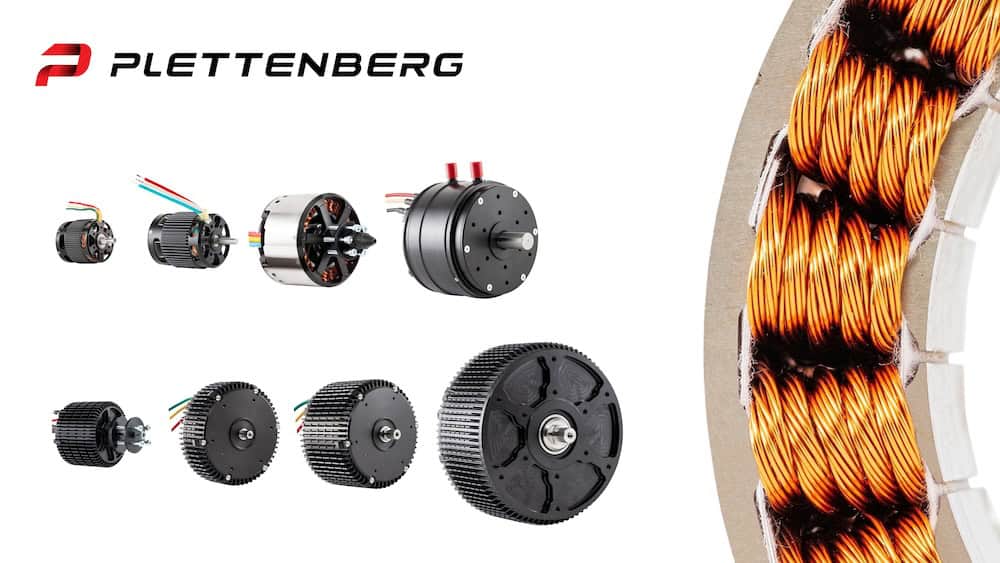
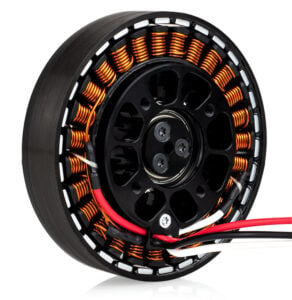
Advanced Motion, Control & Power Solutions for Uncrewed Vehicles Operating in Demanding Mission Environments

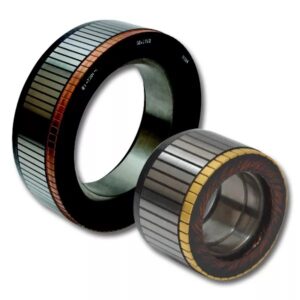
Innovative Precision Motor & Motion Solutions for Mission-Critical Military & Aerospace Applications

COTS & Custom Drone Propellers and Electric Motors for Military UAVs

If you design, build or supply Electric Motors, create a profile to showcase your capabilities and connect with visitors who have an active requirement for your solutions.

Electric motors are fundamental to defense and aerospace systems, converting electrical energy into mechanical motion for propulsion, actuation, positioning, pumping, cooling, and auxiliary functions. A military electric motor may face temperature, vibration, shock, electromagnetic, pressure, and moisture conditions, making reliability, power density, thermal management, sealing, and electromagnetic compatibility critical.
Motor selection should consider peak and continuous torque, speed, voltage, current, duty cycle, efficiency, thermal limits, control method, packaging, cooling, environmental exposure, and qualification. Applications range from lightweight high-speed motor solutions for airborne systems to waterproof electric motors for marine and subsea operation.
Brushless DC motors use an Electronic Speed Controller (ESC) or other motor drive to electronically commutate the motor phases instead of using mechanical brushes, reducing wear while supporting efficient control. They suit aerospace equipment, robotics, pumps, fans, gimbals, and propulsion. Waterproof brushless motors can be designed for maritime platforms where sealing and corrosion resistance matter.
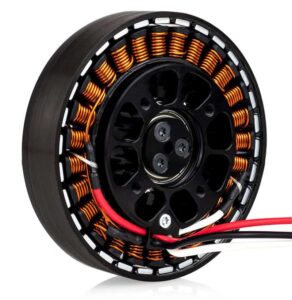
High-Torque UAV Motors by Allient
Brushed DC motors use brushes and a mechanical commutator to switch current through rotor windings. Their simple controls can suit actuators, pumps, auxiliary mechanisms, and legacy equipment, although brush wear, arcing, maintenance, and electromagnetic noise must be considered.
Permanent Magnet Synchronous Motors (PMSMs) use permanent magnets on the rotor and an electronically controlled stator field. Their efficiency and high torque density suit compact propulsion and motion-control systems, including electrified military vehicles and aerospace equipment. Magnet temperature limits and demagnetization risk require attention.
AC induction motors create rotor current through electromagnetic induction rather than permanent magnets or direct rotor connections. Their robust construction suits propulsion, pumps, fans, compressors, and machinery. Variable-Frequency Drives (VFDs) provide controlled speed and torque.
Switched Reluctance Motors (SRMs) produce torque as the rotor moves toward lower magnetic reluctance under sequential stator excitation. Their simple rotor, without windings or permanent magnets, can support high-speed and high-temperature operation, although torque ripple, acoustic noise, and drive complexity require engineering.
Stepper motors move in discrete angular increments. They can provide repeatable positioning without closed-loop feedback where loads are predictable, supporting instrumentation, antenna positioning, valves, and optical systems. Torque margin, speed, resonance, and missed-step risk must be considered.
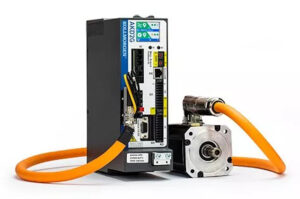
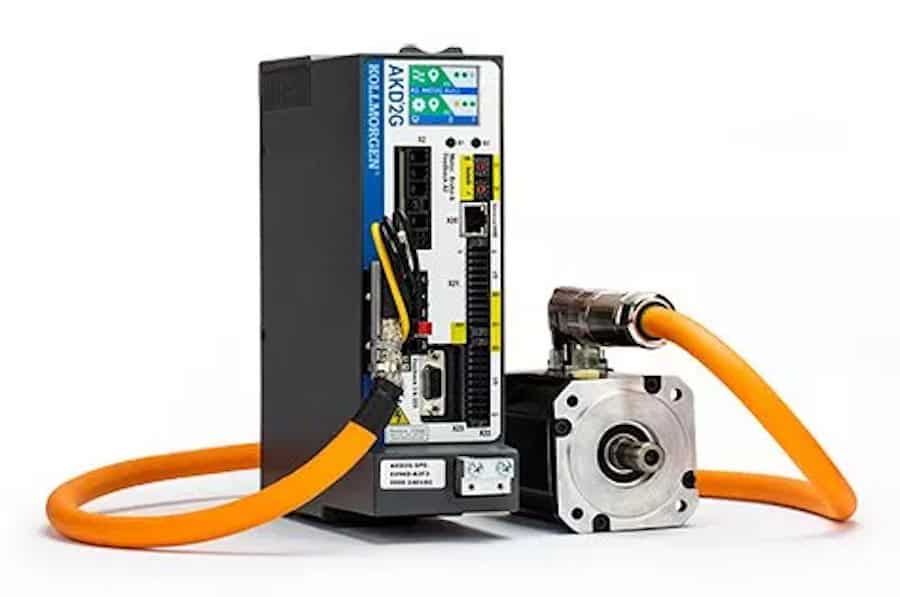
Servo motors operate within closed-loop motion-control systems using position, speed, or torque feedback rather than representing a distinct electromagnetic motor type. Military servo motors are used in flight controls, stabilized payloads, radar systems, weapon stations, and precision pointing equipment.
Electric motors are often combined with gearboxes, sensors, controllers, brakes, and transmissions to form electromechanical drives. Rotary actuators provide angular movement, while linear actuators typically use screws or similar mechanisms for doors, hatches, deployment mechanisms, and positioning systems. Electromechanical actuators can also operate control surfaces, valves, and thrust-vector control mechanisms.
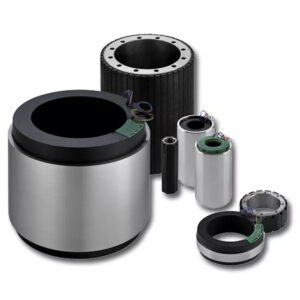
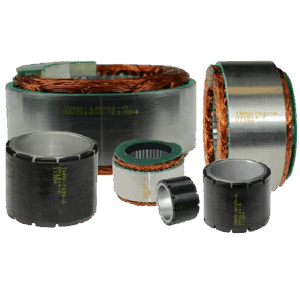
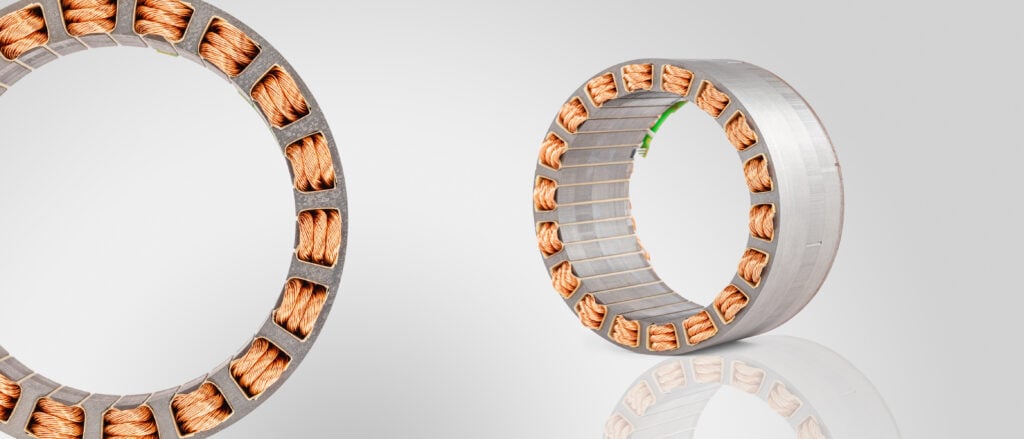
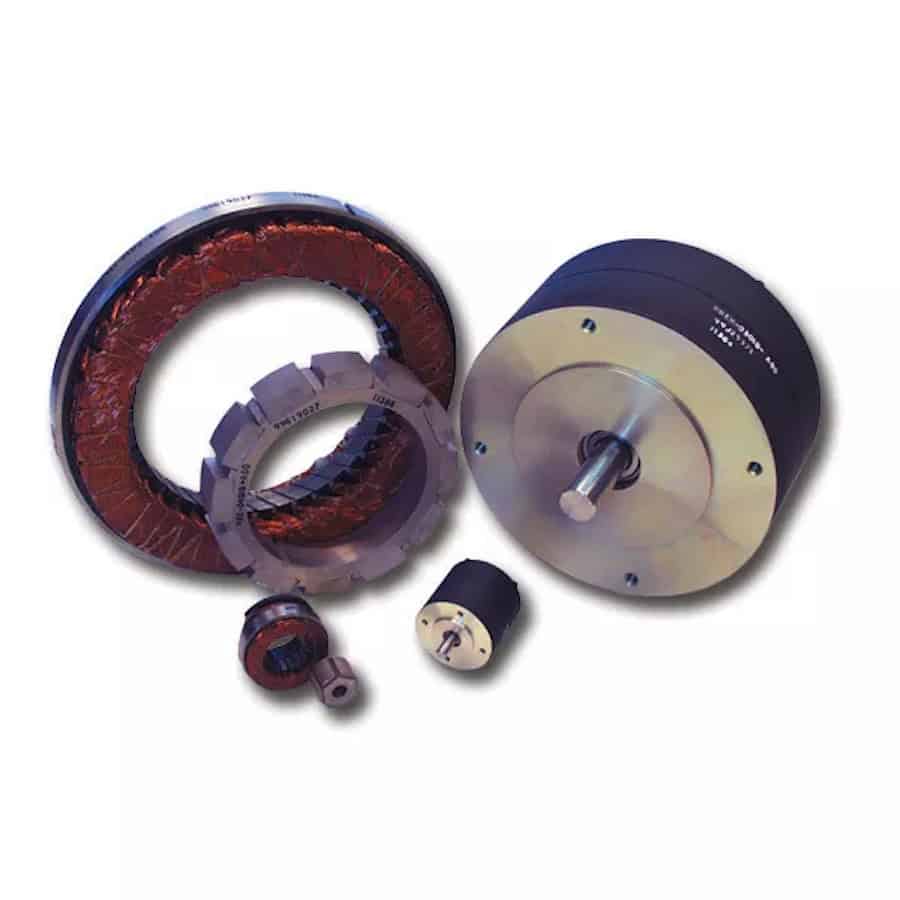
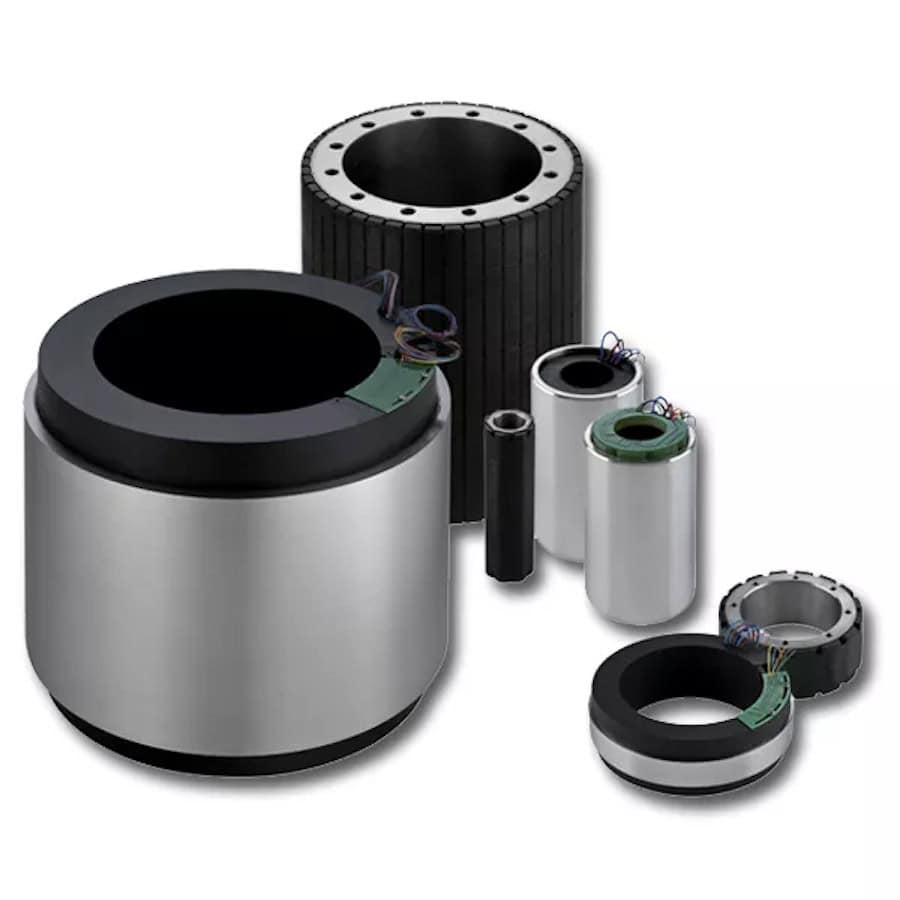
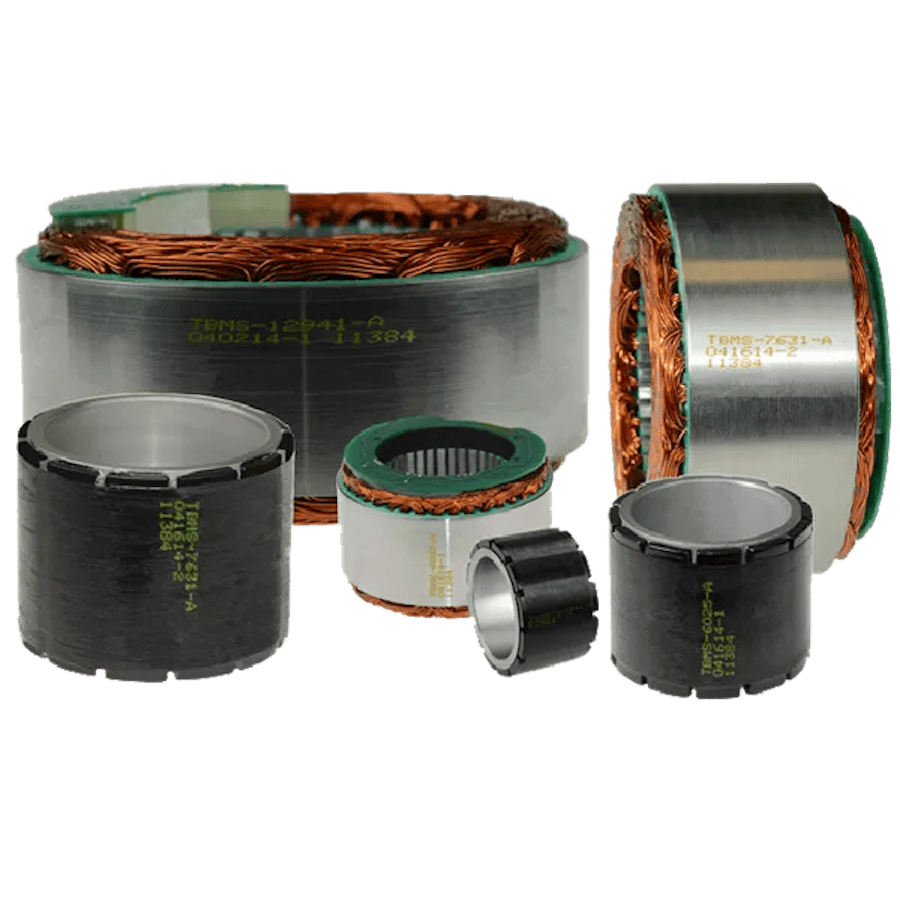
Direct-drive motors couple directly to the load, reducing backlash and mechanical complexity. Frameless motors are supplied as rotor and stator components for integration into a host structure, enabling compact packaging for gimbals, robotics, stabilized systems, and actuators.
Electric motors provide propulsion, actuation, positioning, pumping, cooling, and motion control across military air, land, maritime, weapon, sensor, and support systems. Motor architecture, power electronics, thermal design, environmental protection, and integration must match the mission.
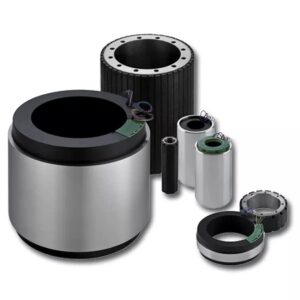
KBM Series Electric Drone Motors by Kollmorgen
Aircraft use electric motors in flight controls, landing gear, pumps, ventilation, and sensor positioning. Unmanned Aerial Vehicle (UAV) propulsion may use a high-speed electric motor optimized for low weight and efficiency, while brushless gimbal motors stabilize electro-optical and surveillance payloads. Altitude, cooling, vibration, and power quality can influence design.
Ground platforms use electric motors for traction, steering, hybrid-electric drivetrains, suspension, manipulators, turrets, and robotics. UGV motors for Unmanned Ground Vehicles (UGVs) must account for terrain loads, shock, vibration, stall conditions, duty cycle, thermal limits, and available electrical power.
Naval motors perform propulsion, steering, pumping, ventilation, winching, and handling functions. Underwater electric motors require corrosion control, sealing or pressure compensation, suitable bearings, protected cable entries, and pressure-compatible construction. AUV motors, ROV motors, ROV thruster motors, and underwater thruster motors may power Autonomous Underwater Vehicles (AUVs) and Remotely Operated Vehicles (ROVs).
A missile electric motor may move fins, seekers, or guidance mechanisms within strict size, weight, response-time, and reliability limits. Motors also support launchers, ammunition handling, turret traverse, gun elevation, autoloaders, and Remote Weapon Stations (RWS), where RWS motors must maintain accurate positioning under shock, vibration, and platform movement.
Radar antennas, Electro-Optical/Infrared (EO/IR) payloads, laser designators, communication antennas, and surveillance sensors depend on precise positioning. Servo and brushless gimbal motors provide fine control, while feedback compensates for movement, vibration, changing loads, and pointing rates.
Electromechanical actuators control surfaces, valves, hatches, doors, locks, and deployment mechanisms. Servo, torque, brushless, and geared motor configurations can be selected according to force, travel, accuracy, response time, holding requirements, duty cycle, and space.
Military pump motors drive fuel, lubrication, coolant, hydraulic, and other fluid-handling equipment. Motors also power cooling and environmental-control fans and blowers, where efficiency, bearing life, and thermal behavior affect limited onboard power.
Military winch motors, hoist drives, loading systems, powered ramps, cargo-handling machinery, and maintenance equipment support logistics. These applications may prioritize high starting torque, low-speed control, overload tolerance, braking, environmental protection, and rugged construction.
Defense motor requirements depend on the platform, mission, and contracting specification. The term MIL-SPEC motor should therefore refer to defined program requirements rather than a universal motor classification.
Relevant requirements can include:
Qualification should be assessed at system level, including the motor, controller, cabling, feedback devices, cooling, mounting structure, and load. Fault tolerance, redundancy, safe failure behavior, and maintainability may also matter in critical functions.
Electric motor development increasingly focuses on higher power density, lower weight, improved efficiency, thermal performance, and integration with power electronics and digital control.
These developments reinforce the need to treat the electric motor as part of a complete propulsion or motion-control system, with electrical, mechanical, thermal, control, reliability, and environmental requirements considered together.


 Searching Companies & Products