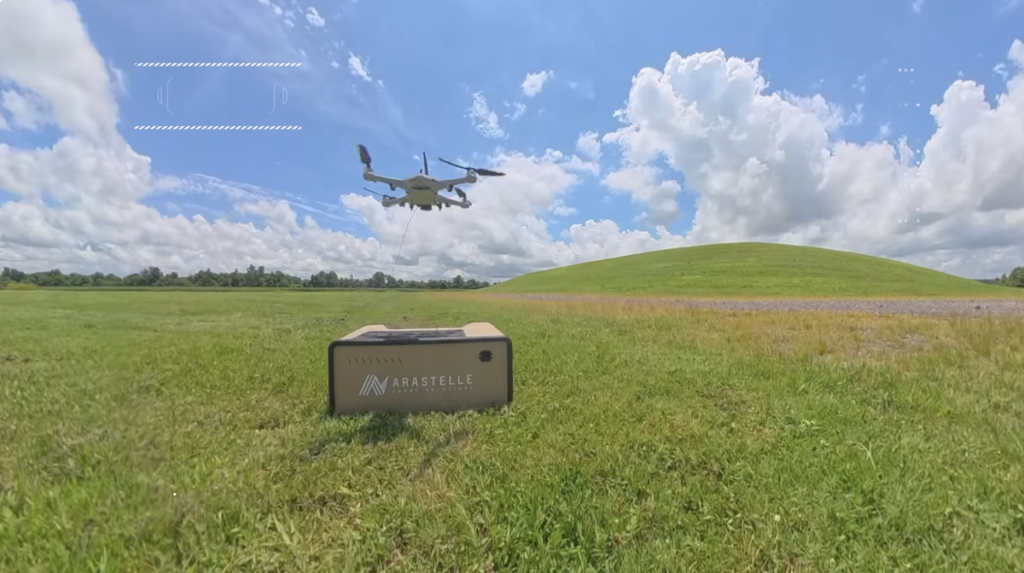
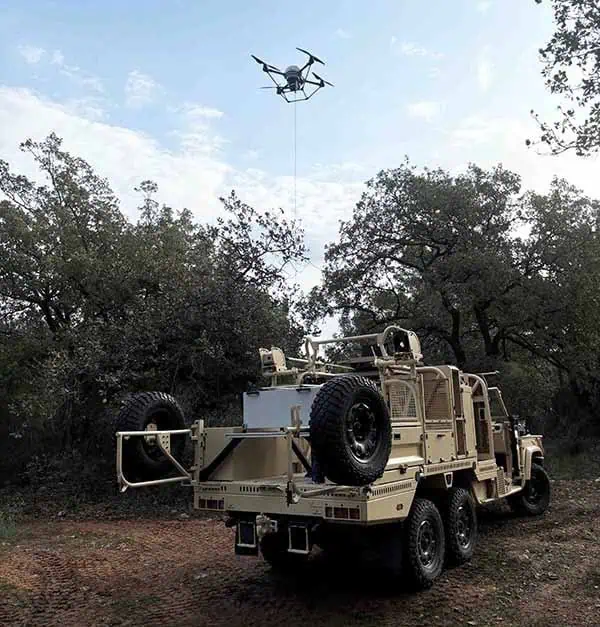
Showcase your capabilities
If you design, build or supply Tethered Drone Systems, create a profile to showcase your capabilities and connect with visitors who have an active requirement for your solutions.




Tethered drone systems offer continuous aerial presence and reliable power and communications links, making them a game-changer for defense operations. By leveraging tether systems, military users can overcome the endurance and control limitations of free‑flying UAVs, enabling extended missions in ISR, SIGINT, EW, maritime security, and perimeter defense.
Read the Technology Overview
Cutting-Edge Tethered Drone Solutions for Mission-Critical Defense & Security Applications

Advanced Tethered Drone Systems for Military, Government & Security Applications

If you design, build or supply Tethered Drone Systems, create a profile to showcase your capabilities and connect with visitors who have an active requirement for your solutions.

As defense forces face increasingly complex threats across multiple domains, tethered drone systems have become a critical asset for real-time intelligence, surveillance, and tactical communication. These systems provide unmatched aerial persistence, allowing militaries to maintain situational awareness and command continuity even in the most challenging environments. This section explores how tethered drones are redefining mission capabilities in modern warfare.
Tethered drones are uniquely suited for defense missions that require persistent observation, secure communications, and robust situational awareness. Typical roles include:
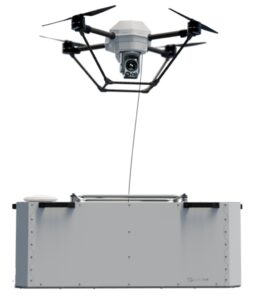
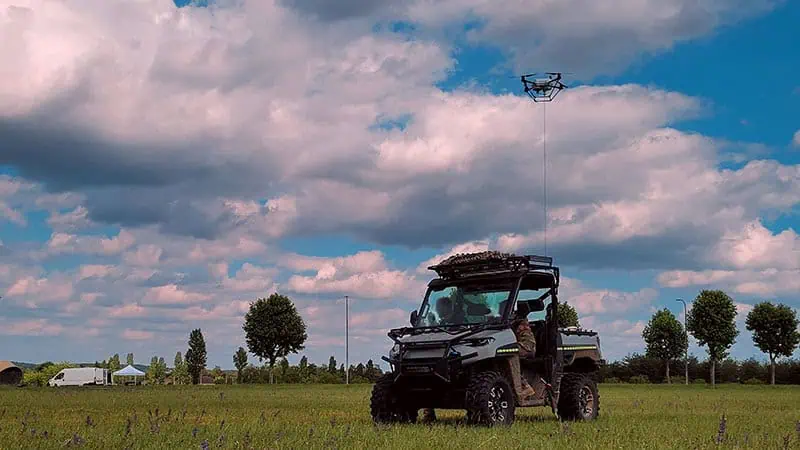
Khronos by Elistair.
Tethered drones provide a stable aerial platform for electro-optical and infrared imaging systems, enabling high-resolution, real-time surveillance around the clock. Their ability to hover continuously above a fixed location makes them ideal for monitoring high-risk zones such as borders, forward operating bases, coastal approaches, and convoy routes. This persistent presence significantly enhances situational awareness and mission planning by delivering uninterrupted data streams to command centers.
Equipped with advanced sensor payloads, tethered drones can intercept, classify, and analyze enemy radio frequencies, communications, and radar emissions. These capabilities are essential for identifying hostile assets, assessing threats, and executing electronic countermeasures such as jamming or spoofing. The stability and constant power supply of a tethered platform support prolonged SIGINT and EW operations, often in coordination with other electronic warfare drones on the battlefield.
Acting as an elevated communication mast, a tethered drone enhances line-of-sight coverage for tactical networks, especially in mountainous terrain, urban environments, or maritime deployments. By maintaining a fixed altitude, these platforms ensure reliable BVLOS (beyond-visual-line-of-sight) connectivity, enabling secure voice, data, and video transmission between dispersed units. This functionality is critical during mission-critical scenarios like convoy protection, shipboard operations, or remote base deployments where conventional infrastructure is unavailable or compromised.
Tethered drones can be rapidly deployed to create an aerial security perimeter around military installations, forward bases, or naval vessels. Their persistent surveillance capabilities, including thermal imaging and radar payloads, allow them to detect intrusions, unauthorized movement, or surface threats like small boats or low-flying aircraft. These systems provide extended situational awareness in open waters for maritime applications, complementing shipboard radar and visual observation systems with real-time overhead monitoring.
Beyond traditional surveillance and communications roles, tethered drones are increasingly being used in specialized mission sets that require persistent overwatch or rapid response capability. For example, they are deployed during disaster response and civil-military operations, where real-time aerial views aid in assessing damage, directing emergency teams, or monitoring crowds in humanitarian or stability missions. Additionally, tethered systems can support counter-UAS operations, providing an elevated sensor platform for detecting and tracking rogue drones that threaten critical infrastructure or deployed forces. In training environments, these systems also serve as live scenario observation tools, allowing commanders to monitor troop movements and engagement performance in real time.
At the heart of a tethered drone system lies a power-and-data tether, typically fiber‑optic or heavy‑duty cable, that connects the UAV to a ground station. The tether provides:
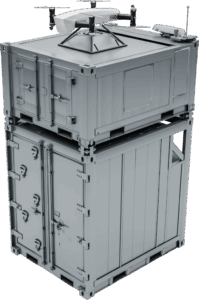
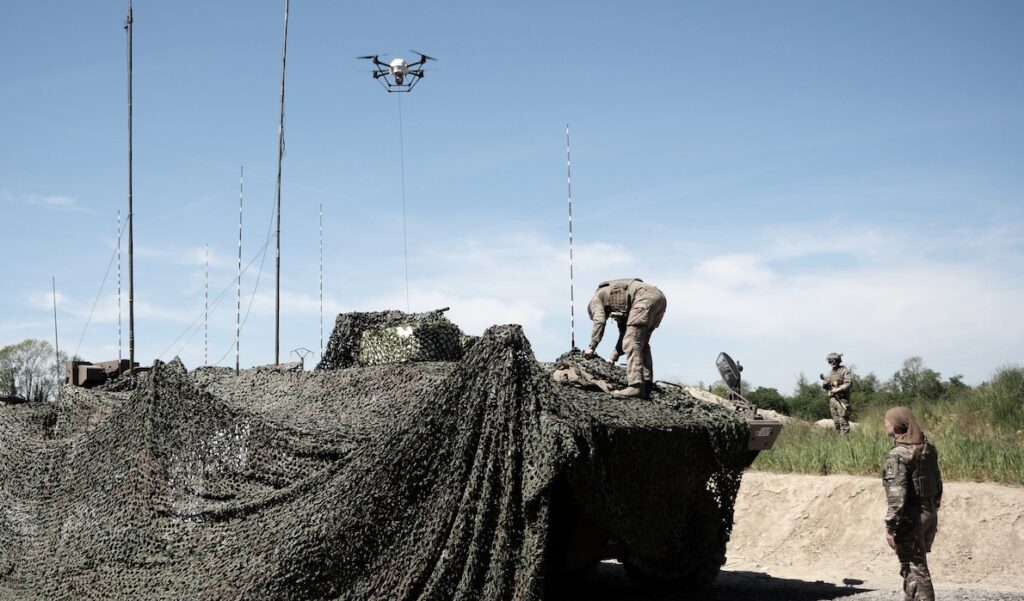
Vulture by DPI UAV Systems.
Continuous power for extended flight time (hours or even days without landing)
These systems may use multirotor platforms such as quadcopters, hexacopters, octocopters, or fixed‑wing VTOL UAVs. Tethered aerostats (lighter-than-air variants) or balloons are also used for higher altitude persistence in coastal or border surveillance.
Key components of tethered drone design include the tether winch, fiber‑optic or power cable, UAV platform, sensors (EO/IR cameras, radar, SIGINT/EW payloads), and ground station. Specialized variants may include tactical drones ruggedized for battlefield deployment or systems conforming to military standards (MIL‑STD) for transportable ISR capability.
Tethered drones deliver mission advantages that free‑flying UAVs cannot:
Many tactical systems align with MIL‑STD‑810 for environmental durability and MIL‑STD‑461 for electromagnetic compatibility. Some designs are optimized for MIL‑STD‑129 for defense transportability and may support NATO and coalition interoperability standards for ISR and electronic warfare missions.
Tethered systems excel at endurance and secure causality, while free-flight UAVs offer greater range and flexibility.
More cost-effective than SATCOM for tactical communications and better suited to low-altitude or stealth operations.
Aerostats provide longer altitude persistence but require more logistic support and are vulnerable to weather.
Tethered drone systems integrate smoothly into multi-domain defense operations, including convoy coverage, expeditionary base setups, disaster response, and carrier or shipborne ISR. Their adaptability, from fixed-wing platforms to tactical rotorcraft and electronic countermeasure payloads, empowers forces with persistent aerial oversight, protected communications relay, and direct drone defense against potential threats like hostile UAVs.
Tethered drone systems have emerged as a transformative tool for defense and military organizations. Their unique blend of persistent power, secure data connectivity, and rapid deployability makes them indispensable across ISR, SIGINT, EW, perimeter/maritime security, and tactical communications roles. As UAV and drone technology evolves, tethered systems offer a specialized, high-value solution that complements existing aerial capabilities.


 Searching Companies & Products