Showcase your capabilities
If you design, build or supply FPV Drones, create a profile to showcase your capabilities and connect with visitors who have an active requirement for your solutions.




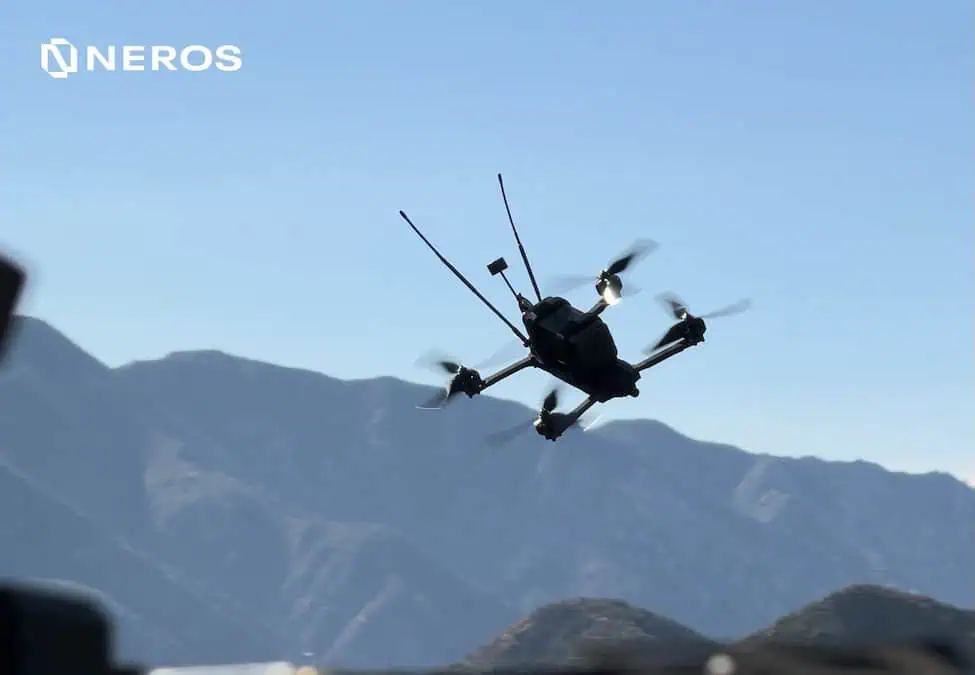
Military FPV drones are tactical unmanned aircraft that provide operators with a live first-person video feed for close-control flight in contested or complex environments. Used across defense missions, these systems support reconnaissance, target acquisition, battle damage assessment, perimeter security, and precision effects where authorized.
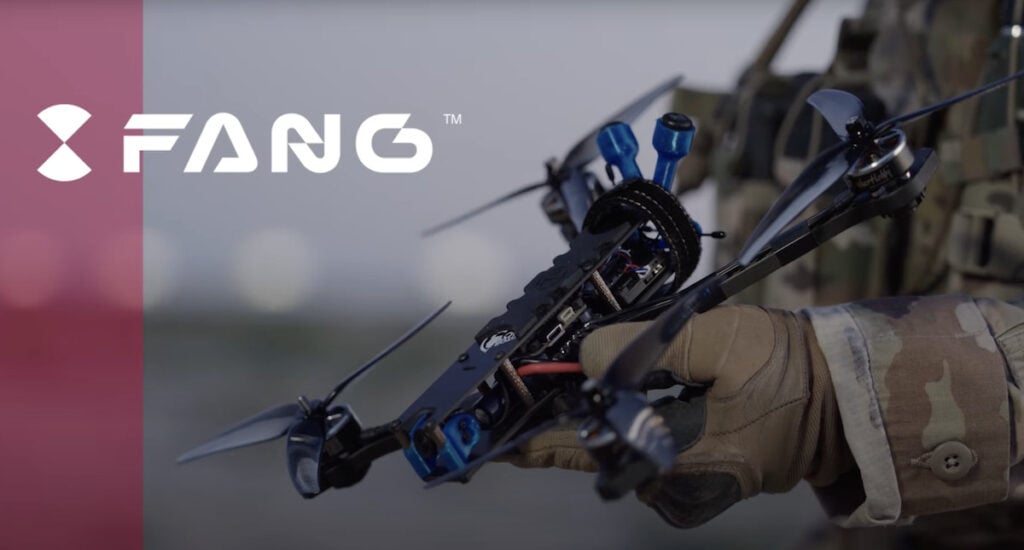
This page showcases leading military FPV drone manufacturers offering platforms ranging from lightweight high-speed airframes to heavy-lift FPV configurations carrying modular sensors or mission payloads.
Read the Technology Overview
Tactical UAS Platforms for Mission-Critical Military, Defense & Law Enforcement Applications

If you design, build or supply FPV Drones, create a profile to showcase your capabilities and connect with visitors who have an active requirement for your solutions.

Military FPV drones are becoming a widely adopted tactical asset due to their ability to stream a live, low-latency video feed directly to an operator, offering a close-proximity, pilot’s-eye control model that differs significantly from conventional remotely piloted aircraft. This immediate visual loop allows pilots to navigate complex terrain, thread through structural openings, and execute high-stakes missions with remarkable accuracy.
Within modern combat operations, these platforms occupy a unique niche between traditional reconnaissance assets and larger loitering munitions. Their low cost, minimal logistical footprint, and rapid deployment capabilities make FPV military drones highly attractive to armed forces seeking scalable, attritable capabilities. As defense organizations adapt to contested environments, these versatile systems have become essential tools for precision strike, force protection, and electronic warfare support.
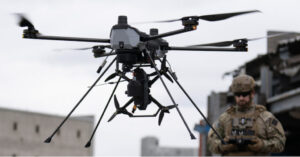
AM-FPV drone from Performance Drone Works
A defining characteristic of the tactical FPV drone is its ability to deliver massive operational impact at a fraction of the cost of traditional guided munitions. While conventional missile systems or large unmanned combat aerial vehicles demand significant budgets and complex supply chains, a military FPV drone system can be assembled, modified, and fielded rapidly.
This affordability underpins the modern concept of attritable drone warfare. Rather than relying on a small inventory of exquisite, irreplaceable platforms, commanders can deploy a high volume of FPV drones. Armed forces can accept individual platform losses while maintaining overall operational momentum, allowing units to overwhelm defensive networks, drain adversary air defense resources, and sustain a high operational tempo without catastrophic financial strain.
Historically, precision strike capabilities were the exclusive domain of advanced aircraft, laser-guided artillery, or high-end missile platforms managed at the strategic level. The widespread adoption of first person view drones has fundamentally decentralized this capability.
Now, small tactical units down to the squad level can project highly accurate kinetic effects using real-time visual feedback. This can shorten the decision-to-engagement cycle, particularly where authority has been delegated to small tactical units.
The proliferation of FPV UAV platforms has significantly affected infantry tactics, fieldcraft, and force protection procedures. Modern units must operate under the assumption that they are under constant aerial surveillance. This reality places a premium on camouflage, signature reduction, and proactive electronic countermeasures.
Conversely, friendly forces utilize these platforms to extend their vision past hills, buildings, and traditional line-of-sight obstacles, drastically lowering the risk to personnel during scouting operations.
Military FPV drones serve as highly maneuverable, operator-guided kinetic weapons capable of striking a wide array of targets.
Following an engagement, additional FPV or ISR drones can support rapid battle damage assessment, gathering visual evidence to determine if a target requires subsequent strikes. FPV military drones excel in forward observation roles, acting as responsive, low-profile scouts for artillery units by locating enemy positions and providing visual observation and, where available, positional data to support artillery correction.
As hostile drone threats increase, military FPV drones are stepping into air-to-air, counter-uas defense roles. Using high-speed flight profiles, a fast tactical FPV drone can intercept and ram enemy reconnaissance UAVs mid-air. This kinetic drone-on-drone engagement provides a highly cost-effective method for protecting forward operating bases and moving convoys without wasting expensive air defense missiles.
Equipped with specialized sensor suites, FPV drones can map radio frequency environments, intercept enemy communications, and pinpoint the coordinates of hostile radar or jamming stations. For base defense, they provide continuous perimeter surveillance and route clearance, flying ahead of mechanized formations to screen for ambushes, roadblocks, or Improvised Explosive Devices (IEDs).
Military airframes must balance durability, payload capacity, and field serviceability. Rigid carbon fiber composites serve as the industry standard due to their exceptional strength-to-weight ratio and resistance to high-G maneuvering stresses.
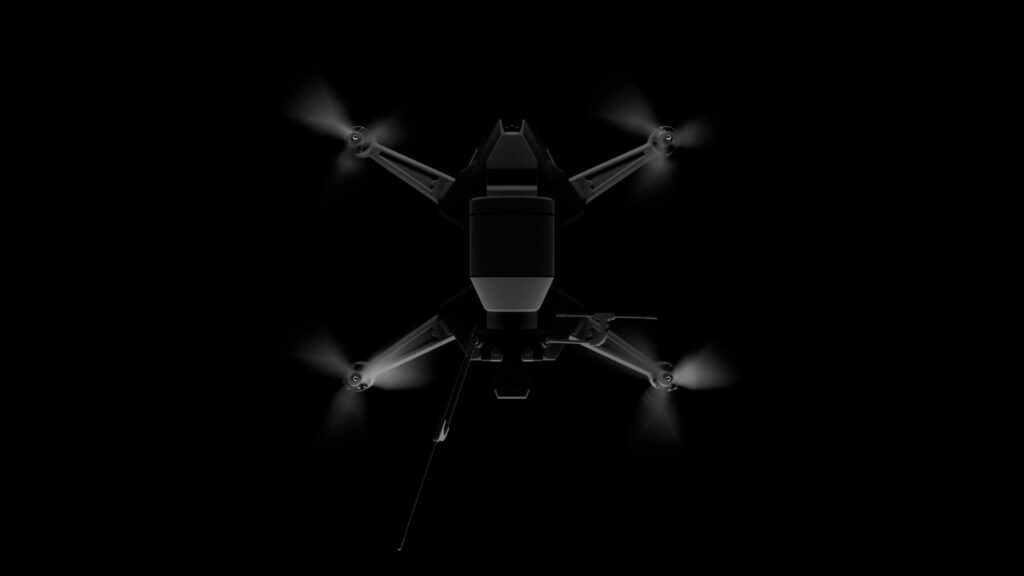
Depending on the mission, architectures diverge between lightweight, high-speed strike frames and a heavy lift FPV drone optimized to carry bulkier explosive payloads or advanced multi-sensor arrays. Modular construction is highly favored, allowing field technicians to swap arms, motors, or brackets in minutes.
The brain of the platform is the FPV drone flight controller. This processing unit integrates Inertial Measurement Units (IMUs), barometers, and specialized software to translate pilot inputs into precise motor adjustments. Modern military variants increasingly utilize an autonomous FPV drone configuration where the flight controller features advanced stabilization, automated target tracking, and optical flow positioning to retain operational control even when GPS signals are completely severed.
Power delivery relies on mission-matched FPV drone motors managed by high-frequency Electronic Speed Controllers (ESCs). These components require immense current, which is supplied by specialized FPV drone batteries. Typically using lithium battery chemistries, these battery packs are engineered to balance the maximum discharge rate required for high-load flight profiles with the total capacity needed for extended operational range.
The communication link is the most critical and heavily targeted element of any FPV drone system.
The utility of a defense FPV platform relies heavily on its modular FPV drone payload bay. Engineers prioritize universal connection interfaces that let operators swap sensors depending on changing mission parameters.
| Payload Category | Technical Sensor Type | Core Operational Value |
| Daylight EO Imaging | High-definition daylight FPV drone camera | Provides crisp visual data for daytime target tracking and low-altitude navigation. |
| Thermal Night Vision | Long-Wave Infrared (LWIR) or Mid-Wave Infrared (MWIR) sensor | Exposes thermal signatures of personnel and concealed vehicles in absolute darkness. |
| Electronic Support | Miniaturized Signals Intelligence (SIGINT) receiver | Detects radio emissions, geolocates enemy command nodes, and maps electromagnetic barriers. |
| Kinetic / Offensive | Shaped charges, fragmentation warheads, or RF jammers | Delivers physical destruction to armor or deploys localized electronic disruption. |
To achieve precise control, pilots rely on ruggedized FPV drone goggles. These head-mounted displays isolate the operator’s visual field, projecting a real-time, low-latency view from the drone’s nose camera. For military environments, these goggles must feature high-brightness screens, active defogging systems, and video-out ports so commanders in a tactical operations center can monitor the feed concurrently.
Pilots manage flight profiles via an ergonomic FPV drone controller utilizing secure, Frequency-Hopping Spread Spectrum (FHSS) protocols. Because electronic warfare units target the radio emissions of the controller to locate the pilot, modern defense setups separate the operator from the transmitter.
By utilizing remote antenna arrays connected via long coaxial or fiber cables, the high-emission FPV drone antenna can be placed on a distant ridgeline or mast. This ensures that if the adversary tracks the signal, the pilot remains safely hidden in an armored vehicle or fortified bunker hundreds of meters away.
The acquisition model for military FPV drones represents a departure from traditional, multi-year defense aerospace programs. Because consumer and commercial drone innovations move at an incredibly fast pace, global defense forces are bypassing legacy frameworks in favor of rapid, agile Commercial Off-the-Shelf (COTS) procurement.
Currently, top-tier defense buyers are focused on eliminating single points of failure within the supply chain. Concerns over foreign-manufactured microchips, software backdoors, and sudden component export bans have forced governments to invest heavily in domestic FPV drone manufacturers.
Future development focuses on embedding machine vision directly into the FPV drone flight controller. By implementing Automated Target Recognition (ATR) algorithms, next-generation platforms will be capable of locked-on autonomous terminal guidance. Once a target is selected by the operator, the drone can reduce dependence on the data link during the final phase of flight, making certain RF jamming techniques less effective.


 Searching Companies & Products