


Showcase your capabilities
If you design, build or supply Autonomous Drones, create a profile to showcase your capabilities and connect with visitors who have an active requirement for your solutions.




Military autonomous drones are Unmanned Aerial Vehicles (UAVs) designed to execute complex defense missions with minimal or no continuous human control. Enabled by autonomy software, sensor fusion, and onboard edge processing, these platforms support reconnaissance, surveillance, logistics, electronic intelligence, and strike operations in contested environments. Autonomous navigation allows operation in GPS-denied or communications-limited airspace, while adaptive decision logic supports obstacle avoidance, mission replanning, and cooperative behaviors.
This guide showcases suppliers of autonomous drones for defense operations including fixed-wing, rotary, and VTOL UAVs, enhancing resilience, interoperability, and reliable performance under strict SWaP, cybersecurity, and integration constraints.
Read the Technology Overview
Developing & Delivering A Range of Uncrewed Air Systems for Both Military & Commercial Applications

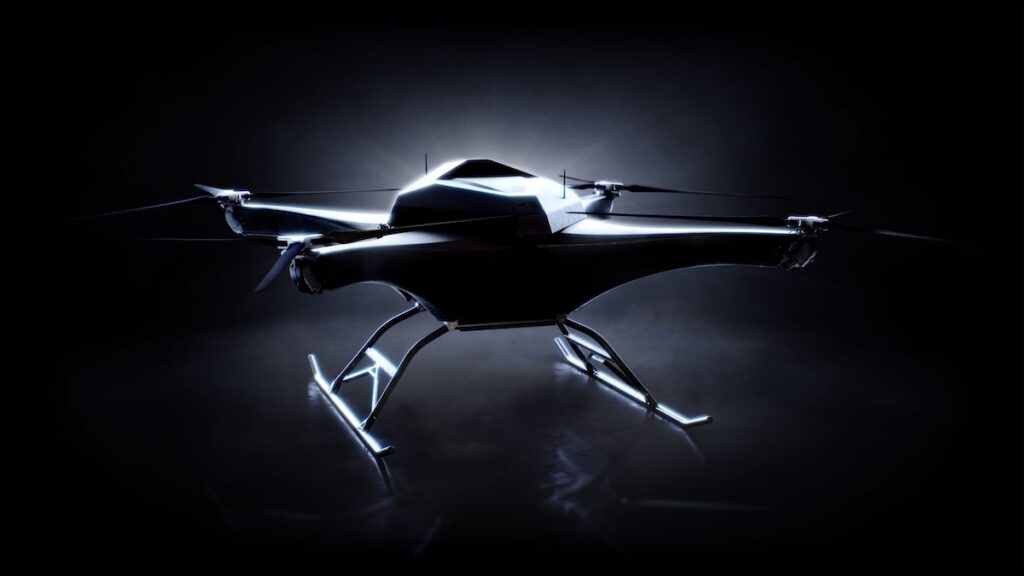
Autonomous UAV Platforms & Drone Services for Military, Government, Security & Emergency Response


Unmanned Aerial Systems for Military & Defense Applications, from Mission-Critical ISTAR to Battlefield Logistics


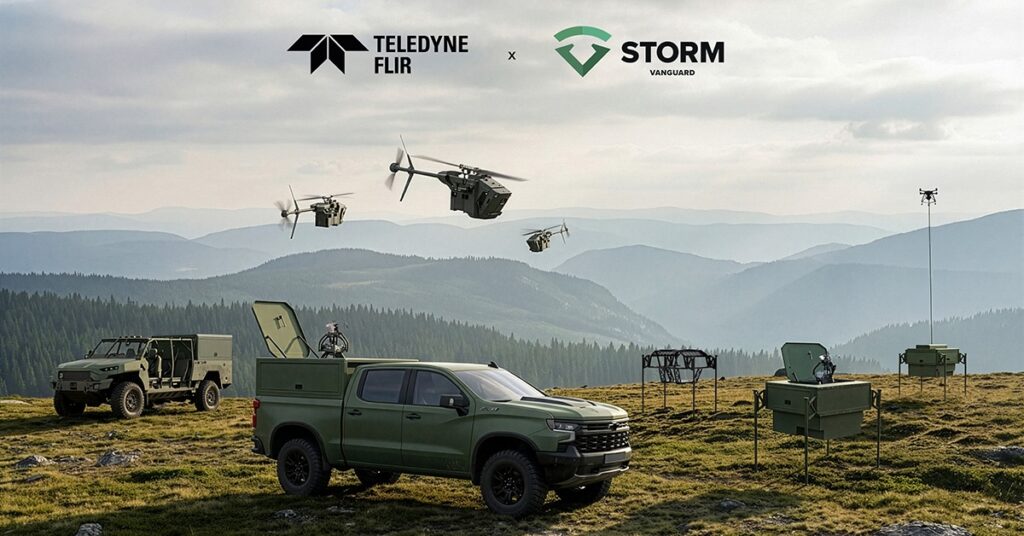
Cutting-Edge Defense Technologies Empowering The Warfighter On The Modern Battlefield

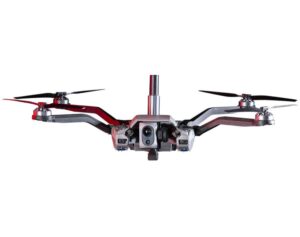
Advanced American-Made Drone Technologies for Aerial ISR (Intelligence, Surveillance & Reconnaissance)

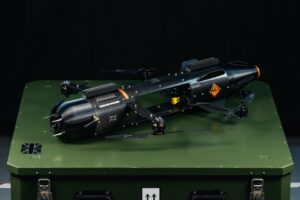
UK Sovereign Autonomous Uncrewed Systems for Defence, Security & Critical Infrastructure

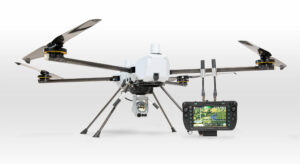
Tactical UAS Platforms for Mission-Critical Military, Defense & Law Enforcement Applications

If you design, build or supply Autonomous Drones, create a profile to showcase your capabilities and connect with visitors who have an active requirement for your solutions.

Autonomous drone technology enables military platforms to execute complex missions without continuous operator control. Integrated with real-time data fusion, AI-powered flight path planning, and adaptive decision-making algorithms, these systems navigate dynamic airspaces and respond intelligently to threats or mission changes. Military autonomous UAVs can detect, classify, and track targets using deep learning models and onboard edge processing, significantly enhancing operational efficiency while reducing human workload.
Modern Autonomous Aerial Vehicles (AAVs) are engineered to function in GPS-denied or communication-limited zones through autonomous navigation systems, visual-inertial odometry, and terrain-following sensors. Defense contractors and UAV manufacturers are embedding AI copilots and sensor fusion technologies that enable real-time obstacle avoidance, cooperative swarming, and automated takeoff and recovery in confined or unpredictable environments.
Many military autonomous flight systems are built on AI-driven autonomy software that fuses machine reasoning with flight dynamics and mission execution. Core to these systems are reinforcement learning architectures, convolutional and recurrent neural networks, and adaptive decision-making algorithms that allow drones to process sensor data, predict environmental changes, and select optimal actions in real time.
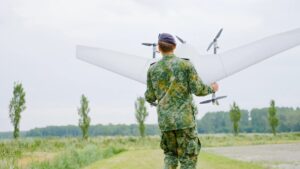
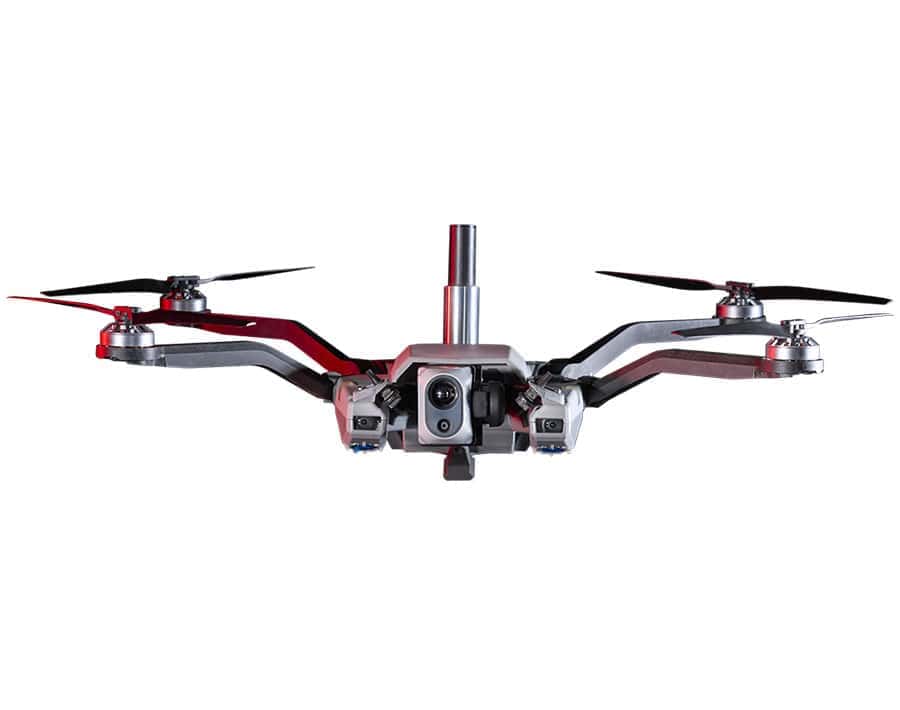
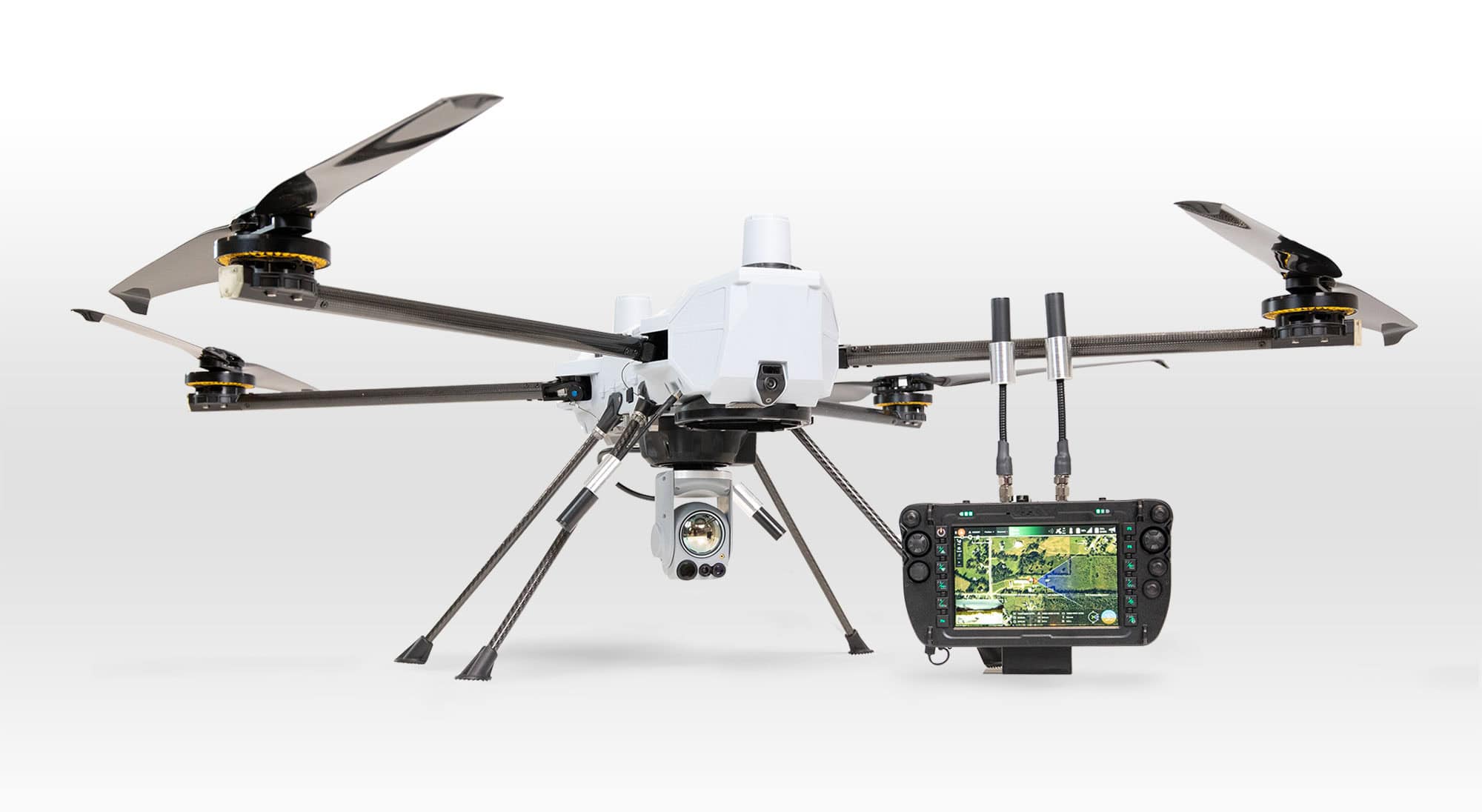
Evo Tactical Autonomous UAV Platform by DeltaQuad
These AI frameworks evolve through high-fidelity simulation and digital twin environments, where algorithms are trained to recognize patterns, refine maneuvering strategies, and respond to threats or mission deviations without manual input. AI-enabled drones can perform target detection, classification, and prioritization using onboard edge processors, reducing latency and dependence on external command links.
Autonomous decision logic allows drones to evaluate mission objectives against fuel status, risk levels, and threat assessments, adjusting their behavior as conditions change. Through continual machine learning updates, AI-equipped systems improve flight precision, sensor interpretation, and tactical decision-making across successive missions, creating self-optimizing platforms capable of independent operation in complex combat environments.
Autonomous drone systems are now integral to modern defense operations, supporting a wide spectrum of missions ranging from reconnaissance to logistics and precision engagement. Key operational applications include:
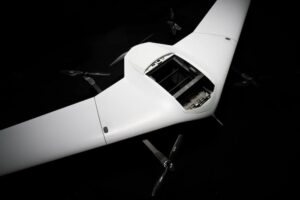
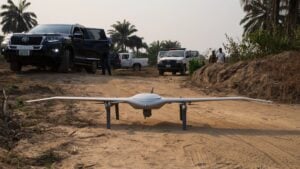
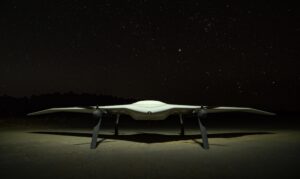
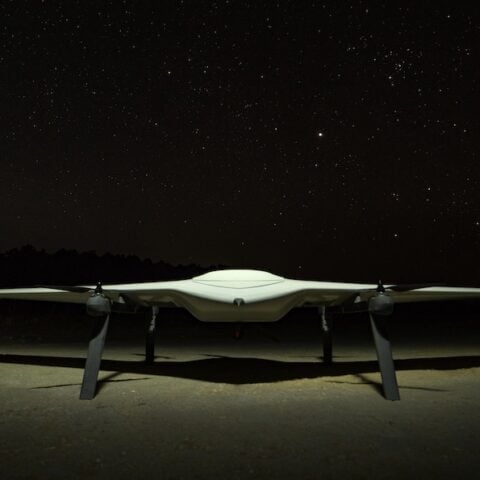
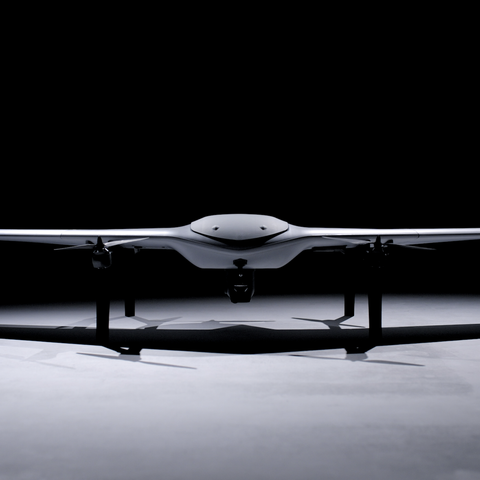
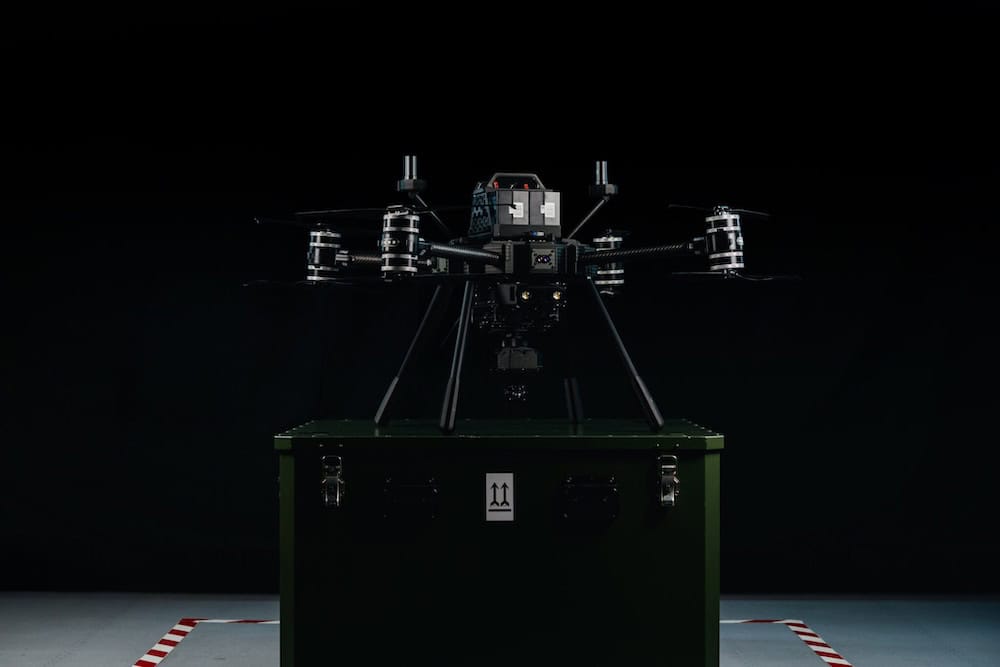
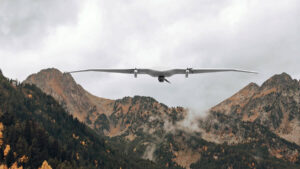
Evo Stealth Autonomous VTOL Fixed-Wing UAV by DeltaQuad
Modern defense systems are advancing toward collaborative autonomy, where human operators, autonomous drones, and intelligent control networks function as an integrated decision ecosystem. This paradigm encompasses both swarm coordination among unmanned systems and Human–Machine Teaming (HMT) between crewed and autonomous platforms.
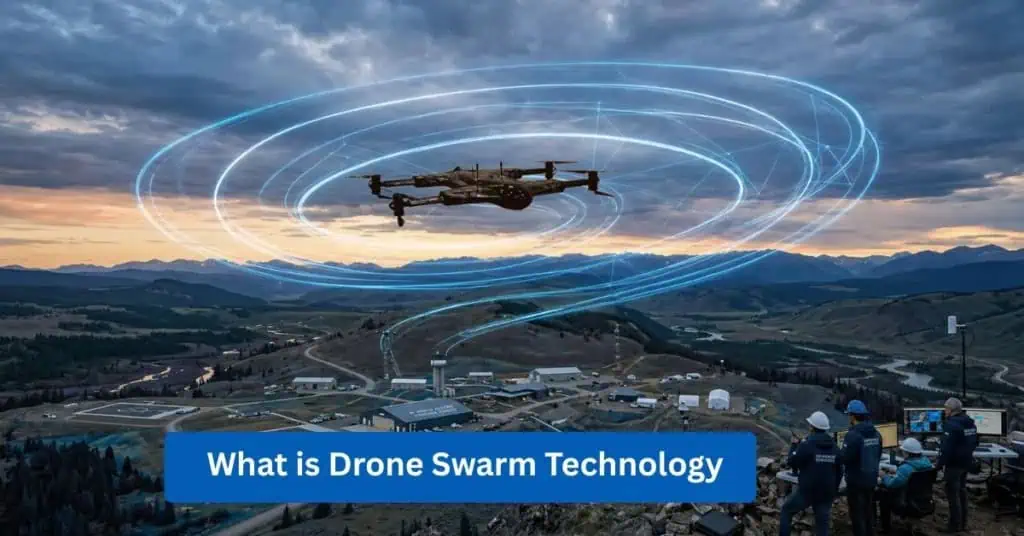
In swarm operations, fleets of autonomous UAVs act as adaptive, self-organizing teams, with each unit serving as both a sensor and a decision-maker. Through distributed AI frameworks such as consensus-based optimization, graph neural networks, and behavior-driven algorithms, swarm units dynamically coordinate route planning, threat avoidance, and mission tasking without reliance on a central controller.
This distributed intelligence increases operational resilience and enables autonomous formation flying, synchronized Intelligence, Surveillance, and Reconnaissance (ISR) collection, as well as cooperative strike missions across multiple domains.
In parallel, Manned–Unmanned Teaming (MUM-T) integrates autonomous UAVs with crewed aircraft and ground controllers, forming hybrid operational teams. These frameworks allow human pilots to focus on mission-level strategy while autonomous systems manage reconnaissance, Electronic Warfare (EW), or precision strike execution.
A key example is the development of Unmanned Combat Aerial Vehicle (UCAV) loyal wingmen, autonomous combat drones that accompany manned fighters to extend sensor coverage, provide decoy support, or deliver coordinated strikes. Through real-time data fusion and AI-assisted decision aids, these UCAVs align autonomous actions with human intent, representing the next phase of network-centric warfare built on shared autonomy and cognitive collaboration.
Core to autonomous flight technology is the seamless integration of navigation, communication, and control systems. Defense-grade UAV autonomy platforms utilize redundant Inertial Measurement Units (IMUs), radar altimeters, LiDAR, and optical flow sensors to maintain flight stability and positional accuracy. Autonomous military drones employ real-time map generation, terrain referencing, and AI-based path prediction to ensure mission continuity in degraded visual environments.
Tactical data links and anti-jamming protocols enable autonomous flight within multi-domain operations. Encrypted mesh networks facilitate fleet coordination and data relay between autonomous air vehicles and command centers, allowing synchronized actions across air, land, and sea domains.
Defense-grade autonomous UAVs rely on a tightly integrated hardware ecosystem optimized for real-time AI processing and sensor fusion. Onboard avionics include redundant flight controllers, MIL-STD-810H-compliant components, and AI-enabled mission processors for edge inference. These systems manage high-bandwidth data from LiDAR, Synthetic Aperture Radar (SAR), and EO/IR sensors, enabling continuous perception and adaptive navigation in complex environments.
Advanced cooling and power management architectures ensure operational stability under high computational loads, while modular payload bays support rapid reconfiguration between ISR, EW, and logistics roles. Sensor integration frameworks synchronize heterogeneous data streams with sub-millisecond latency, producing fused situational awareness maps essential for autonomous decision-making in denied or degraded environments.
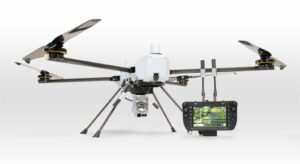
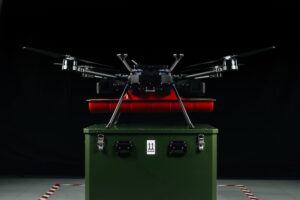
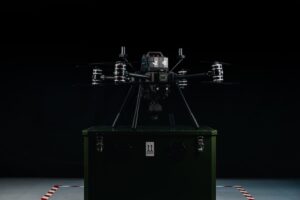
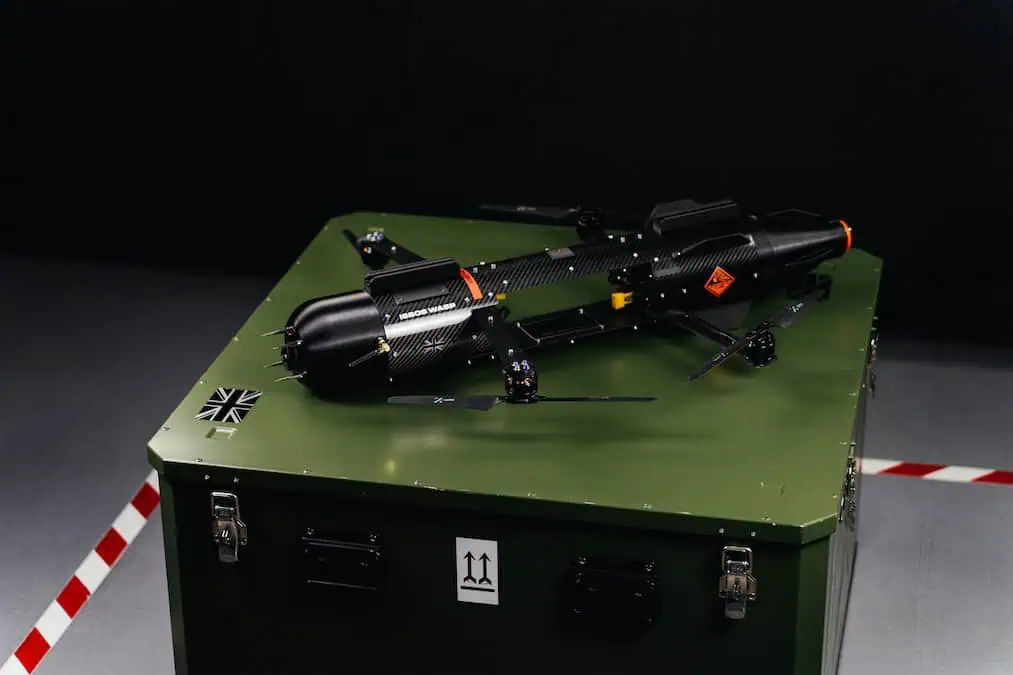
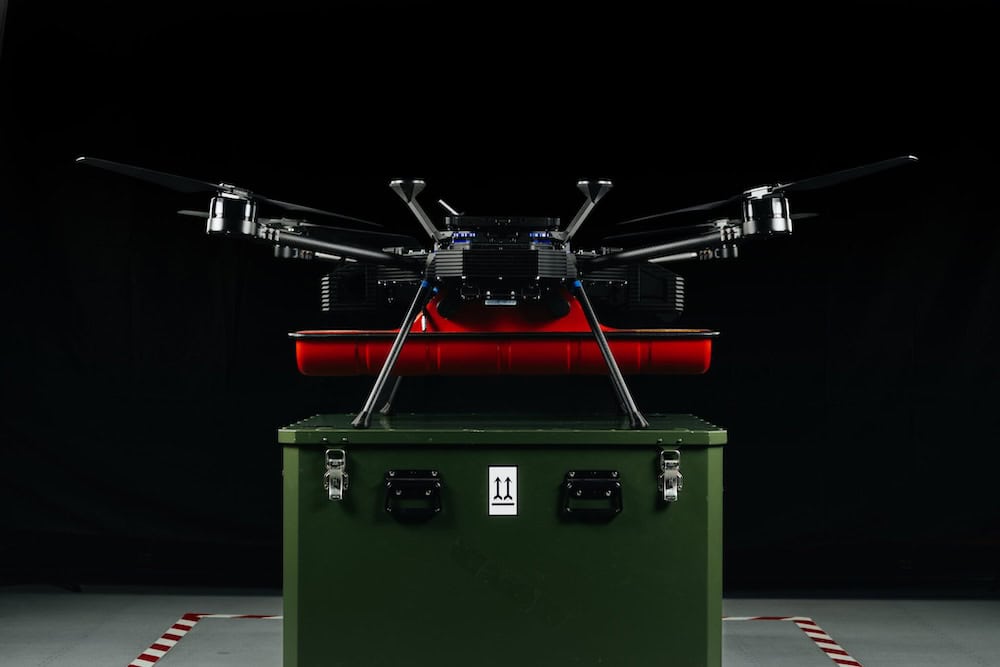
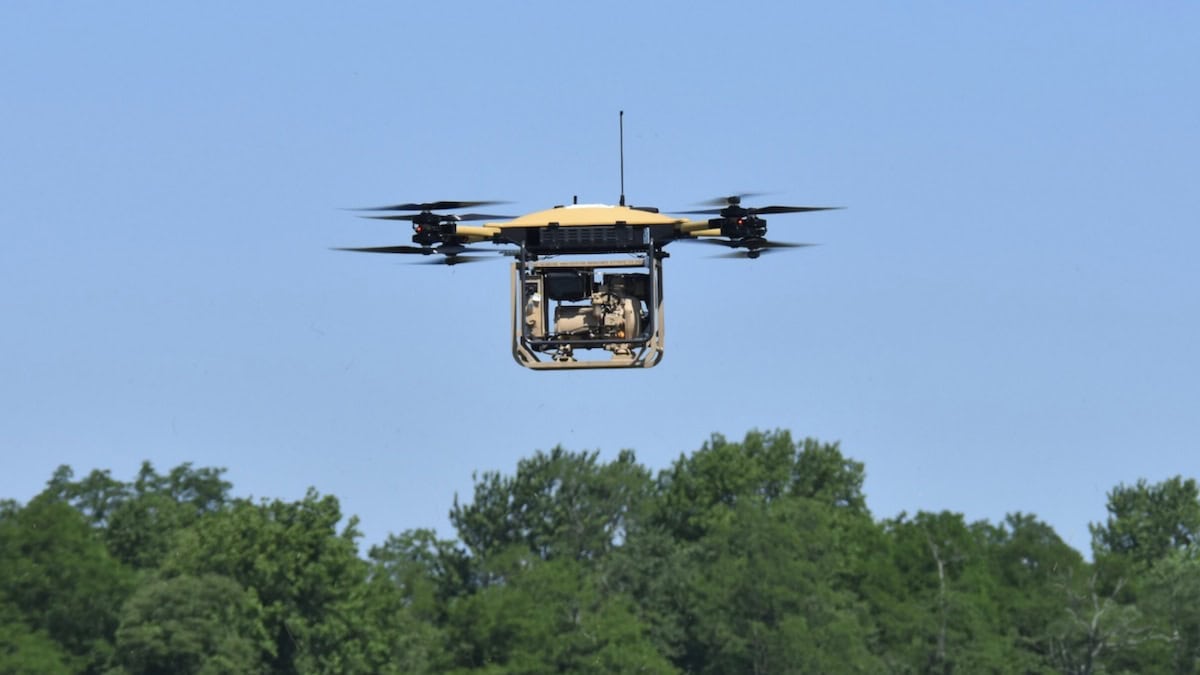
C100 Heavy-Lift Quadcopter with Autonomous Capabilities by Performance Drone Works (PDW)
Autonomous drone platforms require strong digital protection to maintain system integrity in hostile cyber environments. AI-based intrusion detection monitors onboard processors, drone software functions, and data pathways for anomalies or unauthorized activity. When threats are detected, automated containment protocols isolate affected subsystems to prevent wider system failure.
Security frameworks use secure boot, cryptographic signing, and are exploring quantum-resistant encryption to protect mission data and ensure only authenticated commands and software are executed. Edge-based cyber defense agents operate independently of external networks, maintaining mission continuity by detecting attacks in real time and preserving the integrity of AI decision-making and onboard data.
Leading autonomous drone companies within the defense sector develop modular UAV architectures supporting AI upgrades, payload adaptability, and mission-specific configurations. These include manufacturers of autonomous fixed-wing drones, quadcopters, and hybrid VTOL UAVs engineered for long endurance and heavy payloads.
Suppliers also deliver autonomous flight kits and retrofit systems that convert conventional drones into AI-enabled, self-piloting platforms. Integration services often extend to autonomous aircraft systems that interface with Ground Control Stations (GCS), enabling seamless interoperability across autonomous unmanned systems and autonomous UAS networks.
Defense research organizations and OEMs continue to enhance autonomous flight systems with cognitive AI modules and autonomous navigation systems for military UAVs, driving advancements in mission autonomy, swarm coordination, and self-healing communication frameworks. These developments mark a decisive shift toward adaptive, data-driven warfare, where AAVs act as force multipliers in multi-domain operations.


 Searching Companies & Products