Showcase your capabilities
If you design, build or supply Maritime Security USVs, create a profile to showcase your capabilities and connect with visitors who have an active requirement for your solutions.




Select maritime security USV manufacturers and suppliers delivering platforms for port, harbor, and coastal security operations. These systems support maritime domain awareness, ISR operations, and force protection across contested environments, integrating advanced navigation systems, satellite communication, and propulsion systems.
Read the Technology Overview



Naval Vessels, Submarines & Autonomous Maritime Systems for Modern Defense Forces

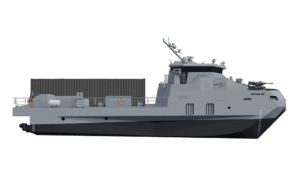
Crewed & Uncrewed Vessels for Naval Defense, Coast Guard & Humanitarian Missions

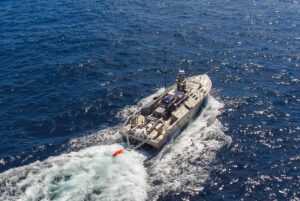
Cutting-Edge Defense Technologies Empowering The Warfighter On The Modern Battlefield

If you design, build or supply Maritime Security USVs, create a profile to showcase your capabilities and connect with visitors who have an active requirement for your solutions.

Maritime security USVs are unmanned surface platforms designed for port monitoring, harbor security, and coastal surveillance. They support ISR operations and maritime domain awareness while reducing personnel exposure in contested environments.
These systems integrate navigation systems, satellite communication, propulsion systems, and payloads such as radar, sonar, cameras, and infrared sensors. Optimized for autonomous maritime patrol, they enable real-time data exchange within command-and-control systems.
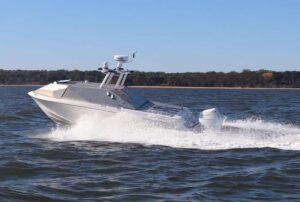
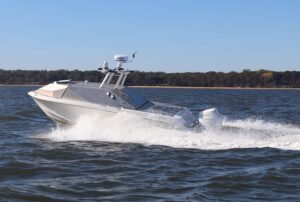
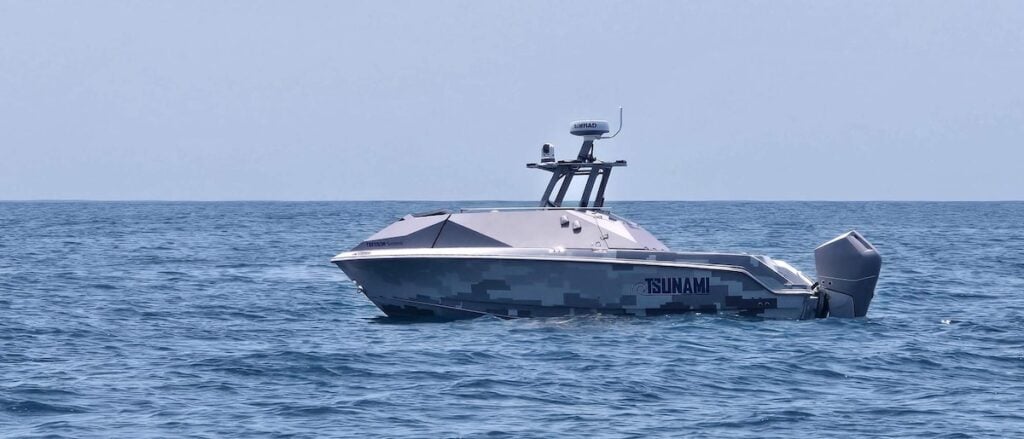
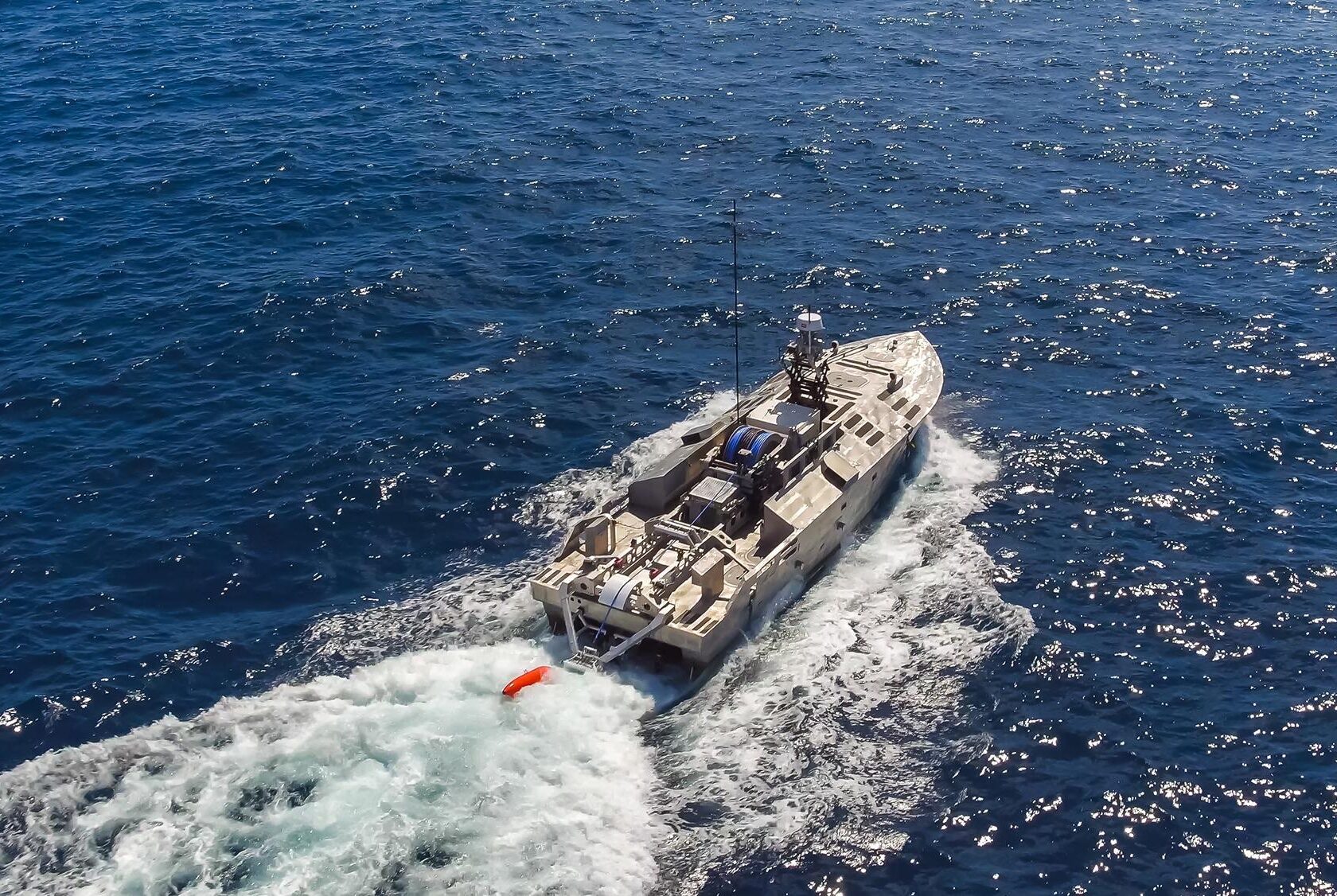
TSUNAMI™ by Textron Systems
Modular architectures support system integration with C4ISR networks, delivering scalable force protection, maritime interdiction capability, and critical infrastructure protection across diverse operational environments.
Remotely operated USVs rely on continuous command and control via radio or satellite communication links. They are suited to high-control environments such as port monitoring and harbor security where operators require direct oversight. These systems prioritize real-time decision-making within constrained operational environments.
Semi-autonomous USVs combine onboard navigation systems with operator supervision, enabling waypoint navigation and automated behaviors with human intervention as needed. They are commonly deployed in coastal surveillance and maritime patrol missions. This approach balances autonomy with operational control in dynamic environments.
Fully autonomous USVs execute missions using onboard control systems, sensor fusion, and AI-driven decision-making with minimal operator input. These platforms are optimized for persistent ISR operations and extended deployment in contested environments. They enable scalable maritime domain awareness with reduced dependence on communication.
Electric USVs are optimized for low acoustic signature and reduced thermal output, supporting covert ISR operations in sensitive operational environments. These platforms are suited for harbor security and naval base protection missions. Limited endurance is offset by low detectability.
Hybrid propulsion system configurations combine diesel and electric power to extend mission duration and flexibility. These USVs support long-range maritime patrol and coastal surveillance while maintaining efficient fuel consumption. They are commonly deployed in multi-mission security operations.
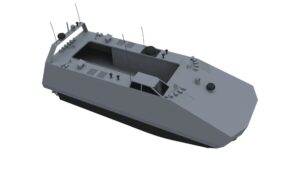
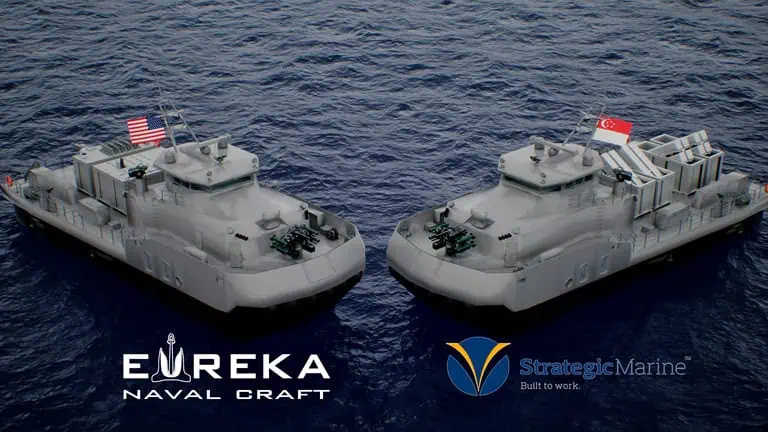
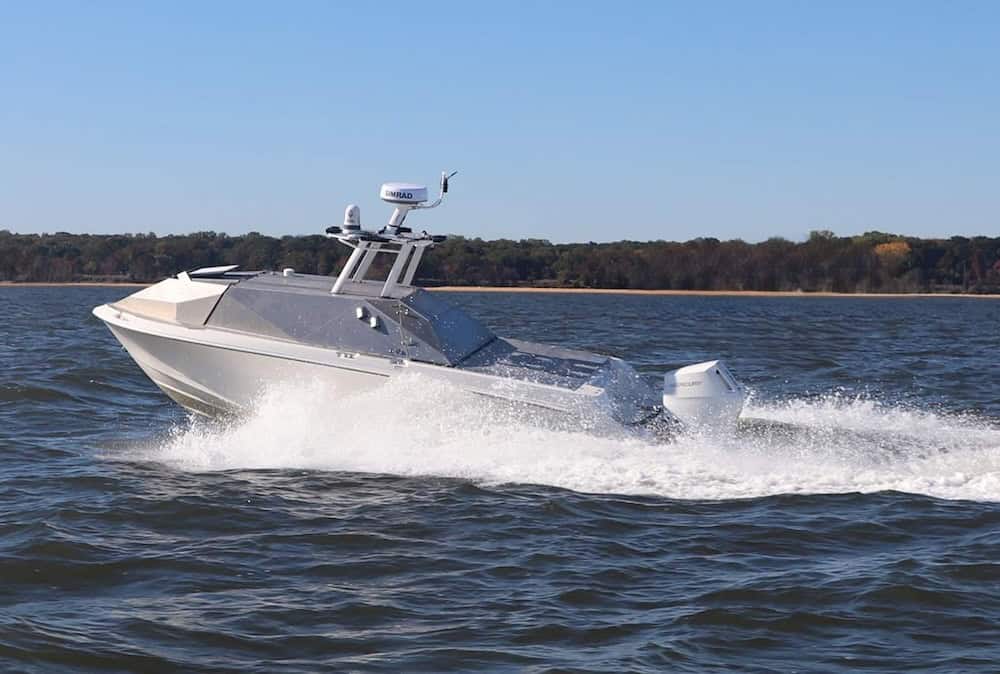
AIRCAT Panther by Eureka Naval Craft
Large unmanned surface vessels offer greater payload capacity and endurance for extended deployments. These platforms support complex ISR operations, including maritime domain awareness and fleet protection. They are suited for offshore and blue-water maritime security missions.
Modular maritime security USVs are designed for rapid reconfiguration of payloads and subsystems. This enables system integration across diverse mission requirements, including convoy protection, port monitoring, and maritime interdiction. Modular architectures support scalability and lifecycle adaptability.
Maritime security USVs enable continuous port monitoring by integrating radar, camera, and AIS data into centralized command-and-control systems. These platforms enhance maritime security by detecting unauthorized vessels and supporting port security operations. Persistent presence reduces reliance on manned patrol assets.
USVs deployed for harbor security provide real-time surveillance and rapid-response capabilities within confined operational environments. Equipped with infrared sensors and collision-avoidance systems, they maintain safe navigation while supporting harbor patrol and force-protection missions. Integration with shore-based systems enhances situational awareness.
For coastal surveillance and maritime security, USVs deliver extended coverage across littoral zones and national boundaries. These systems support border security, anti-piracy operations, and maritime patrol through long-endurance deployment scenarios. Sensor payloads enable detection and tracking of surface and subsurface threats.
USVs are deployed to secure offshore platforms, pipelines, and maritime logistics hubs as part of critical infrastructure protection strategies. Persistent ISR operations support the protection of oil and gas infrastructure and maritime assets. Autonomous patrol patterns reduce operational costs and increase coverage.
Maritime security USVs support maritime interdiction operations by providing forward-deployed surveillance and tracking capabilities. These platforms enable early threat detection and cue manned assets for interception. Integration with ISR networks enhances response effectiveness in contested environments.
Common payloads on maritime security USVs include mission-specific sensors and effectors that deliver ISR capabilities and threat detection. These are interchangeable and selected based on deployment scenarios and operational environments.
These payloads directly support force protection and critical infrastructure protection by enabling real-time situational awareness.
These elements define the core architecture of maritime security USVs, enabling platform functionality, autonomy, and reliable system integration. In contrast to payloads, they are foundational to vessel operation and remain fixed across deployment scenarios rather than being mission-configurable.
These subsystems ensure reliable deployment, support continuous ISR operations, and enable integration into broader maritime security architectures.
Compared to traditional manned patrol vessels, maritime security USVs offer reduced operational risk, lower lifecycle cost, and enhanced persistence in contested environments. While manned platforms provide onboard decision-making and higher payload flexibility, USVs excel in continuous ISR operations and distributed deployment scenarios.
Maritime security USVs also integrate more seamlessly into modern command-and-control systems, enabling networked operations across multiple assets. Their ability to operate autonomously or semi-autonomously supports scalable maritime security architectures aligned with evolving mission requirements.
Maritime security USVs must comply with a range of defense and maritime standards to ensure interoperability and operational reliability. Relevant frameworks include:
Compliance ensures that maritime security USVs can be deployed effectively within joint and coalition operational environments while maintaining system integrity under harsh maritime conditions.
Effective deployment of maritime security USVs depends on seamless system integration among navigation, propulsion, and mission payloads. Integration with satellite communication networks enables beyond line-of-sight operations, while interoperability with existing maritime domain awareness frameworks enhances situational awareness.
Key integration factors include SWaP constraints, payload compatibility, and data interoperability within command-and-control systems. Ensuring alignment with mission requirements and deployment scenarios is critical for maximizing operational effectiveness in maritime security missions.
As maritime threats evolve, maritime security USVs are becoming central to layered defense strategies, supporting force protection, ISR operations, and persistent surveillance across ports, harbors, and coastal regions.


 Searching Companies & Products