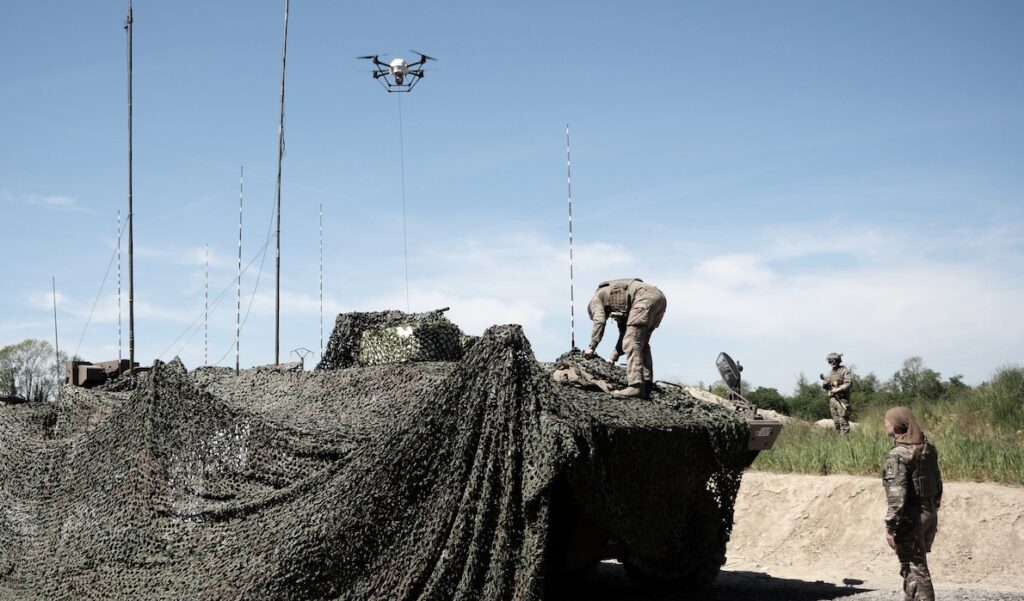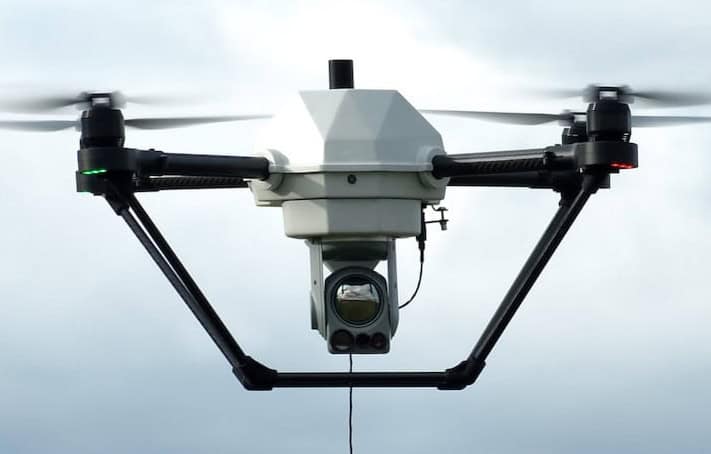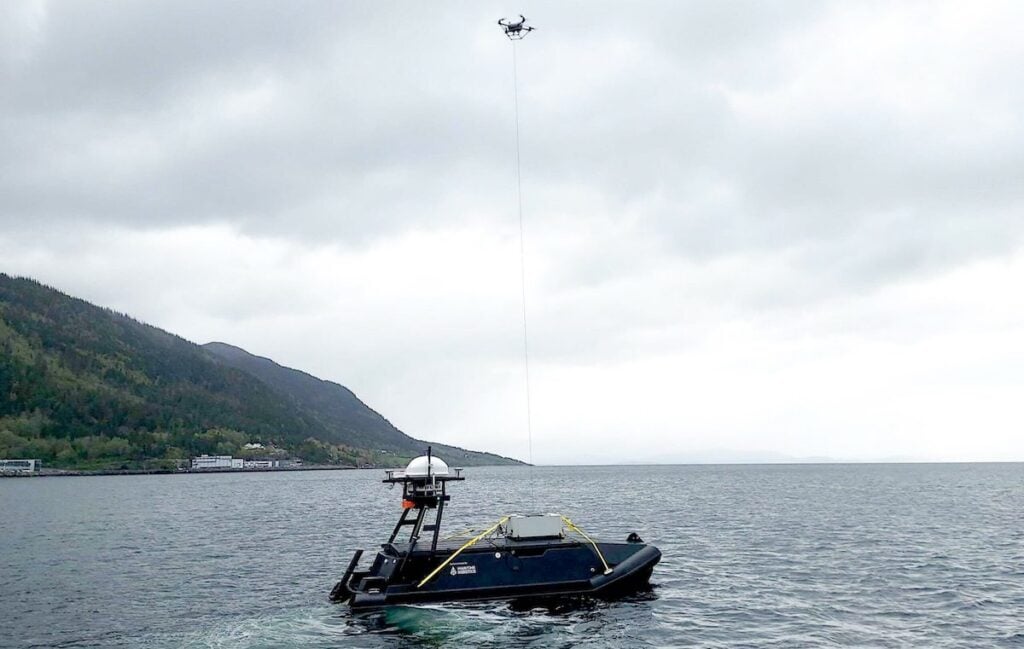

Elistair, a developer of tethered drone solutions for defense, security, and first responder applications, discusses the growing role of tethered Unmanned Aerial Vehicles (UAVs) in providing persistent Intelligence, Surveillance, and Reconnaissance (ISR) capabilities and how they are shaping modern military doctrine. Read more >>
Modern military operations require continuous ISR, even in contested environments. Traditional ISR assets, including satellites and untethered drones, face limitations in endurance, electromagnetic warfare resilience, and exposure to enemy defenses.
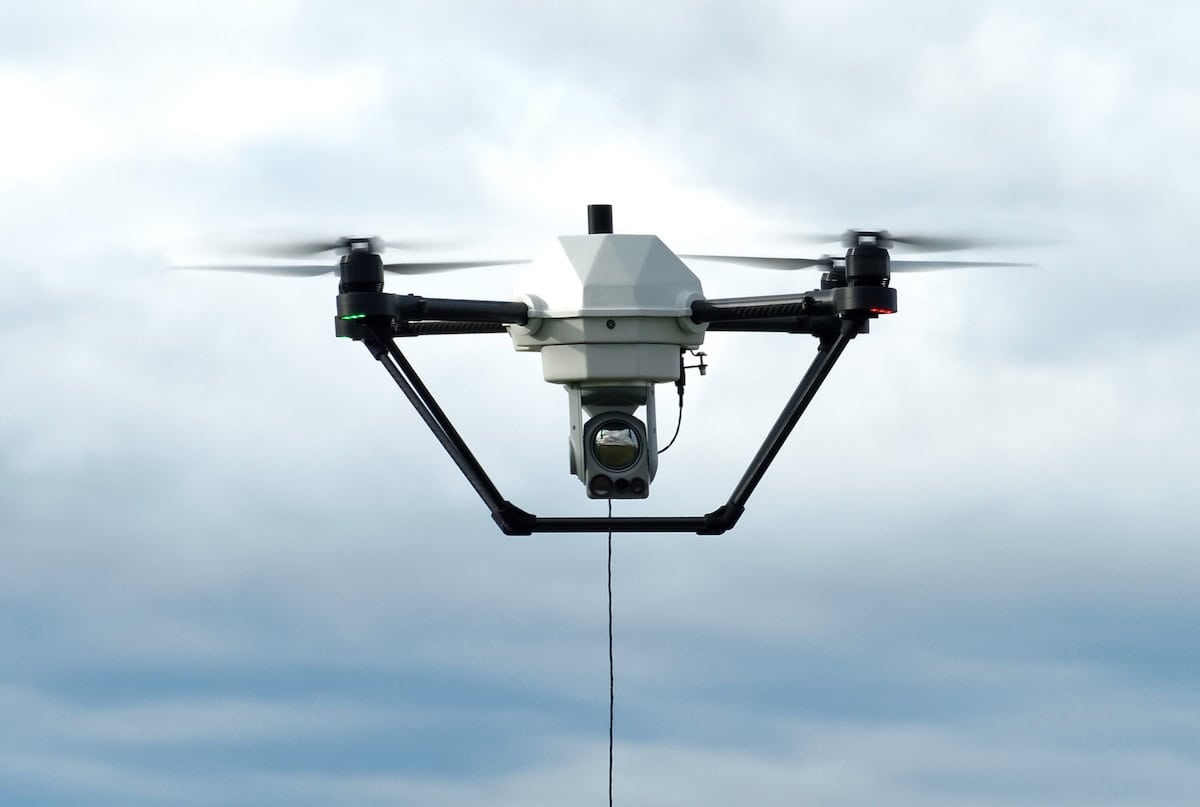
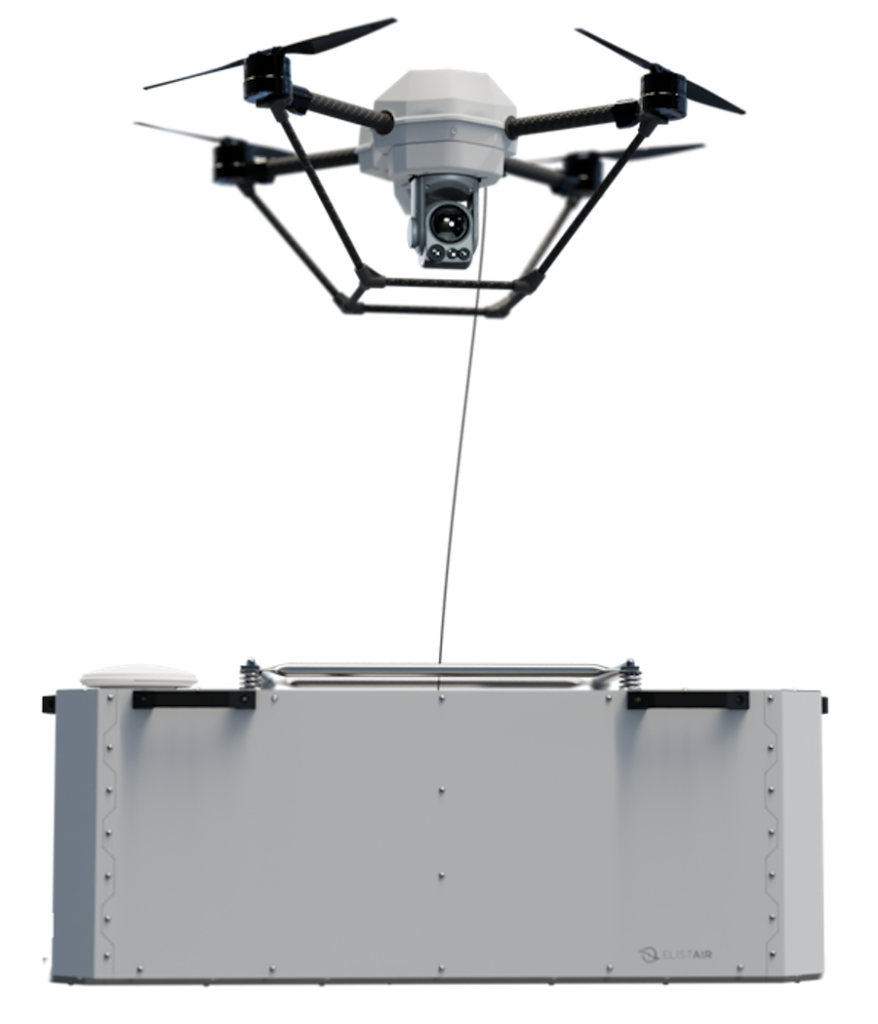
Tethered UAVs, connected to ground power and communications source via a lightweight cable, offer extended airborne operations and a secure data link, providing a continuously available overwatch capability.
These drones act as long-endurance ISR platforms, capable of hovering for over 24 hours and providing continuous day- and night-time surveillance without battery swaps or frequent landings. Functioning like relocatable aerial watchtowers, they elevate cameras and sensors to deliver clear lines of sight over terrain and structures.
Tethered UAVs also enhance force protection and situational awareness, for prolonged observation of forward bases, convoys, and border areas, while minimizing risk to personnel and larger UAVs. These platforms operate at low altitudes with a small visual profile for covert or semi-covert ISR missions.
By bridging the gap between ground sensors and high-flying ISR assets, tethered UAVs offer commanders uninterrupted intelligence and a discreet, persistent observation capability that is reshaping tactical reconnaissance.
U.S. Military Integration
NATO, U.S., and European militaries are increasingly integrating tethered UAVs into doctrine.
The U.S. Army is actively exploring tethered UAVs to provide persistent overwatch for armored and mechanized units, leveraging wired power supply for extended flight durations. Plans are underway to move these systems from concept to formal programs of record, offering organically controlled aerial ISR for units on the move.
Army requirements emphasize covert, vehicle integration, low signatures, extended endurance, and communications via the tether, which functions as both a power source and high-bandwidth data link.
Army requirements focus on vehicle integration, low visual and electromagnetic signatures, extended endurance, and operation in GPS-denied and adverse conditions. The tether functions as both a power source and a high-bandwidth data link, carrying control signals and sensor feeds while avoiding Radio Frequency (RF) emissions that could be detected or jammed.
The U.S. doctrinal development views tethered drones as organic ISR assets that enhance situational awareness while keeping personnel and high-value platforms protected.
NATO & European Integration
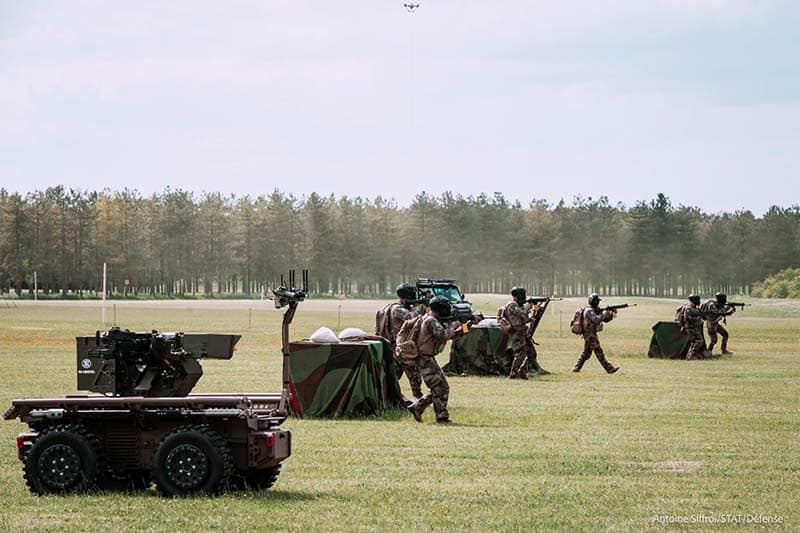
European militaries are also increasingly integrating tethered UAVs into exercises and operations for both domestic security and expeditionary missions. Trials, such as a German Army evaluation, demonstrated Elistair’s tethered drone pairing with Unmanned Ground Vehicles (UGVs) to provide continuous mobile ISR, maintaining surveillance as vehicles maneuvered.
NATO member experiments and deployments, including by French armed forces, show that tethered UAVs can support base protection, border monitoring, command and control systems, and coalition networks, providing persistent observation and real-time secure video feeds.
These systems enhance situational awareness at the tactical level, allowing high-end ISR assets to focus elsewhere, and are being incorporated into doctrine as organic extensions of ground units, similar to deployable sensor towers.
Operational Lessons in Contested Environments
The war in Ukraine has highlighted the importance of resilient ISR in environments with heavy Electronic Warfare (EW). Both sides have used jamming and spoofing to disrupt standard drones that rely on RF control links or GPS.
Fiber-tethered UAVs, or “invisible drones,” bypass these wireless vulnerabilities by using a thin optical fiber for power and data, making them undetectable by RF sensors and immune to RF jamming or interception.
These drones can maintain position and stability even when GPS is denied, using inertial systems or tether-based guidance. This shows tethered UAVs provide reliable ISR in contested electromagnetic environments, ensuring commanders can sustain observation where conventional radio-controlled drones might fail.
Ukraine’s conflict has also shown the tactical survivability of tethered UAVs in contested airspace. Although restricted by their tethers, these drones operate close to friendly forces, often below enemy radar and out of range of long-range defenses, making them difficult targets for enemy EW or intercept.
Their persistence, reliability, and low observability address gaps in ISR capabilities. Recent operational experience shows tethered UAVs are highly secure ISR nodes, maintaining surveillance in contested environments. NATO and coalition forces are increasingly integrating them as key components of multi-layered ISR doctrine.
To find out more information read ‘Rethinking Recon: How Tethered UAV Change ISR Doctrine’ here >>