



Analog Modules’ Model 742DP is a laser spot tracker designed for missile and platform tracking applications, featuring a temperature-controlled detector optimized for operation at 1.06μm. Read more >>
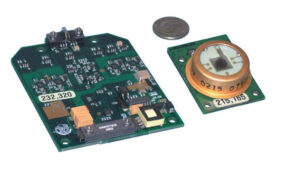
Model 742DP by Analog Modules.
Combining adaptive signal processing, integrated decoding capabilities, and a sunlight-tolerant design, Model 742DP is intended to support reliable laser spot acquisition and tracking across a wide range of operating conditions.
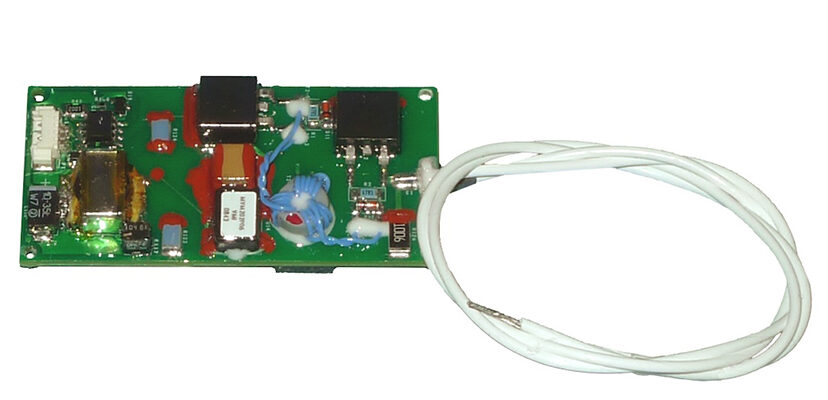
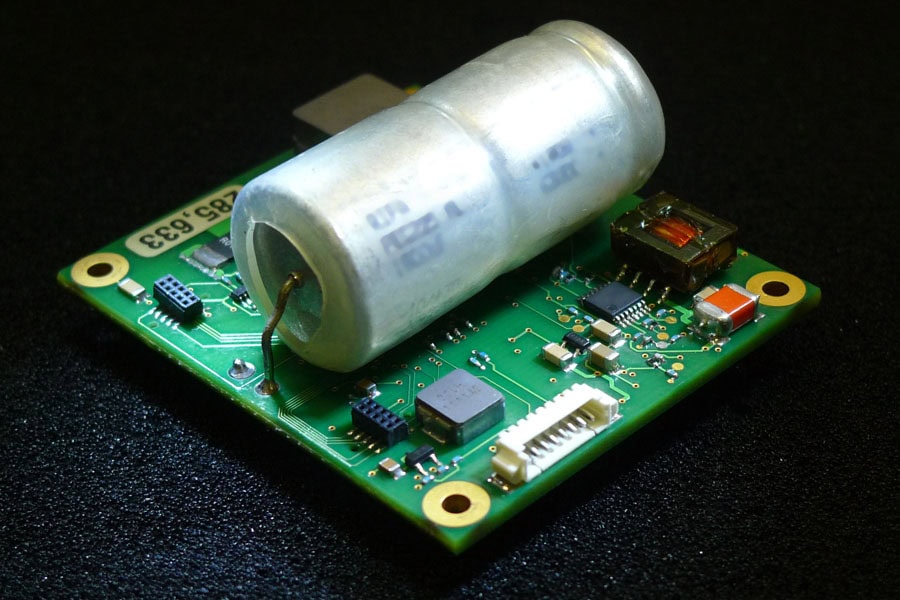
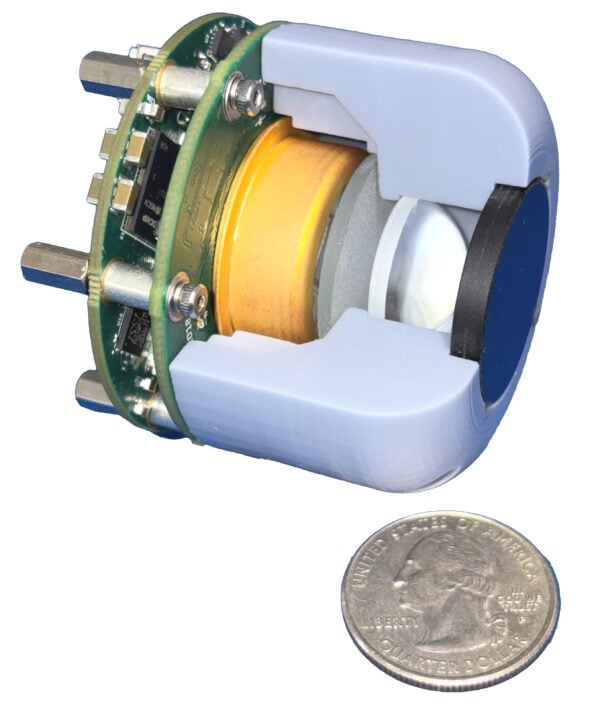
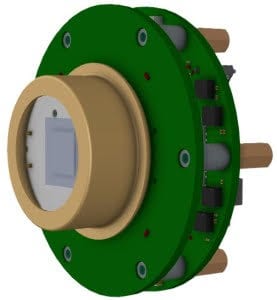
The tracker comprises a hermetically sealed detector with built-in front-end electronics mounted on a compact surface-mount PCB, together with a separate processing board housing the analog and digital circuitry. A dedicated substrate allows detector size and type to be tailored to specific application requirements, providing flexibility for a range of tracking platforms.
Optimized Detector Architecture for 1.06μm Operation
The Model 742DP utilizes custom-designed N-type detectors optimized for performance at 1.06μm. Available with either a 5.33 mm or 14 mm quadrant detector, the system can also accommodate alternative detector sizes and InGaAs variants where required.
Independent five-channel noise detectors establish detection thresholds that support long acquisition ranges under varying background illumination levels and laser spot positions. Special circuitry is incorporated to resist sunlight blinding in any one or all quadrants, helping to maintain tracking performance in challenging environments.
Detector performance characteristics include a responsivity of 0.4 A/W at 1.06μm, with leakage currents below 10 nA for the 5.33 mm detector and below 200 nA for the 14 mm version. The detector assembly incorporates a built-in heater and controller to maintain stable operating conditions.
Adaptive Signal Processing and Digital Output
Individual detector channels are digitized using a high-speed A-D converter before being transmitted through a serial digital interface for steering applications. Adaptive threshold control continuously adjusts operating thresholds to maintain optimum signal-to-noise performance, while integrated power-management functionality helps minimize power consumption.
The tracker also incorporates decoding functionality, supporting first, last, and peak pulse logic as well as tri-service code and PIM sequence processing through an RS-422/RS-485 full-duplex serial interface. Steering and system status information are provided through the same interface, while multiple gain stages are automatically selected to accommodate changing signal conditions.
Wide Dynamic Range and Sunlight Tolerance
Designed for operation across a broad range of signal levels, the Model 742DP offers a dynamic range greater than 100,000:1 and maintains linear operation up to 10 μW per quadrant at 1.06μm. Over-temperature monitoring is provided through a dedicated temperature sensor output, while resistive current limiting protects against over-current conditions.
Adaptive threshold control is applied to each individual channel as well as the summed channel. Typical minimum detectable signal levels are 200 nW for the 5.33 mm detector configuration and 400 nW for the 14 mm version, measured on a single channel at a 50% probability of detection.
Compact Form Factor for Demanding Environments
The system consists of a hermetically sealed detector and amplifier assembly mounted on a miniature SMT PCB together with a separate quadrant processor board. The detector measures 1.123 inches in diameter and 0.43 inches in height, while the amplifier PCB measures 1.6 × 1.18 × 0.492 inches. The quadrant processor board occupies a footprint of 3.0 × 2.30 × 0.50 inches.
Operating from -40°C to +85°C, the tracker is designed for deployment in demanding environmental conditions. Power requirements include +5 V at 600 mA, including up to 250 mA for the integrated heater, and -5 V at 200 mA. The complete assembly weighs 1.62 ounces (45 g) and utilizes an Omnetics A16464-001 connector.