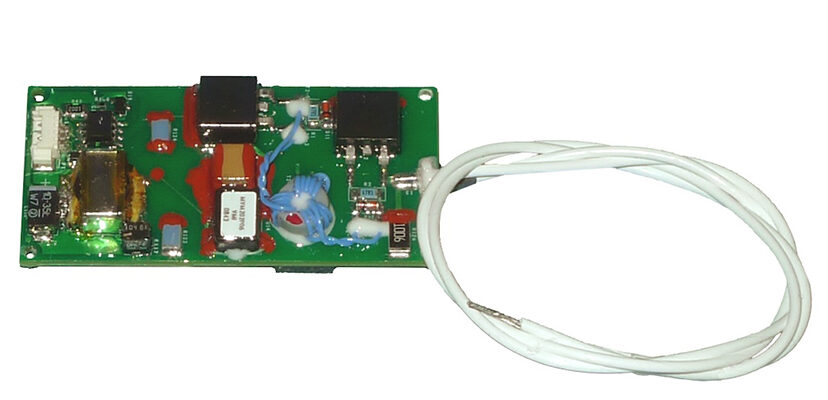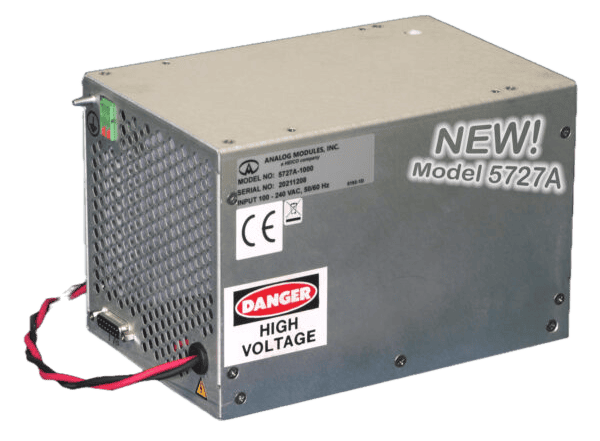





Analog Modules, Inc. (AMI), a specialist in the design and manufacture of laser electronics for military and defense applications, examines the design and optimization of high current laser diode drivers, with a focus on the technical challenges associated with military use. Read more >>
This article explores the evolution of diode driver architectures over the past fifteen years, including the limitations of simple linear designs and the progression toward more advanced approaches incorporating intelligent control and high-frequency switching. The advantages and trade-offs of these design strategies are considered in the context of performance, efficiency, and operational lifetime.
When evaluating diode driver solutions for military laser systems, several key factors must be addressed, including size, weight, cost, efficiency, and reliability across defined environmental conditions. These requirements often conflict, requiring careful balancing during the design process. Lower-cost solutions may not meet size constraints or may fail to operate consistently across temperature extremes and other demanding conditions.
Performance and Design Trade-Offs
Simple linear diode drivers are not well suited for military laser systems due to their limited ability to adapt to environmental variation and the effects of component aging. This lack of adaptability results in reduced electrical efficiency and increased stress on internal components, which can shorten battery life and raise the probability of failure.
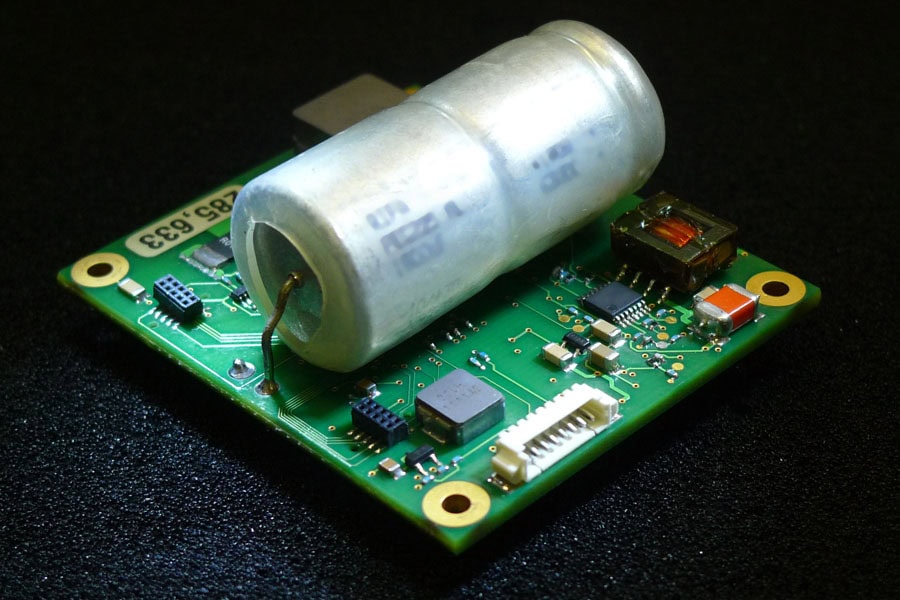
The choice of energy storage components presents additional challenges. Commercial aluminum electrolytic capacitors are often selected due to their low cost, but their characteristics vary significantly with temperature and degrade over time. As a result, it is extremely difficult to meet military temperature and lifetime requirements using these components. Hermetically sealed capacitors offer improved stability across temperature and aging, as well as reduced size, but introduce higher cost.
Linear diode drivers can be enhanced through the inclusion of sensing and control mechanisms that monitor multiple input conditions and adjust operation accordingly. While this approach mitigates some environmental effects, it does not fully resolve limitations related to efficiency and size.
Diode drivers that utilize intelligent, high-frequency switching techniques provide a more robust solution. These designs are more tolerant of changing operating conditions and achieve higher electrical efficiency than linear approaches. Internal component stress is reduced, supporting improved reliability and longer operational life. In addition, switching designs require approximately one quarter of the capacitance needed in linear configurations, enabling reductions in size and weight.
Such architectures may also permit the use of commercial electrolytic capacitors while still meeting environmental requirements, although operational lifetime may be reduced due to aging effects.
Driver Topology Analysis
Across all diode driver architectures, the energy storage capacitor remains a fundamental design constraint. Batteries and external power supplies are typically unable to deliver the peak power required to drive pump laser diodes. Consequently, most systems incorporate a power conversion stage that increases the input voltage and stores energy in a capacitor at an elevated level.
This stored energy must be sufficient to drive the diode load while maintaining adequate voltage to compensate for losses within the system. The performance characteristics of the storage capacitor directly influence both efficiency and reliability.
In simple linear diode driver circuits, these dependencies are particularly evident. The interaction between capacitor behavior, system losses, and load requirements highlights the trade-offs inherent in different design approaches. A clear understanding of these relationships is essential when selecting an appropriate driver topology for military laser applications, where performance, durability, and environmental resilience are critical requirements.