Showcase your capabilities
If you design, build or supply Combat USVs, create a profile to showcase your capabilities and connect with visitors who have an active requirement for your solutions.




Select combat USV platforms from leading manufacturers and suppliers developing armed unmanned surface vehicles for naval warfare, maritime security, and autonomous maritime operations. Combat USVs integrate sensors, communications systems, and weapon payloads to deliver surface strike, surveillance, escort, and reconnaissance capabilities while reducing risk to personnel.
Read the Technology Overview
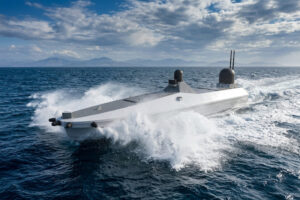
Advanced Mission Systems for Defense Forces Across the Land, Air, Naval & Space Domains

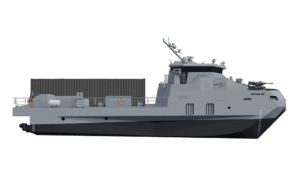
Crewed & Uncrewed Vessels for Naval Defense, Coast Guard & Humanitarian Missions

If you design, build or supply Combat USVs, create a profile to showcase your capabilities and connect with visitors who have an active requirement for your solutions.

Combat USVs combine autonomous navigation, sensor fusion, and secure communications with mission payloads such as missile launchers, torpedo launchers, electronic warfare systems, and remote weapon stations. These platforms support surveillance, strike, and defensive missions in contested maritime environments.
Designed with modular architectures, these military USVs integrate sensors, including radar, EO/IR systems, sonar, and AIS receivers, for intelligence gathering and maritime surveillance. Connected through line-of-sight data links and satellite communications, combat USVs support distributed maritime operations, swarm attacks, convoy escort, and maritime security missions while reducing risk to personnel.
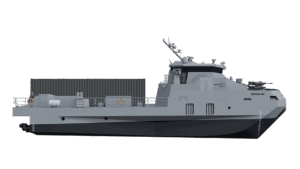
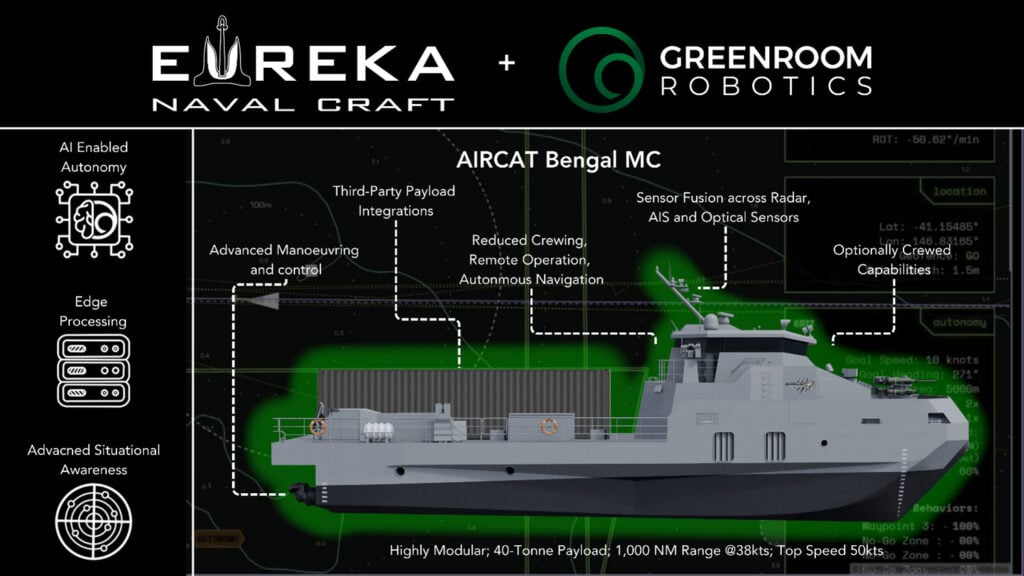
AIRCAT Bengal MC, optionally-crewed fast attack vessel, by Eureka Naval Craft
Armed USVs equipped with missile launchers, naval gun systems, or torpedo launchers can conduct anti-surface warfare and maritime strike operations against hostile vessels or coastal targets.
Combat USVs equipped with radar sensors, EO IR systems, and AIS receivers provide persistent maritime surveillance for naval task groups, enabling early detection of potential threats.
USVs can conduct escort security operations for high-value vessels, supporting convoys and protective escorts during naval operations or maritime interdiction missions.
Small USVs equipped with electro-optical cameras and infrared cameras support naval reconnaissance and scouting missions in contested or high-risk maritime environments.
Multiple small USVs can coordinate swarm warfare missions, overwhelming defenses through distributed maritime operations and rapid strike tactics.
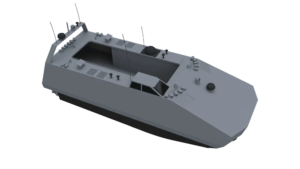
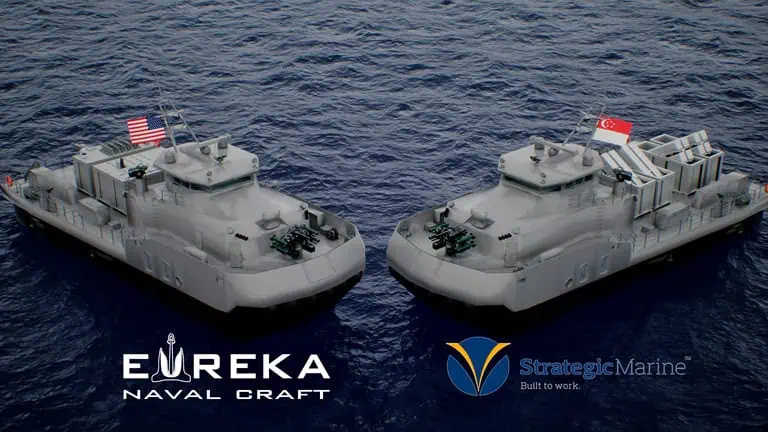
AIRCAT Panther, for attack and defense operations, from Eureka Naval Craft
Armed unmanned surface vessels support coastal defense operations by providing surveillance, patrol, and strike capabilities along littoral regions and strategic waterways.
USVs can conduct perimeter patrol and port security operations, detecting and responding to maritime threats near critical infrastructure and naval bases.
Small USVs are compact unmanned surface vehicles designed for rapid deployment and high-speed operations. These platforms are often used for reconnaissance, surveillance, and swarm warfare missions.
Medium USVs provide extended endurance and greater payload capacity, supporting surveillance sensors, electronic warfare payloads, and remote weapon stations.
Low-observable USV platforms are designed with stealth features and reduced radar signatures to enable covert reconnaissance and surveillance missions in contested maritime environments.
One way attack USVs function as surface loitering munition platforms capable of conducting suicide attack missions against high-value maritime targets.
Multi-role USVs feature modular combat payload architectures that allow the integration of surveillance sensors, strike systems, and electronic warfare payloads, depending on mission requirements.
Combat unmanned surface vehicles vary significantly in size, endurance, payload capacity, and operational roles. Small tactical USVs typically prioritize speed and maneuverability, supporting reconnaissance or swarm attack missions. Larger platforms emphasize endurance and payload flexibility, enabling integration of radar sensors, electronic warfare payloads, and strike systems for extended patrol operations.
Propulsion system selection also influences platform performance. Marine diesel engines provide long-range endurance for patrol missions, while electric propulsion motors and hybrid propulsion systems can reduce acoustic and thermal signatures during stealth operations.
Sensor configurations may also vary depending on the mission profile. Surveillance-oriented USVs typically integrate maritime surveillance radar, EO IR systems, and AIS receivers. Strike-focused platforms may prioritize missile and torpedo launchers, as well as remote weapon stations, combined with targeting sensors and sensor fusion systems.
Autonomy capabilities represent another major differentiator. Some systems rely primarily on remote command-and-control via line-of-sight or satellite communications, while others, such as autonomous surface vehicles, incorporate advanced autonomous navigation systems and artificial intelligence processors capable of independent mission execution.
Combat USV platforms deployed by modern naval forces must meet stringent military standards for reliability, interoperability, and cybersecurity. Systems integrated into naval networks often align with NATO STANAG interoperability standards and military communication protocols to ensure compatibility with command-and-control systems and joint operations architectures.
Navigation systems, sensors, and communications equipment may also comply with established defense standards governing environmental resilience, electromagnetic compatibility, and mission system integration. These standards support secure operation in distributed maritime environments where multiple unmanned and crewed platforms must work together across complex naval missions.


 Searching Companies & Products