Showcase your capabilities
If you design, build or supply Small USVs, create a profile to showcase your capabilities and connect with visitors who have an active requirement for your solutions.



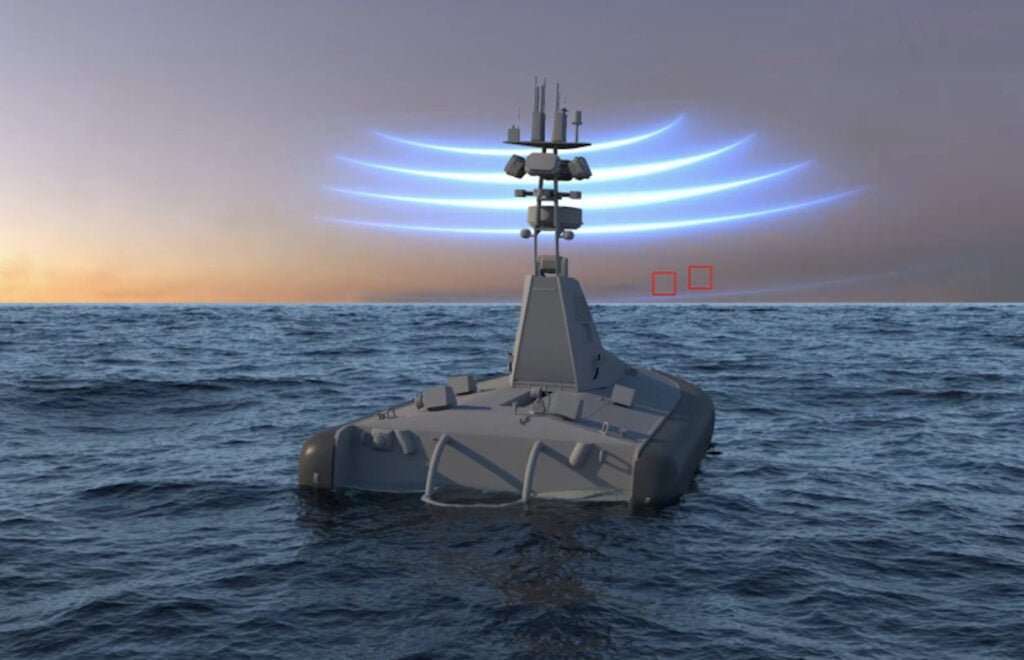
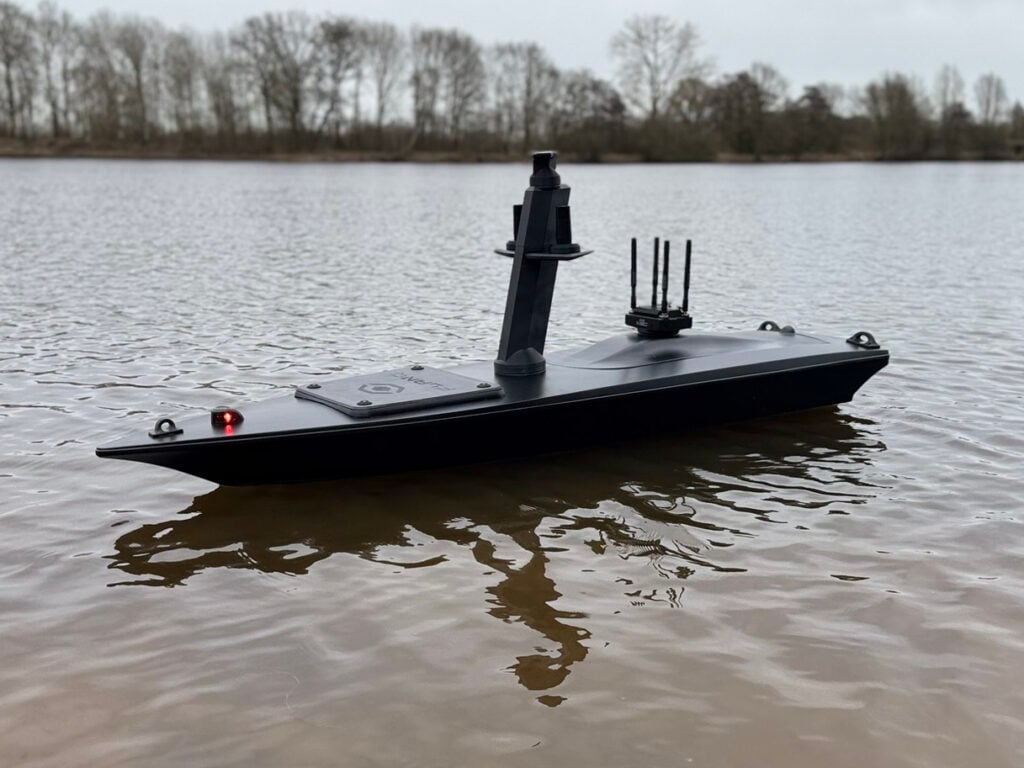
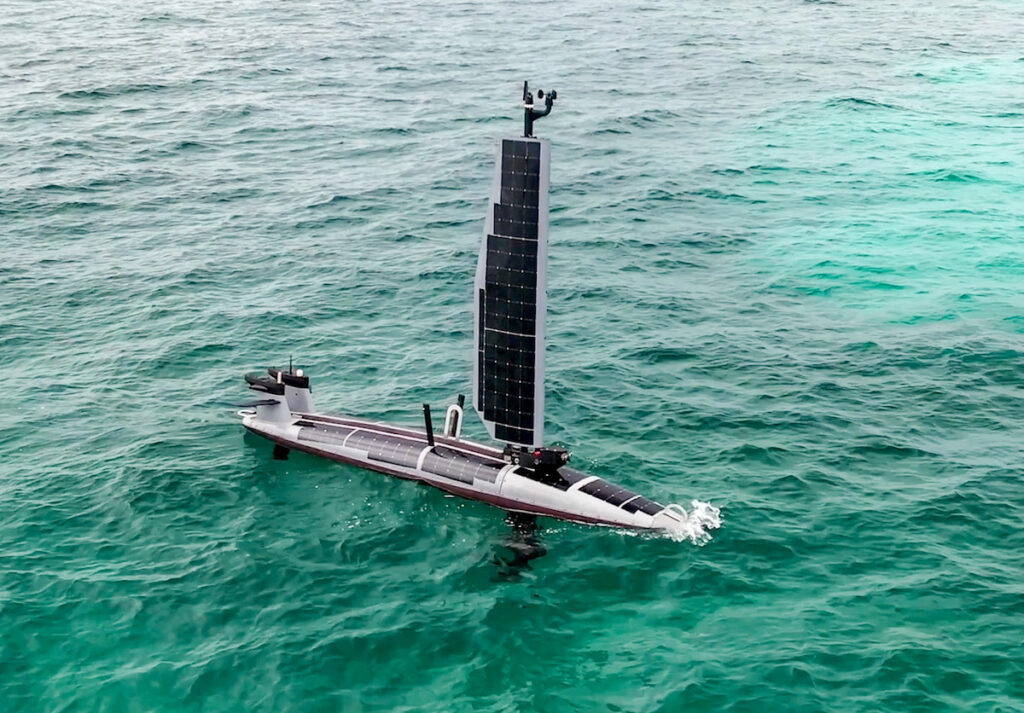
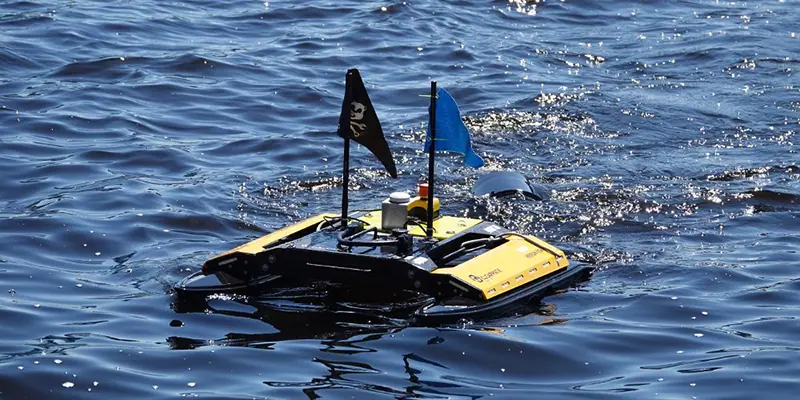
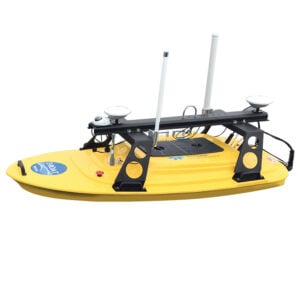
Select small USV platforms from leading manufacturers and suppliers supporting defense, security, and government maritime operations. Compact unmanned surface vehicles provide flexible capabilities for surveillance, maritime patrol, intelligence gathering, and coastal protection while reducing personnel risk. Small USVs support missions across naval forces, coast guards, border agencies, and emergency services, delivering autonomous or remotely operated performance in littoral waters, ports, and nearshore environments.
Read the Technology Overview
Autonomous Systems, Subsea Sensing & Underwater Technologies for Maritime Defense

If you design, build or supply Small USVs, create a profile to showcase your capabilities and connect with visitors who have an active requirement for your solutions.

Small unmanned surface vehicles (SUSVs) are remotely operated, autonomous, or semi-autonomous vessels designed to operate where larger USVs are not practical. Their small size enables rapid deployment, portability, and cost-effective operation across a wide range of missions.
Defense forces, coast guards, and security agencies use small USVs for intelligence, surveillance, and reconnaissance, maritime patrol, mine detection, and harbor security. These platforms typically integrate navigation systems, radar, electro-optical and infrared sensors, sonar, and communications links, enabling remote control or autonomous operation for maritime surveillance, environmental monitoring, and security operations.
Small USVs support persistent maritime surveillance by carrying camera systems, radar sensors, and electro-optical sensors. These platforms provide continuous monitoring of coastal zones, shipping lanes, and restricted waters.
Harbor security and port surveillance operations use small USVs to patrol restricted areas and detect potential threats. Collision avoidance systems and autonomous navigation enable safe operations around busy maritime infrastructure.
ISR USVs collect data using infrared, EO, radar, and sonar systems. These platforms contribute to intelligence-gathering and maritime domain awareness in contested environments.
Small USVs equipped with side scan sonar systems and forward looking sonar can support mine detection missions. These platforms enable remote survey of potentially hazardous areas while minimizing risk to crewed vessels.
Government agencies deploy USVs for coastal patrol and border security missions. Autonomous surface vehicles can monitor maritime borders and support interdiction operations.
Compact USVs are widely used for bathymetric and oceanographic survey operations. Sonar systems, lidar sensors, and onboard computers allow precise data collection in shallow or hazardous waters.
Naval forces use small USVs to enhance force protection around naval bases and anchored vessels. Persistent patrol capability improves situational awareness and early threat detection.
Remotely operated USVs are controlled from a ground control station via radio or satellite communication systems. Operators maintain direct control over navigation, payload operation, and mission execution.
Autonomous surface vehicles operate using onboard computers and autopilot systems that follow predefined mission routes. Autonomous navigation and collision-avoidance systems enable independent operation with limited operator oversight.
Hybrid systems combine autonomous navigation with remote operator intervention. These platforms can operate autonomously for routine patrol while allowing operators to assume control during complex mission phases.
Survey-focused USVs are equipped with specialized sensors, including side-scan sonar, bathymetric sonar systems, and lidar. These platforms support hydrographic mapping and maritime monitoring operations.
Security-oriented platforms emphasize surveillance cameras, radar sensors, and situational awareness systems. These USVs are optimized for port patrol, coastal surveillance, and maritime reconnaissance missions.
Small USVs differ from larger unmanned naval vessels primarily in size, endurance, and mission scope. Compact platforms emphasize rapid deployment, lower operating cost, and high maneuverability in confined environments such as harbors and coastal waters.
Larger autonomous naval vessels typically support extended missions, carry greater payloads, and have longer endurance. However, they require more complex logistics and infrastructure.
Small USVs provide advantages in operations where portability, shallow water capability, and rapid deployment are critical. They can be launched from shore, small vessels, or temporary staging locations, enabling flexible mission planning across military and civil security organizations.
Small USV systems designed for defense and security operations often comply with established military and maritime standards to ensure reliability, interoperability, and safety.
Relevant standards may include MIL-STD environmental and testing specifications that define requirements for vibration, shock, and temperature resilience in military equipment. NATO interoperability frameworks such as STANAG standards may also apply for communications, command and control systems, and data link systems used in multinational operations.
Autonomous navigation and collision avoidance capabilities must also comply with maritime safety frameworks such as the International Regulations for Preventing Collisions at Sea (COLREGs). Compliance with these standards ensures safe operation in mixed maritime traffic environments while enabling integration with broader maritime command and control systems.


 Searching Companies & Products