Unmanned Surface Vessels For Anti-Submarine Warfare Operations
Source anti-submarine warfare USV solutions from leading manufacturers and suppliers. ASW USVs are purpose-built unmanned surface vessels designed to detect, track, and support engagement operations against submerged threats in contested maritime environments. Sometimes also known as ACTUV or Sea Hunter platforms, these systems combine autonomous navigation, advanced sensor payloads, and resilient communication systems to extend naval reach while reducing operational risk.
If you design, build or supply Anti Submarine Warfare USVs, create a profile to showcase your capabilities and connect with visitors who have an active requirement for your solutions.
Unmanned Surface Vessels For Anti-Submarine Warfare Operations
Overview by
Olivia Hannam
Updated:
Anti-submarine warfare USVs support submarine detection, tracking, and maritime security operations. These platforms are designed for persistent deployment, offering extended endurance and reduced risk compared to crewed anti-submarine ship operations.
Their role in maritime domain awareness continues to expand, supporting naval surveillance, convoy protection, and harbor defense missions. With modular payload systems and scalable architectures, these platforms are adaptable to a wide range of operational requirements.
Anti-Submarine Warfare USV Roles and Applications
Submarine Detection
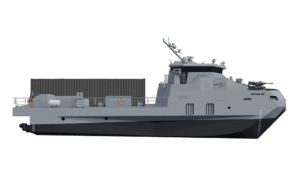
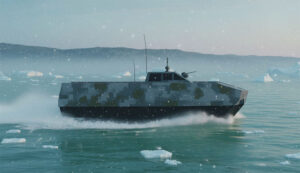
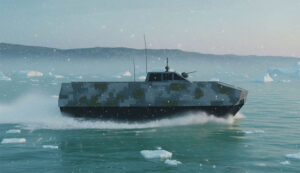
AIRCAT Bengal MC by Eureka Naval Craft
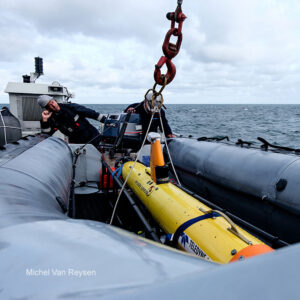
ASW USVs use sonar systems and acoustic surveillance technologies to identify submerged threats across wide operational areas. This enhances early warning and detection capabilities.
Submarine Tracking
Persistent tracking is enabled by towed-array sonar systems and advanced signal-processing units. This supports a coordinated response by naval assets.
Maritime Domain Awareness
ASW USVs contribute to maritime domain awareness systems by providing continuous environmental and threat data. This supports naval reconnaissance and maritime security operations.
Coastal And Harbor Defense
These platforms support harbor defense and coastal security missions by monitoring submarine activity in high-risk zones. Autonomous surface vehicles can operate continuously in restricted waters.
Convoy And Fleet Protection
ASW USVs enhance fleet protection by screening for submarine threats ahead of naval formations. This improves survivability in contested environments.
Types Of ASW USVs
Catamaran USV
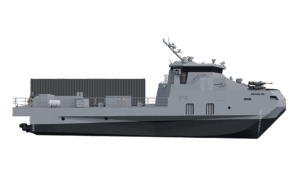
AIRCAT Bobcat, ultra-high-speed catamaran, from Eureka Naval Craft
Catamaran USVs offer stability and deck space for modular payload systems. They are well-suited for integrating sonar systems and communication systems.
Trimaran USV
Trimaran USVs provide enhanced hydrodynamic efficiency and endurance. Their design supports long-range maritime surveillance and submarine tracking missions.
Hybrid Propulsion USV
Hybrid propulsion USVs combine diesel engines with electric propulsion to reduce acoustic signatures. This is critical for stealth in ASW operations.
Long-Endurance USV
Long-endurance platforms are designed for persistent deployment with advanced energy storage systems. These systems support extended maritime surveillance operations.
Key Technologies In ASW USV Systems
ASW USVs rely on tightly integrated subsystems that enable detection, navigation, communication, and propulsion in contested environments:
Acoustic sensing is fundamental, with towed array sonar, hull-mounted sonar, and advanced acoustic sensor arrays enabling submarine detection and tracking. Signal processing systems and embedded AI enhance classification accuracy in complex underwater conditions.
ASW USVs provide a persistent, low-risk alternative to traditional crewed anti-submarine ship platforms, enabling continuous operations in contested maritime environments without exposing personnel. Their extended endurance supports wide-area coverage for submarine detection and tracking, while lower operating costs and flexible deployment models improve scalability across naval operations. Modular payload systems enable rapid adaptation to evolving mission requirements and support the integration of new sonar systems, sensors, and communication technologies.
While crewed platforms remain essential for complex engagement scenarios and onboard decision-making, ASW USVs are primarily deployed to augment manned assets, forming part of a layered and distributed maritime strategy.
Standards And Interoperability For ASW USVs
ASW USVs must comply with a range of military and maritime standards to ensure interoperability, safety, and mission effectiveness:
STANAG frameworks define interoperability requirements for NATO maritime operations, including data link systems and command-and-control system integration. These standards are critical for coalition operations.
Autonomous navigation and collision avoidance systems must align with international maritime regulations, including COLREGs, to ensure safe operation in shared waterways.
Secure communication systems and satellite communication systems must meet defense cybersecurity requirements to protect mission-critical data and ensure resilience against electronic warfare threats.
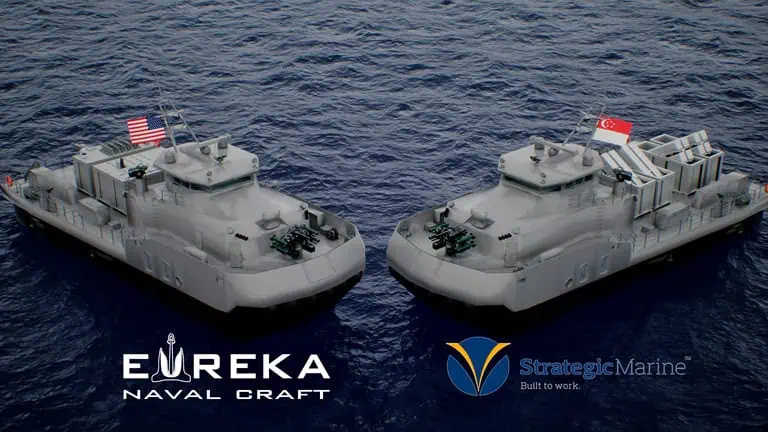
Eureka Naval Craft is a leading U.S.-based developer of high-speed crewed and uncrewed vessels for naval defense, coast guard, and humanitarian operations, built on advanced Surface Effect Ship (SES) technology
Eureka Naval Craft has partnered with Strategic Marine to expand production of the AIRCAT BENGAL MC, a versatile vessel designed for both naval and commercial applications
The latest defense technology news, straight to your inbox.
Get our weekly roundup of technology developments, new products and industry news.
THANK YOU FOR SIGNING UP
Thanks for joining us. Check your inbox.
We've sent you an email. Click the confirmation link to complete your subscription to the weekly eBrief. In the meantime, explore the latest news, suppliers and technologies on DA.
Advancing Defense Capability Through Strategic Collaboration
Defense Advancement works with major OEMs to foster collaboration and increase engagement with SMEs, to accelerate innovation and drive defense capabilities forward.