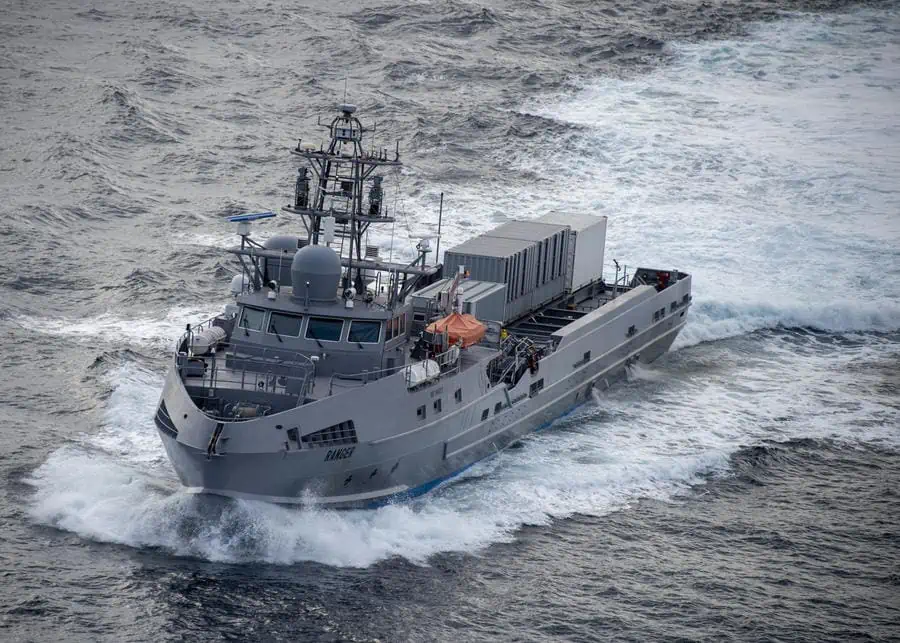
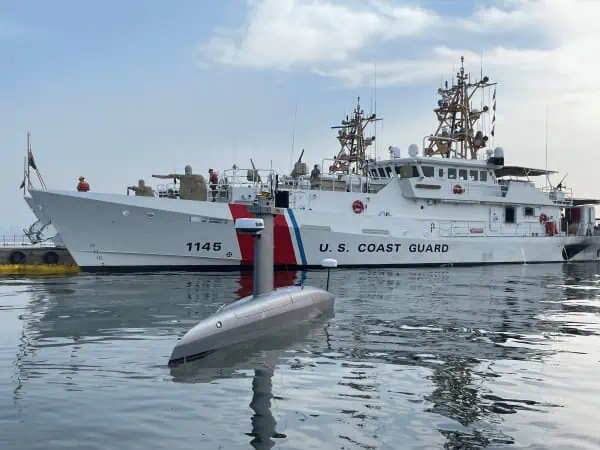
Select MUSV manufacturers and suppliers providing medium unmanned surface vessels for military, security, and emergency service operations. Medium USVs offer persistent maritime capability for intelligence, surveillance, reconnaissance, and mission support tasks without placing personnel at risk. These platforms are designed for flexible payload integration, autonomous or remotely operated control, and operation across coastal, offshore, and contested environments. Medium unmanned surface vessels are widely used by defense organizations, maritime security agencies, coast guards, and emergency response teams requiring scalable unmanned maritime systems.
If you design, build or supply Medium Unmanned Surface Vessels (MUSV), create a profile to showcase your capabilities and connect with visitors who have an active requirement for your solutions.
Medium unmanned surface vessels (MUSVs) are autonomous, semi-autonomous, or remotely operated platforms that operate on the ocean surface without an onboard crew. These crafts provide greater endurance, payload capacity, and sea keeping than smaller USVs. MUSVs support missions including surveillance, reconnaissance, mine countermeasures, hydrographic survey, and maritime domain awareness. Modular designs enable integration of radar, electro-optical and infrared cameras, sonar systems, and communication payloads. Navigation systems integrate GNSS, inertial navigation, and collision-avoidance technologies. With satellite communications and command-and-control integration, MUSVs can operate beyond line of sight, delivering persistent maritime capability while reducing risk to personnel.
Applications Of Medium Unmanned Surface Vessels
Intelligence Surveillance And Reconnaissance (ISR)
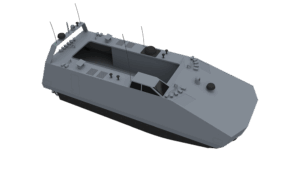
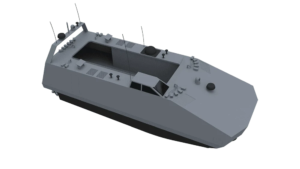
AIRCAT Panther from Eureka Naval Craft
MUSVs support intelligence gathering and maritime reconnaissance missions using integrated radar systems, EO IR sensors, acoustic sensors, and satellite communications systems. These capabilities enable persistent monitoring of maritime activity across large operational areas.
Maritime Domain Awareness
Medium USVs contribute to maritime domain awareness by continuously patrolling and surveilling coastal waters, shipping lanes, and offshore infrastructure. Data collected by onboard sensors can be transmitted in real time to command-and-control systems.
Naval Mine Countermeasures
Mine-hunting unmanned surface vehicles detect and classify naval mines using side-scan and multibeam sonar systems. MUSVs allow mine countermeasure operations to be conducted without exposing crewed vessels to risk.
Coastal And Border Security
Security agencies deploy MUSVs for maritime border patrol, harbor monitoring, and anti-piracy patrol operations. Autonomous navigation systems and long-endurance propulsion systems enable persistent surveillance across wide areas.
Search And Rescue Operations
Emergency response organizations use MUSVs to support search-and-rescue missions in hazardous environments. Infrared imaging cameras, radar systems, and communication systems enable the detection of distressed vessels and coordination with rescue teams.
Hydrographic And Bathymetric Survey
Survey USVs equipped with multibeam sonar systems and bathymetric survey sensors collect seabed mapping data for navigation safety, marine research, and offshore infrastructure planning.
Types Of Medium Unmanned Surface Vessels
Multipurpose MUSV
Multipurpose platforms are designed with modular payload bays that support rapid integration of mission equipment. These vessels can transition between ISR, surveillance, and environmental monitoring tasks with minimal modification.
Combat USV
Armed combat USVs are configured for naval security operations and may be equipped with remote weapon systems, electronic warfare equipment, and advanced maritime surveillance sensors.
Anti-Submarine Warfare (ASW) USV
ASW USVs are equipped with acoustic detection sensors, sonar systems, and autonomous tracking capabilities to detect and monitor underwater threats during maritime security operations.
Survey And Research USV
Survey-focused MUSVs integrate hydrographic sensors, including side-scan and multibeam sonar systems, for seabed mapping, environmental monitoring, and offshore infrastructure inspection.
Mine Countermeasure (MCM) USV
Mine-hunting USVs operate specialized sonar systems and remote payloads to identify and neutralize underwater mines during naval mine countermeasures operations.
Medium USV Systems And Key Technologies
Medium unmanned surface vessels incorporate a range of integrated subsystems that support autonomous and remote operations. Propulsion systems commonly include diesel marine engines, electric propulsion systems, or hybrid marine propulsion configurations combining internal combustion engines with lithium-ion battery packs. Water jet propulsion and propeller propulsion systems are frequently used depending on mission requirements and vessel design.
Navigation and autonomy systems combine GNSS receivers, inertial navigation systems, obstacle avoidance systems, and onboard computers capable of executing autonomous navigation algorithms. These systems allow MUSVs to maintain precise navigation and collision avoidance in busy maritime environments.
Communication architectures are equally critical. MUSVs typically integrate radio communication systems, line-of-sight data links, and beyond line-of-sight satellite communications systems to ensure continuous connectivity with command centers. These systems enable remote operators to monitor vessel status, update mission parameters, and control payload operations.
Sensor payloads vary depending on mission requirements but commonly include marine radar systems, electro-optical cameras, infrared imaging sensors, AIS transponders, acoustic detection sensors, and sonar systems. Combined, these technologies allow MUSVs to perform maritime surveillance, reconnaissance, and environmental monitoring across a wide range of operational environments.
MUSV Compared With Other Unmanned Maritime Platforms
Medium unmanned surface vessels occupy an important operational niche between small surface drones (SUSV) and larger autonomous ships. Small USVs are typically used for short-range missions such as harbor security or localized inspection tasks. While highly agile, they often have limited endurance and payload capacity.
Large unmanned surface vessels (LUSV) provide significantly greater endurance and payload capacity but require larger launch and recovery infrastructure and incur higher operating costs. MUSVs balance endurance, mission flexibility, and deployability, making them well-suited for naval operations, maritime security, and offshore monitoring missions.
Compared with unmanned underwater vehicles, MUSVs provide surface-level surveillance and communication relay capabilities while maintaining a persistent presence in operational areas. They often function as command nodes or sensor platforms within distributed unmanned maritime systems.
Standards And Interoperability Considerations
Military and security organizations deploying MUSV platforms often require compliance with established defense and maritime standards. Interoperability with existing command-and-control systems and communication architectures is particularly important.
Relevant standards may include NATO STANAG protocols governing unmanned system interoperability, secure data links, and communications architecture. Additional requirements may include MIL-STD specifications covering environmental testing, electromagnetic compatibility, and system reliability for mission-critical naval platforms.
Adherence to standardized communication interfaces and autonomous control frameworks enables MUSVs to integrate with broader unmanned maritime systems and joint operational networks. This interoperability enables defense forces and security agencies to deploy coordinated unmanned fleets to support surveillance, reconnaissance, and mission support operations across maritime domains.
Eureka Naval Craft is a leading U.S.-based developer of high-speed crewed and uncrewed vessels for naval defense, coast guard, and humanitarian operations, built on advanced Surface Effect Ship (SES) technology
Hanwha Defense USA, Hanwha Systems Co, and HavocAI have partnered to develop 200-foot autonomous surface vessels, combining Hanwha’s shipbuilding and manufacturing scale with HavocAI’s collaborative autonomy software to support future U.S. defense programs
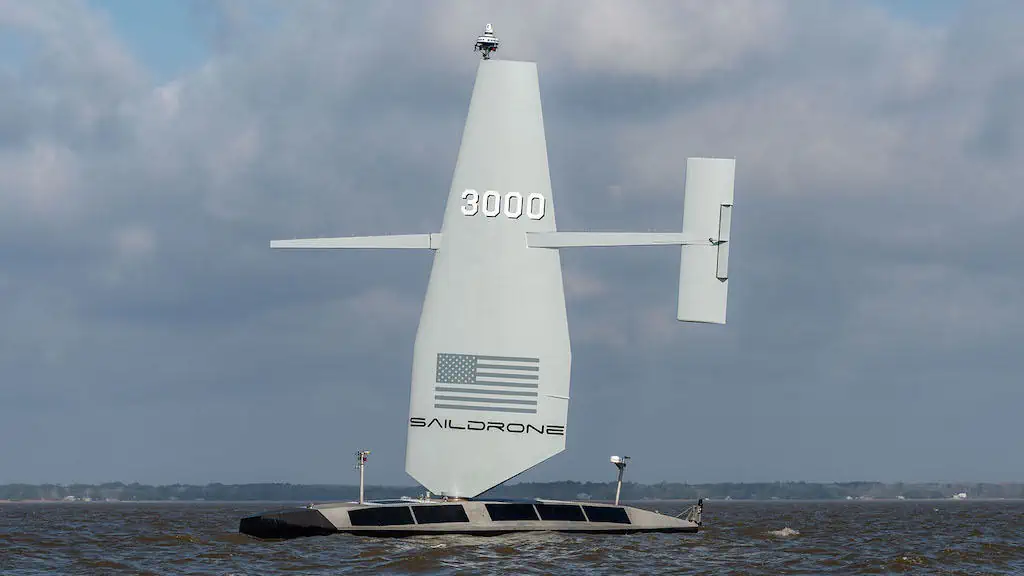
The first Saildrone aluminum Surveyor USV has been completed, carrying the latest multibeam sonar equipment and purpose-built defense and security payloads
Exail's DriX Unmanned Surface Vehicle (USV) was among fifteen USVs and Unmanned Aerial Vehicles (UAV) to participate in Digital Horizon, tasked with gathering data on the surface in order to detect and identify potential threats
The latest defense technology news, straight to your inbox.
Get our weekly roundup of technology developments, new products and industry news.
THANK YOU FOR SIGNING UP
Thanks for joining us. Check your inbox.
We've sent you an email. Click the confirmation link to complete your subscription to the weekly eBrief. In the meantime, explore the latest news, suppliers and technologies on DA.
Advancing Defense Capability Through Strategic Collaboration
Defense Advancement works with major OEMs to foster collaboration and increase engagement with SMEs, to accelerate innovation and drive defense capabilities forward.