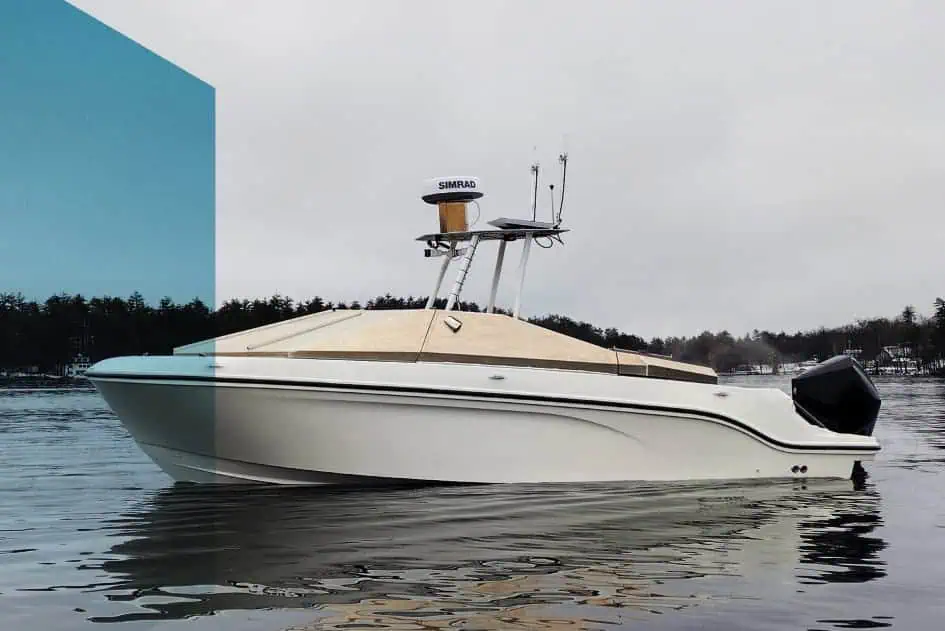
Showcase your capabilities
If you design, build or supply Attritable USV, create a profile to showcase your capabilities and connect with visitors who have an active requirement for your solutions.




Source attritable USVs from leading manufacturers and suppliers for decoy, ISR, electronic warfare, and strike missions. Designed for contested environments, these unmanned surface vehicles enable scalable deployment across force protection, swarm tactics, and one-way strike operations within integrated C4ISR systems.
Read the Technology Overview
Advanced Mission Systems for Defense Forces Across the Land, Air, Naval & Space Domains

Cutting-Edge Defense Technologies Empowering The Warfighter On The Modern Battlefield

If you design, build or supply Attritable USV, create a profile to showcase your capabilities and connect with visitors who have an active requirement for your solutions.

Attritable unmanned surface vehicles are designed for deployment in contested environments where mission requirements accept platform loss in exchange for operational advantage. These systems extend naval capabilities across ISR, electronic warfare, and direct-attack roles, enabling distributed maritime operations at scale. By combining low-cost manufacturing with modular subsystems, attritable USVs provide a flexible approach to force protection, target saturation, and offensive strike capability.
An attritable unmanned surface vehicle is a naval drone engineered for missions where loss is acceptable within defined operational parameters. These systems support force protection, ISR operations, electronic warfare operations, and offensive strike missions in high-risk deployment scenarios.
Unlike conventional unmanned surface vehicles, attritable USVs prioritize scalability, cost efficiency, and rapid deployment. This allows their use in large numbers for naval decoy missions, electronic attack, and one-way strike operations, including kamikaze-style attack profiles against high-value or defended targets.
Attritable USVs function as naval decoys by replicating radar, infrared sensor, and RF signatures of crewed platforms. They support radar spoofing and signature spoofing to misdirect adversary targeting systems in contested environments.
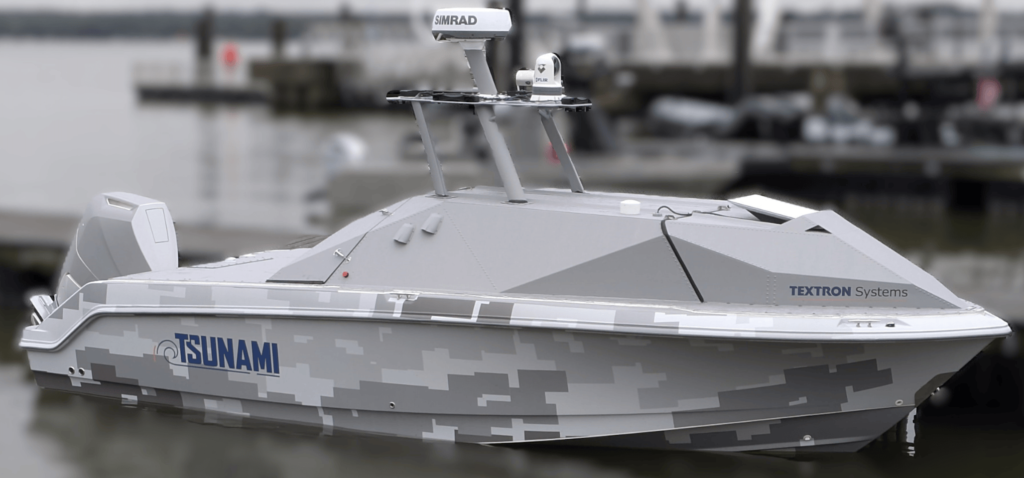
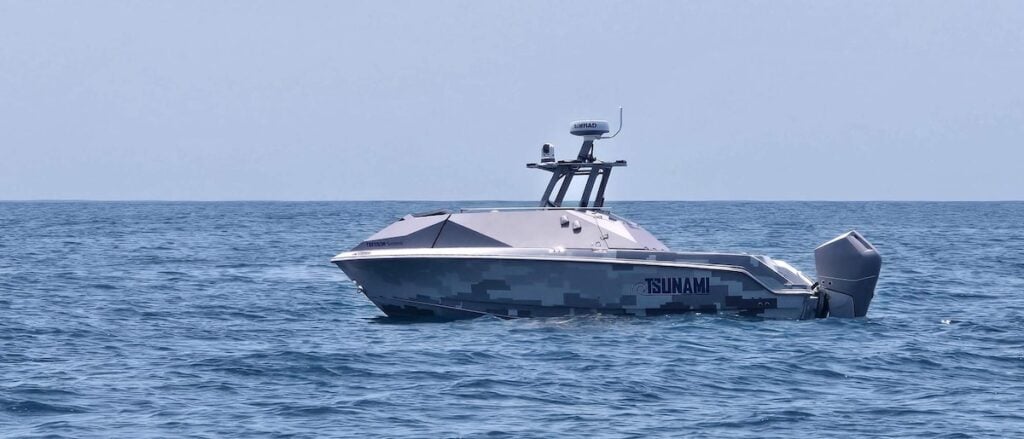
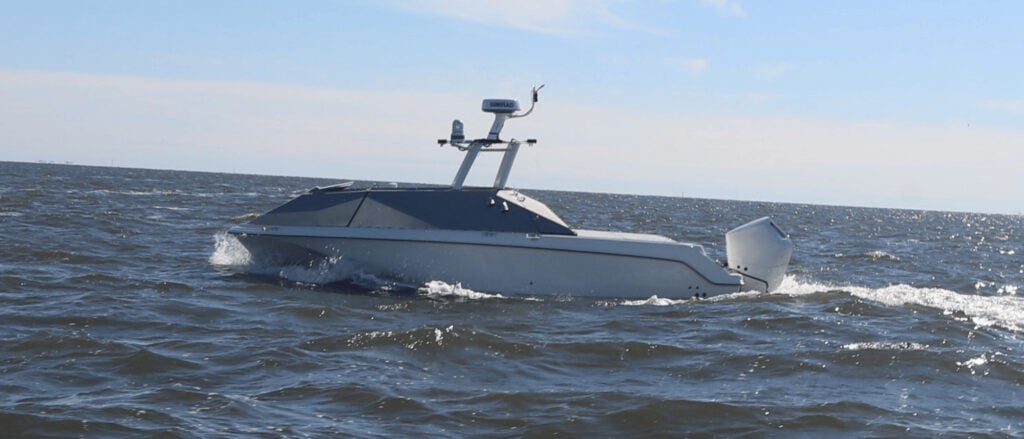
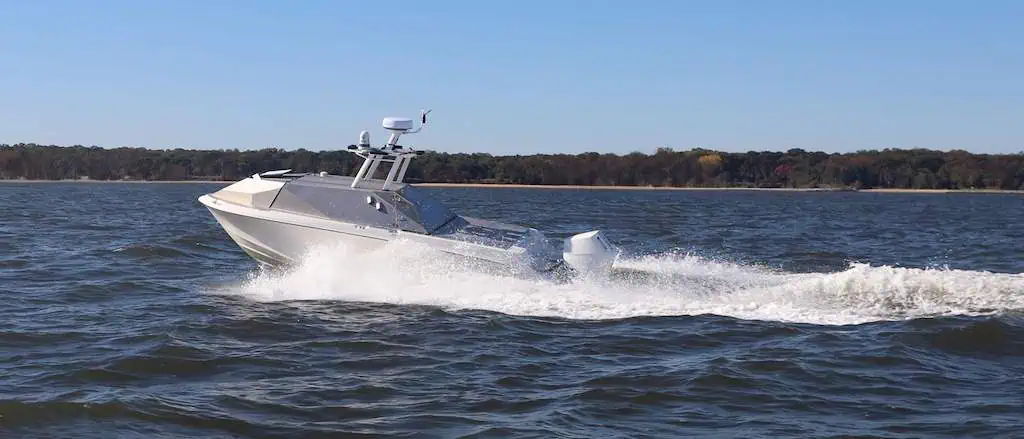
Attritable USV, TSUNAMI, from Textron Systems.
Equipped with electronic countermeasures and EW payloads, these platforms conduct electronic attack and electromagnetic deception. Alongside higher-value EW USVs, by enabling higher-risk deployment and increased operational density.
Attritable USVs support ISR operations using sensor suites that include camera systems, marine radar, and electro-optical sensor payloads. They complement non-attritable ISR USVs, they enable intelligence gathering and surveillance operations in denied or high-threat areas.
Operating in coordinated groups, attritable USVs execute swarm tactics to overwhelm detection and response systems. They are deployed in screening operations and perimeter defense roles to enhance fleet protection in complex operational environments.
Attritable USVs are configured for one-way strike missions, delivering explosive payloads against maritime targets. These deployment scenarios enable low-cost offensive capabilities in anti-access/area-denial environments and high-risk strike profiles.
These platforms are used in combat training, live fire training, and weapons testing to simulate realistic maritime threats. They support target simulation and threat replication for testing and evaluation of defensive systems.
Attritable USVs contribute to coastal defense and harbor defense by providing autonomous surveillance, rapid interception, and layered force protection. Their deployment enhances situational awareness in littoral operations. They can serve alongside or in place of non-attritable maritime security USVs.
Small USV platforms are optimized for low SWaP and high-volume deployment. They are commonly used for swarm tactics, decoy boat roles, and short-range strike or ISR missions.
Medium USV systems provide a balance between payload system capacity and endurance. They support multi-mission deployment, including ISR, electronic warfare, and strike roles.
Large USV platforms enable extended range, increased payload integration, and persistent ISR operations. They support complex mission systems, including satellite communication and advanced electronic countermeasures.
Attritable USVs are built around modular subsystems to enable rapid reconfiguration to meet mission requirements. Core subsystems include propulsion system options such as diesel engine, electric propulsion, or waterjet propulsion, enabling speed, endurance, and maneuverability trade-offs based on deployment scenarios.
Navigation systems integrate GNSS, inertial navigation systems, and advanced redundancy for operations in degraded environments. Communication systems include RF communication, satellite communication, and resilient datalink architectures for command-and-control system integration.
Payload systems define mission capability and include radar reflector units, signature generator modules, EO sensor and infrared sensor payloads, electronic countermeasures, and EW payload configurations. For strike roles, payload systems can include explosive payloads for one-way missions, supported by autonomy software and onboard computing units for terminal guidance.
Hull designs are optimized for SWaP constraints, balancing payload capacity, stability, and survivability through mission duration. Small, medium, and large USV configurations enable scalable deployment across diverse operational environments.
Attritable USVs differ from conventional unmanned surface vehicles in their acceptance of loss as part of mission design. Conventional systems emphasize survivability, redundancy, and long-term deployment, while attritable platforms prioritize cost efficiency, rapid production, and expendability.
This distinction enables attritable USVs to operate in contested environments where platform risk is high, including electronic warfare operations, anti-access/area-denial scenarios, and offensive strike missions. Their deployment increases operational flexibility while preserving high-value assets.
Attritable USVs integrate into C4ISR systems through robust communication systems and mission control system architectures. Data link and satellite communications enable real-time coordination with command-and-control system frameworks.
Autonomy software and onboard processing unit capabilities support distributed control, enabling coordinated ISR operations, electronic countermeasures, and synchronized strike missions across multiple platforms in swarm configurations.
Attritable USV deployment aligns with military standards governing interoperability, environmental performance, and communication systems. NATO STANAG protocols define data link interoperability, while MIL-STD requirements ensure system resilience in harsh operational environments.
Testing and evaluation processes validate performance across ISR, electronic warfare, and strike operations. Compliance ensures reliability in contested environments and integration with existing naval mission systems.
Procurement decisions for attritable USVs are driven by mission requirements, deployment scenarios, and integration with existing force structures. Key considerations include payload system compatibility, communication system resilience, propulsion system performance, and scalability.
For force protection and offensive capability, attritable unmanned surface vehicles provide a cost-effective solution for distributed maritime operations. Their ability to support naval decoys, ISR operations, electronic warfare, and one-way strike missions positions them as a critical component in modern naval strategy.


 Searching Companies & Products