Integrated USV Platforms for Autonomous Logistics and Maritime Cargo Resupply
Source manufacturers and suppliers of Unmanned Surface Vehicles (USVs) for autonomous logistics. These maritime platforms are engineered for cargo transport, autonomous resupply, and ship-to-shore missions. Key system capabilities include high-payload capacity, long-endurance operation, and robust Command and Control (C2) systems for remote and autonomous navigation. The integration of SATCOM, sense-and-avoid sensors, and modular payload bays allows for flexible deployment in both commercial and defense scenarios.
If you design, build or supply Support and Logistics USVs, create a profile to showcase your capabilities and connect with visitors who have an active requirement for your solutions.
Integrated USV Platforms for Autonomous Logistics and Maritime Cargo Resupply
Overview by
Joseph Macey
Updated:
The operational value of USVs in logistics lies in their ability to perform lengthy, repetitive, or high-risk tasks without direct human intervention on board. This enhances operational safety, reduces personnel costs, and allows for the reallocation of manned assets to more complex missions. Development is focused on increasing vessel size, payload capacity, and autonomy, enabling complex coordination in swarm or fleet configurations.
Advancements in artificial intelligence and sensor fusion are critical for enabling USVs to navigate complex maritime environments safely. These systems process data from radar, AIS, EO/IR cameras, and other sensors to build a comprehensive situational awareness picture, allowing the vehicle to detect and avoid potential hazards. This capability is essential for operating in congested shipping lanes and near other vessels.
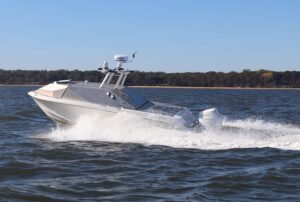
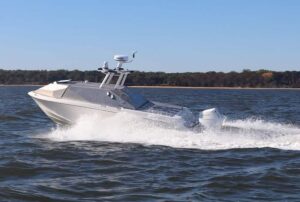
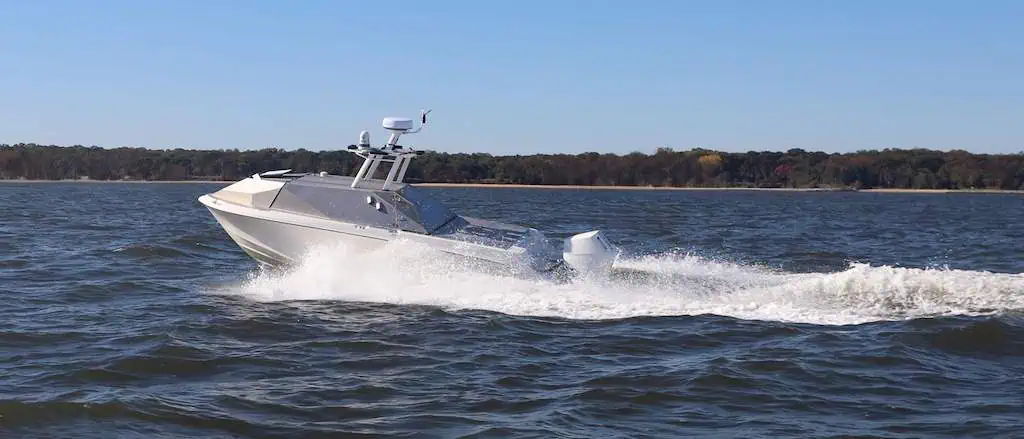
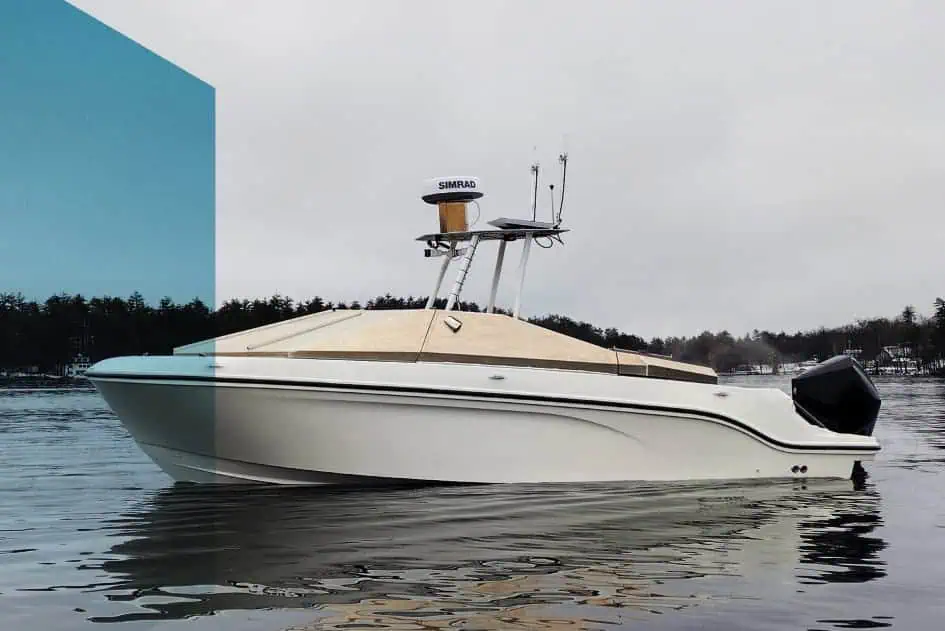
TSUNAMI series of USVs for autonomous logistics from Textron Systems.
Types of Autonomous Logistics Craft
Small USVs
Often based on Rigid-Hulled Inflatable Boat (RHIB) or small monohull designs, small USVs are typically under 7 meters in length. They are used for rapid, short-range logistics, last-mile resupply, or as daughtercraft deployed from a larger vessel. Their small size allows for easy deployment and recovery but limits their payload capacity and endurance.
Medium USVs
Medium USVs represent a versatile middle ground, frequently utilizing catamaran or monohull forms. They balance significant payload capacity with good endurance, making them suitable for coastal logistics, offshore platform resupply, and persistent surveillance. These platforms often serve as the primary workhorses for a wide range of logistics scenarios.
Large USVs
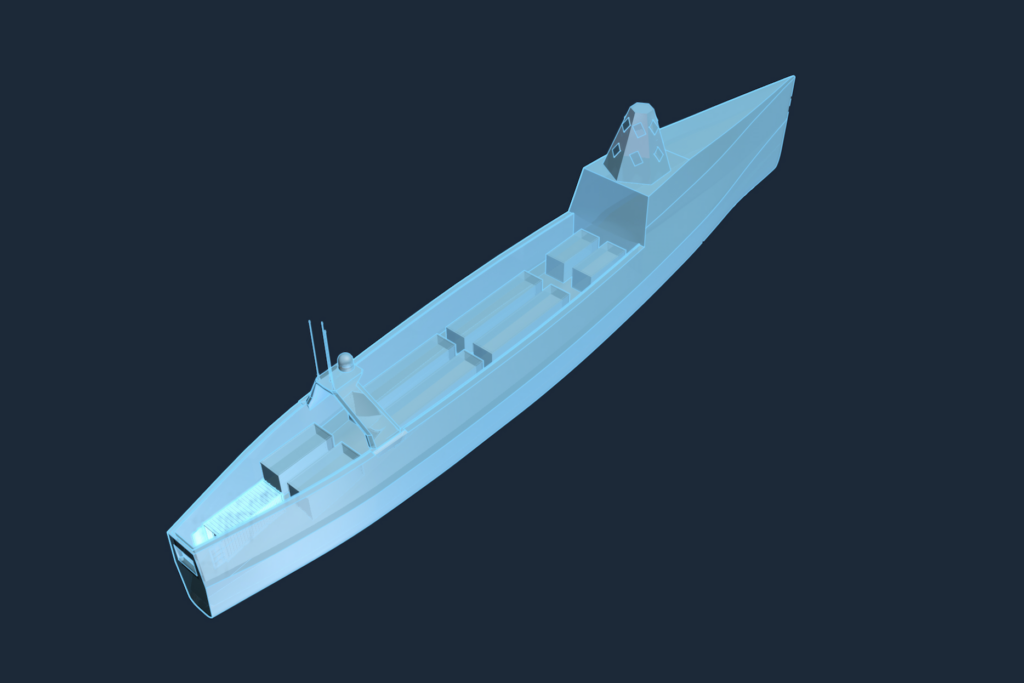
Large USVs, which can exceed 20 meters in length, are designed for long-endurance, high-payload missions. Often based on ship-sized monohull or trimaran designs, they are capable of trans-oceanic voyages and transporting substantial cargo loads. Large USVs are being developed for roles traditionally filled by manned supply ships.
Mothership and Daughtercraft Systems
This system architecture involves a large host vessel (the mothership) that deploys and recovers one or more smaller USVs (daughtercraft). This model extends the operational reach of the mothership and enables specialized tasks to be performed by smaller, more agile platforms. It is particularly effective for complex missions requiring both large-scale presence and localized action.
Semi-Submersible USVs
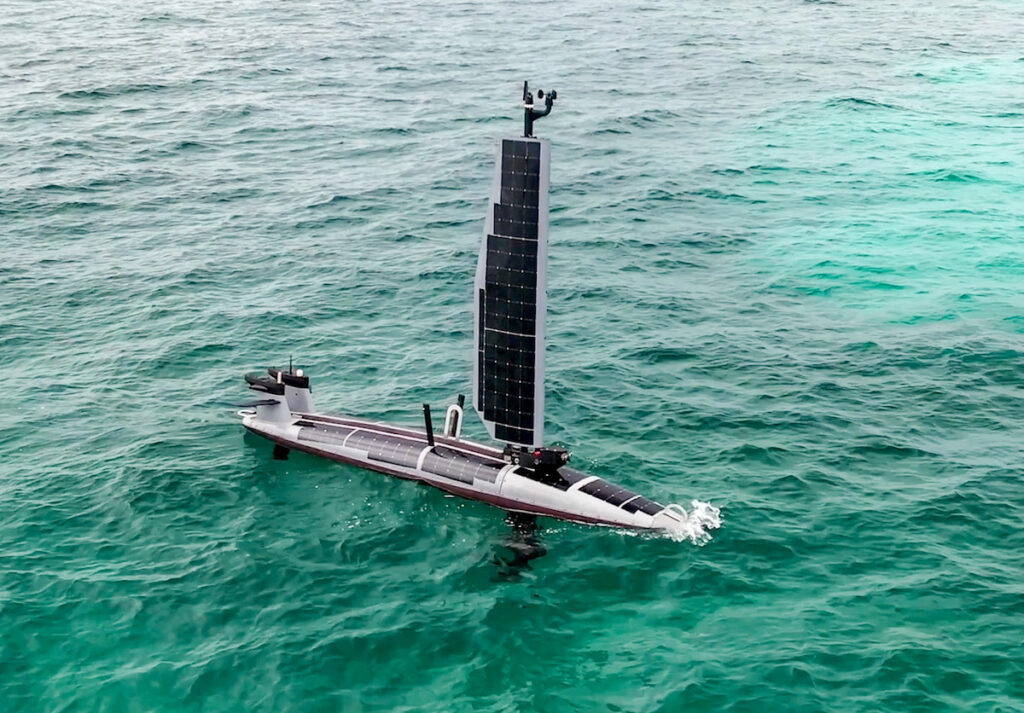
These vessels are designed with a low-profile hull that runs just beneath the surface, reducing their visibility to radar and visual detection. This characteristic is highly valuable for military logistics and resupply missions in contested environments. While offering stealth, the design can limit payload capacity compared to conventional hulls.
Monohull USVs
Traditional monohull designs are frequently used for logistics USVs due to their simplicity, robust construction, and predictable handling characteristics. These vessels can be scaled to a wide range of sizes to accommodate different payload and endurance requirements. They are often optimized for stability and seakeeping in open-ocean conditions.
Catamaran and Trimaran USVs
Multi-hull platforms offer a large, stable deck area, making them ideal for carrying oversized cargo or mounting specialized equipment. Their design provides excellent efficiency and seakeeping, particularly at high speeds. This stability is also beneficial for missions that require precise positioning or the operation of sensitive sensor payloads.
Cargo and Logistics USV Applications
Ship-to-Shore Logistics
USVs provide a reliable method for transferring cargo, equipment, and supplies from a mothership to a coastline. This application is critical for naval amphibious operations, resupplying forward operating bases, and supporting commercial offshore construction projects. The use of unmanned platforms for these tasks minimizes risk in contested or hazardous zones.
Offshore Asset Resupply
Autonomous vessels are used for the routine resupply of offshore energy platforms, wind farms, and aquaculture installations. They provide a cost-effective, persistent logistics capability that can operate in high sea states that might challenge manned vessels. This ensures a consistent flow of materials and personnel support without interruption.
Contested Environment Logistics
In military contexts, logistics USVs are designed to operate in areas where manned operations would be too dangerous. They can perform autonomous resupply missions under threat, delivering critical supplies to surface combatants or special operations forces. Their low-profile design and autonomous navigation reduce the risk of detection and attack.
Humanitarian Aid and Disaster Relief (HADR)
Following a natural disaster, USVs can be deployed to deliver critical supplies such as food, water, and medicine to affected coastal areas. Their ability to navigate shallow waters and debris-filled harbors makes them invaluable when traditional port infrastructure is damaged or inaccessible. They can also be equipped with sensors to conduct initial damage assessments.
System Integration
GNSS and Inertial Navigation
For precise positioning and navigation, USVs integrate Global Navigation Satellite Systems (GNSS) with Inertial Navigation Systems (INS). The INS provides crucial dead-reckoning data on heading, velocity, and attitude if the GNSS signal is lost or jammed. Advanced systems may also incorporate vision-based navigation for enhanced performance in GPS-denied environments.
Command and Control (C2)
The C2 system is the operational core, allowing operators to plan missions, monitor vehicle status, and control payloads. These systems utilize encrypted data links, including SATCOM and Line-of-Sight (LOS) radios, to ensure secure communication. Advanced C2 software includes features for autonomous pathfinding, collision avoidance, and multi-vehicle coordination.
Propulsion Systems
Logistics USVs employ a range of propulsion systems depending on their mission requirements. Diesel and hybrid-electric systems are common for long-endurance missions, offering a balance of power and fuel efficiency. All-electric propulsion is increasingly used for smaller USVs or for missions requiring low acoustic signatures.
Payload Integration
A key feature of logistics USVs is their modular payload capacity. Standardized interfaces and configurable cargo bays enable rapid integration of different mission packages. This can include containerized cargo, liquid storage tanks, or specialized modules for intelligence, surveillance, and reconnaissance (ISR).
Comparisons
Payload vs. Endurance
Larger monohull and multi-hull USVs typically offer the greatest payload capacity, but often at the cost of higher fuel consumption, which can limit unrefueled endurance. Smaller, more efficient platforms may offer extended operational time but are restricted to lighter cargo loads. The choice involves a direct trade-off based on the specific logistics scenario.
Seakeeping vs. Stealth
Vessels with conventional hull forms, like catamarans, offer superior stability and performance in high sea states (e.g., Sea State 5 and above). In contrast, semi-submersible platforms sacrifice some seakeeping ability for a significantly reduced radar cross-section and visual profile. The selection depends on whether mission success relies more on survivability in harsh weather or avoiding detection.
Autonomy Level
The level of autonomy varies significantly between systems, impacting operator workload and mission complexity. Basic remotely operated USVs require constant human oversight. More advanced semi-autonomous USVs incorporate autonomous navigation and collision avoidance, while fully autonomous systems can execute complex missions based on high-level objectives with minimal human interaction.
Standards
MIL-STD-810
MIL-STD-810 defines environmental engineering considerations and laboratory tests for military equipment. USVs designed for defense applications are tested against MIL-STD-810 criteria to ensure they can withstand factors such as extreme temperatures, humidity, salt fog, vibration, and shock encountered during maritime operations. Compliance ensures reliability in harsh field conditions.
MIL-STD-461
MIL-STD-461 addresses the electromagnetic compatibility (EMC) of electronic systems. USVs must comply with MIL-STD-461 to ensure their onboard electronics do not emit high levels of electromagnetic interference that could disrupt other systems, and that they are not susceptible to external EMI. This is crucial for the integrity of communication, navigation, and C2 systems.
NDAA Compliance
The National Defense Authorization Act (NDAA) includes sections that regulate the procurement of technology for the U.S. Department of Defense, including unmanned systems. For manufacturers, this involves strict adherence to supply chain security and prohibitions on the use of certain components sourced from designated foreign countries. NDAA compliance is a critical requirement for any USV intended for U.S. military use.
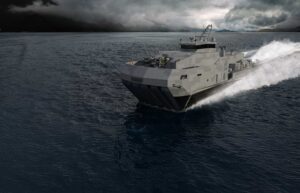
Following $50 million in development, the new autonomous vessel demonstrates resilience in Sea State 9 conditions and offers modular payload integration for contested environments
Textron Systems aims to lead the future of maritime autonomy with advanced uncrewed integration, looking into their TSUNAMI™ family of autonomous maritime surface vessels
Textron Systems introduces the TSUNAMI family of autonomous maritime surface vessels, offering versatile, cost-effective solutions for the U.S. Department of Defense and allied forces
Ocean Aero has selected Forcys to provide advanced sonar and navigation systems, including Sonardyne’s SPRINT-Nav Mini and Wavefront Systems’ Solstice MAS, for the Triton AUSV
The Large Uncrewed Surface Vessel (LUSV) vision is an evolution of BMT's Highly Autonomous Warship Technologies (HAWT) programme launched at DSEI two years ago where the company created a vision of a safe and secure lean crewed warship
During trials, the Otter Pro robot boat from RS Aqua was able to survey a 7,000 square meters area in just 40 minutes, collecting sonar imagery of several wrecks and sensing swim lines and seabed erosion caused by divers
The latest defense technology news, straight to your inbox.
Get our weekly roundup of technology developments, new products and industry news.
THANK YOU FOR SIGNING UP
Thanks for joining us. Check your inbox.
We've sent you an email. Click the confirmation link to complete your subscription to the weekly eBrief. In the meantime, explore the latest news, suppliers and technologies on DA.
Advancing Defense Capability Through Strategic Collaboration
Defense Advancement works with major OEMs to foster collaboration and increase engagement with SMEs, to accelerate innovation and drive defense capabilities forward.