Showcase your capabilities
If you design, build or supply Fleet-Class USVs, create a profile to showcase your capabilities and connect with visitors who have an active requirement for your solutions.




Select fleet-class unmanned surface vessel platforms from specialist manufacturers and suppliers supporting naval defense, maritime security, and military R&D programs. These unmanned surface vehicles are designed for patrol, escort, surveillance, electronic warfare, and mine countermeasure missions.
Read the Technology Overview
Crewed & Uncrewed Vessels for Naval Defense, Coast Guard & Humanitarian Missions

Cutting-Edge Defense Technologies Empowering The Warfighter On The Modern Battlefield

If you design, build or supply Fleet-Class USVs, create a profile to showcase your capabilities and connect with visitors who have an active requirement for your solutions.

Fleet-class unmanned surface vessel platforms, sometimes referred to as common unmanned surface vessels (CUSVs), are military craft designed for multi-mission maritime operations. Typically, medium– to large unmanned surface vessels can operate independently or alongside crewed ships and other unmanned maritime systems.
Naval forces deploy fleet-class USVs to support maritime domain awareness, intelligence, surveillance, and reconnaissance, high speed interception, and high-risk missions, without exposing personnel. These platforms integrate autonomous navigation, command-and-control, and satellite communication systems for extended operations in littoral and open-ocean environments.
Modular payload bays support sensors such as marine radar, electro-optical infrared sensors, and towed sonar systems, as well as payloads for electronic warfare, signals intelligence, mine countermeasures, and maritime security missions.
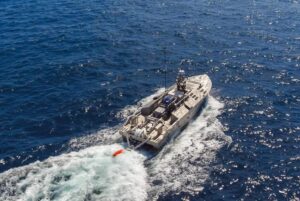
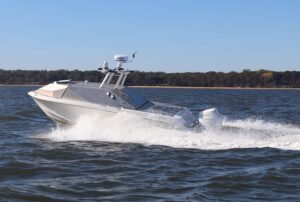
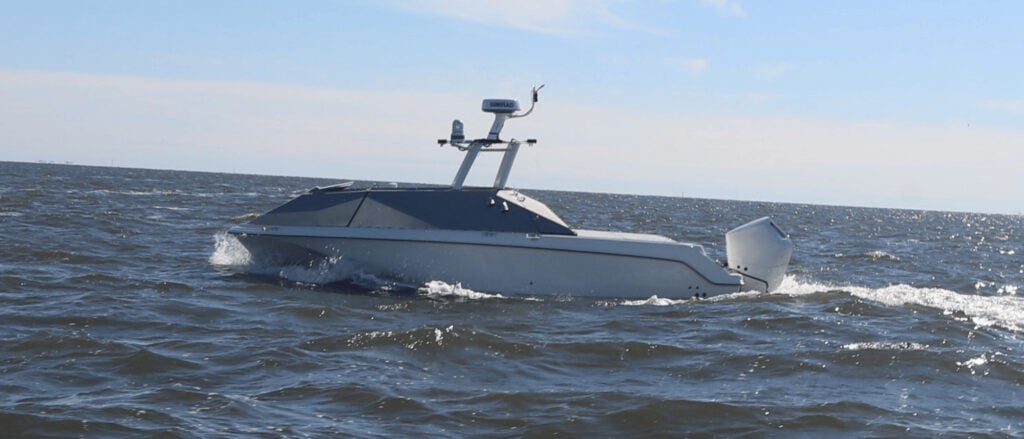
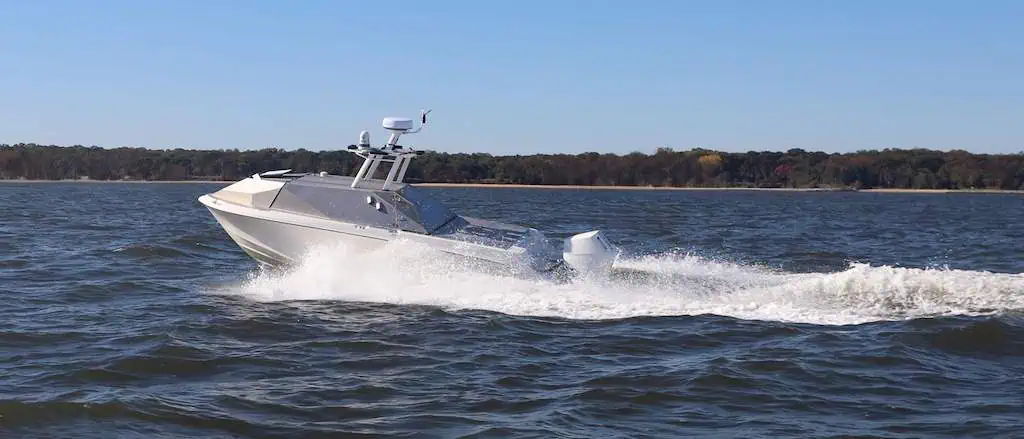
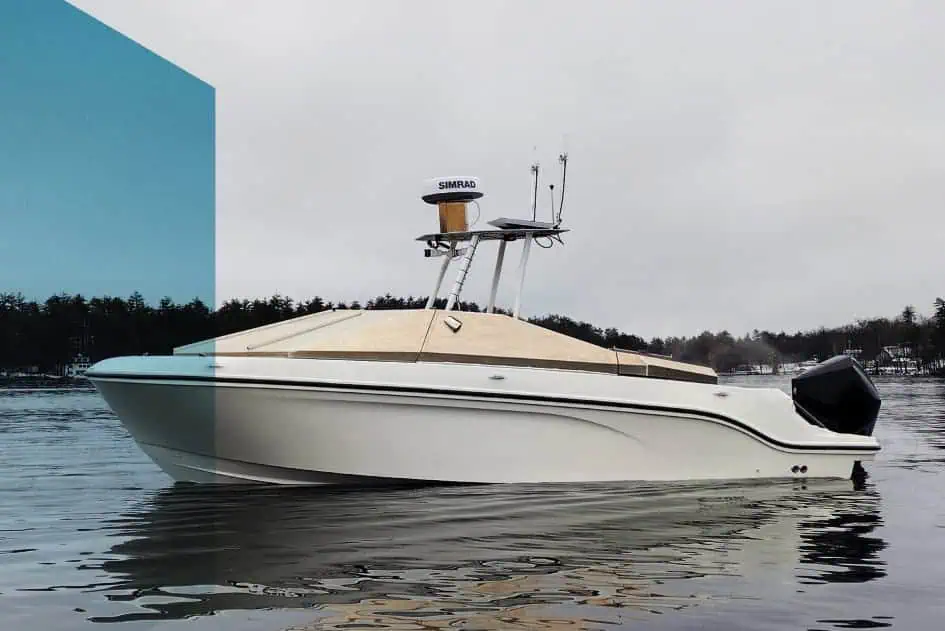
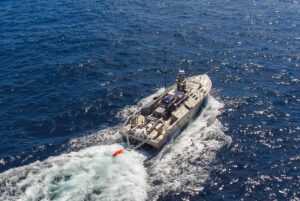
Fleet class CUSV, Common Unmanned Surface Vehicle, from Textron Systems.
Fleet-class USVs are widely deployed for maritime security operations, including anti-piracy patrols, border security patrols, harbor protection, and port security operations. Their persistent surveillance capabilities enable naval and coast guard forces to monitor large maritime areas at reduced operational cost.
Electronic warfare configurations prioritize electromagnetic payloads such as SIGINT systems and electronic warfare suites. These vessels are designed to collect signals intelligence and support electronic warfare operations across naval theaters.
Escort-class configurations emphasize maritime security and force protection roles. These vessels integrate navigation radars, electro-optical sensors, and remote weapon stations to support escort and patrol missions.
Fleet-class unmanned surface vessels occupy a distinct operational niche between small tactical USVs and large unmanned naval vessels designed for long-endurance missions.
Small USVs are typically used for short-range reconnaissance, harbor surveillance, or specialized missions with limited payload capacity. Fleet-class USVs provide significantly greater endurance, mission flexibility, and payload integration capabilities.
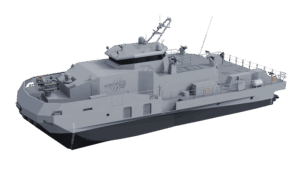
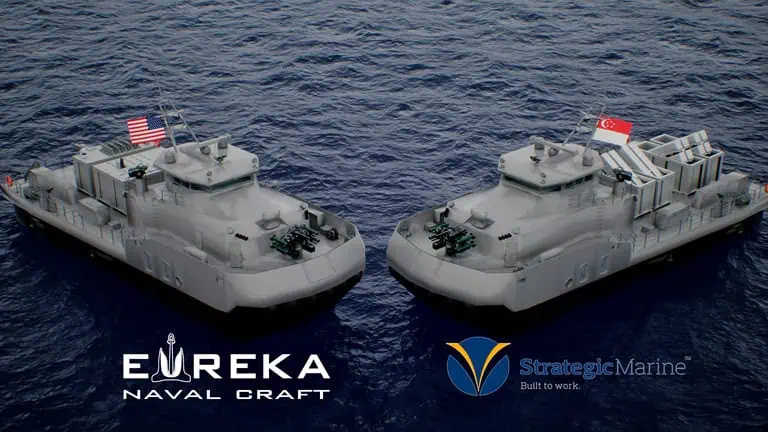
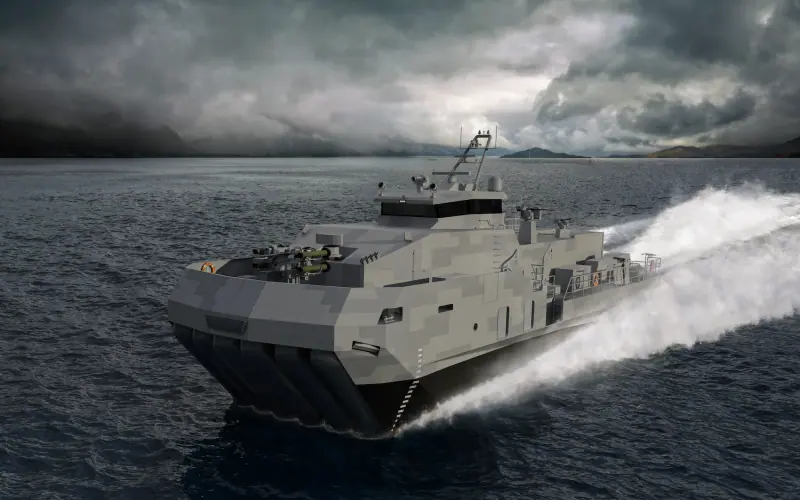
AIRCAT Bengal fleet class USV from Eureka Naval Craft.
Compared with large unmanned surface vessels, fleet-class platforms emphasize modular mission payloads and distributed maritime operations. Their size and power capacity enable integration of advanced sensors, propulsion systems, and electronic warfare payloads while maintaining relatively lower operational complexity.
Fleet-class platforms are therefore well-suited to distributed naval operations where multiple unmanned maritime vehicles collaborate to extend maritime domain awareness and support naval task forces.
Fleet-class unmanned surface vessel systems must comply with a range of military and maritime standards to ensure interoperability, safety, and mission reliability.
Military command-and-control systems often align with NATO STANAG frameworks governing unmanned-system interoperability, data exchange, and operational integration. Compliance with STANAG standards supports integration with allied naval forces and joint operations.
Navigation and maritime safety functions may also align with international maritime regulations governing collision avoidance systems, automatic identification systems, and safe navigation practices.
Cybersecurity, autonomy, software reliability, and communications resilience are additional areas of focus for defense procurement programs. Standards related to secure communications, mission system architecture, and onboard computer systems help ensure the reliable operation of autonomous surface vessel platforms in contested environments.


 Searching Companies & Products