Honeywell Aerospace | Better Cooling
International Armoured Vehicles
Leading Global Suppliers

RF Drone Detection Systems

RF drone detection systems are passive surveillance solutions that identify, classify, and track Unmanned Aerial Systems (UAS) by monitoring Radio Frequency (RF) emissions from Command and Control (C2) links, telemetry, and video transmissions. Used in military Counter-UAS (C-UAS) operations, these systems provide early warning and situational awareness for airfield defense, force protection, border security, and critical infrastructure monitoring.

This category showcases suppliers of RF drone detection systems available as fixed, portable, handheld, and vehicle-mounted solutions.

Read the Technology Overview

Suppliers of RF Drone Detection Systems

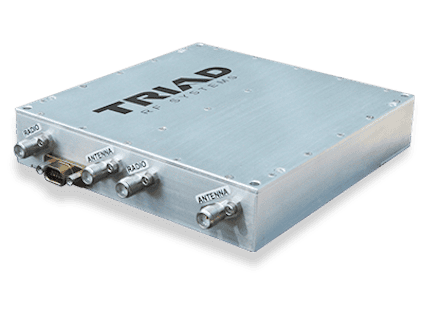
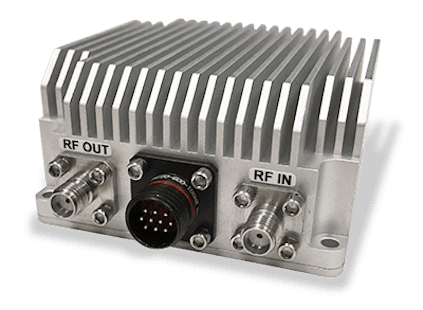
Triad RF Systems
Triad RF Systems

Integrated Radio MIMO Systems, RF Power Amplifiers for C-UAS, Electronic Warfare & ISR Data Links

CRFS
CRFS

SIGINT Payloads & Software-Defined RF Sensing Technology for Military UxS

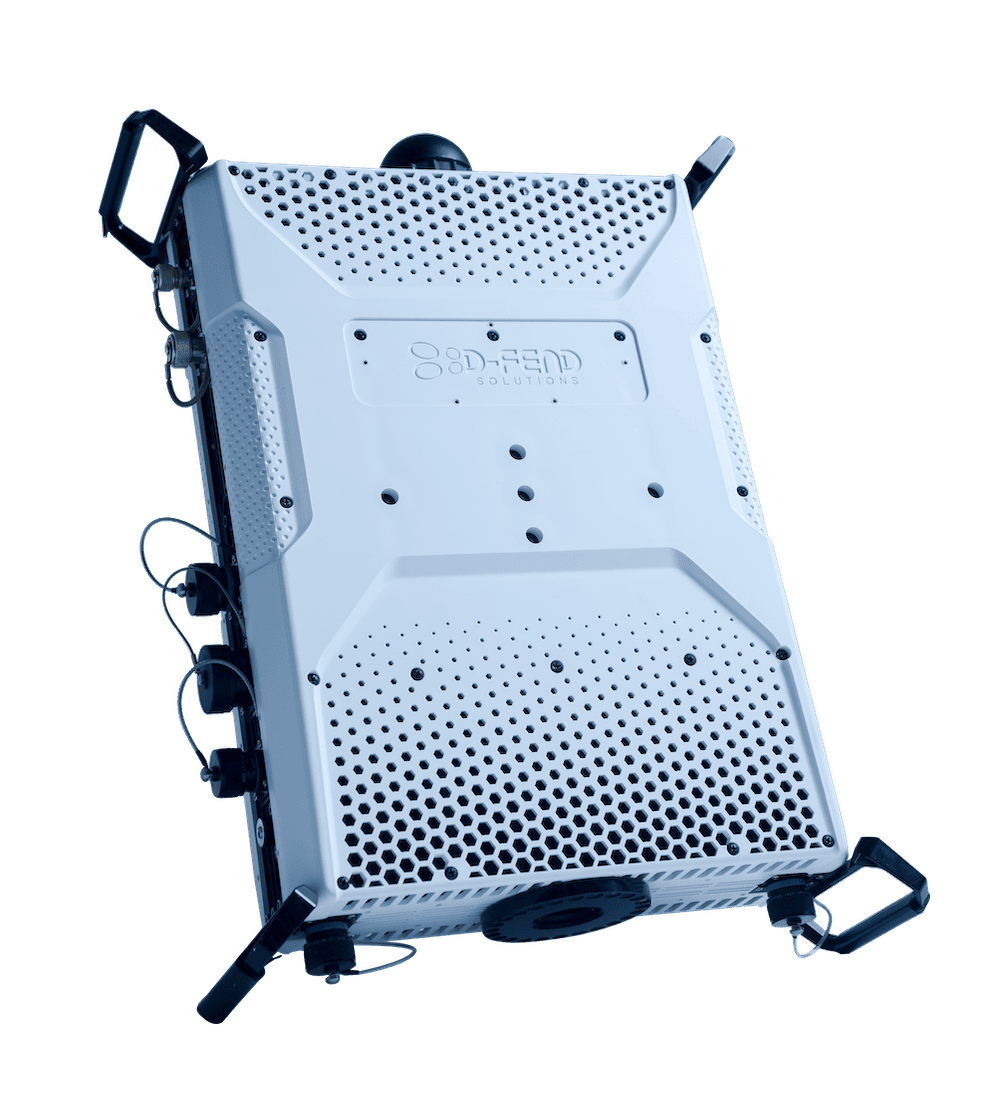
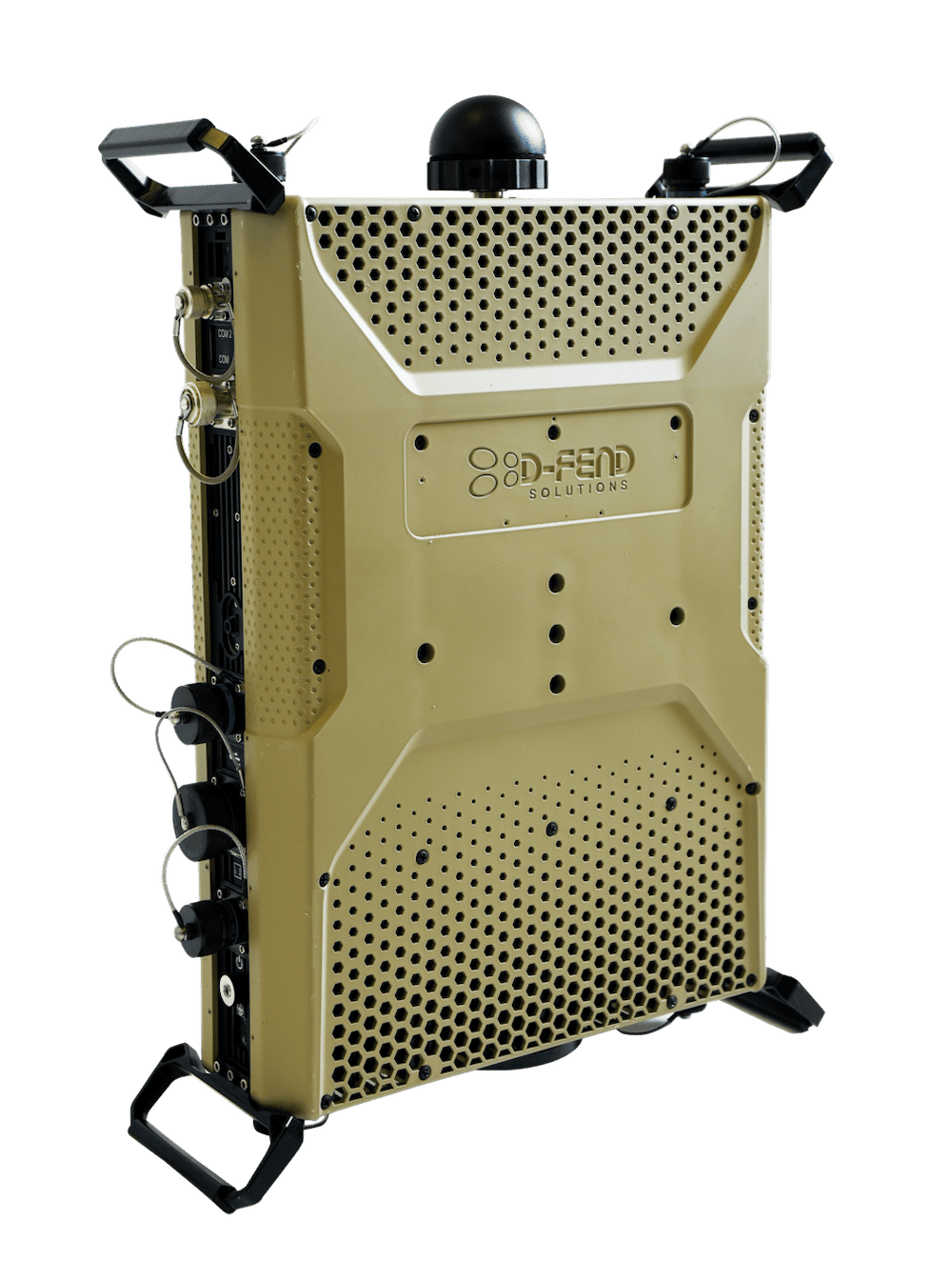
D-Fend Solutions
D-Fend Solutions

RF-Cyber Counter-Drone Technologies for Military, Special Forces & Government Applications

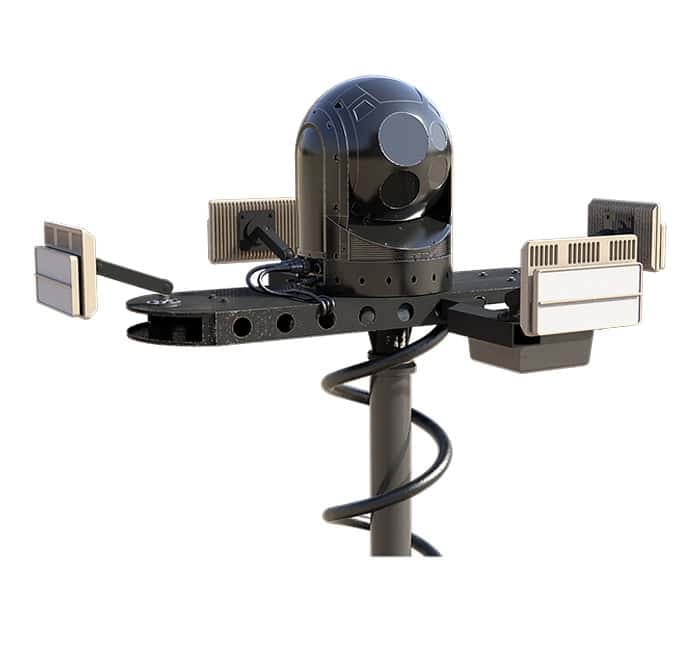
Trakka Systems
Trakka Systems

Integrated Vision, Imaging & Illumination Technologies for Airborne, Land & Maritime Missions

Showcase your capabilities

If you design, build or supply RF Drone Detection, create a profile to showcase your capabilities and connect with visitors who have an active requirement for your solutions.


Create Supplier Profile

Radio Frequency Drone Detection Systems

7 Cutting-edge Solutions
Add your solutions
Triad Power Amplifier Modules

High-efficiency RF power amplification for extended uncrewed links

High-efficiency RF power amplification for extended uncrewed links
...e designed for RF and microwave radio systems that require increased transmit power, high linearity,...
Triad Bi-directional Amplifiers (BDAs)

Rugged bidirectional RF amplification for long-range uncrewed links

Rugged bidirectional RF amplification for long-range uncrewed links
Triad’s Bi-directional Amplifiers (BDAs) are compact COTS RF modules developed for long-range, hig...
EnforceAir PLUS
EnforceAir PLUS

Multilayer, AI-enhanced C-UAS system for tactical & strategic airspace defense

Multilayer, AI-enhanced C-UAS system for tactical & strategic airspace defense
...vanced counter-drone system that integrates the EnforceAir2 platform with advanced detection and... ... and intuitive system flow. The SmartAir fusion engine synthesizes radar and RF-cyber data to...
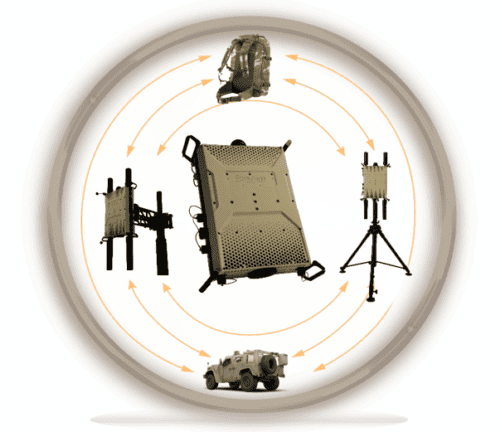
EnforceAir
EnforceAir

Anti-drone technology featuring state-of-the-art RF cyber takeover capabilities

Anti-drone technology featuring state-of-the-art RF cyber takeover capabilities
...eading counter-drone system based on state-of-the-art radio-frequency (RF) cyber takeover...
EnforceAir2
EnforceAir2

Counter-UAS solution with tactical capabilities

Counter-UAS solution with tactical capabilities
...agship counter-drone system, delivering more power and performance in a highly compact footprint....
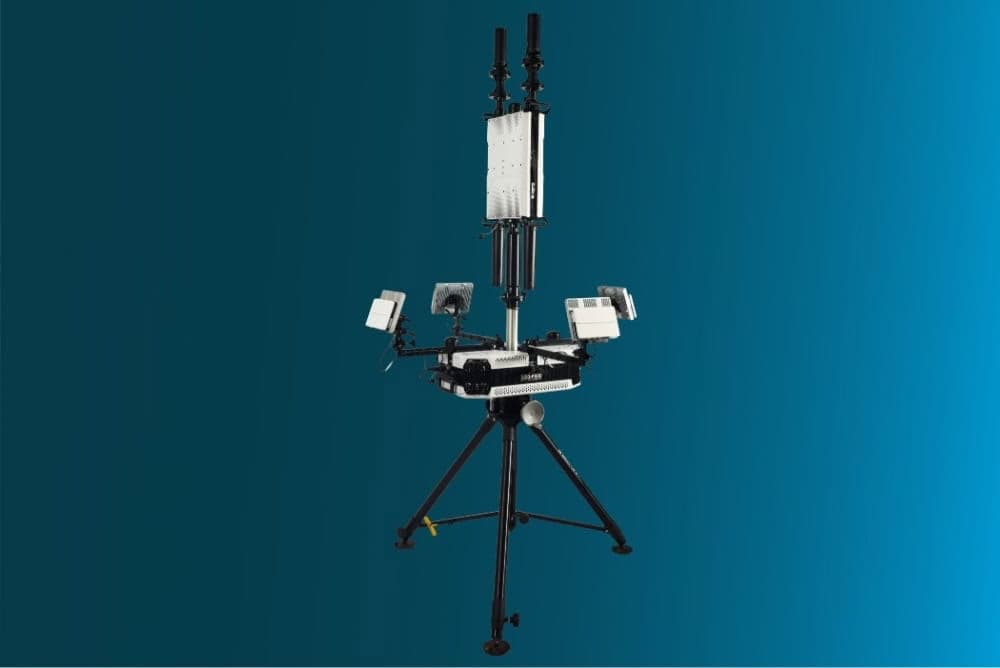
EnforceAir2 Deployment Bundles

Quick deployment for stationary and on-the-move counter-drone missions

Quick deployment for stationary and on-the-move counter-drone missions
...ceAir2 counter-drone system can be provided as a multi-mission bundle that allows military, security...
TIPS-C
TIPS-C

Mobile counter-UAS platform with autonomous multi-sensor drone detection, tracking & defeat

Mobile counter-UAS platform with autonomous multi-sensor drone detection, tracking & defeat
...tor Protection System – Counter Terror (TIPS-C) is a mobile Counter-Unmanned Aircraft System... ...ta from radar, RF detection systems, optical AI/ML analytics, and EO/IR sensors is fused into a...

Overview of RF Drone Detection Systems for Military C-UAS

William Mackenzie

Updated:

Introduction to RF Drone Detection Systems

Radio Frequency (RF) drone detection systems are passive surveillance technologies used to detect, identify, classify, and track Unmanned Aerial Systems (UAS) by monitoring electromagnetic emissions associated with their communications. These systems analyze Command and Control (C2) links, telemetry, video transmissions, and other detectable RF signals to identify drone activity without transmitting radar energy or interfering with communications.

RF-based drone detection supports military Counter-Unmanned Aircraft Systems (C-UAS), providing early warning, situational awareness, and, where supported, drone and controller geolocation. Fixed, portable, vehicle-mounted, and networked RF detection systems help protect military installations, deployed forces, airfields, and critical infrastructure. They can operate independently or alongside drone detection radar, Electro-Optical/Infrared (EO/IR) sensors, and other detection technologies. Detection depends on recognizable RF emissions, however, limiting effectiveness against radio-silent drones or those using unfamiliar communication methods.

Key Types of Detectable RF & Communication Signals

RF drone detection systems monitor several categories of wireless transmissions, with detection and classification capabilities depending on receiver coverage, signal characteristics, supported communication protocols, and reference signature libraries.

RF Signal Type Characteristics Detection Considerations
Command and Control (C2) Uplinks and Telemetry Downlinks Wireless communications carrying flight commands, status information, and operational telemetry between drones and ground control stations. Detection of supported links can provide drone classification, activity alerts, and potential controller localization.
Digital and Analog Video Transmission Links RF transmissions carrying live video from onboard cameras through analog or digitally encoded communication systems. Signal characteristics may support detection and classification without requiring access to video content.
Frequency-Hopping Spread Spectrum (FHSS) and Direct-Sequence Spread Spectrum (DSSS) Transmission techniques that distribute signal energy across changing frequencies or wider bandwidths to improve communication robustness. Wideband monitoring and suitable signal processing can help detect these emissions, although hopping speed, signal strength, and receiver coverage affect detection performance.
Direct Remote Identification (DRI) Broadcasts Direct Remote ID messages transmitted using supported Bluetooth and Wi-Fi technologies, including formats specified by ASTM F3411 and ASD-STAN EN 4709-002. Compatible receivers can obtain broadcast identification and location information, subject to message availability and implementation. Network Remote ID uses a separate communication architecture.
Cellular-Connected Drones (4G LTE / 5G) Drone communications routed through Fourth-Generation (4G) Long-Term Evolution (LTE) or Fifth-Generation (5G) cellular networks rather than conventional point-to-point controller links. Detection and attribution are challenging because transmissions may resemble ordinary cellular activity and are not necessarily identifiable as drone communications.
Non-Standard and Spectrum-Shifted Frequencies Custom communication links operating in sub-gigahertz (sub-GHz), proprietary, or military frequency bands. Multiband RF detection equipment may identify emissions outside commonly monitored commercial drone frequencies, subject to receiver capabilities.

Military Applications of RF Drone Detection Systems

FOBs, Deployed Units, and Airfield Defense

Military RF drone detection systems help protect Forward Operating Bases (FOBs), tactical formations, and military airfields against unauthorized UAS activity. Portable RF scanners and long-range RF drone detectors can provide early warning of approaching drones with detectable transmissions, while networked sensors extend coverage across dispersed defensive positions. Vehicle-mounted and dismounted systems also support mobile force protection, convoy security, and tactical counter-drone operations.

Civil Aviation and Commercial Airport Drone Containment

RF drone detection supports airport security by identifying drone-related transmissions near runways, approach corridors, and restricted airspace. Passive RF sensors complement airport surveillance infrastructure without introducing active RF emissions. Where supported, radio frequency drone tracking and controller geolocation capabilities help security personnel investigate unauthorized drone activity and coordinate appropriate responses.

Borders, Prisons, and Critical National Infrastructure (CNI)

RF surveillance systems monitor protected perimeters around borders, correctional facilities, energy installations, and other Critical National Infrastructure (CNI). Fixed RF detection networks provide continuous monitoring of supported drone communications, while distributed sensors can improve coverage across larger sites. Automated alerts enable operators to investigate potential surveillance, smuggling, or infrastructure security threats.

VIP, Stadium, and Event Perimeter Protection

Deployable RF drone detection equipment provides temporary airspace surveillance for Very Important Person (VIP) movements, public events, and high-security gatherings. Portable and vehicle-mounted detectors monitor drone-related RF activity around designated security zones, supporting rapid identification and response. Passive operation is particularly useful where additional RF transmissions could interfere with sensitive communications or existing security infrastructure.

RF Detection Architectures & Signal Processing

RF drone detection systems combine specialized receivers, antennas, and signal processing software to capture radio emissions, recognize drone-related signals, and generate detection alerts in complex electromagnetic environments.

  • Wideband RF Monitoring and Spectrum Analysis: Software-Defined Radio (SDR) front ends and spectrum monitoring receivers analyze radio emissions across supported frequency ranges to identify potential drone transmissions.
  • Protocol Decoding vs. Protocol-Agnostic RF Fingerprinting: Protocol-aware systems recognize supported communication formats and may extract identification data, while protocol-agnostic techniques analyze measurable signal characteristics without requiring complete message decoding.
  • Machine Learning & Edge AI for Signal Recognition: Machine learning and edge-based Artificial Intelligence (AI) algorithms can classify RF signatures and distinguish drone-related transmissions from other emitters, with local processing supporting rapid detection and alerts.
  • Multichannel, Multiband, and Direct RF Sampling Receivers: Advanced receiver architectures support simultaneous monitoring of multiple frequency bands, improving detection coverage and reducing blind intervals associated with sequential scanning.
  • System Form Factors: Fixed installations provide persistent surveillance, vehicle-mounted detectors support mobile operations, and wearable or handheld RF detection devices deliver localized situational awareness for dismounted personnel.

Receiver architecture, antenna configuration, signal sensitivity, and signature library coverage influence detection latency, classification performance, and suitability for military deployment.

RF Direction Finding & Drone Geolocation

RF Direction Finding (DF) and geolocation technologies estimate the bearing or location of transmitting drones and, where their emissions can be distinguished, associated ground control equipment.

  • Angle of Arrival (AoA) Direction Finding: Antenna arrays, interferometry, and pseudo-Doppler techniques estimate the direction of incoming RF signals, providing bearing information for tracking and localization.
  • Time Difference of Arrival (TDOA) and Multilateration: Spatially separated, synchronized receivers compare signal arrival times to estimate transmitter positions across a monitored area.
  • Received Signal Strength (RSS) and Path-Loss Profiling: RF signal strength measurements can support approximate ranging and localization, although propagation losses, antenna orientation, and interference affect accuracy.
  • Ground Control Station (GCS) and Operator Geolocation: Supported RF detection networks may locate transmitting drone controllers, helping security personnel identify potential control station positions rather than necessarily the operator’s exact location.
  • Geometric Dilution of Precision (GDOP), Multipath, and Tracking Accuracy: Sensor geometry, signal reflections, receiver synchronization, and environmental conditions influence geolocation uncertainty and tracking performance.

Combining direction finding with multiple synchronized receivers can improve localization compared with single-sensor bearing measurements, provided suitable signal observations and sensor geometry are available.

Emerging Developments in RF Drone Detection Systems

Developments in receiver technology, signal processing, and distributed sensing are improving the adaptability of passive RF drone detection in increasingly congested electromagnetic environments.

  • Specific Emitter Identification (SEI) and Physical-Layer RF Fingerprinting: Advanced signal analysis examines transmitter-specific characteristics, including hardware-induced signal variations, to support emitter differentiation beyond general protocol classification, although environmental conditions can affect reliability.
  • Distributed, Self-Synchronizing Ad Hoc Sensor Meshes: Networked RF sensors using suitable timing references and synchronization methods support distributed monitoring, collaborative direction finding, and geolocation across wider operational areas.
  • Cognitive Software-Defined Radios and Real-Time Adaptive Filtering: Adaptive receiver techniques can adjust monitoring parameters and filtering methods in response to changing RF activity, helping improve signal detection in congested or contested environments.
  • Detection of Frequency-Agile Military FPV Drones: Evolving monitoring and classification techniques target First-Person View (FPV) drones using non-standard frequencies, modified communication links, and frequency-agile transmissions, with research focusing on improved signal detection and classification under changing transmission conditions.

These developments support more flexible RF detection architectures, particularly for tactical environments where drone communication technologies and electromagnetic conditions change rapidly.


Related Articles

Lightweight Wearable Device Redefines Frontline RF Drone Detection

Combining continuous onboard AI with signature-based RF detection, a new sub-kilogram wearable device from MyDefence enables frontline soldiers to analyze and classify unknown drone threats directly at the tactical edge

Oct 08, 2026
Passive RF Sensing for Drone Detection & Counter-UAS Integration

CRFS explores how passive RF sensing can provide earlier warning and richer threat intelligence by detecting, classifying, and locating drone-related RF activity within multi-layered Counter-UAS architectures

Aug 19, 2026
DroneShield Advances Tactical Sensing With Portable RF Intelligence System

DroneShield has unveiled its latest flagship product, the RfRecon, a portable radio frequency intelligence solution designed to help defense, government, and security organisations better understand the electromagnetic environment

Aug 14, 2026
Extending RF Detection & Geolocation with Airborne ISR Platforms

CRFS explores how RF sensors integrated with drones and aerostats can enhance spectrum monitoring, signal detection, and geolocation across diverse ISR missions

Jul 21, 2026
Drone-Based Passive RF Sensing System Enhances Target Detection at NATO Exercise

A collaboration between Sky Spy and Orqa showcases how lightweight UAVs can overcome the limitations of ground-based electronic warfare sensors to track hostile emitters

Jul 07, 2026
Strengthening IAMD with Passive RF Sensing

CRFS explores how integrating passive RF sensing with active radar can improve situational awareness, target characterization, and resilience within Integrated Air and Missile Defense architectures operating in contested environments

Jun 26, 2026
Polish C-UAS Program to Receive RF Drone Detection Sensors

Radio frequency specialist Metis has secured a major multimillion-pound contract to supply its advanced passive sensor technology for Poland’s comprehensive integrated air defense and counter-uncrewed aerial system initiative

Jun 18, 2026
CRFS Highlights 2026 & 2027 Event Lineup

CRFS has announced its 2026–2027 events schedule, where it will showcase its battle-proven RF sensing, SIGINT, and electromagnetic spectrum operations technologies at leading global defense, security, and electronic warfare exhibitions and conferences

Jun 03, 2026
EnforceAir C-UAS Technology Secures 55th Annual JUNO Awards

D-Fend Solutions partnered with Hamilton Police to deploy the EnforceAir2 system, providing non-disruptive drone detection and real-time situational awareness for the 55th Annual JUNO Awards

Apr 10, 2026

THE WEEKLY eBRIEF

The latest defense technology news, straight to your inbox.

Get our weekly roundup of technology developments, new products and industry news.

By subscribing, you agree to receive the weekly DA eBrief newsletter from EchoBlue Ltd. Unsubscribe at any time using the link in every email. See our Privacy Notice.

Advancing Defense Capability Through Strategic Collaboration Defense Advancement works with major OEMs to foster collaboration and increase engagement with SMEs, to accelerate innovation and drive defense capabilities forward.