
Suppliers: GPS & GNSS Receivers

NovAtel

Assured Position, Navigation and Timing (PNT) Solutions for Military and Defense

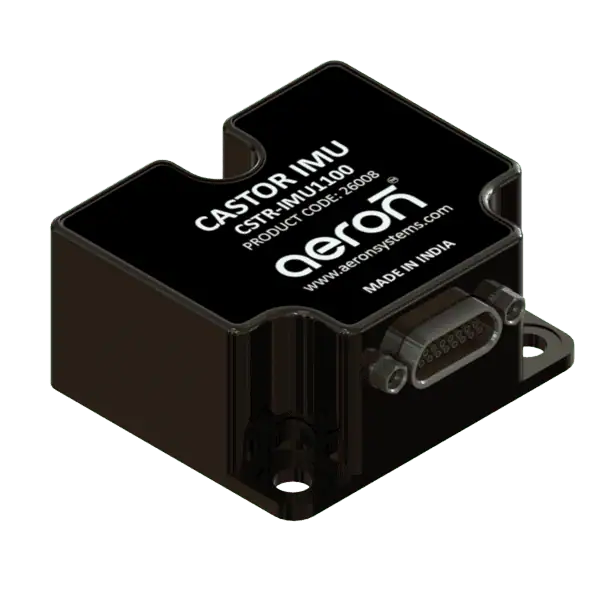
Aeron Systems

Advanced Navigation Solutions for Mission-Critical Defense & Aerospace Applications

GNSS.store

Ultra-Reliable Positioning, Navigation & Timing (PNT) Solutions for Aerospace & Security Applications

uAvionix Corporation

Identification Friend or Foe & Mode 5 Combat ID for Military UAS

ARK Electronics

State-Of-The-Art NDAA-Compliant Electronic Hardware Components for Mission-Critical Drone & Robotics Platforms. Made in the USA.

Xeos by Satlink

Marine & Ground-Based Tracking Beacons: Track, Monitor, & Safeguard Critical Naval & Defense Assets

Septentrio

Assured PNT Solutions for Mission Critical Military, Defense & Government Applications

Sunhillo Corporation

Mission-Critical Surveillance Data Solutions for Government, Military & Defense Organizations

Showcase your capabilities

If you design, build or supply GPS & GNSS Receivers, create a profile to showcase your capabilities and connect with visitors who have an active requirement for your solutions.


Create Supplier Profile

Products

16 Cutting-edge Solutions
Add your solutions
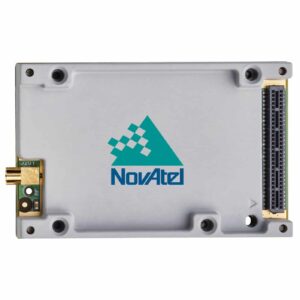
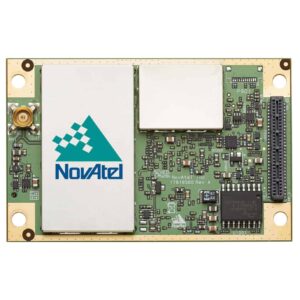
OEM7600

OEM7600 Dual-Frequency GNSS Receiver

OEM7600 Dual-Frequency GNSS Receiver
...ulti-frequency GNSS receiver delivers robust positioning plus L-band functionality in our smallest... ...ellite System (GNSS) receiver that delivers robust positioning for space constrained applications....
OEM7700

OEM7700 Multi-Frequency GNSS Receiver

OEM7700 Multi-Frequency GNSS Receiver
...ulti-frequency GNSS receiver delivers robust positioning, simplifies integration and offers maximum... ...ulti-frequency GNSS receiver offers precise positioning and advanced interference mitigation for...
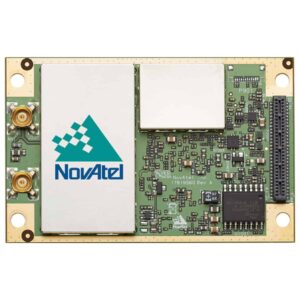
OEM7720

OEM7720 Dual-Antenna, Multi-Frequency GNSS Receiver

OEM7720 Dual-Antenna, Multi-Frequency GNSS Receiver
...ulti-frequency GNSS receiver offers precise positioning plus SPAN functionality for space... ..., dual-antenna receiver that delivers robust heading and positioning along with advanced...
OEM719

OEM719 Multi-Frequency GNSS Receiver

OEM719 Multi-Frequency GNSS Receiver
...ulti-frequency GNSS receiver delivers precise positioning while retaining backwards compatibility... ...ellite System (GNSS) receiver. It is form factor and pin compatible with NovAtel’s popular...
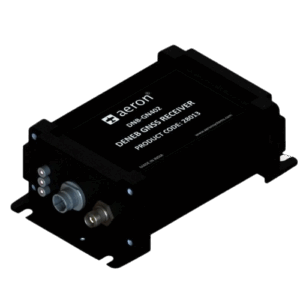
DENEB DNB-GN402

Rugged triple-frequency RTK GNSS receiver with IP65-rated enclosure

Rugged triple-frequency RTK GNSS receiver with IP65-rated enclosure
...-constellation GNSS receiver designed to IP65, MIL-STD-810G and MIL-STD-461E/F standards. Providing...
RTK GNSS Heading Modules

Dual-antenna RTK modules with sub-degree heading accuracy & roll/pitch output

Dual-antenna RTK modules with sub-degree heading accuracy & roll/pitch output
GNSS.store’s heading modules leverage the power of RTK technology and dual-antenna GNSS design...
High-Precision RTK GNSS Modules

Advanced modules with centimeter-level navigation & positioning accuracy

Advanced modules with centimeter-level navigation & positioning accuracy
GNSS.store’s range of high-precision GNSS modules utilizes advanced positioning technologies...
ZPR

Passive Mode 5 IFF & ADS-B receiver for detection of military & civil aircraft

Passive Mode 5 IFF & ADS-B receiver for detection of military & civil aircraft
...R is a passive receiver with both Mode 5 L2/2B IFF and civil 1090 MHz ADS-B capabilities, intended...
ZPX-1

Combat ID Mode 5 transponder with ADS-B for tactical UAS

Combat ID Mode 5 transponder with ADS-B for tactical UAS
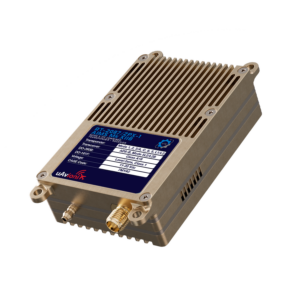
The ZPX-1 is a Mode 5 transponder that provides IFF (Identification Friend or Foe) and ADS-B capabil...
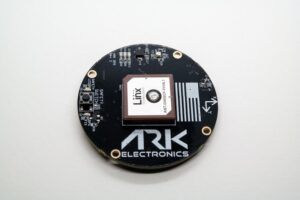
ARK DAN GPS

NDAA-compliant dual-band GNSS & magnetometer module for reliable positioning

NDAA-compliant dual-band GNSS & magnetometer module for reliable positioning
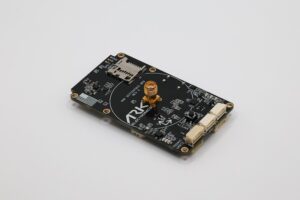
The ARK DAN GPS is a U.S.-manufactured, NDAA-compliant dual-band L1/L5 GNSS and industrial... ... and a visible GPS fix LED, the ARK DAN GPS combines precision signal processing, compact form...
ARK MOSAIC-X5 RTK GPS

Septentrio mosaic-X5-based L1/L2/L5 RTK GNSS receiver with jamming protection

Septentrio mosaic-X5-based L1/L2/L5 RTK GNSS receiver with jamming protection
... ARK MOSAIC-X5 GPS is a triple-band GNSS RTK receiver module based on the Septentrio mosaic-X5,...
ARK TESEO GPS

Blue UAS Framework-listed L1/L5 GNSS receiver based on Teseo-LIV4F

Blue UAS Framework-listed L1/L5 GNSS receiver based on Teseo-LIV4F
...ics' ARK TESEO GPS is a Blue UAS Framework-listed dual-band GNSS receiver module based on the...
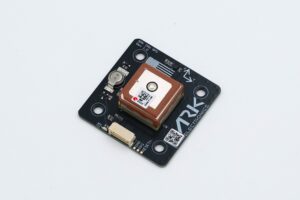
ARK GPS

u-blox M9N-based GNSS receiver with DroneCAN, magnetometer, barometer & IMU

u-blox M9N-based GNSS receiver with DroneCAN, magnetometer, barometer & IMU
...ectronics' ARK GPS is a compact GNSS receiver module based on the u-blox M9N, providing reliable...
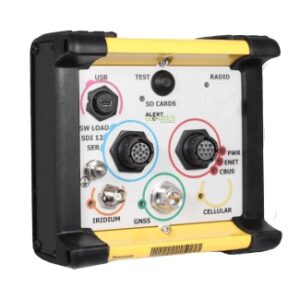
Resolute

All-in-one GNSS monitoring receiver for remote & critical deployments

All-in-one GNSS monitoring receiver for remote & critical deployments
The Resolute GNSS receiver is a compact, rugged system purpose-built to meet telemetry, power... ...Supporting all GNSS constellations across L1, L2, and L5 frequencies, the Resolute features 136...
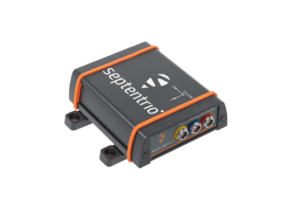
AsteRx SBi3 Pro+ GNSS Receiver

Rugged GNSS-INS with single- or dual-antenna capabilities

Rugged GNSS-INS with single- or dual-antenna capabilities
...TD-810G-tested GNSS/INS receiver that offers reliable IMU-enhanced GNSS positioning down to...
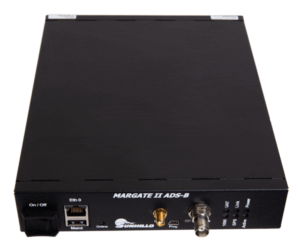
Margate II ADS-B Receiver

DoD-deployed ADS-B receiver with range of up to 200 miles

DoD-deployed ADS-B receiver with range of up to 200 miles
... or dual ADS-B Receivers or a combination of the RICI data distribution and conversion unit with an...

Military-Grade GPS Receivers & GNSS Receivers

Sarah Simpson

Updated:

GNSS receivers are ubiquitous and used in a wide variety of military applications. Traditionally, they have equipped military vehicles, aircraft and ships. This reflects GPS, the world’s first GNSS system, being primarily developed for military use.

GNSS use has now spread well beyond the military world into the civilian domain, where GNSS technologies are a fundamental component of modern geolocation technology. GNSS receivers have likewise proliferated. They are no longer restricted to vehicles; anyone or anything requiring location or movement details can and does use GNSS receivers.

GNSS Receivers

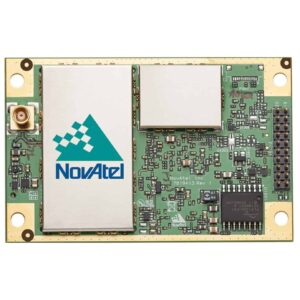
OEM7600 Dual-Frequency GNSS Receiver by Hexagon NovAtel

OEM7600 Dual-Frequency GNSS Receiver by Hexagon NovAtel

A Global Navigation Satellite Signal (GNSS) receiver is any system which can receive an incoming transmission from a GNSS satellite and convert this into usable data. As of 2022, the world has four GNSS constellations. These are the United States’ Global Positioning System, the European Galileo constellation, Russia’s GLONAS system and the People’s Republic of China’s Beidou constellation. All four use the same operating principles. These are articulated in more detail on our Satellite Navigation page.

Satellites transmit a radio signal which includes precise timing information. Provided the GNSS receiver has an uninterrupted line-of-sight to three or more satellites it can receive a distinct signal from each. The receiver then triangulates its position based upon the time it takes each signal to reach the receiver. This process allows the receiver to provide precise position, navigation and timing (PNT) information using these signals.

GNSS receivers are used by a host of static applications. Thanks to the atomic clocks equipping GNSS satellites, GNSS receivers obtain a precise time signal. This is a by-product of navigation requiring the measurement of distance over time. Precise time signals are vital to the digital world and the precise time signal transmitted by GNSS satellites satisfies these requirements.

Military-Grade GNSS Receivers

GNSS Receiver by Aeron Systems

DENEB DNB-GN402 GNSS Receiver by Aeron Systems

All the world’s GNSS systems use radio signals transmitted by the satellites across a waveband of 1.1 gigahertz/GHz to 1.6GHz. GNSS receivers must be able to detect these signals. One challenge for any GNSS receiver is the weakness of the signal once it reaches Earth. GNSS satellites are positioned thousands of kilometers above Earth. This ensures each satellite can ‘see’ as much of Earth as possible. Their altitude means that GNSS signals must travel a very long distance to reach Earth. The satellites have a finite size limiting the electricity generation equipment they can accommodate, and hence the power they can generate. Given the distance the signal must travel, this means it is very weak by the time it reaches Earth.

The weakness of this signal makes it easy to jam (stop the signal outright) or spoof (manipulate the signal to show false data). As a result, military-grade GNSS receivers are designed to accept only encrypted GNSS transmissions reserved for military use. They may also have software to recognise and ignore GNSS jamming or spoofing. While currently the preserve of the military domain, such attributes could migrate to civilian GNSS receivers in the future when they become cost effective.

SAASM GPS Receivers

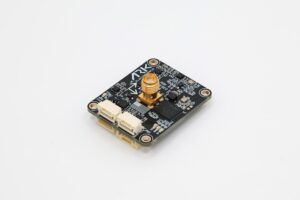
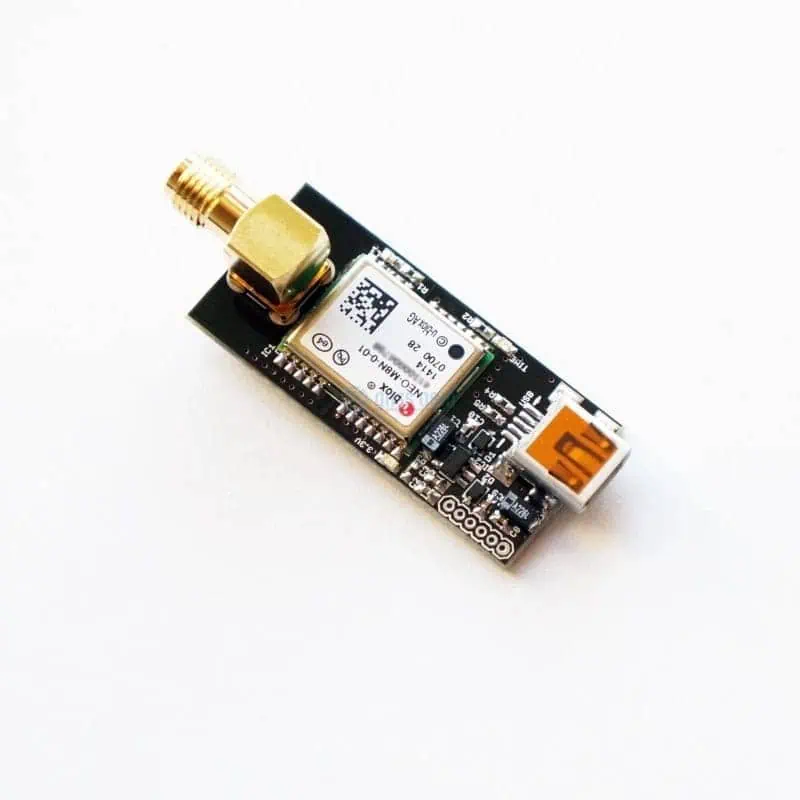
GPS Receiver by ARK Electronics

ARK GPS – GNSS Receiver by ARK Electronics

Unlike commercial Global Positioning System (GPS) receivers, military GPS receivers can deliver secure, Selective Availability Anti-Spoofing Module (SAASM)-based GPS in the most reliable handheld form available.

A SAASM system allows over-the-air rekeying, satellite verification, and contingency recovery, as well as the ability to be updated with an encrypted “Black Key” that can be transmitted over open channels.

In order to get better tracking performance in jamming applications, a higher data rate of the P(Y) code (an encrypted precision code) is needed. To prevent analysis of its internal operations, SAASM hardware is usually covered with an anti-tampering coating.

Military GPS receivers offer benefits such as protection from jamming and spoofing using SAASM and dual-frequency encrypted signals. This type of receiver can be integrated into a vehicle or simply used as a handheld device. It goes without saying that security is vital in military applications, and therefore GPS upgrades, such as the latest M-Code, must provide additional improvements to anti-jam capabilities.

Related Articles

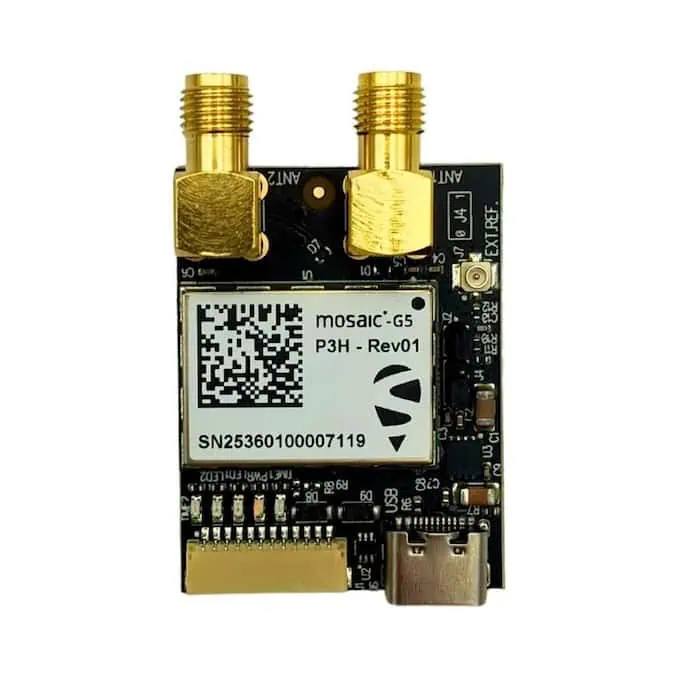
Mosaic-G5 P3H Dual Channel RTK GNSS Module for High Precision Positioning

The mosaic-G5 P3H dual channel RTK GNSS module, available from GNSS.store, delivers centimeter-level, high-precision positioning with multi-constellation support for embedded and industrial applications

Mar 27, 2026
Mosaic-X5 for Tethered Drone Positioning in GNSS Contested Environments

Septentrio outlines how its mosaic-X5 GNSS receiver module supports Hoverfly tethered drones in maintaining positioning and operating in GNSS-contested environments for surveillance and extended network communications

Mar 23, 2026
Septentrio Details Validation of GNSS Receiver Resilience at JammerTest 2024

Septentrio outlines validation results for its GNSS receiver resilience at JammerTest 2024 in Norway, highlighting static and mobile trials of AIM+ anti-jamming and anti-spoofing technology under live interference conditions, including high-power signals and GNSS time spoofing

Mar 04, 2026
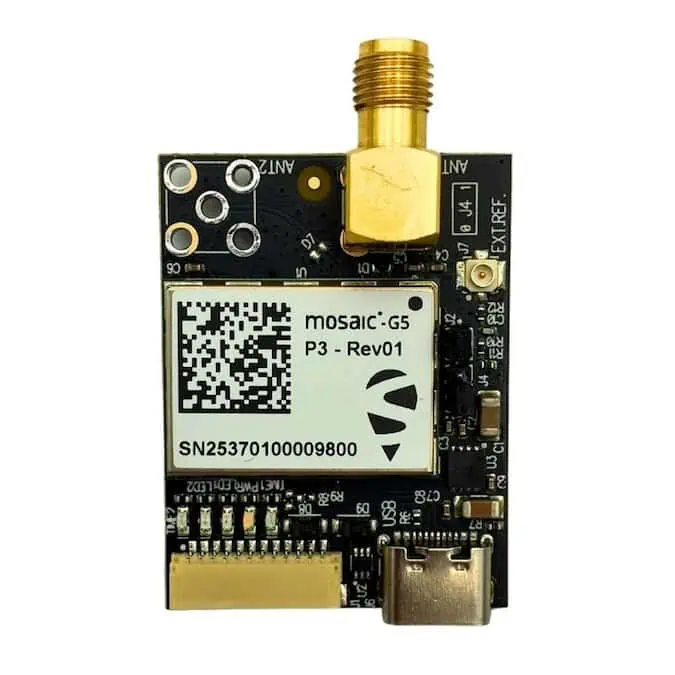
Mosaic-G5 P3 RTK GNSS Module for Embedded & Industrial Applications

Available from GNSS.store, the mosaic-G5 P3 RTK GNSS module supports GPS, GLONASS, Galileo, and BeiDou, delivering centimeter-level accuracy, fast satellite acquisition, and low-power operation for embedded and industrial applications

Feb 27, 2026
Hexagon | NovAtel Launches New Firmware to Boost GNSS Reliability

Hexagon | NovAtel has launched new OEM7 firmware delivering enhanced tracking, precise point positioning and real-time kinematic performance to improve global navigation satellite system accuracy and reliability in challenging and obstructed environments

Feb 13, 2026
Septentrio GNSS Receivers Validated for Integration into Air Traffic Management Systems

Septentrio outlines how its GNSS receivers were validated at JammerTest in Norway through live jamming and spoofing trials, supporting their use in Saab air traffic management systems

Feb 11, 2026
Aeron Systems Develops Navigation Solutions for GNSS Denied Operations

Defense Advancement showcases Aeron Systems' advanced navigation solutions for mission-critical defense and aerospace applications, including inertial sensors and GNSS receivers

Jan 15, 2026
GNSS.store Outlines Key Factors Behind L1/L5 and L1/L2/E5b Receiver Performance

GNSS.store provides a technical review of chip lengths, signal rates, constellation availability, and band-selection considerations that collectively influence the operational characteristics of L1/L5 and L1/L2/E5b receivers

Nov 20, 2025
Mission-Critical PNT Systems for Aerospace & Security Applications

Defense Advancement showcases GNSS.store's ultra-reliable Positioning, Navigation & Timing (PNT) solutions for aerospace and security applications

Nov 17, 2025