Showcase your capabilities
If you design, build or supply Cable Assemblies, create a profile to showcase your capabilities and connect with visitors who have an active requirement for your solutions.




Source high-performance cable assemblies and wiring harnesses engineered for mission-critical defense and aerospace systems. Connect with verified manufacturers and suppliers providing rugged interconnect solutions for UAVs, aircraft, ground vehicles and naval platforms, designed for EMI protection, durability and extreme operational environments.
Read the Technology Overview
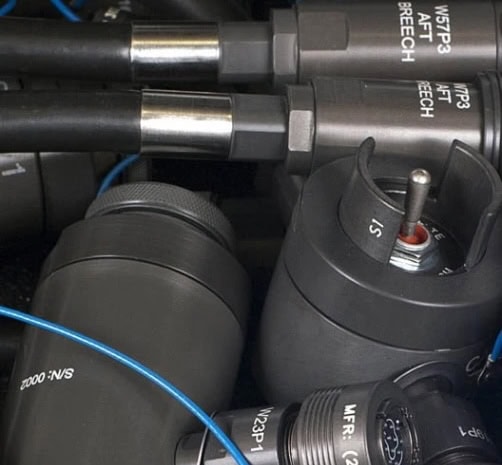

MIL-Spec Connectors for Military & Army Applications - MIL-STD Electrical Connectors


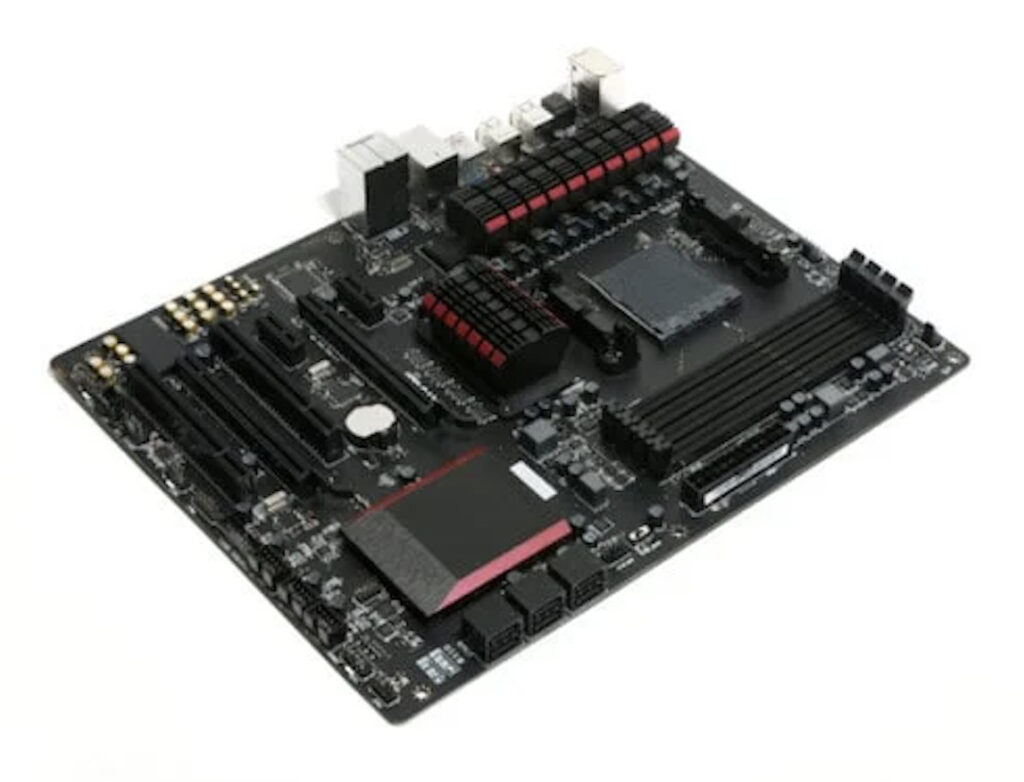
Mission-Critical Rugged Displays, Embedded Computing & Electronics for Defence Systems

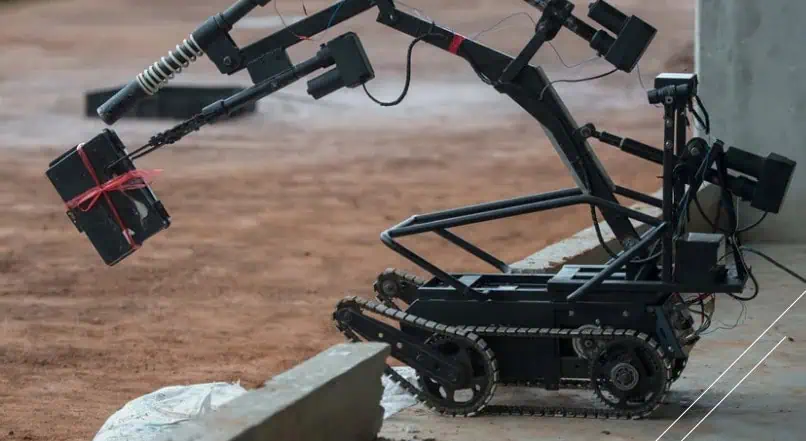
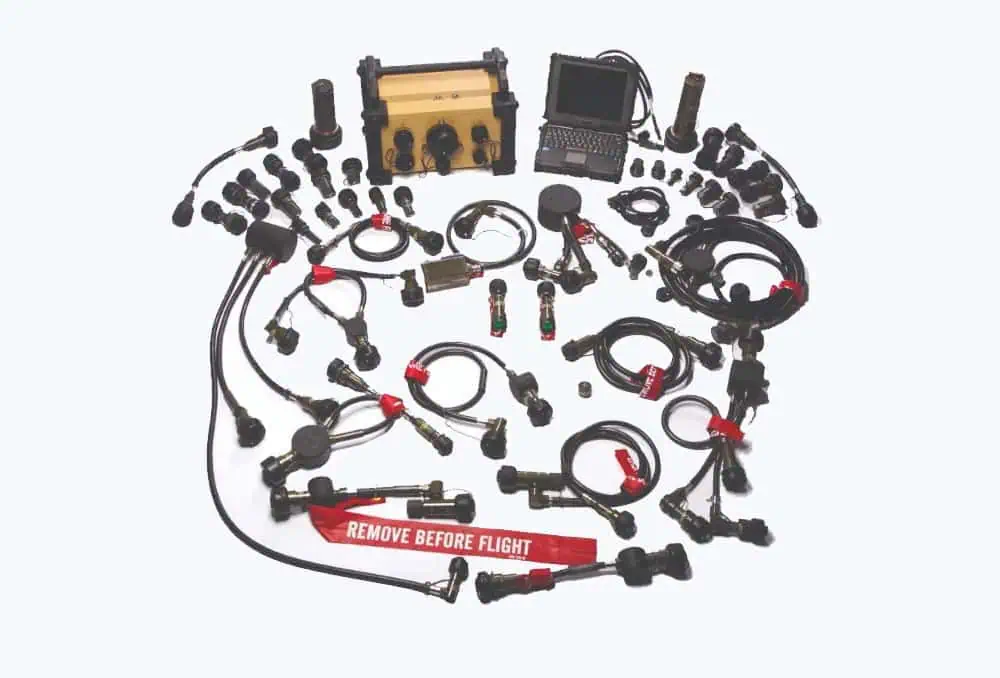
Support Equipment Design & Manufacturing for Military Aviation & Aerospace Programs

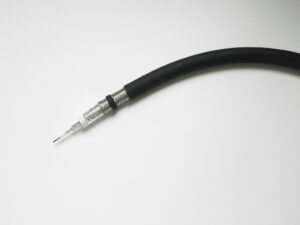
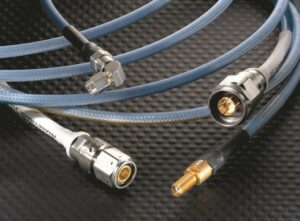
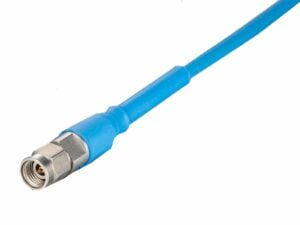
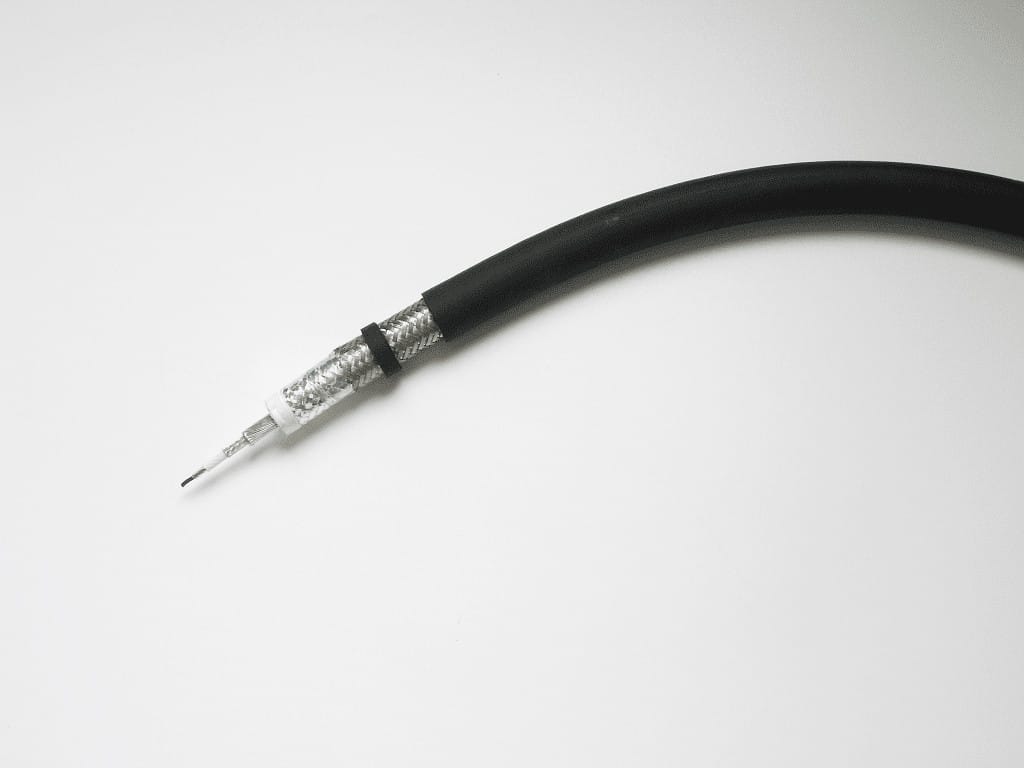
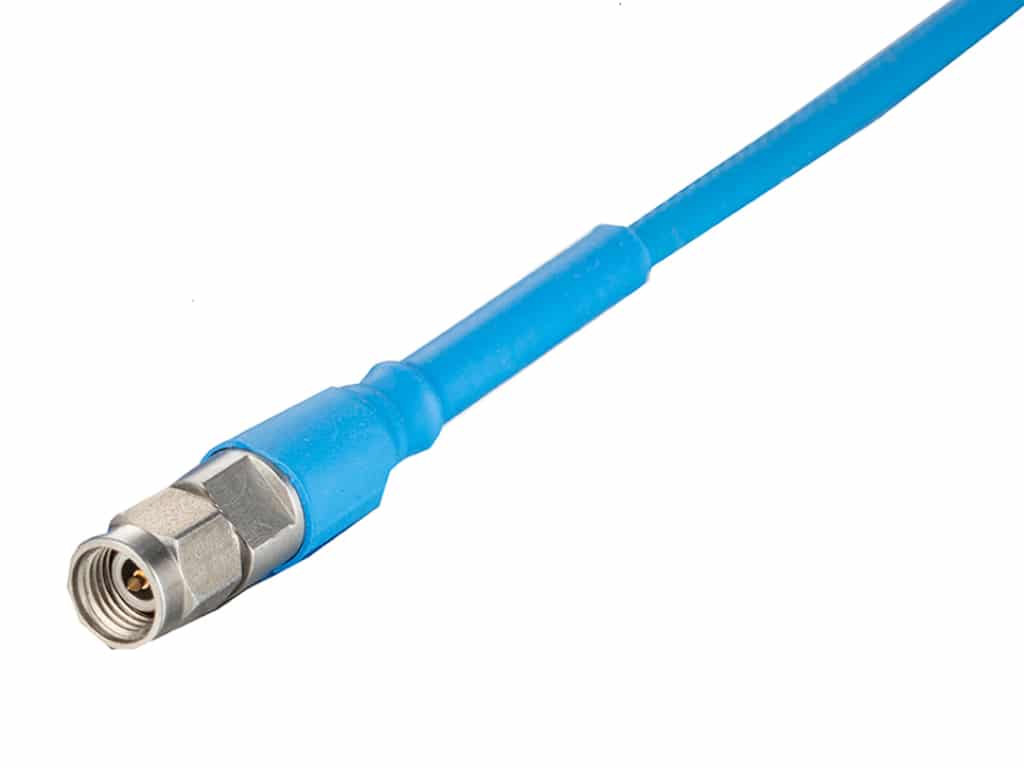
High-Reliability Mil-Spec Ruggedized RF Coaxial Cables, RF Cable Assemblies and Interconnects

If you design, build or supply Cable Assemblies, create a profile to showcase your capabilities and connect with visitors who have an active requirement for your solutions.

Military-spec cable assemblies and wiring harnesses are deployed across airborne, ground, naval, and space platforms, engineered to meet stringent defense and aerospace requirements. Designed to resist vibration, temperature extremes, EMI, and chemical exposure, they support mission-critical power, data, and communications in UAVs, aircraft, missiles, and C2 systems. Solutions include fiber optic bundles for radar and ISR, ruggedized coaxial cables for RF and EW, and assemblies with shielded jackets, high-reliability connectors, overmolded terminations, strain relief, and thermal protection to ensure durability and signal integrity in constrained operational environments.

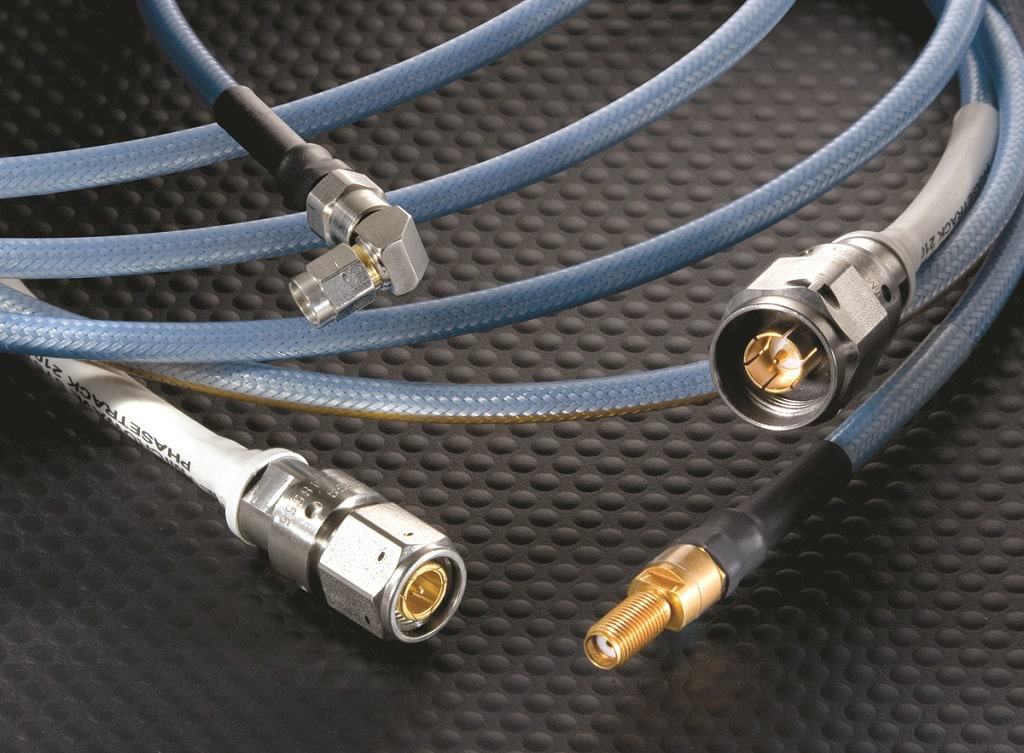
PhaseTrack Cable Assemblies by Times Microwave Systems
Unmanned aerial vehicles (UAVs) and military drones require compact, lightweight cable harnesses capable of withstanding high vibration and variable environmental conditions. Harnesses support avionics, flight control units, propulsion systems, onboard sensors, GPS/GNSS modules, and communication relays.
Due to limited space and payload constraints, assemblies often utilize miniature connectors, lightweight shielded cables, and hybrid designs that combine power and signal conductors. Modular designs also allow for field servicing and rapid component replacement.
In fixed-wing and rotary aircraft, cable assemblies are integral to avionics systems, radar, navigation, engine control, weapons integration, and environmental controls. These assemblies must meet rigorous standards for electromagnetic compatibility (EMC), fire resistance, and thermal cycling. Aerospace-grade wiring harnesses use lightweight materials, specialized insulation, and high-performance shielding to reduce weight while maintaining signal integrity. Connector types often include MIL-DTL-38999 circular connectors and AS22759-compliant wires for high-reliability operation.
Military ground vehicles and naval platforms demand rugged cable solutions for shock, vibration, moisture, and chemical resistance. Harnesses route power and data between engine controls, communication equipment, navigation aids, and weapon systems. For naval systems, additional protection against salt spray, corrosion, and pressure changes is critical. Assemblies frequently incorporate waterproof connectors, overmolded junctions, and reinforced insulation. Ground platforms like tanks and MRAPs may include EMI shielding for operation in electronic warfare environments.
Launch vehicles, satellites, and deep-space systems use highly specialized wiring harnesses engineered for zero-failure performance. Harnesses must function across extreme temperatures, vacuum conditions, and radiation exposure. They often include PTFE or polyimide-insulated wires, multi-layer shielding, and redundant routing paths. Cable weight and routing volume are minimized through custom looms, harness braiding, and tight-bend radius configurations. Testing protocols exceed standard defense requirements, incorporating thermal vacuum testing, outgassing evaluation, and dynamic launch profiling.
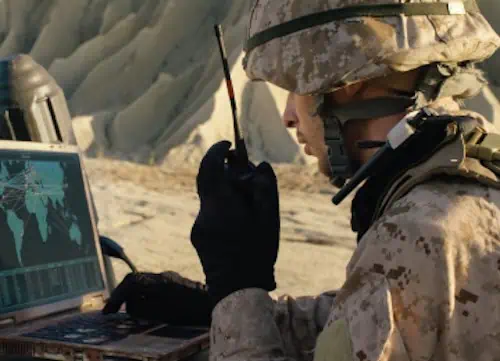
Field-deployable communication systems and command-and-control infrastructure depend on multi-channel cable assemblies that ensure high-throughput, encrypted data transmission. Fiber optic cables, coaxial lines, and hybrid assemblies connect radios, antennas, servers, and power modules in mobile and stationary deployments. Tactical cable harnesses must be rugged, flexible, and rapidly deployable, often including reel-mounted overmolded cables, quick-connect interfaces, and strain reliefs. These systems are designed for quick setup in forward operating bases, vehicles, and portable control units.
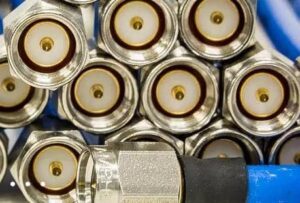
Cable Assemblies by KT Technical Solutions
Fiber optic assemblies are essential in defense systems that demand high-bandwidth, secure, and interference-free data transmission. These assemblies are commonly deployed in avionics, ISR payloads, satellite systems, and communication nodes. They offer advantages in electromagnetic immunity, lightweight construction,and resistance to environmental extremes. Connectors are typically ruggedized for field use, and cables may include armoring and gel-free buffers for tactical deployment.
Coaxial assemblies are used in RF transmission lines, radar systems, jammers, and electronic warfare platforms. These cables are engineered for impedance stability, minimal insertion loss, and high-frequency performance. Assemblies often feature triple-shielded coax with silver-plated conductors and PTFE insulation. RF connectors include SMA, TNC, and MIL-DTL-38999 types, chosen for secure mating and low signal degradation under vibration.
These assemblies are ideal for systems requiring high noise immunity and reliable signal transmission. Used in data buses, flight control networks, and digital communication lines, they offer excellent crosstalk performance and can be shielded with braid or foil depending on the EMC environment. Multicore versions consolidate multiple circuits into a compact bundle, improving space efficiency and ease of installation.
Overmolded assemblies provide strain relief, environmental sealing, and mechanical protection. Designed for field use and repeated handling, they are common in soldier-worn systems, deployable ground assets, and vehicle-mounted electronics. Molded terminations help prevent water ingress, reduce connector fatigue, and extend service life in harsh conditions.
Custom harnesses are engineered to meet the unique geometry, electrical load, and environmental requirements of a given platform. Hybrid assemblies may integrate power, RF, data, and fiber optic lines into a single harness, minimizing routing complexity. These solutions often involve co-engineering between OEMs and cable manufacturers to optimize harness weight, bend radius, and system compatibility.
All components and assemblies for defense and aerospace use must meet or exceed stringent international and military standards, including:
Manufacturers must also comply with ITAR, RoHS, REACH, and other regional or export regulations, depending on the program and market.
Cable assemblies are rarely off-the-shelf for defense applications. Customization is typically required to match system-specific electrical, mechanical, and spatial constraints. Considerations include:
Integrated teams often collaborate across electrical, mechanical, and systems engineering to co-design harnesses that align with overall platform requirements.
The defense cable assembly landscape includes:
Production capabilities vary from prototype support for R&D programs to scaled delivery for multiyear defense contracts. Traceability, documentation, and lot testing are essential components of the supply chain.
Defense and aerospace assemblies differ sharply from commercial variants regarding robustness, tolerances, and environmental ratings. UAV and drone platforms emphasize flexible, lightweight harnesses with high connector density. Military ground vehicles focus on impact resistance and repairability. Space applications demand zero-failure thresholds, thermal radiation resistance, and mechanical resilience under launch G-forces.
Commercial cable solutions typically lack the shielding, sealing, and documentation required for military use. Aerospace versions, while lighter and more thermally stable, still require adaptations for combat use in EW-heavy or contested environments.


 Searching Companies & Products