
Showcase your capabilities
If you design, build or supply Servo Motors, create a profile to showcase your capabilities and connect with visitors who have an active requirement for your solutions.




Servo motors translate electrical signals into controlled mechanical movement, delivering the responsiveness and accuracy required by mission-critical applications. From missile guidance and UAV stabilization to radar positioning and remote weapon stations, servo motors are at the core of advanced military technologies.
Read the Technology Overview
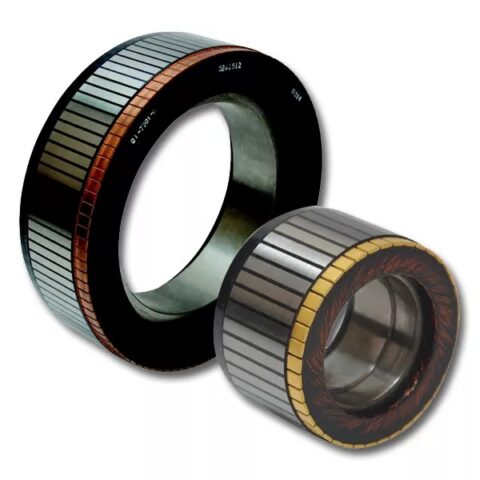
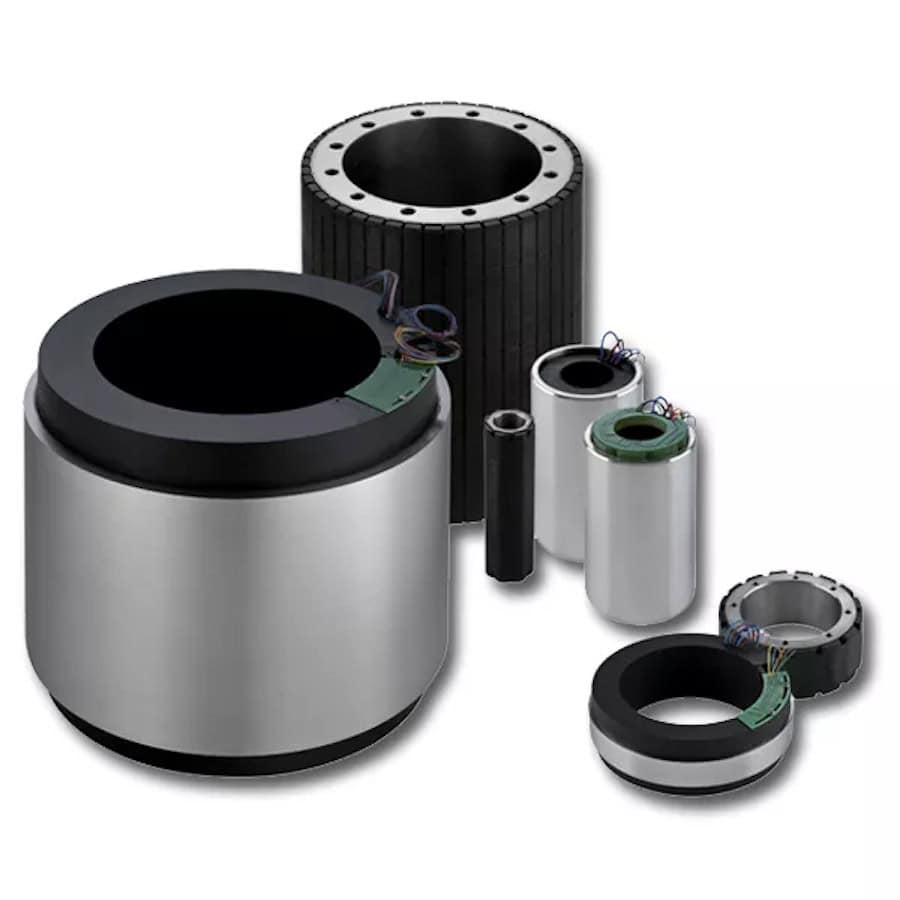
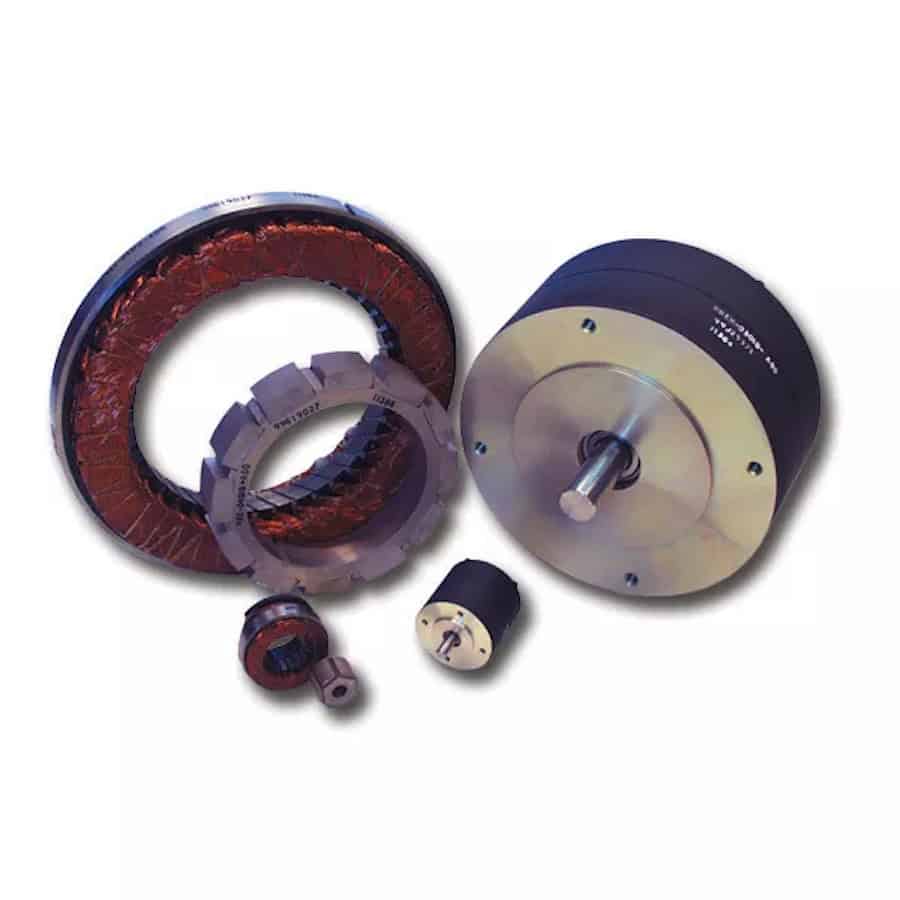
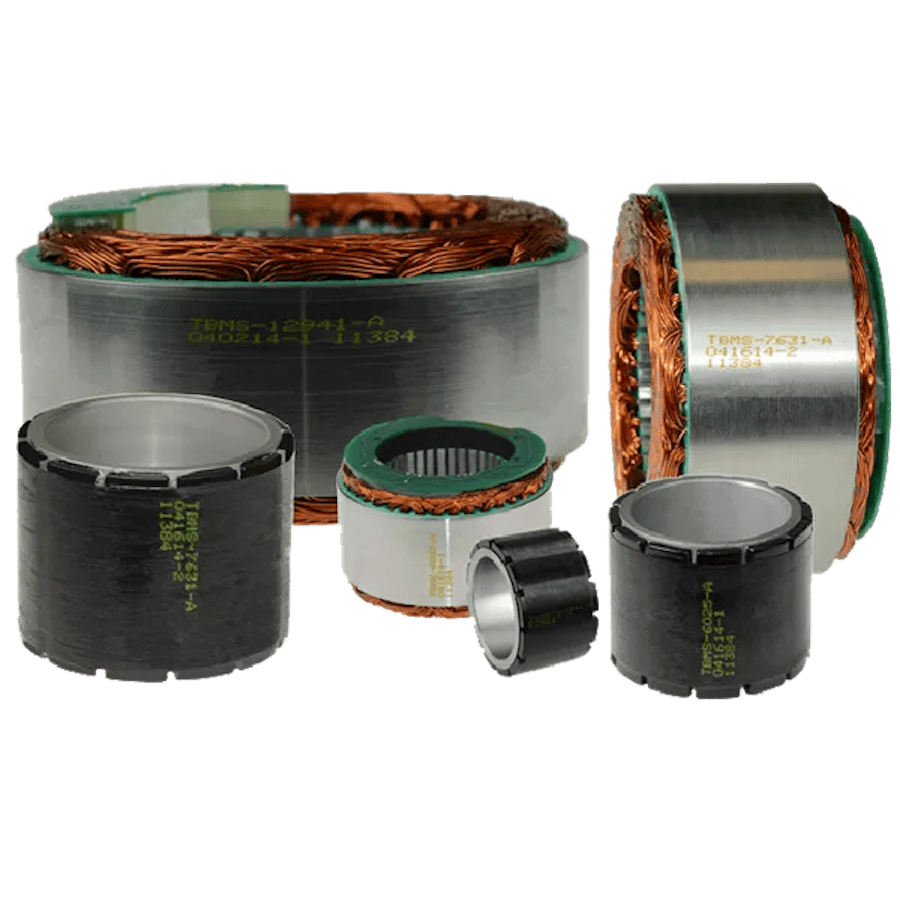
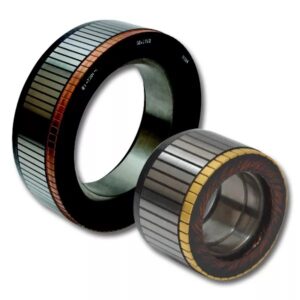
Innovative Precision Motor & Motion Solutions for Mission-Critical Military & Aerospace Applications

Cutting-Edge Electro-Mechanical Actuators for Military & Defense Applications

If you design, build or supply Servo Motors, create a profile to showcase your capabilities and connect with visitors who have an active requirement for your solutions.

Military servo motors are engineered to provide precise, reliable actuation under extreme conditions. These closed-loop systems include position feedback, typically via encoders or potentiometers, enabling accurate control and real-time correction during operation.
In contrast to open-loop motors, servo units maintain performance under load, resist vibration, and adapt quickly to dynamic input.
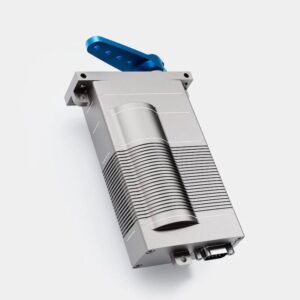
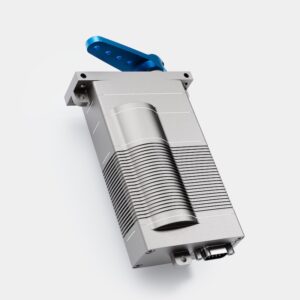
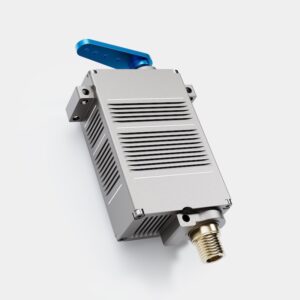
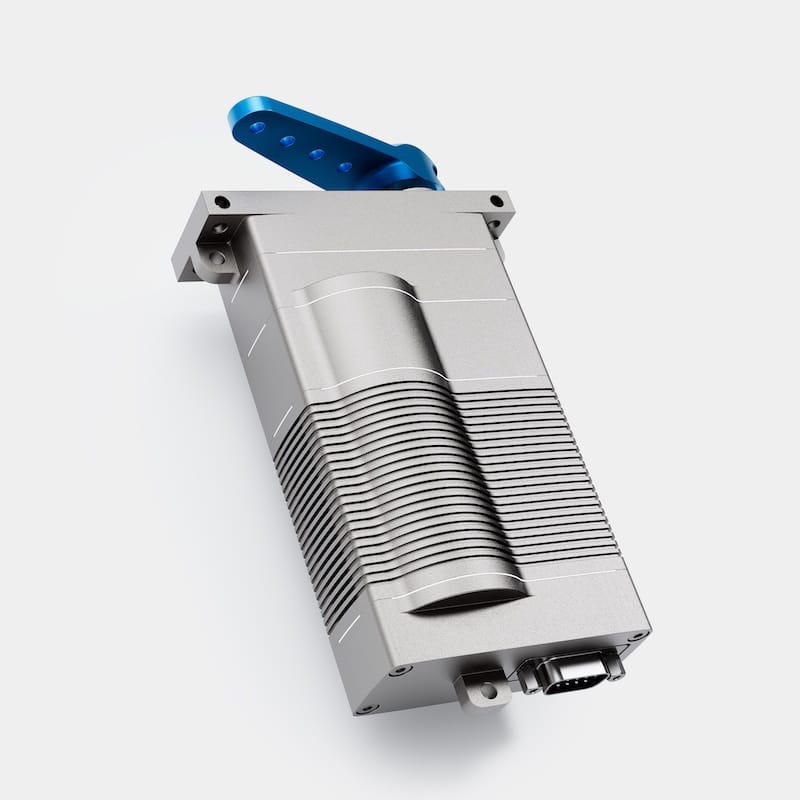
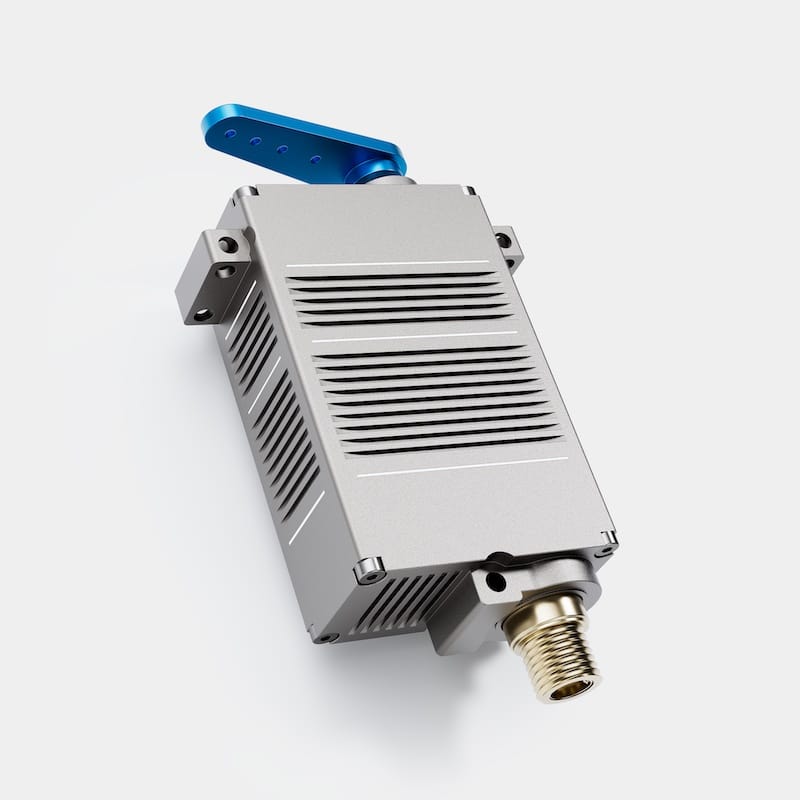
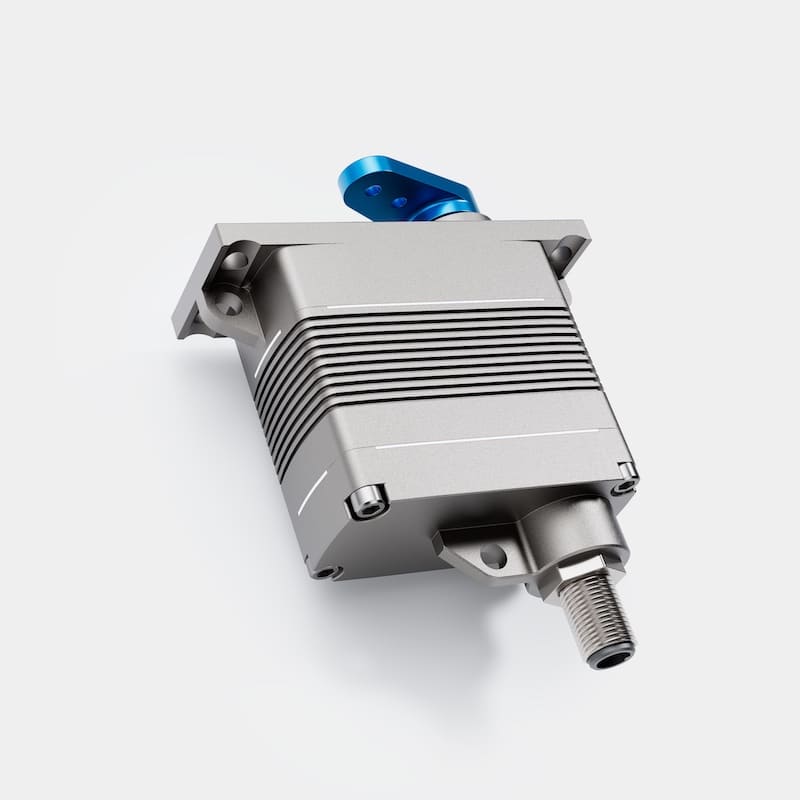
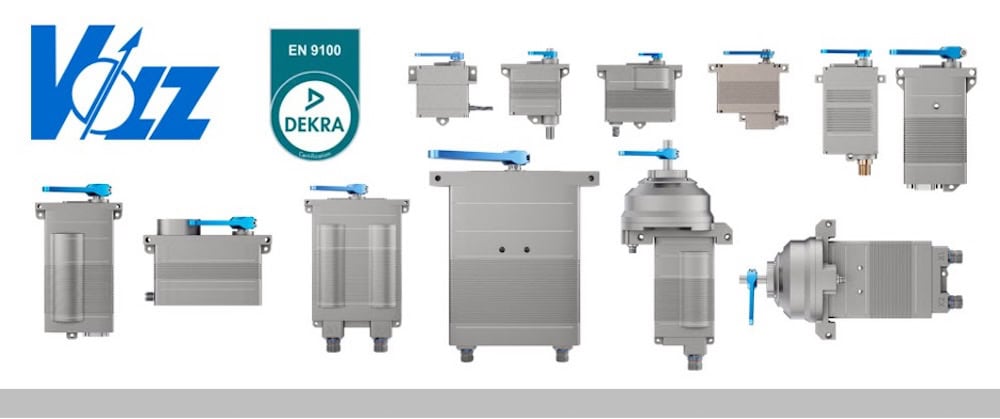
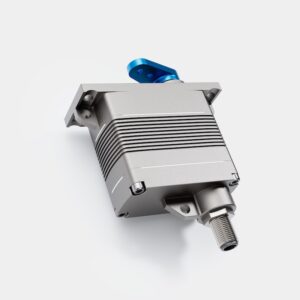
Servo motor, the DA 30-HT, by Volz Servos.
Unmanned aerial vehicles (UAVs) rely on rotary servo motors to operate ailerons, elevators, and rudders, enabling autonomous or remote-controlled flight. Lightweight brushless and micro digital servos are often used in gimbal systems to stabilize cameras and sensors. Linear servos may control payload release or retractable mechanisms.
Guided munitions use coreless and digital servos for rapid, high-torque movement of aerodynamic fins. These units respond in milliseconds to trajectory adjustments, with continuous rotation or fine positional control based on real-time telemetry.
Servos enable high-precision pan and tilt in RWS and turret-mounted platforms. Geared or direct drive rotary servos control azimuth and elevation for weapon alignment. Integrated feedback ensures synchronized movement with targeting systems, while high torque digital servos resist shock and overrun.
Antenna arrays and surveillance radars use AC servo motors or brushless rotary servos to maintain continuous sweep or fixed positional aiming. These motors withstand environmental extremes and operate quietly with low backlash.
In unmanned ground vehicles and wearable exoskeletons, servo motors actuate limbs, grippers, and control surfaces. Linear servo motors simulate joint movements, while rotary micro servos allow compact actuation. Silent operation, low power draw, and ruggedization are vital in these applications.
Designed for angular motion control, rotary servos are available in multiple forms:
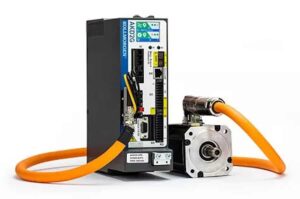
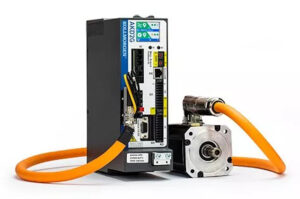
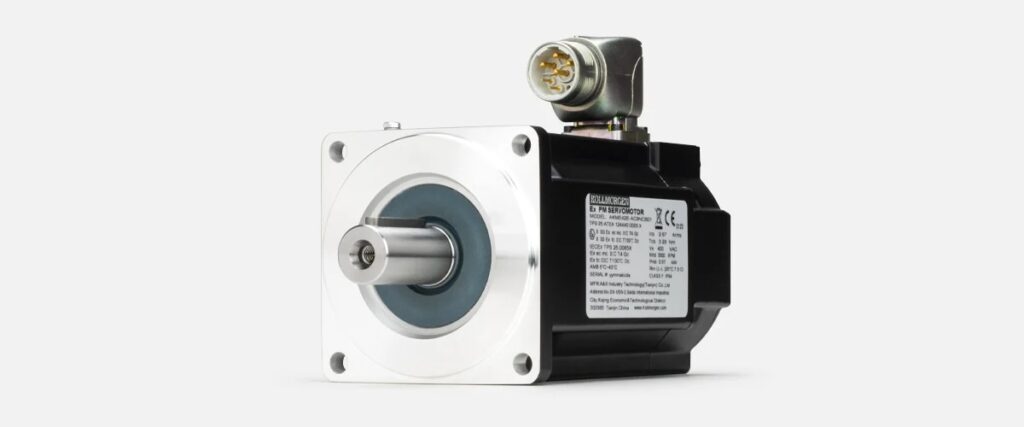
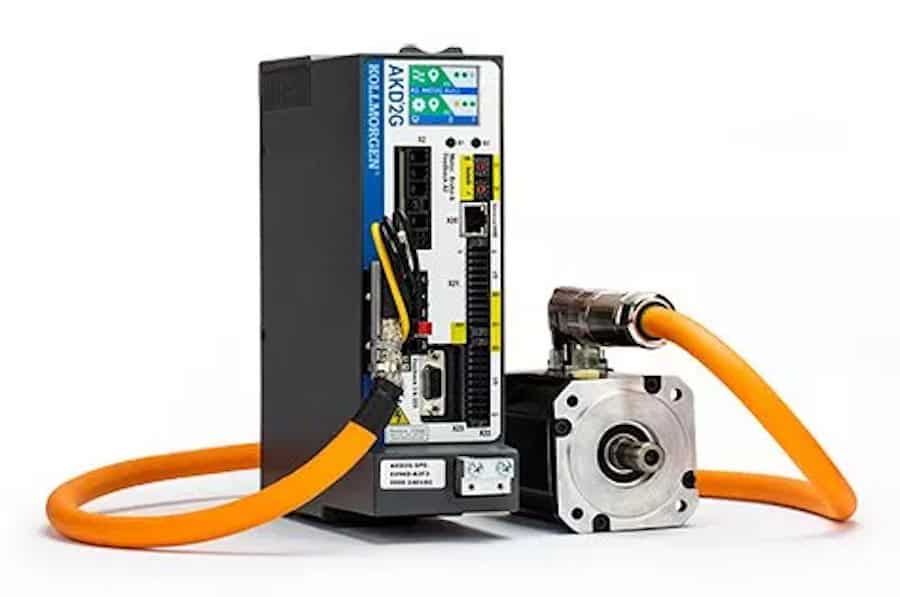
Servo motors, AKM2G Series, from Kollmorgen.
Delivering precise linear motion, these linear actuators are critical in actuator systems:
Combining traditional stepper motor characteristics and servo control capabilities, hybrid stepper servo motors offer an attractive solution in defense applications where cost, efficiency, and feedback control intersect. These motors feature closed-loop feedback with stepper-style movement, enhancing accuracy, torque stability, and smoother motion than standard steppers.
Used increasingly in:
Hybrid servo steppers reduce vibration and overheating common to traditional steppers and are easier to integrate than full digital servos in constrained environments.
Servo motors outperform traditional stepper motors in dynamic, high-precision applications thanks to their closed-loop feedback systems, smoother acceleration, and ability to adapt under variable load. In missile control surfaces or UAV stabilization, real-time response and torque correction are critical advantages delivered by servos but not by standard steppers.
However, hybrid stepper servo motors provide a middle-ground solution. They maintain the simplicity and cost-effectiveness of steppers while incorporating feedback control to improve precision and thermal efficiency. For military integrators needing reliable mid-range performance in applications like antenna positioning or unmanned system payload control, hybrid stepper servos offer a compelling alternative.
Servo motor systems deployed in defense platforms must conform to stringent standards:
Housing is typically ruggedized with IP67 or MIL-rated enclosures. Servos are often integrated with onboard diagnostics, thermal protection, and EMI shielding.
When evaluating servo motors for defense:
From remote weapon stations and smart munitions to unmanned ground robots and radar systems, servo motors are essential to the responsiveness and control of military platforms. Each application places unique demands on motor selection, whether emphasizing torque, size, silence, or feedback resolution. Hybrid stepper servo motors now join the array of solutions available, delivering enhanced control in cost-sensitive or space-constrained designs.
Whether implementing high-speed rotary servos in UAVs, linear actuators in robotic arms, or hybrid solutions for targeting systems, military developers rely on servo technology to translate electrical intent into mission success.
The evolution of servo motors continues to align with emerging defense priorities: miniaturization, automation, reliability, and environmental ruggedness. With advanced control electronics and specialized form factors, servo technologies, both conventional and hybrid, remain indispensable in modern military engineering.


 Searching Companies & Products