Showcase your capabilities
If you design, build or supply Naval Radar, create a profile to showcase your capabilities and connect with visitors who have an active requirement for your solutions.



Find Naval Radar manufacturers and suppliers of maritime surveillance radar for military and naval applications
Read the Technology Overview
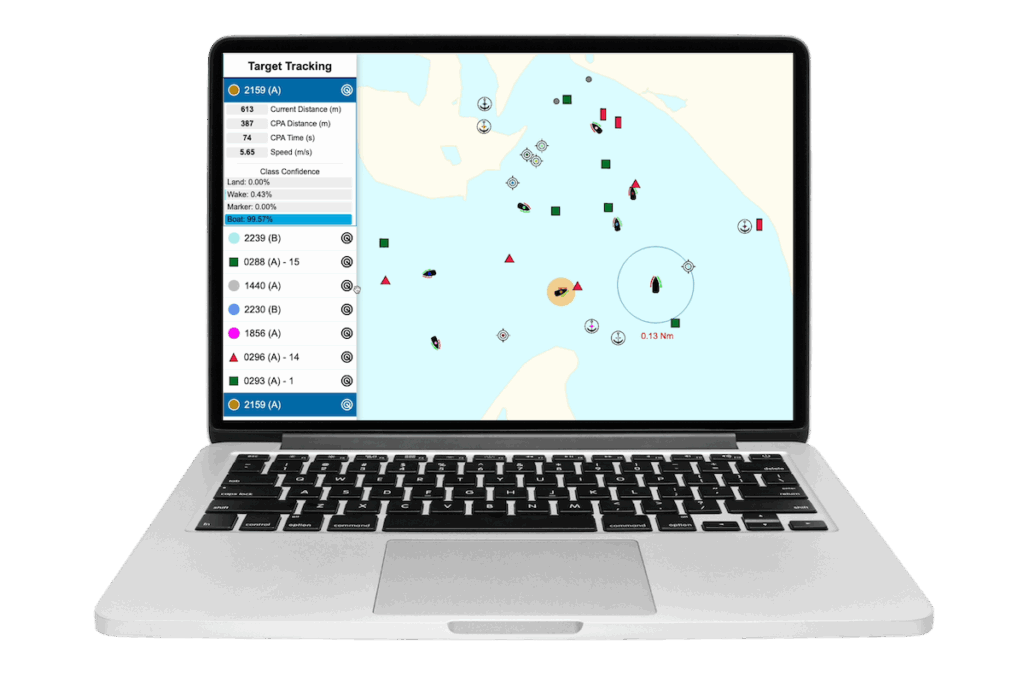
Next-Generation Marine Radar Processing Solutions for Enhanced Situational Awareness in Naval & Defense Applications

If you design, build or supply Naval Radar, create a profile to showcase your capabilities and connect with visitors who have an active requirement for your solutions.

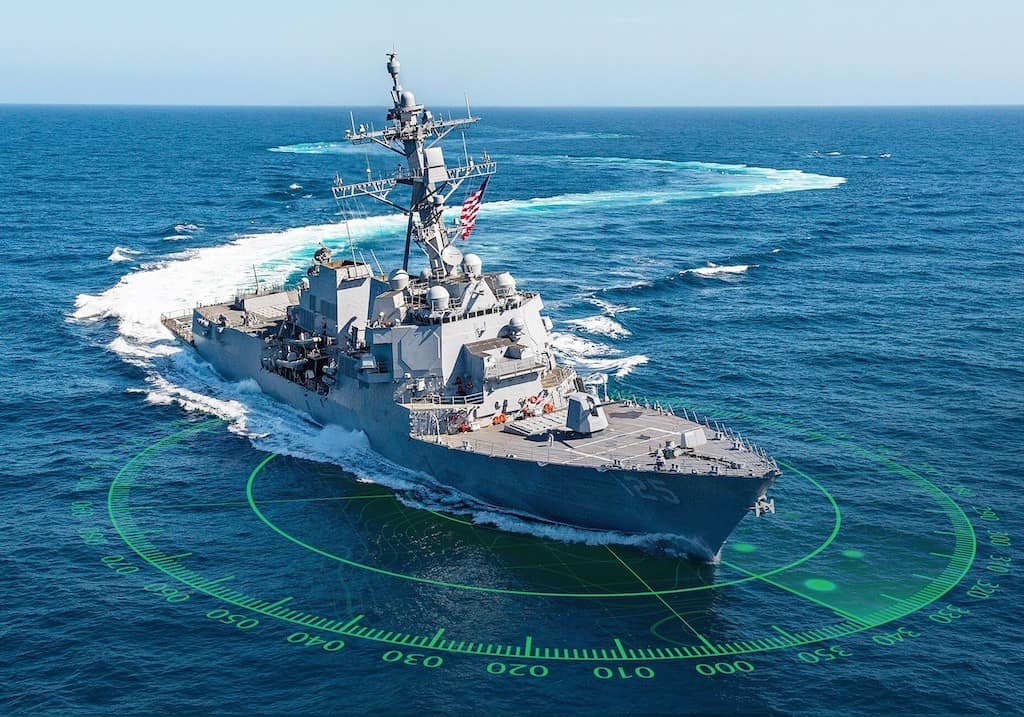
Military naval radar systems are used by navies and maritime forces around the world for surveillance at sea, watching the skies and the water’s surface to detect, identify and track targets and potential threats. Maritime radar provides situational awareness and intelligence, surveillance and reconnaissance (ISR) support, whilst radar-guided missiles can also be used to intercept air and surface targets.
Radar has supported sea power since the Second World War. The first experiments with radio direction finding, as radar was known, occurred in the maritime environment in the early 20th Century. Christian Hülsmeyer, a German physicist and inventor, developed a system called the Telemobiloscope. This harnessed the principles of radar by which radio waves are reflected to the transmitting antenna from metallic surfaces. The Telemobiloscope demonstrated that a ship carrying the apparatus could detect other ships in fog.
The Second World War saw naval radar come of age. During the 1930s German scientific interest in radar initially focused on its feasibility as a mechanism to detect ships. In 1935, a research ship called Welle became the world’s first vessel equipped with a naval surveillance radar. The equipment furnishing the Welle formed the basis for the Kriegsmarine (German Navy) Seetakt system. Elsewhere in Europe, the Royal Navy forged ahead with its adoption of radar. Ground-breaking experiments by the physicist Robert Watson-Watt in the 1930s proved radar could detect aircraft. Navy efforts to configure radar for maritime use gathered momentum in the mid-1930s. By 1938, the Royal Navy’s Type-79Y radar had equipped HMS Sheffield, a ‘Southampton’ class cruiser and the ‘Nelson’ class battleship HMS Rodney. Radar would outfit the navies of all the major belligerents during the conflict.
The pioneering work of the 1930s, and the adoption of radar during the war, paved the way for the evolution of the technology during the Cold War and beyond. Much as it does today, naval surveillance radars detected, identified and tracked targets on the sea and in the air. Alongside sonar, optronics and electronic warfare it provides a warship’s situational awareness, and intelligence, surveillance and reconnaissance support.
Design & Compromises
All radar design is a compromise balancing the radar’s intended role alongside the practical size of its antenna and how much power it can draw from the hosting platform. Although warships are large platforms, they are still space and power constrained. This is the result of the quantity of sensors, weapons and communications systems they must accommodate. As well as absorbing space these systems place power demands on a ship’s engines.
Naval surveillance radars typically transmit in L-band (1.215 gigahertz/GHz to 1.4GHz), S-band (2.3GHz to 2.5GHz/2.7GHz to 3.7GHz), C-band (5.25GHz to 5.925GHz) and X-band (8.5GHz to 10.68GHz). The precise choice of waveband is based on the factors above dictated by the vessel the radar will equip.
Today’s naval radars are very different from those equipping the navies of yesterday. Vacuum tube technology has given way to solid state electronics. The latter has increased radar reliability and lowered Maintenance, Repair and Overhaul (MRO) costs. Solid state electronics have paved the way for Active Electronically Scanned Array (AESA) naval radars. The first naval AESA radar was the Mitsubishi Electric OPS-24. It equipped the Japan Maritime Self Defence Force’s JS Hamagiri ‘Asagiri’ class destroyer, entering service in 1990.
These radars can electronically steer their radar beams in any direction, which means the radar’s antenna does not necessarily have to be physically steered towards a target. This allows AESA radar panels, each of one with a specific field-of-view, to be fitted to a ship’s superstructure. Such an arrangement provides full coverage around and above the vessel. Flat panel AESA designs dispense with heavy antenna turning mechanisms consuming space and power. Moving parts like these also increase a radar’s MRO burden.
The electronic beam-steering characteristics let a radar perform several tasks at once. An AESA produces scores of individual radar beams. Some of the beams can be steered to look at the sky for air targets. Others can be steered to look for surface targets. The radar can also coordinate the interception of air and surface targets with radar-guided missiles simultaneously.


 Searching Companies & Products



 Subscribe to the Weekly eBrief
The latest engineering and technical developments straight to your inbox - join thousands of engineers who receive it.
Subscribe to the Weekly eBrief
The latest engineering and technical developments straight to your inbox - join thousands of engineers who receive it.