SAE Media | Counter UAS
Honeywell Aerospace | Better Cooling
International Armoured Vehicles
Leading Global Suppliers

Motor Controllers

Motor controllers regulate the speed, torque, direction, and positioning of electric motors used in military vehicles, robotics, aerospace systems, and naval equipment. Rugged military motor controllers include brushed and brushless DC drives, servo controllers, stepper motor controllers, and multi-axis systems.

This page features suppliers of motor controllers for applications such as turret positioning, EO/IR gimbal stabilization, radar antenna movement, and vehicle propulsion.

Read the Technology Overview

Suppliers of Rugged Motor Controllers

4 Leading Suppliers
Grid List
SAGLAMTEK
SAGLAMTEK
Turkey (2 locations)

Advanced RF, Navigation & Electronic Systems for Defense Applications

Allient
Allient
USA (2 locations)

Advanced Motion, Control & Power Solutions for Uncrewed Vehicles Operating in Demanding Mission Environments

Redler Technologies
Redler Technologies
Israel

Circuit Breakers & Solid-State Power Distribution Solutions for Mission-Critical Applications

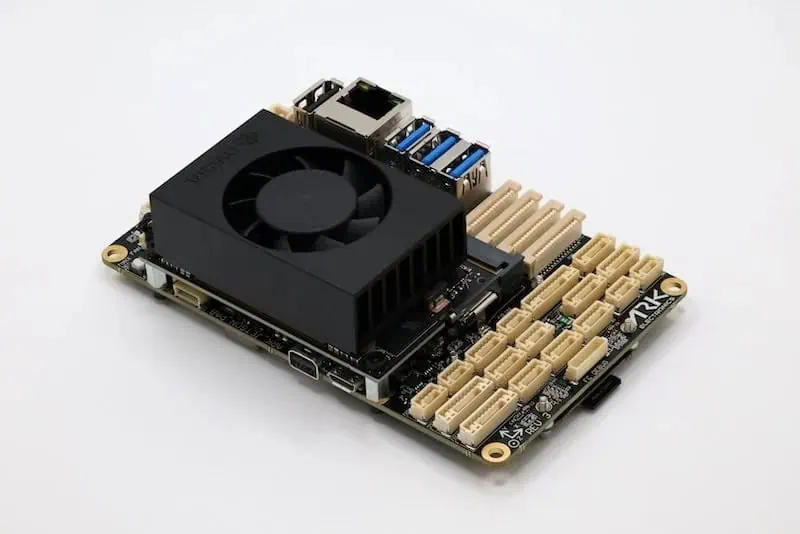
ARK Electronics
ARK Electronics
USA

State-Of-The-Art NDAA-Compliant Electronic Hardware Components for Mission-Critical Drone & Robotics Platforms. Made in the USA.

Browse suppliers by country
Showcase your capabilities

If you design, build or supply Motor Controllers, create a profile to showcase your capabilities and connect with visitors who have an active requirement for your solutions.


Create Supplier Profile

Motor Controllers

7 Cutting-edge Solutions
Add your solutions
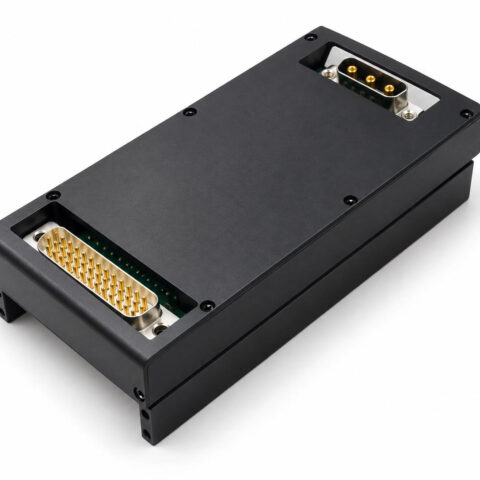
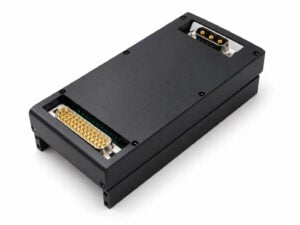
SGT-FDMSCK-YKD-AA FOC Motor Driver

Precision BLDC motor control for defense actuation systems

Precision BLDC motor control for defense actuation systems
...iented-control motor driver developed for precise position control of three-phase BLDC actuation...
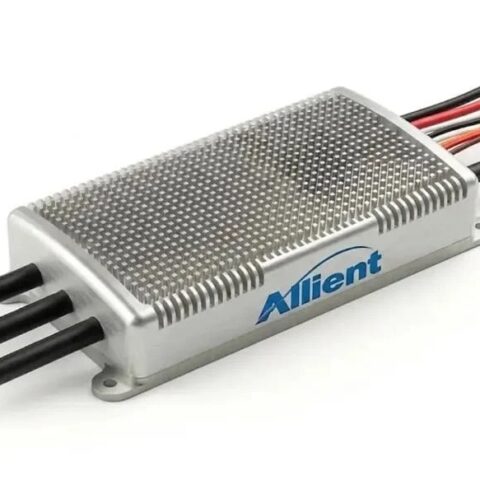
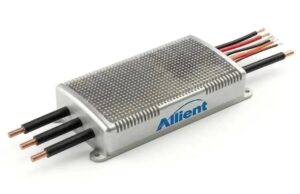
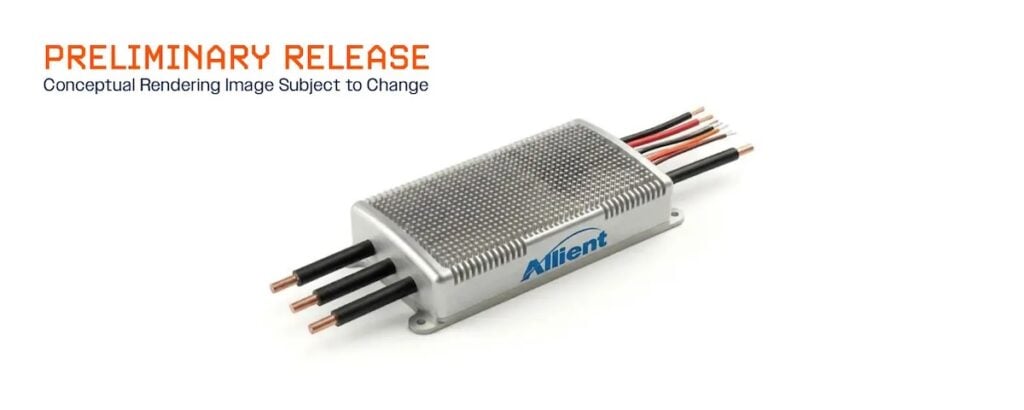
Vyxalon™ Apex Drone Drive

Gallium nitride-powered electronic speed controller for military UAV motor control

Gallium nitride-powered electronic speed controller for military UAV motor control
...ectronic Speed Controller (ESC) designed for professional defense and government UAV propulsion... ...ics can reduce controller size by up to 50%, while the lightweight aluminum enclosure incorporates...
Micro Rayon
Micro Rayon

Ultra-compact servo controller for up to 450W motors

Ultra-compact servo controller for up to 450W motors
...C servo motion controller with an ultra-compact footprint, making it ideal for tactical drones and...
TMC III
TMC III

Compact servo controller & evaluation board for up to 500W motors

Compact servo controller & evaluation board for up to 500W motors
Redler Technologies’ TMC III is a comprehensive evaluation and testing platform that allows de...
Rayon Single Board
Rayon Single Board

Size- and weight-optimized servo controller for up to 960W motors

Size- and weight-optimized servo controller for up to 960W motors
...C servo motion controller tailored specifically for size- and weight-constrained tactical robotics...
Rayon 70
Rayon 70

High-performance & high-power servo controller for up to 3500W motors

High-performance & high-power servo controller for up to 3500W motors
...C servo motion controller designed for demanding tactical robotics and defense equipment...
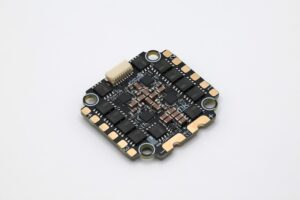
ARK 4-in-1 ESC
ARK 4-in-1 ESC

Blue UAS Framework-listed electronic speed controller for high performance drone motor control

Blue UAS Framework-listed electronic speed controller for high performance drone motor control
...ectronic speed controller) provides precise and reliable motor control for mission-critical...

The Technical Guide to Motor Controllers for Military Platforms

William Mackenzie

Updated:

Introduction to Rugged Motor Controllers for Military Platforms

Military motor controllers regulate the speed, torque, direction, and positioning of electric motors used across defense vehicles, weapon systems, aerospace platforms, and military robotics. These electronic control units manage electrical power delivery and motor operation, enabling precise motion control under demanding operational conditions. Applications range from turret positioning and stabilized sensor payloads to vehicle drive systems and electromechanical actuators.

Motor controllers for military applications include brushed and brushless DC controllers, servo drives, multi-axis systems, and compact embedded motor controllers. Rugged designs may incorporate high-current power electronics, programmable control functions, sensor feedback, and protection against electrical and environmental stresses.

Key Types of Motor Controllers

Electric motor controllers are available in different configurations to support specific motor technologies, electrical loads, and motion-control requirements. Common types include:

  • Brushed DC Motor Controllers: Regulate the voltage and current supplied to brushed DC motors, providing speed and directional control for actuators, positioning mechanisms, and auxiliary systems.
  • Brushless DC (BLDC) Motor Controllers: Use electronic commutation to control brushless motors, supporting efficient operation, responsive speed adjustment, and precise torque regulation in robotics, UAVs, and electromechanical systems.
  • AC Motor Controllers and Variable Frequency Drives (VFDs): Control compatible AC motors by adjusting electrical frequency and voltage, enabling variable-speed operation in vehicle drive systems, pumps, and mechanical equipment.
  • Servo Motor Controllers: Use feedback from encoders, resolvers, or other sensors to regulate motor position, speed, and torque for precision applications such as gimbal stabilization and turret positioning.
  • Stepper Motor Controllers: Generate controlled phase excitation sequences for incremental motor movement, supporting positioning mechanisms and instrumentation requiring repeatable motion.
  • Multi-Axis Motor Controllers: Coordinate multiple motors through integrated control electronics, enabling synchronized movement in robotic assemblies, stabilized platforms, and complex positioning systems.
  • Integrated Motor Controllers and Drives: Combine control processing and motor power electronics within compact assemblies, reducing external components and simplifying integration into space-constrained military equipment.

Programmable and embedded motor controllers can support configurable operating parameters, feedback options, and protection functions, depending on the selected architecture.

Military Applications of Motor Controllers

Turret Traversal and Weapon Elevation

Motor controllers regulate the movement of electrically driven turret traverse and elevation mechanisms. Closed-loop servo control enables accurate angular positioning, controlled acceleration, and responsive movement under changing mechanical loads. High-current controllers may be required to accommodate demanding actuator loads.

Remote Weapon Stations (RWS)

Remote weapon stations use motor controllers to position and stabilize weapon mounts through electronically controlled drive mechanisms. Coordinated control of azimuth and elevation axes supports operator commands, target tracking, and integration with fire control and stabilization systems.

Electro-Optical and Infrared (EO/IR) Gimbal Stabilization

Gimbal motor controllers provide precise motion regulation for stabilized EO/IR imaging payloads. High-bandwidth servo control, low-speed smoothness, and encoder feedback support accurate line-of-sight positioning. Compact brushless controllers are particularly suited to lightweight gimbals with limited installation space.

Radar and Antenna Positioning Systems

Motor controllers drive mechanically steered radar assemblies, directional antennas, and positioning mechanisms. Programmable speed profiles and position feedback support repeatable scanning, controlled rotation, and accurate alignment. Suitable controllers must accommodate the mechanical loads and duty cycles of the installation.

Military Vehicle Steering and Electric Drive Systems

High-power motor controllers regulate electric traction motors and electrically actuated steering mechanisms in compatible military vehicles. Traction applications require substantial current handling, controlled torque delivery, and thermal management. High-voltage motor controllers may also support regenerative braking and energy recovery where vehicle electrical architectures permit.

Military Robotics and Unmanned Ground Vehicles (UGVs)

Military robotic platforms use motor controllers for wheel and track drives, steering, robotic manipulators, and auxiliary actuators. Rugged controllers provide responsive movement and controllable torque across variable terrain. Multi-axis configurations can coordinate several motors through onboard autonomy and vehicle control systems.

Naval Gun Mounts and Stabilized Deck Equipment

Naval platforms incorporate motor controllers into stabilized gun mounts, sensor positioning assemblies, and electrically operated deck mechanisms. These applications demand reliable movement under vessel motion, vibration, and changing loads. Marine installations may also require corrosion-resistant packaging and protection against moisture and saltwater exposure.

Aerospace Actuation and Positioning Systems

Aircraft motor controllers support compatible electromechanical actuators, positioning mechanisms, and electrically driven subsystems. Aerospace designs emphasize compact dimensions, low weight, controlled power consumption, and reliable operation across demanding environmental conditions. Brushless and embedded controllers are also used in UAV flight-control actuators and electric drive architectures, with dedicated electronic speed controllers commonly regulating UAV propulsion motors.

Communication Interfaces & System Integration

Military motor controllers communicate with vehicle computers, mission systems, actuator controllers, and other electronic equipment through digital networks or discrete electrical interfaces. Supported protocols influence command transmission, feedback monitoring, diagnostics, and synchronization across multiple motors.

Interface Primary Functions Military Integration Applications
CAN / CANopen Motor commands, status feedback, parameter configuration, and diagnostics Military vehicles, robotics, and distributed actuator systems
MILCAN CAN-based communication with defined military network profiles Compatible military ground vehicle electronic architectures
EtherCAT Deterministic communication and synchronized multi-axis motion control Precision positioning systems and coordinated electromechanical assemblies
RS-422 / RS-485 Serial command transmission, configuration, telemetry, and diagnostics Remote actuators, positioning mechanisms, and embedded equipment
Ethernet Network communication, configuration, monitoring, and diagnostic data exchange Integrated mission equipment and networked control systems
Analog and Digital I/O Discrete commands, analog references, fault signals, and sensor inputs Direct actuator interfaces, limit switches, and supervisory control systems

Military Standards & Qualification Requirements

Military motor controllers may require environmental, electromagnetic, and electrical power qualification according to their intended platform and installation. Relevant standards include:

  • MIL-STD-810: Provides environmental engineering guidance and test methods addressing conditions such as vibration, shock, temperature extremes, humidity, and other operational stresses.
  • MIL-STD-461: Defines electromagnetic interference emission and susceptibility requirements for military electronic equipment and subsystems.
  • MIL-STD-1275: Defines electrical power characteristics associated with military ground vehicle 28 V DC systems, including relevant voltage transients and power quality conditions.
  • MIL-STD-704: Establishes aircraft electrical power characteristics relevant to compatible airborne motor controller installations.
  • DO-160 / ED-14: Provides environmental conditions and test procedures for airborne equipment, including applicable temperature, vibration, electrical, and electromagnetic tests.
  • IEC 61800 Series: Covers adjustable-speed electrical power drive systems, including relevant performance, safety, and electromagnetic compatibility requirements.

Applicable qualification requirements depend on the installation environment, electrical architecture, equipment function, and procurement specifications. Compliance should be verified against the relevant requirements and documented test evidence.

Emerging Developments in Military Motor Control Technology

Motor control technology continues to advance through improvements in power electronics, embedded processing, and diagnostics. Developments relevant to military applications include:

  • Wide-Bandgap Semiconductors: Silicon carbide (SiC) and gallium nitride (GaN) power devices support higher switching frequencies and improved conversion efficiency in suitable motor drive architectures, with potential benefits for thermal management and power density.
  • Integrated Motor-Drive Electronics: Compact assemblies combining motor control processing, power electronics, and protection functions reduce external wiring and installation complexity in space-constrained defense equipment.
  • Advanced Digital Control Algorithms: Field-oriented control, adaptive regulation, and model-based control techniques improve torque response, motion precision, and efficiency across changing operating conditions.
  • Predictive Diagnostics: Integrated monitoring of current, temperature, operating loads, and fault histories supports condition assessment and the earlier identification of developing motor or controller problems.

These developments are particularly relevant to rugged motor controllers operating within increasingly electrified, automated, and space-constrained military systems.


Related Articles

Next-Gen GaN Speed Controllers Elevate Drone Efficiency & Defense Systems

Allient has unveiled the Vyxalon Apex Drone Drive, an electronic speed controller featuring advanced Gallium Nitride technology designed to boost flight range, efficiency, and reliability across defense and industrial platforms

Aug 11, 2026
Advanced NDAA Compliant Hardware Solutions for Drones & Robotics

Defense Advancement showcases ARK Electronics' electronic hardware components and technologies for mission-critical drone and robotics platforms

Sep 19, 2025

THE WEEKLY eBRIEF

The latest defense technology news, straight to your inbox.

Get our weekly roundup of technology developments, new products and industry news.

By subscribing, you agree to receive the weekly DA eBrief newsletter from EchoBlue Ltd. Unsubscribe at any time using the link in every email. See our Privacy Notice.

Advancing Defense Capability Through Strategic Collaboration Defense Advancement works with major OEMs to foster collaboration and increase engagement with SMEs, to accelerate innovation and drive defense capabilities forward.