Showcase your capabilities
If you design, build or supply Servo Drives, create a profile to showcase your capabilities and connect with visitors who have an active requirement for your solutions.




Servo drives are electronic motion control devices that regulate motor torque, speed, and position in military and defense systems using closed-loop feedback. Also known as servo amplifiers or servo motor drives, they enable precise and repeatable movement in weapon turrets, remote weapon stations, EO/IR gimbals, radar antennas, tactical robotics, and aircraft actuation systems.
This page highlights suppliers of rugged and MIL-SPEC servo drives, including AC and DC servo drives, brushless DC drives, digital servo drives, and compact multi-axis or embedded units.
Read the Technology Overview

Advanced RF, Navigation & Electronic Systems for Defense Applications


Circuit Breakers & Solid-State Power Distribution Solutions for Mission-Critical Applications

If you design, build or supply Servo Drives, create a profile to showcase your capabilities and connect with visitors who have an active requirement for your solutions.
No products available No products available from suppliers based in . View products from all territories

Military servo drives are electronic motion control devices designed to regulate the torque, speed, and position of electric motors in defense systems. Also known as servo amplifiers or servo motor drives, they regulate electrical power delivered to motors according to commands from a motion controller and feedback from sensors. Internal power electronics, current regulation, and closed-loop control work together to deliver precise positioning, rapid response, and repeatable movement in demanding military environments.
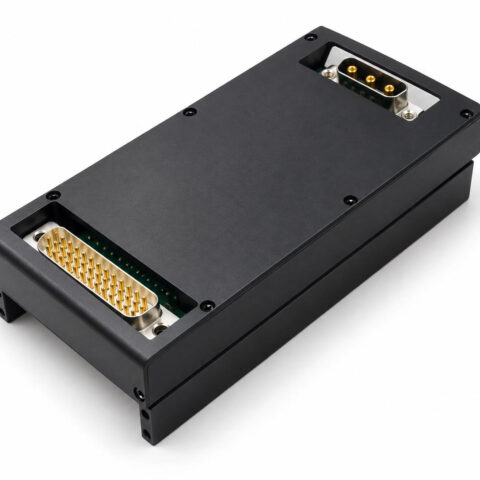
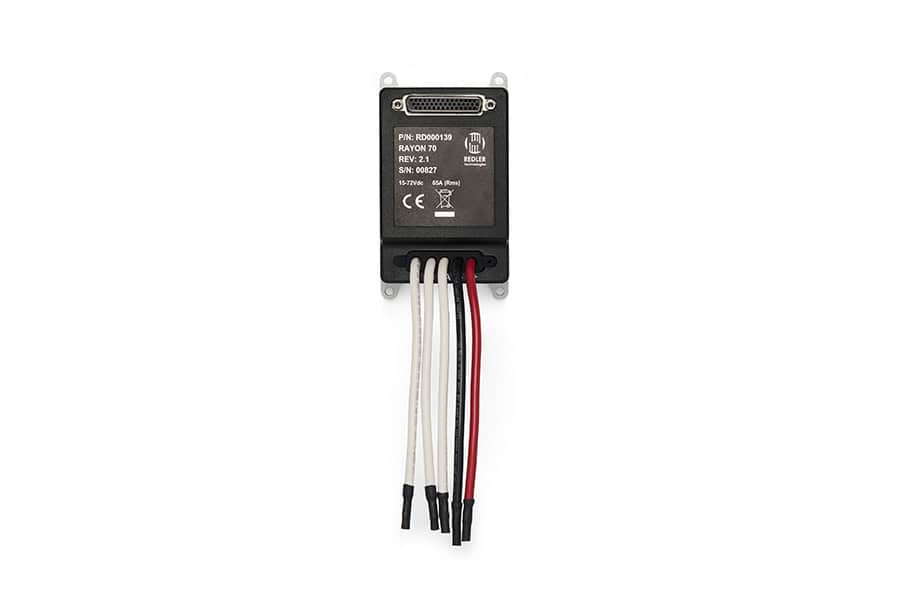
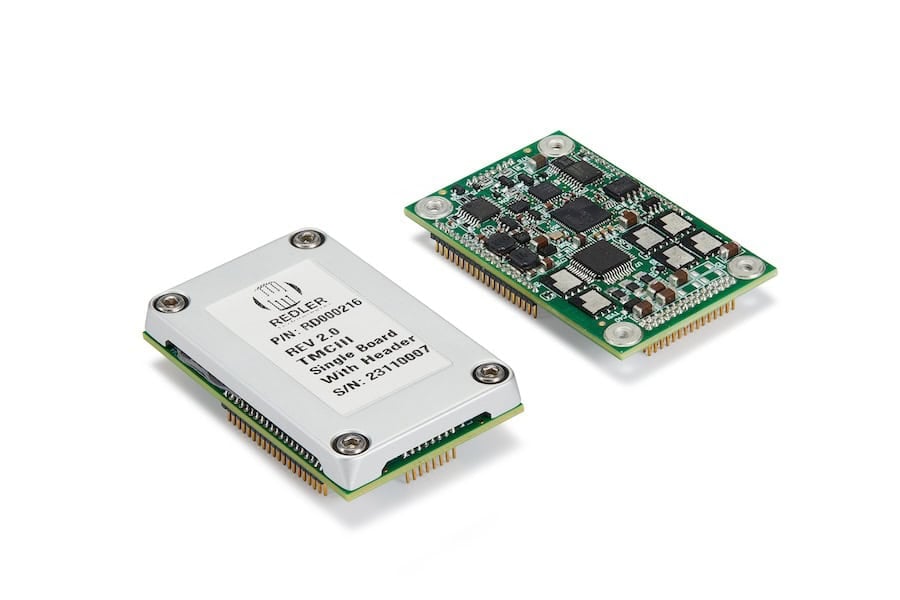
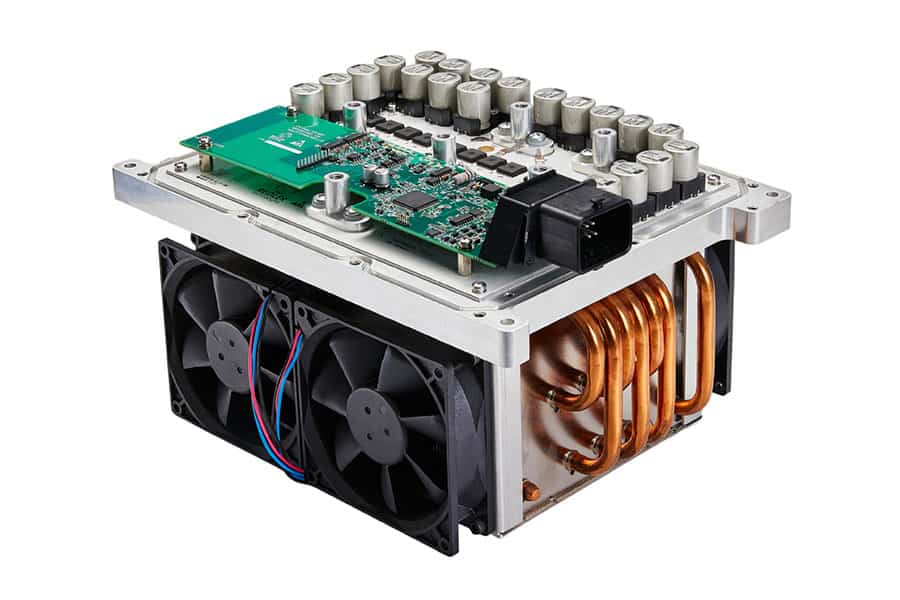
Ruggedized servo drives are used in weapon turrets, remote weapon stations, Electro-Optical/Infrared (EO/IR) systems, tactical robotics, and aircraft actuation. Available as compact modules, embedded drives, and high-power multi-axis units, they can be integrated into military platforms requiring reliable electromechanical motion control.
Military servo amplifiers control azimuth and elevation mechanisms in weapon turrets and remote weapon stations, enabling precise positioning and controlled movement. High-power servo drives regulate motor current to generate the torque required to accelerate and position mechanical loads, while closed-loop feedback supports accurate and repeatable movement. Ruggedized servo drive units can be integrated with fire control systems, rotary actuators, and higher-level stabilization controllers that compensate for platform movement.
Precision servo drives are used in EO/IR gimbals, radar antennas, and communications equipment requiring accurate angular positioning. Brushless servo drives support smooth low-speed movement, rapid repositioning, and corrective motion commanded by stabilization controllers. Multi-axis servo drive systems can coordinate pan, tilt, and other positioning mechanisms, while high-resolution encoder or resolver feedback supports precise tracking and disturbance rejection.
Military robotic systems use servo motor drives to control articulated joints, manipulators, steering mechanisms, and other electromechanical actuators. Compact servo drives and embedded servo drive modules can be integrated into space-constrained robotic assemblies where size, weight, and electrical efficiency are important. Multi-axis configurations support coordinated joint movement, while programmable current limits, feedback monitoring, and fault detection help manage mechanical loads and protect connected components.
Servo drive technology supports electromechanical actuators used in compatible military aircraft control systems, UAV payload mechanisms, and airborne positioning equipment. Brushless DC servo drives can regulate motor torque and position within compact actuator assemblies, while digital servo drives provide programmable response characteristics and feedback processing. Flight-critical applications require additional system-level safety, redundancy, fault management, and qualification measures appropriate to the aircraft architecture.
Different servo drive types are available to meet the motion control requirements, feedback architectures, and installation constraints of military and defense systems. Configurations vary according to motor technology, control methods, programmability, axis coordination, and level of integration.
| Servo Drive Type | Control Method | Key Characteristics | Typical Defense Applications |
| Alternating Current (AC) Servo Drives | Closed-loop torque, velocity, and position control | Responsive motion control, encoder or resolver feedback, programmable motion profiles | Turret positioning, radar systems, heavy-duty actuation |
| Direct Current (DC) Servo Drives | Armature current regulation with velocity or position feedback | Analog or digital control, relatively simple drive architecture, legacy system compatibility | Legacy military equipment, compact electromechanical actuators |
| Brushless Direct Current (BLDC) Servo Drives | Electronic commutation with closed-loop current, velocity, or position control | Precise commutation, smooth low-speed operation, configurable feedback, rapid dynamic response | EO/IR gimbals, antenna positioning, Unmanned Aerial Vehicle (UAV) payloads |
| Digital Servo Drives | Digitally implemented, programmable control loops | Software configuration, adjustable control parameters, diagnostics, digital communication interfaces | Precision positioning, robotic mechanisms, stabilized systems |
| Multi-Axis Servo Drives | Independent or coordinated closed-loop control of multiple axes | Multiple drive channels, synchronized motion support, shared interfaces, space-efficient integration | Robotic manipulators, multi-axis turrets, stabilized platforms |
| Integrated Servo Drives | Embedded closed-loop control within combined motor-drive assemblies | Integrated control electronics, reduced external wiring, compact packaging, local feedback processing | Space-constrained actuators, robotic joints, UAV mechanisms |
| Ruggedized and Embedded Servo Drives | Application-dependent digital or analog closed-loop control | Board-level or enclosed designs, vibration-resistant construction, environmental protection, platform-specific interfaces | Military vehicles, airborne equipment, harsh-environment systems |
Servo drive systems use different operating modes to regulate motor behavior according to the required motion profile. Programmable digital servo amplifiers may support multiple control modes and motion functions within a single unit, allowing them to accommodate different electromechanical systems and operating requirements.
Control mode selection depends on the mechanical load, feedback architecture, required response time, and level of coordination between motion axes. Available functions vary according to the drive hardware, firmware, and communication interface.
Military servo amplifiers must withstand the environmental, electrical, and electromagnetic conditions associated with their intended deployment. Ruggedized servo drives may be designed and tested against applicable military and industry standards to demonstrate suitability for ground vehicles, aircraft, and other defense platforms.
Qualification requirements depend on the platform, electrical architecture, and operating environment. Manufacturers of MIL-SPEC servo drives may provide environmental test reports, EMC data, and supporting qualification documentation to demonstrate compliance with specified defense procurement requirements.


 Searching Companies & Products