
Showcase your capabilities
If you design, build or supply Motor Controllers, create a profile to showcase your capabilities and connect with visitors who have an active requirement for your solutions.



Motor controllers regulate the speed, torque, direction, and positioning of electric motors used in military vehicles, robotics, aerospace systems, and naval equipment. Rugged military motor controllers include brushed and brushless DC drives, servo controllers, stepper motor controllers, and multi-axis systems.
This page features suppliers of motor controllers for applications such as turret positioning, EO/IR gimbal stabilization, radar antenna movement, and vehicle propulsion.
Read the Technology Overview


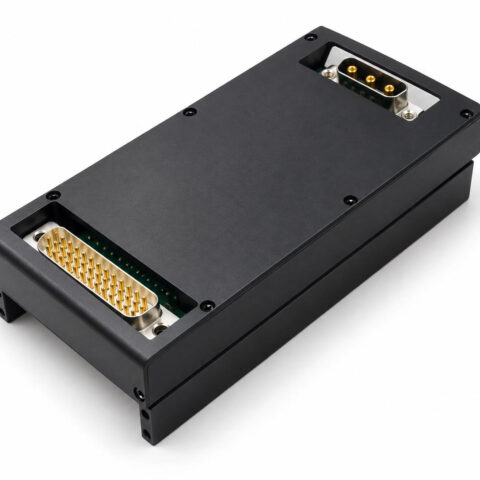


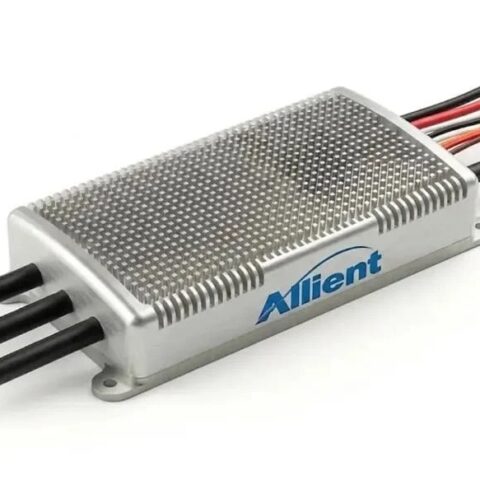

Advanced RF, Navigation & Electronic Systems for Defense Applications

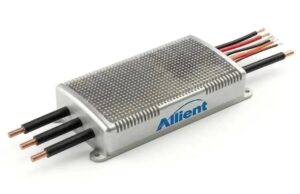
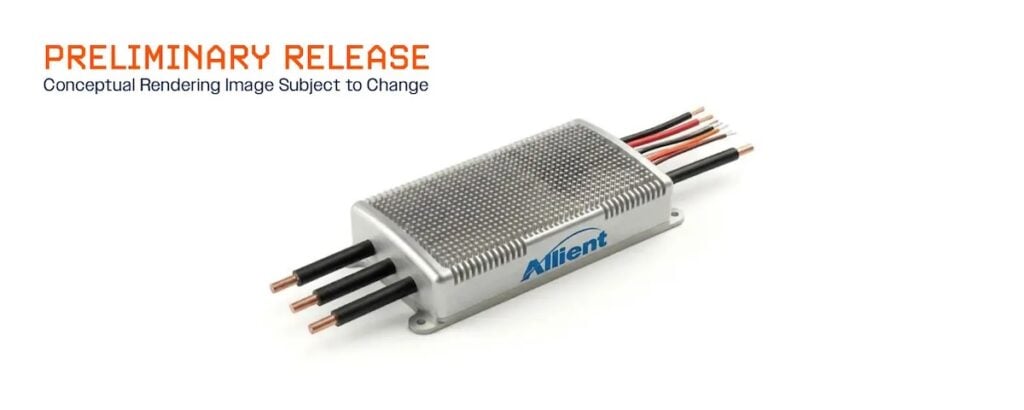
Advanced Motion, Control & Power Solutions for Uncrewed Vehicles Operating in Demanding Mission Environments


Circuit Breakers & Solid-State Power Distribution Solutions for Mission-Critical Applications

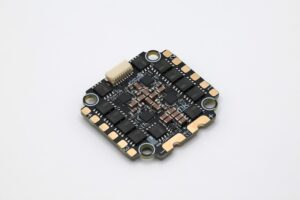
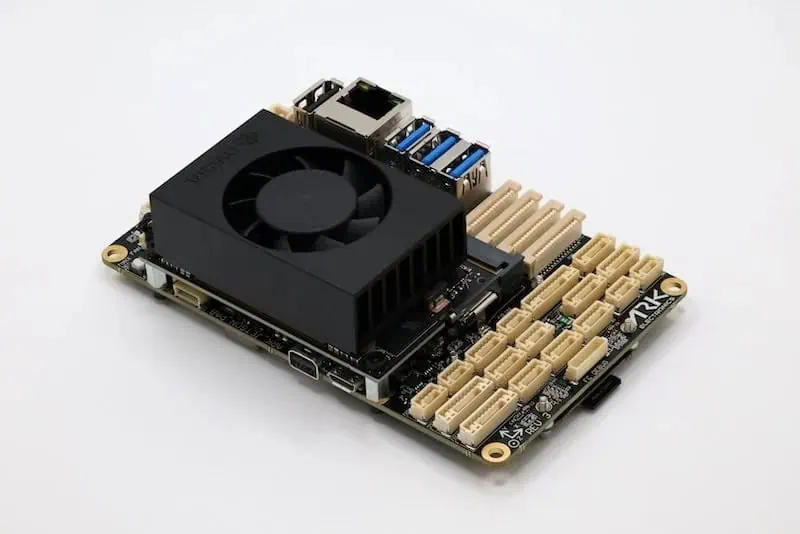
State-Of-The-Art NDAA-Compliant Electronic Hardware Components for Mission-Critical Drone & Robotics Platforms. Made in the USA.

If you design, build or supply Motor Controllers, create a profile to showcase your capabilities and connect with visitors who have an active requirement for your solutions.
No products available No products available from suppliers based in . View products from all territories

Military motor controllers regulate the speed, torque, direction, and positioning of electric motors used across defense vehicles, weapon systems, aerospace platforms, and military robotics. These electronic control units manage electrical power delivery and motor operation, enabling precise motion control under demanding operational conditions. Applications range from turret positioning and stabilized sensor payloads to vehicle drive systems and electromechanical actuators.
Motor controllers for military applications include brushed and brushless DC controllers, servo drives, multi-axis systems, and compact embedded motor controllers. Rugged designs may incorporate high-current power electronics, programmable control functions, sensor feedback, and protection against electrical and environmental stresses.
Electric motor controllers are available in different configurations to support specific motor technologies, electrical loads, and motion-control requirements. Common types include:
Programmable and embedded motor controllers can support configurable operating parameters, feedback options, and protection functions, depending on the selected architecture.
Motor controllers regulate the movement of electrically driven turret traverse and elevation mechanisms. Closed-loop servo control enables accurate angular positioning, controlled acceleration, and responsive movement under changing mechanical loads. High-current controllers may be required to accommodate demanding actuator loads.
Remote weapon stations use motor controllers to position and stabilize weapon mounts through electronically controlled drive mechanisms. Coordinated control of azimuth and elevation axes supports operator commands, target tracking, and integration with fire control and stabilization systems.
Gimbal motor controllers provide precise motion regulation for stabilized EO/IR imaging payloads. High-bandwidth servo control, low-speed smoothness, and encoder feedback support accurate line-of-sight positioning. Compact brushless controllers are particularly suited to lightweight gimbals with limited installation space.
Motor controllers drive mechanically steered radar assemblies, directional antennas, and positioning mechanisms. Programmable speed profiles and position feedback support repeatable scanning, controlled rotation, and accurate alignment. Suitable controllers must accommodate the mechanical loads and duty cycles of the installation.
High-power motor controllers regulate electric traction motors and electrically actuated steering mechanisms in compatible military vehicles. Traction applications require substantial current handling, controlled torque delivery, and thermal management. High-voltage motor controllers may also support regenerative braking and energy recovery where vehicle electrical architectures permit.
Military robotic platforms use motor controllers for wheel and track drives, steering, robotic manipulators, and auxiliary actuators. Rugged controllers provide responsive movement and controllable torque across variable terrain. Multi-axis configurations can coordinate several motors through onboard autonomy and vehicle control systems.
Naval platforms incorporate motor controllers into stabilized gun mounts, sensor positioning assemblies, and electrically operated deck mechanisms. These applications demand reliable movement under vessel motion, vibration, and changing loads. Marine installations may also require corrosion-resistant packaging and protection against moisture and saltwater exposure.
Aircraft motor controllers support compatible electromechanical actuators, positioning mechanisms, and electrically driven subsystems. Aerospace designs emphasize compact dimensions, low weight, controlled power consumption, and reliable operation across demanding environmental conditions. Brushless and embedded controllers are also used in UAV flight-control actuators and electric drive architectures, with dedicated electronic speed controllers commonly regulating UAV propulsion motors.
Military motor controllers communicate with vehicle computers, mission systems, actuator controllers, and other electronic equipment through digital networks or discrete electrical interfaces. Supported protocols influence command transmission, feedback monitoring, diagnostics, and synchronization across multiple motors.
| Interface | Primary Functions | Military Integration Applications |
| CAN / CANopen | Motor commands, status feedback, parameter configuration, and diagnostics | Military vehicles, robotics, and distributed actuator systems |
| MILCAN | CAN-based communication with defined military network profiles | Compatible military ground vehicle electronic architectures |
| EtherCAT | Deterministic communication and synchronized multi-axis motion control | Precision positioning systems and coordinated electromechanical assemblies |
| RS-422 / RS-485 | Serial command transmission, configuration, telemetry, and diagnostics | Remote actuators, positioning mechanisms, and embedded equipment |
| Ethernet | Network communication, configuration, monitoring, and diagnostic data exchange | Integrated mission equipment and networked control systems |
| Analog and Digital I/O | Discrete commands, analog references, fault signals, and sensor inputs | Direct actuator interfaces, limit switches, and supervisory control systems |
Military motor controllers may require environmental, electromagnetic, and electrical power qualification according to their intended platform and installation. Relevant standards include:
Applicable qualification requirements depend on the installation environment, electrical architecture, equipment function, and procurement specifications. Compliance should be verified against the relevant requirements and documented test evidence.
Motor control technology continues to advance through improvements in power electronics, embedded processing, and diagnostics. Developments relevant to military applications include:
These developments are particularly relevant to rugged motor controllers operating within increasingly electrified, automated, and space-constrained military systems.


 Searching Companies & Products