Showcase your capabilities
If you design, build or supply Circuit Breakers, create a profile to showcase your capabilities and connect with visitors who have an active requirement for your solutions.




Military-grade circuit breakers are engineered protection devices designed to interrupt fault currents and selectively isolate electrical circuits in defense power architectures. Used across aircraft, ground vehicles, naval systems, unmanned platforms, and fixed installations, they protect mission electronics from overloads, short circuits, and cascading failures.
This category features suppliers of military circuit breakers available in thermal, magnetic, thermal-magnetic, solid-state, and hybrid designs, specified to match platform load profiles, fault energy, and coordination requirements.
Read the Technology Overview

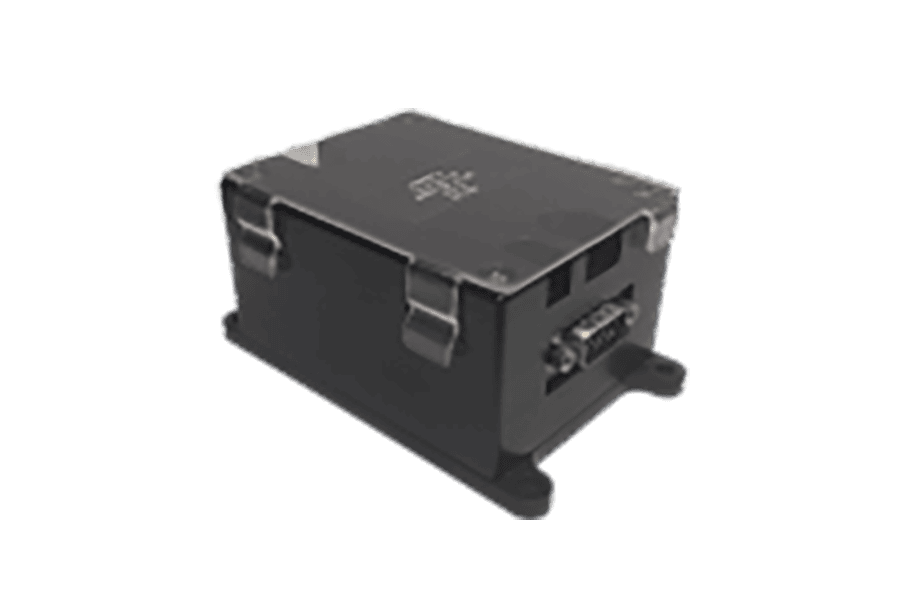
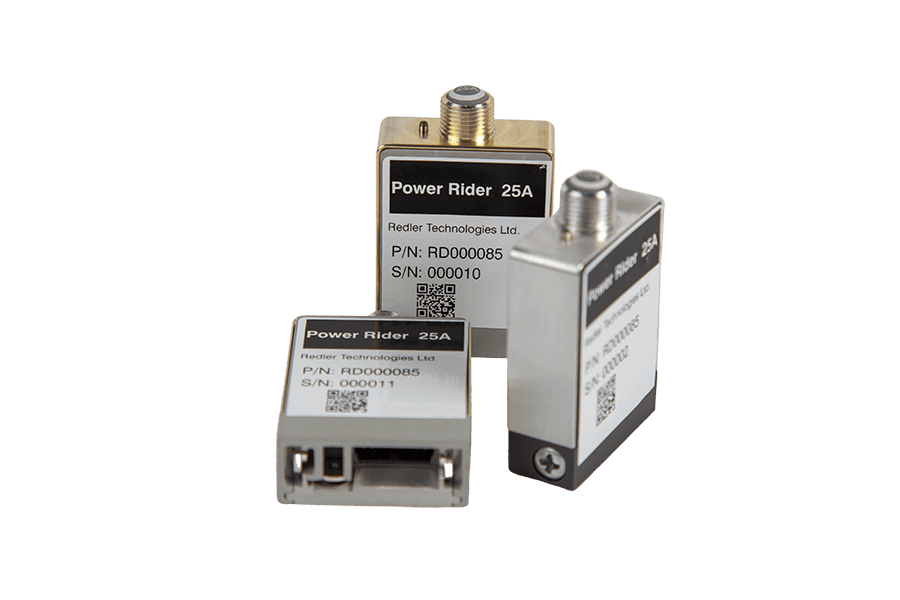

Circuit Breakers & Solid-State Power Distribution Solutions for Mission-Critical Applications

Field-Proven Rugged Power Conversion Products for Military & Defense Applications

If you design, build or supply Circuit Breakers, create a profile to showcase your capabilities and connect with visitors who have an active requirement for your solutions.

Military-grade circuit breakers are engineered to interrupt fault currents and isolate damaged circuits fast enough to prevent secondary failures, fires, and loss of mission systems. In defense platforms, they sit inside power distribution hierarchies that may include multiple generation sources (engine-driven alternators, APU, shore power, vehicle DC buses, battery packs, and increasingly hybrid energy storage) feeding a mixture of deterministic loads (flight controls, navigation, comms) and high-dynamic loads (EW, radar, EO/IR payloads).
These circuit breakers are controlled isolation devices that support selective tripping so that the smallest possible part of the electrical architecture is removed during a fault, preserving continuity to mission-critical loads and preventing cascade effects across shared buses.
Aircraft circuit breakers demand circuit protection that is lightweight, highly reliable, and compatible with stringent airborne power characteristics. Breakers must operate predictably across wide altitude and temperature ranges. Coordination is particularly important: a fault in a non critical subsystem should not remove power from flight critical or navigation functions. Aircraft integration also brings practical constraints such as arc fault management in confined spaces.
Ground vehicles typically operate on high current DC systems with significant transient events. Circuit breakers in this environment must withstand shock and vibration, tolerate contamination, and clear faults quickly enough to avoid harness damage and fire risks inside densely packed compartments. This often pushes the architecture toward coordinated protection and intelligent distribution that can shed loads dynamically.
Shipboard systems present a unique blend of high fault currents and harsh environmental exposure. Corrosion resistance is a central concern for any marine circuit breaker due to salt laden air and humidity. Redundancy is also a standard design principle, with multiple feeds, ring mains, and segregated distribution zones employed to preserve capability after damage.
Unmanned platforms compress power, compute, and payload into small envelopes, making circuit protection both more difficult and more important. Typical strategies include isolating a faulted payload module, throttling non essential loads, and protecting propulsion electronics. SSCBs and intelligent PDUs are increasingly attractive here because they provide the telemetry needed for autonomy and health management.
Power Rider 25A, an advanced intelligent circuit breaker, by Redler Technologies
Thermal breakers use a bimetal element that heats with current and bends to actuate a trip mechanism once an overload persists long enough to exceed the calibrated thermal threshold. Their value in military systems is the inherent inverse time characteristic: short duration inrush events (motor starts, capacitor charging, transient payload loads) can be tolerated without nuisance trips, while sustained overloads still clear before wiring insulation or connectors are damaged.
Thermal devices are typically favored for lower current distribution and control circuits where simplicity and ruggedness matter more than ultra fast interruption. Designers must still account for ambient temperature sensitivity. At elevated compartment temperatures, the trip point can effectively shift, so derating and thermal environment analysis become part of the specification process.
Magnetic breakers trip via an electromagnet whose force increases with current. Once current exceeds a threshold, the mechanism trips rapidly, making them well suited to protecting against hard short circuits where speed is essential to limit energy and downstream damage. In defense vehicles and power dense electronics enclosures, rapid short circuit response helps protect wiring bundles, backplanes, and connectors that may otherwise experience intense thermal and mechanical stress during a fault.
The trade is that purely magnetic circuit breakers can be less forgiving of benign surges unless designed with appropriate thresholds or paired with upstream coordination, so they are often selected where short circuit protection is the dominant requirement.
Thermal magnetic breakers combine a thermal element for overload protection with a magnetic element for instantaneous short circuit clearing, providing a broad protection envelope that maps well to the mixed load profiles typical of ground platforms, shelters, and shipboard auxiliaries.
In practice, these devices simplify coordination because they can address both failure modes without requiring separate protective layers. For defense integrators, the key engineering task is selecting trip curves that align with cable ratings and connector limits, ensuring that the electrical circuit breaker clears faults reliably under worst case supply conditions.
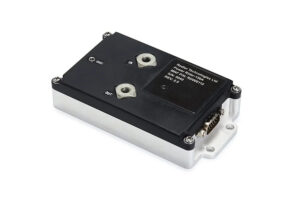
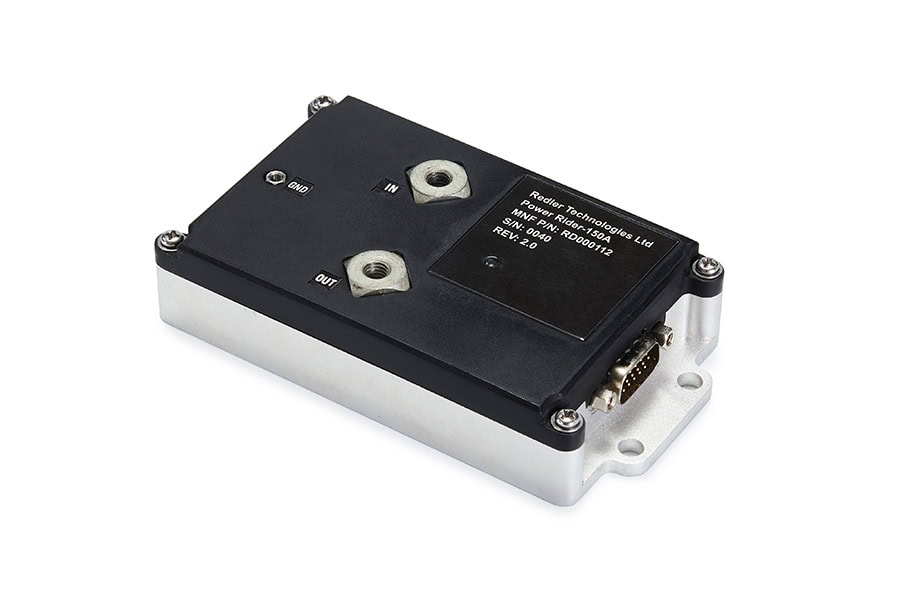
Power Rider 150A, a smart circuit breaker, from Redler Technologies
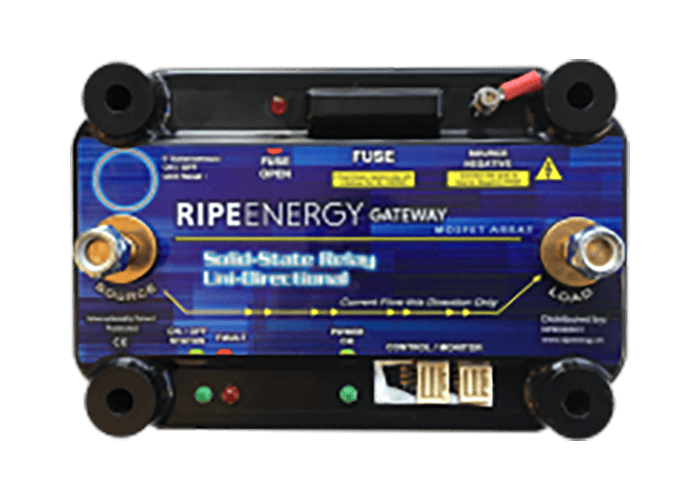
Solid-state circuit breakers (SSCBs) replace mechanical contacts with semiconductor switching elements (typically MOSFETs for lower voltages and IGBTs for higher power ranges), enabling extremely fast interruption and highly repeatable trip behavior. Their speed allows current limiting: rather than waiting for current to peak, a smart circuit breaker using solid-state technology can clamp fault current early, reducing arc risk and improving survivability of sensitive electronics.
SSCBs also unlock digital configurability (trip thresholds, delays, and behavior can be tuned by software) and they can provide rich telemetry for diagnostics.
Hybrid breakers combine solid-state interruption with mechanical contacts to balance the best attributes of both technologies. The solid-state path can interrupt quickly and handle the transient arc management function, while a mechanical contact carries steady state current with very low losses.
This architecture reduces thermal burden compared to a pure SSCB while retaining high speed fault clearing. Hybrids are increasingly relevant for higher current defense applications where response time and fault energy control matter, but where continuous semiconductor conduction loss would create unacceptable thermal management challenges.
Electronic trip units move the decision logic from fixed mechanical thresholds into configurable electronics, allowing trip characteristics to be tailored to the platform protection philosophy. This is particularly valuable in defense systems where a single chassis may be reconfigured across variants, or where mission profiles change the acceptable tolerance for overloads. Programmable trip thresholds and curves enable tighter selective coordination, reducing the probability that a localized fault results in a platform wide power reset.
Modern breakers (especially solid-state or electronically controlled designs) can provide health monitoring and built in test (BIT) functions that convert circuit protection into a diagnostic sensor. Continuous measurement of current, voltage, device temperature, and trip events enables fault logging that can differentiate between overload, short circuit, and intermittent wiring faults. In fleet operations, this supports condition based maintenance where repeated borderline events on a particular feeder may indicate connector degradation or moisture ingress.
Networked breakers integrate into platform data buses (commonly Ethernet for higher level management or CAN family buses for vehicle control architectures) so that power distribution can be monitored as part of the mission system. Within intelligent Power Distribution Units (PDUs), this enables centralized management of priorities: non essential loads can be shed automatically during brownout or battle damage while critical loads are maintained. The engineering challenge is ensuring cyber resilient control pathways and deterministic behavior.
Circuit breaker panels remain common in cockpits and crewed mission consoles because they provide immediate visual status and manual control, allowing operators to isolate a failing circuit or restore power after a transient trip. In aerospace and mission electronics, the physical interface matters: tactile feedback, clear trip indication, and human factors integration reduce operator workload during abnormal events.
DIN rail and rack mounted formats are well suited to shelters, command posts, and fixed installations where maintainability and modular expansion are priorities. These architectures often host mixed commercial and defense grade subsystems, with high density power distribution feeding radios, compute racks, and environmental systems. Integrators focus on ensuring adequate interrupting capacity under the available fault current and coordinating with upstream generators.
Modular and plug in breakers are chosen to reduce mean time to repair and to support scalable architectures where loads are frequently added or swapped. In deployed defense environments, the ability to replace a breaker quickly without extensive rewiring reduces downtime. From a logistical standpoint, a military circuit breaker in a plug in format can also support standardized spares across multiple systems.
Miniature and low SWaP breakers address platforms where every gram and cubic centimeter matters, including UAVs, UGVs, and soldier worn systems. Designers often face the challenge of protecting high value electronics with minimal series loss and minimal footprint. In many unmanned systems, protection philosophy also includes autonomy: the breaker may need to coordinate with software to shut down non essential loads and isolate a faulted module to preserve power for recovery.
Bases and command shelters rely on circuit breakers to protect distribution from generators, UPS systems, and shore power. Here, the engineering emphasis is on coordination across multiple distribution levels, ensuring that downstream protection clears faults without tripping upstream feeders. Vacuum Circuit Breakers (VCBs) or Low Voltage Air Circuit Breakers (ACB) may be utilized in larger infrastructure projects depending on the voltage levels and current requirements of the installation.
DC interruption is challenging because arcs do not naturally extinguish at a current zero crossing. As a result, DC breakers must use arc chutes, magnetic blowout techniques, or solid-state interruption to force arc extinction. In defense systems, DC protection is critical for 28 VDC vehicle buses, battery systems, and emerging DC microgrids.
AC breakers benefit from the periodic current zero crossing, simplifying interruption and allowing well established mechanical technologies to remain effective at scale. They are widely used for shipboard distribution, generator backed facilities, and ground infrastructure. In defense environments, the key is not just nominal voltage and current rating but behavior under power quality disturbances.
Defense platforms are experiencing a steady increase in electrical power demand, driving new requirements for circuit protection performance. High bus voltages and currents are increasing available fault energy, meaning protection devices must interrupt faults faster. At the same time, the role of the circuit breaker supplier is shifting toward providing integrated solutions.
Circuit protection is no longer a standalone safety function. It is part of an active power management architecture. Whether dealing with vacuum circuit breakers for heavy infrastructure or solid-state devices for UAVs, the move toward intelligence and higher power density is defining the next generation of defense technology.


 Searching Companies & Products