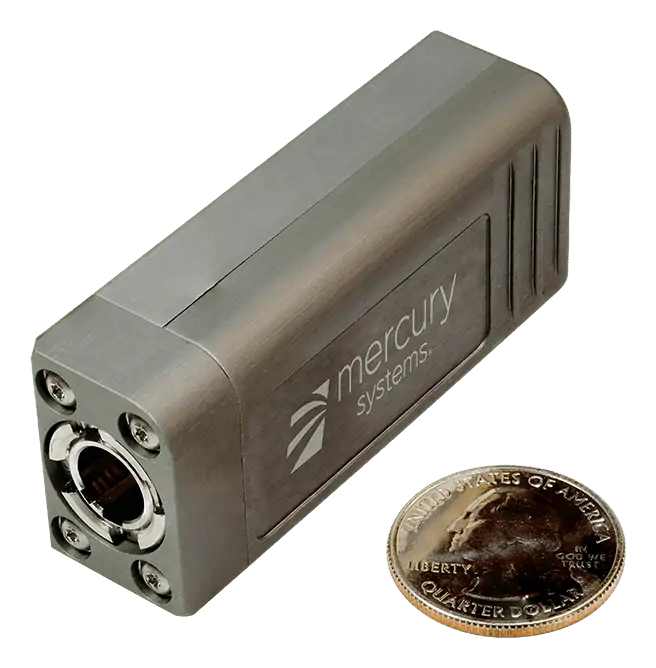
Military-grade Solid State Drives (SSDs) provide rugged, fail-safe data storage for demanding defense and aerospace environments where reliability is critical. Designed to operate under shock, vibration, and temperature extremes, these drives maintain data integrity across mission computers, ISR platforms, edge processing units, and weapons systems. Featuring advanced NAND technology, secure encryption, and space-qualified construction, they ensure fast, deterministic performance in both connected and autonomous operations.
This guide showcases suppliers of military SSD storage devices for defense, ISR, tactical computing, and secure embedded platforms.
Military-grade Solid State Drives (SSDs) are purpose-engineered, high-reliability data storage solutions for environments where failure is simply not an option. They represent a critical technology designed to maintain data integrity and consistent performance under the most extreme operational conditions, including intense shock, vibration, temperature extremes, and electromagnetic interference (EMI).
Military SSDs enable high-speed data logging, mission processing, and real-time control functions across systems spanning land, sea, air, and even space. Their solid state architecture, free from the mechanical constraints of traditional spinning disks used in military hard drives, delivers the instantaneous performance and resilience essential to modern military data storage.
Core Functions & Applications of Military SSDs
The integration of military solid state drives is mandatory across a variety of mission-critical environments:
Embedded Storage in Military Systems
Rugged solid state drives are integral to mission computers, flight control systems, and sensor fusion processors. They reliably store operating systems and mission data in high-vibration and electrically noisy environments. The fast, deterministic read/write capabilities are vital for radar systems, advanced avionics suites, and forward-deployed command centers.
Defense Communications and ISR Platforms
Intelligence, Surveillance, and Reconnaissance (ISR) platforms rely heavily on rugged solid state drives to ingest and process the massive data streams generated by sensors, cameras, and radar arrays. Whether onboard fast jets, naval vessels, or ground vehicles, military-grade SSDs serve as the primary data repositories for multi-sensor fusion and critical network-centric warfare applications, where low latency ensures uninterrupted situational awareness.
Specialized space-qualified SSDs face unique challenges, requiring extreme radiation tolerance, thermal vacuum resistance, and zero outgassing to operate reliably in orbit or deep space missions.
Tactical Edge Computing and AI Systems
As defense architectures transition toward autonomous and distributed operations, military-grade SSD drives serve as high-endurance storage nodes for edge computing. They enable on-platform, real-time analytics and AI-driven decision support even in disconnected environments. Their low power draw and high endurance make them ideal for UAVs, robotic ground vehicles, and portable systems.
Weapons Systems and Fire Control
Within fire control and weapons management applications, these drives must rapidly acquire data, perform ballistic calculations, and log target tracking information. They are specifically built to tolerate extreme shock and recoil forces that would instantly destroy standard commercial-grade storage devices, guaranteeing data remains intact under combat stress. Fail-safe designs ensure mission continuity during transient power events.
Rugged SSD Design Principles for Extreme Environments
Military-grade solid state drives adhere to stringent design and component standards that surpass typical industrial requirements.
NAND Flash Technologies
The choice of NAND flash technology is paramount to the drive’s endurance and lifespan:
Single-Level Cell (SLC) NAND: Still the benchmark for maximum endurance and data retention, offering the highest number of write cycles. It is typically used for applications requiring the absolute longest operational life.
Industrial 3D TLC/pSLC: While traditional TLC (Triple-Level Cell) is common commercially, military-grade storage now widely utilizes highly optimized industrial 3D TLC combined with pseudo-SLC (pSLC) caching. This pairing provides a superior balance of high capacity, good lifespan, and a cost-effective alternative to pure SLC, making it the prevailing choice for modern, high-density defense requirements.
Wear-Leveling and Over-Provisioning: The controller manages data placement and utilizes significant over-provisioning (extra capacity reserved for spare blocks) to maximize the operational life in continuous write environments.
Controller, Firmware, and Error Correction
The SSD controller acts as the intelligence of the drive, dictating its performance and resilience:
Robust Error Correction Codes (ECC): Military-grade memory employs highly advanced ECC algorithms that go beyond standard consumer levels, ensuring the integrity of mission-critical data despite physical wear or electrical noise.
Deterministic Latency: Firmware is fine-tuned for deterministic performance, guaranteeing predictable and consistent data access times, which is vital for real-time operating systems (RTOS) like VxWorks and Integrity.
Interfaces and Specialized Form Factors
While standard interfaces like SATA remain common, military systems frequently mandate specialized, ruggedized form factors. Standard interfaces must include high-speed PCIe/NVMe for throughput-intensive applications, and SATA is often retained for its broad compatibility and ease of integration into existing platforms.
Beyond these, the defense sector heavily relies on ruggedized and custom form factors, including M.2 and U.2 modules, as well as highly specialized open standards like 3U and 6U VPX modules.
The VPX standard is increasingly critical for architectures following the Modular Open Systems Approach (MOSA), including SOSA (Sensor Open Systems Architecture) and CMOSS (C4ISR/EW Modular Open Suite of Standards). Critically, these drives are typically housed in sealed, conduction-cooled aluminum enclosures, and these same design principles are applied even to smaller solutions like rugged mini SSDs.
Mechanical and Environmental Ruggedization
To meet the MIL-STD-810 and DO-160 standards for environmental demands, rugged SSD components utilize specific techniques:
Potted and Sealed Enclosures: Drives are often fully potted, sealed, and conformal-coated to resist moisture, dust, chemical ingress, and corrosion.
Shock and Vibration Mitigation: Mounting systems and internal component stabilization are engineered to withstand extreme shock and constant vibration without mechanical stress or performance degradation.
Military-Grade SSD Data Security Technologies
Data security is non-negotiable in defense applications. These drives incorporate hardware-level security features far beyond what is found in standard consumer or even industrial products.
Hardware Encryption (AES-256)
Highly secure SSDs incorporate hardware-based, real-time AES-256 encryption. This ensures data is secured at rest, rendering the contents inaccessible even if the drive is physically removed. Compliance with FIPS 140-2/3 is often a key requirement for validation against U.S. government cryptographic standards.
Secure Erase and Sanitization
When a drive must be repurposed or decommissioned, secure erase functions perform rapid cryptographic erasure or zeroization. These features are often hardware-triggered for immediate field execution in security-sensitive scenarios, ensuring data is unrecoverable.
Trusted Computing Frameworks
Compliance with Trusted Computing Group (TCG) Opal and IEEE 1667 defines the architecture for Self-Encrypting Drives (SEDs), supporting secure key management, firmware validation, and user authentication.
Anti-Tamper Mechanisms
To prevent unauthorized physical access or data extraction, advanced rugged SSD designs employ physical write-protect switches, epoxy encapsulation, and advanced tamper-detection sensors that can trigger immediate data zeroization upon intrusion.
Military SSD Suppliers & Emerging Technologies
Military solid state drive manufacturers typically maintain ITAR-controlled production lines and implement comprehensive long lifecycle support programs, essential for maintaining systems that often remain in the field for decades. To mitigate the critical risks of counterfeit or compromised components within the supply chain, military SSDs are manufactured under strictly controlled programs. This involves components being sourced only from vetted suppliers, with complete manufacturing traceability and tightly controlled firmware development to ensure compliance with defense procurement and assurance standards.
The future of rugged storage is being redefined by next-generation memory technologies. Emerging memory types such as 3D XPoint, Magnetoresistive RAM (MRAM), and Resistive RAM (ReRAM) are poised to influence the design of future tactical storage devices. These technologies hold the promise of achieving near-zero latency, ultra-high endurance, and inherent radiation resistance, making them the logical next evolution in storage for advanced AI, autonomous platforms, and sophisticated space-qualified defense systems.
Showcase your capabilities
If you design, build or supply Solid State Drives (SSDs), create a profile to showcase your capabilities and connect with visitors who have an active requirement for your solutions.
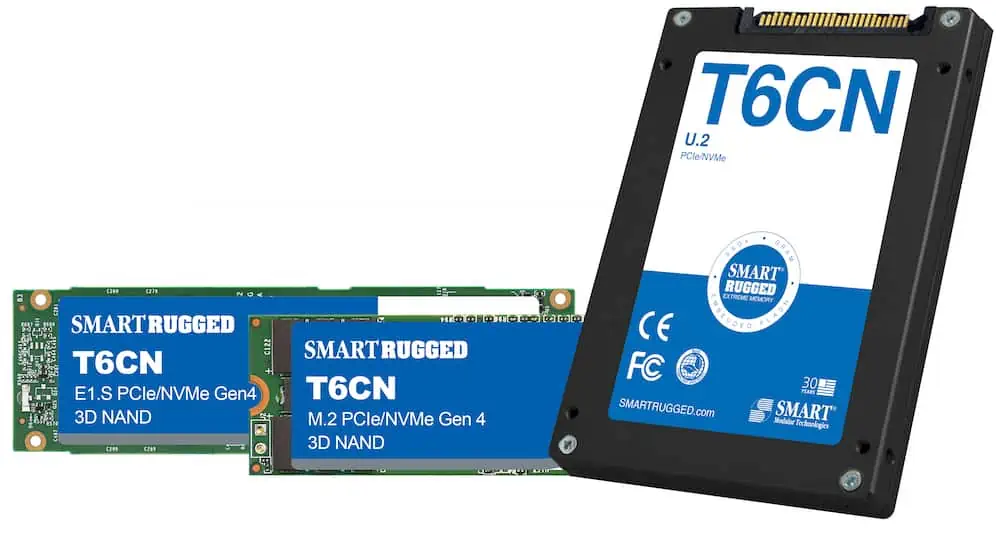
Delivering PCIe Gen 4.0 compatibility, SMART’s new T6CN family of SSDs is designed to fit between very high-performance datacenter SSDs and highly secure, ruggedized SSDs for military, industrial, and telecom applications
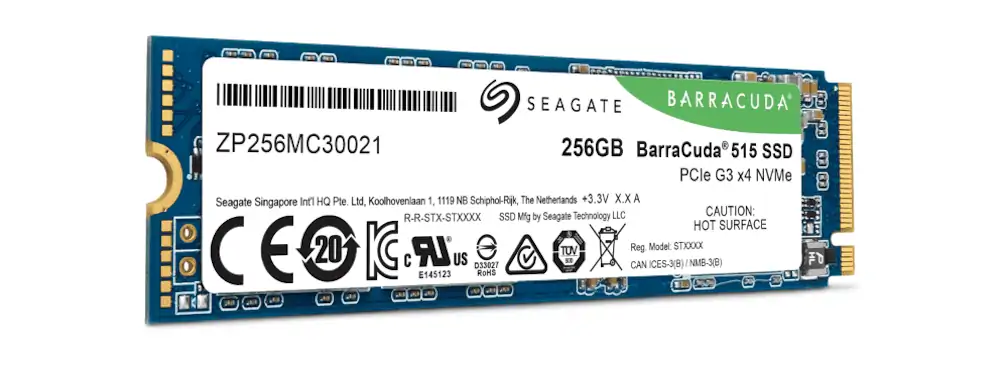
Using new Crystal Group ruggedization techniques on the tamper-evident Seagate BarraCuda 515 Solid State Drive extends the drive’s capabilities to military platforms by meeting US DoD cybersecurity and environmental operating requirements
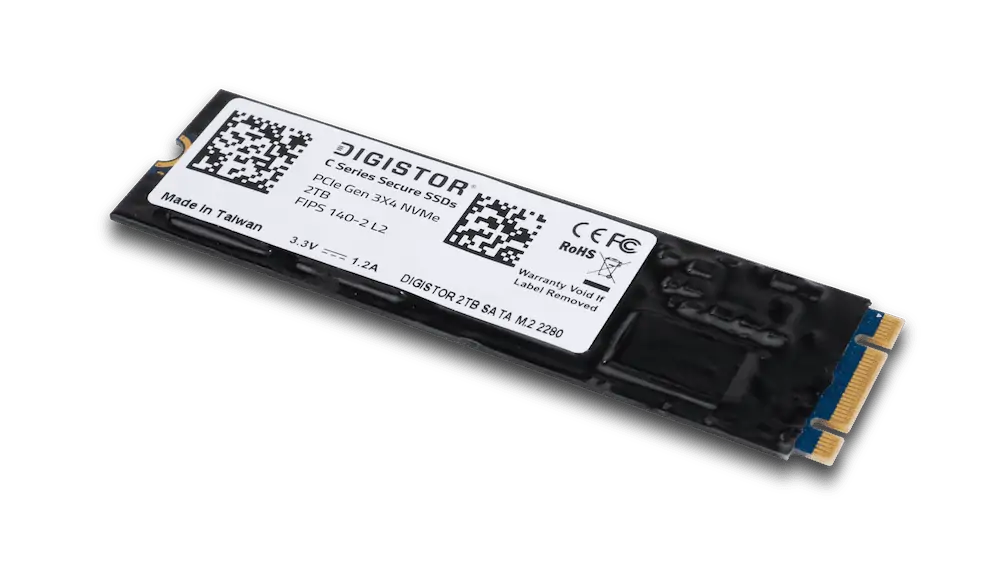
The new Series C secure Solid-State Drives (SSDs) from DIGISTOR have Cigent D³E cybersecurity software and virtually eliminate the barrier to securing Data At Rest (DAR) with military-grade encryption for hardware and software
Viasat U.K. has released the Data-At-Rest Cryptography Solid State Drive that safeguards against when a device is stolen, lost or attacked, enabling the data to be entirely protected and secure, even without the device on hand
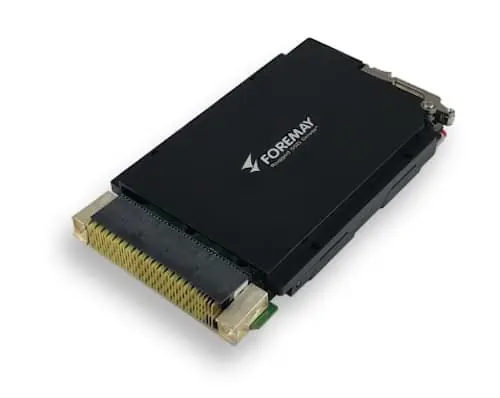
The 3U VPX rugged SSDs deploy NVMe / PCIe Gen 3 interfaces with speeds exceeding 6.0 GB/s and capacities of 16 TB and are designed to work in extreme environmental conditions such as military, defense, and aerospace applications
The ultra-portable, water-resistant Solid-State Drive has been precision-engineered to withstand the harshest operating environments while simultaneously protecting sensitive data
The latest defense technology news, straight to your inbox.
Get our weekly roundup of technology developments, new products and industry news.
THANK YOU FOR SIGNING UP
Thanks for joining us. Check your inbox.
We've sent you an email. Click the confirmation link to complete your subscription to the weekly eBrief. In the meantime, explore the latest news, suppliers and technologies on DA.
Advancing Defense Capability Through Strategic Collaboration
Defense Advancement works with major OEMs to foster collaboration and increase engagement with SMEs, to accelerate innovation and drive defense capabilities forward.