
Showcase your capabilities
If you design, build or supply Power Converters, create a profile to showcase your capabilities and connect with visitors who have an active requirement for your solutions.




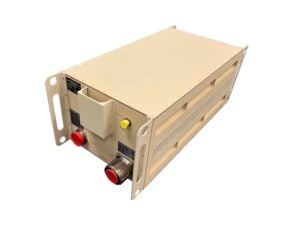
Military power converters are ruggedized electrical devices that convert and regulate power to meet the voltage, current, and frequency requirements of defense systems. Available configurations include military DC-DC converters, AC-DC rectifiers, DC-AC inverters, and AC-AC frequency converters.
This page features military power converter manufacturers supporting reliable power delivery across military vehicles, aircraft, UAVs, naval platforms, and deployable equipment.
Read the Technology Overview
If you design, build or supply Power Converters, create a profile to showcase your capabilities and connect with visitors who have an active requirement for your solutions.

Military power converters are ruggedized electrical devices that convert and regulate electrical power to meet the voltage, current, and frequency requirements of defense electronics and military platforms. These devices include military DC-DC converters, AC-DC rectifiers, DC-AC inverters, and AC-AC frequency converters, supporting reliable power delivery across ground vehicles, aircraft, naval vessels, and deployable defense equipment.
Designed for demanding operating environments, military-grade power converters may incorporate wide input voltage ranges, galvanic isolation, Electromagnetic Interference (EMI) filtering, and protection against voltage transients, shock, vibration, and extreme temperatures. Military Commercial Off-the-Shelf (MIL-COTS) and custom power converters support applications ranging from low-power avionics and communications equipment to high-power electrical distribution and mission-critical defense systems.
Defense and military power converters are available in different configurations to accommodate platform power sources, voltage requirements, and electrical loads. The following table compares the main converter types, their operating principles, and typical applications. Isolation and mechanical packaging options may apply to several conversion types.
| Power Converter Type | Key Characteristics and Operating Principles | Typical Military Applications |
| Military AC-DC Converters and Rectifiers | Convert Alternating Current (AC) into Direct Current (DC) using rectification circuitry, often incorporating filtering and voltage regulation to provide stable DC outputs. | Aircraft ground support equipment, naval electrical systems, military power supplies, and field-deployable electronics. |
| Military DC-DC Converters | Convert one DC voltage level to another using switching circuitry, magnetic components where required, and output filtering. Available in step-up, step-down, isolated, and non-isolated configurations, often with wide input voltage ranges and transient protection. | Armored vehicles, avionics, unmanned systems, radar electronics, and military communications equipment. |
| Military DC-AC Inverters | Convert DC power from batteries or vehicle electrical systems into AC power at the required voltage and frequency using controlled semiconductor switching and output filtering. | Mobile command centers, military vehicles, tactical shelters, and onboard AC equipment. |
| Military AC-AC Frequency Converters | Convert AC power to a different frequency and, where required, voltage. Designs may incorporate intermediate DC conversion stages or direct AC-AC conversion architectures. | Aircraft power systems, naval installations, ground support equipment, and frequency-sensitive military electronics. |
| Bidirectional Power Converters | Transfer electrical energy in either direction between compatible power buses or energy storage systems through controlled switching, supporting voltage conversion, battery charging, and regenerative energy transfer. | Hybrid-electric military vehicles, battery energy storage systems, and high-voltage DC distribution networks. |
| Isolated and Non-Isolated Power Converters | Isolated designs use a galvanic isolation barrier, typically involving a transformer, between input and output circuits. Non-isolated converters provide voltage conversion without galvanic separation. Both configurations may be used across different power conversion architectures. | Isolated avionics and sensor power, vehicle electronics, and point-of-load power conversion. |
| Modular and Chassis-Mounted Power Converters | Use standardized or custom mechanical formats, including plug-in modules and chassis assemblies, for integration into equipment racks, embedded computing systems, and electrical assemblies. These formats can accommodate different conversion architectures. | VPX-based mission computers, rugged electronics, military communications racks, and modular power distribution systems. |
Military power conversion systems use semiconductor switching, control circuitry, and filtering components to produce electrical outputs suited to connected equipment. Depending on the converter architecture, their main functions include:
These functions are particularly important when integrating electronics with military power sources that may experience substantial voltage fluctuations, switching transients, or other demanding operating conditions.
Military ground vehicles rely on rugged power converters to adapt electrical power from batteries, alternators, and onboard generators for use by electronic subsystems. Military DC-DC converters commonly convert nominal 28 VDC vehicle power to the voltages required by communications equipment, vehicle control electronics, navigation systems, and surveillance payloads.
Armored vehicles, tactical trucks, and Unmanned Ground Vehicles (UGVs) may also require high-reliability military DC converters with wide input voltage ranges and transient protection. These features help maintain regulated power during engine starting, changes in electrical load, and disturbances on vehicle power buses.
Aerospace power converters support electrical equipment aboard military aircraft, helicopters, and Unmanned Aerial Vehicles (UAVs). A DC-DC converter for avionics may convert aircraft electrical power into regulated low-voltage outputs for flight computers, navigation equipment, communications systems, and electronic sensors.
Aircraft electrical architectures may include 28 VDC, 270 VDC, and 115 VAC at 400 Hz, depending on the platform. Military-grade DC-DC converters designed for these aircraft power interfaces must accommodate the applicable input conditions and electrical disturbances. Compact, high-efficiency designs are particularly valuable for UAVs, where Size, Weight, and Power (SWaP) constraints influence equipment selection.
Military power converters are used aboard naval vessels and submarines to provide suitable electrical supplies for radar, sonar, communications, navigation, and mission computing systems. AC-DC rectifiers and DC-DC converters support connections between shipboard distribution networks and equipment requiring regulated DC voltages, while military power inverters supply AC loads from DC sources.
Naval installations may require additional protection against humidity, salt exposure, mechanical vibration, and electrical disturbances. Depending on the application, rugged or sealed power converters can be integrated into shipboard equipment racks, machinery compartments, and specialized subsea systems.
Command, Control, Communications, Computers, Intelligence, Surveillance, and Reconnaissance (C4ISR) systems depend on regulated electrical power to operate processors, radios, sensors, and networking equipment. Rugged DC-DC converters provide the voltage levels required by embedded computing hardware, including low-voltage processor rails and higher-voltage peripheral equipment.
Radar and Electronic Warfare (EW) systems may impose demanding requirements for output stability, electrical noise, power density, and transient response. High-reliability power converters help support sensitive receiver electronics, digital processing equipment, and associated Radio Frequency (RF) subsystems while limiting conducted electrical interference.
Military power converters support missile electronics, guidance subsystems, and other specialized defense equipment requiring compact, regulated electrical power. Depending on the system architecture, converters may supply control electronics, navigation sensors, data processing hardware, and other onboard electrical loads.
Deployable field systems also use tactical power converters to interface generators, batteries, and external electrical supplies with military communications and computing equipment. Rugged power inverters and DC-DC converters provide the voltage conversion needed for mobile command posts, temporary installations, and portable mission systems operating under demanding environmental conditions.
Military power converters may be designed, tested, or qualified against defense standards covering electrical interfaces, Electromagnetic Compatibility (EMC), environmental conditions, and mechanical performance. Relevant standards include:
Compliance should be assessed against the specific standard revision, applicable test methods, and platform requirements. A military power converter may be designed to meet selected electrical or environmental requirements without being tested or qualified against every provision of a referenced standard. Manufacturers should distinguish between designs intended to meet a standard and products with documented test or qualification results.
Military power converters operate alongside several other electrical components that perform related but distinct functions within defense power systems. Although some equipment incorporates power conversion circuitry, its primary function may differ from that of a standalone converter.
These devices are frequently integrated into larger military electrical architectures, with power converters providing voltage or frequency conversion as part of the complete system.
Advances in semiconductor devices, electrical architectures, and embedded electronics are influencing the design of next-generation military power converters. Key developments include:
These developments support defense applications requiring efficient power conversion within increasingly compact, electronically complex, and power-intensive military platforms.


 Searching Companies & Products