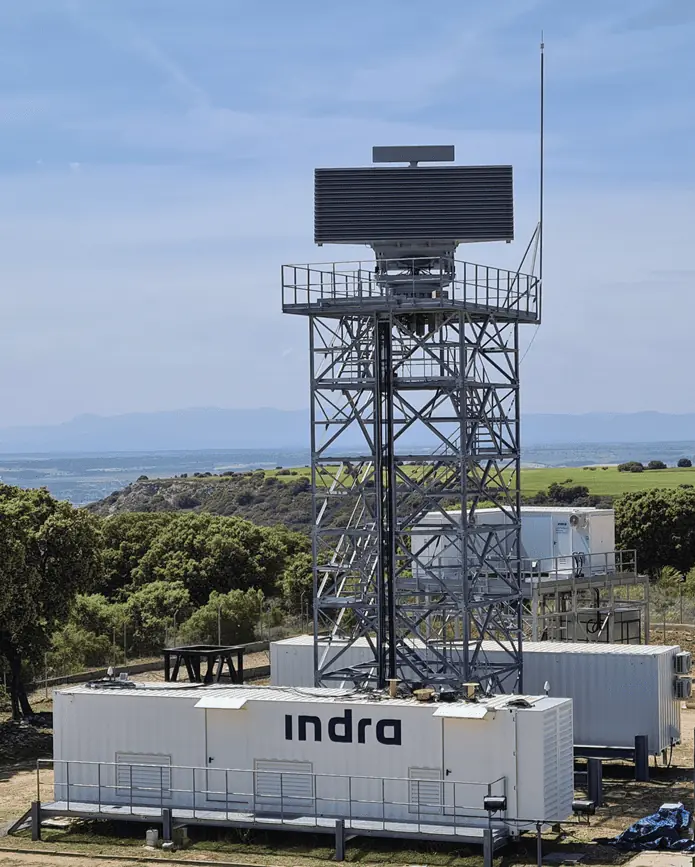
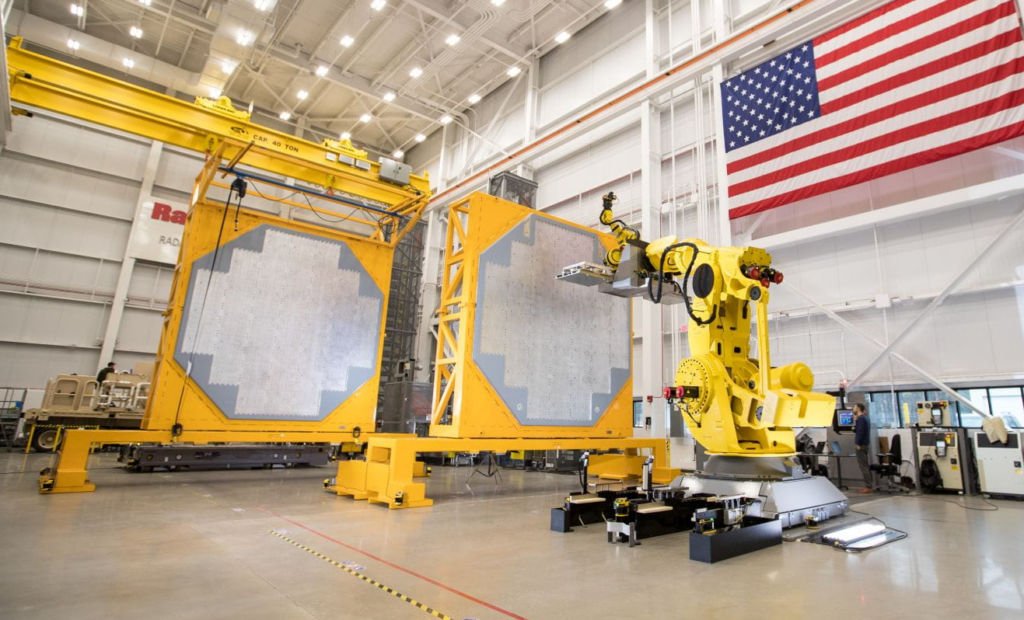
Leading Global Suppliers

Naval Radar Systems

Naval radar provides detection, ranging, tracking, and situational awareness for warships, submarines, and other military maritime platforms. Systems include air surveillance, surface search, navigation, fire control, and target-tracking radar architectures.

This page showcases military naval radar manufacturers and suppliers of maritime surveillance radar, including mechanically scanned, PESA, AESA, rotating phased-array, and fixed-face configurations.

Read the Technology Overview

Naval Radar Suppliers & Manufacturers

ASELSAN
ASELSAN

Advanced Mission Systems for Defense Forces Across the Land, Air, Naval & Space Domains

Tocaro Blue
Tocaro Blue

Next-Generation Marine Radar Processing Solutions for Enhanced Situational Awareness in Naval & Defense Applications

Showcase your capabilities

If you design, build or supply Naval Radar, create a profile to showcase your capabilities and connect with visitors who have an active requirement for your solutions.


Create Supplier Profile

Military Naval Radar Systems

2 Cutting-edge Solutions
Add your solutions
SERDAR 100-Co
SERDAR 100-Co

Coastal surveillance radar for detection & tracking of surface sea targets & low-flying air targets

Coastal surveillance radar for detection & tracking of surface sea targets & low-flying air targets
...l surveillance radar designed for the detection and tracking of above-water naval targets and...
FULMAR 500-A
FULMAR 500-A

Long-range airborne maritime surveillance radar

Long-range airborne maritime surveillance radar
...e surveillance radar designed for fixed-wing UAVs and manned maritime patrol aircraft. The radar...

The Specifier’s Guide to Naval & Maritime Surveillance Radar

William Mackenzie

Updated:

Introduction to Naval Radar Systems

Naval radar provides detection, ranging, tracking, and situational awareness for navigation, surveillance, air defense, surface warfare, and weapon control. Unlike conventional commercial marine radar, military naval radar operates within an integrated combat system and must function against small targets, sea and land clutter, weather, platform motion, and electronic interference.

Radar transmits radio-frequency energy and processes echoes to determine target range and bearing. Doppler processing can measure radial velocity, while repeated observations estimate course and speed. Some systems also measure elevation.
Key Types of Military Naval Radar

Air Surveillance Radar

Air surveillance radar searches large volumes of airspace for aircraft, missiles, and other airborne contacts. Long-range navy radar systems prioritize early detection and stable tracking to support threat classification and defensive response.

Surface Search Radar

Surface search radar concentrates on the sea surface and radar horizon, detecting vessels, small craft, and low-flying threats. Effective maritime surface search radar requires sea-clutter suppression, high sensitivity, and sufficient update rates. Low-altitude detection is strongly affected by radar and target height, sea state, and atmospheric propagation.

3D Surveillance Radar

A 3D surveillance radar measures range, bearing, and elevation. This is particularly important for air defense, engagement planning, and coordination between sensors and weapons.

Multifunction Radar

Multifunction radar uses electronically controlled beams and digital resource management to perform several tasks through a common radar architecture. This can include volume search, horizon search, track-while-scan, precision tracking, missile-defense support, and fire-control functions.

Navigation radar supports safe shiphandling by detecting coastlines, navigation marks, vessels, and other surface objects. Military marine radar systems may also share data with combat-management networks.

Fire Control Radar

Fire control radar provides highly accurate target measurements for weapon engagement. Compared with broad-area military surveillance radar, it places greater emphasis on angular accuracy, rapid updates, and target-quality data for weapons.

Target Acquisition and Tracking Radar

Target acquisition and tracking radar develops detections into stable tracks, supporting classification, weapon assignment, and handoff to fire-control sensors through maneuver or clutter.

Missile Guidance and Target Illumination Radar

Some naval weapon systems use dedicated radar channels or illuminators for missile guidance. Semi-active radar homing missiles may require target illumination, while other weapons can use ship-generated command updates, datalinks, or active onboard radar seekers.

Submarine and Mast-Mounted Radar

Submarine radar is generally operated with an antenna or multifunction mast exposed above the surface. It supports navigation and surface awareness, with emphasis on rapid operation and electromagnetic emission control.

Naval radar antennas use several architectures with different implications for beam agility, coverage, reliability, and shipboard integration.

  • Mechanically Scanned Radar: A rotating or repositioned antenna physically sweeps the search area and remains common for navigation and surveillance.
  • Passive Electronically Scanned Arrays: Passive Electronically Scanned Array (PESA) systems steer the radar beam electronically while typically relying on a centralized high-power transmitter and passive phase-shifting network.
  • Active Electronically Scanned Arrays: Active Electronically Scanned Array (AESA) radar uses distributed transmit and receive modules for rapid beam steering, flexible scheduling, and graceful degradation if modules fail.
  • Rotating Phased-Array Radar: This combines electronic beam control with mechanical rotation, providing phased-array capability with fewer fixed array faces.
  • Fixed-Face Radar Arrays: Several stationary arrays provide near-continuous coverage around the vessel and enable rapid electronic beam movement between sectors, subject to installation geometry.
  • Distributed and Conformal Radar Apertures: Radar elements can be distributed across the ship or integrated into structures, potentially improving coverage while increasing calibration complexity.

Architecture selection depends on mission requirements, platform size, topside arrangement, electromagnetic compatibility, power, cooling, and required performance.

Core Applications of Naval Radar Systems

Air Surveillance, Missile Detection & Air Defense

Naval surveillance radar provides early warning of airborne threats. Modern navy ship radar systems may combine long-range air surveillance with detection of low-altitude and sea-skimming anti-ship missiles, which can leave limited reaction time after crossing the radar horizon. Air and missile defense radars therefore require clutter rejection, rapid track formation, accurate trajectory data, jamming resistance, and close integration with defensive weapons.

Surface, Littoral & Coastal Surveillance

Surface surveillance radar monitors vessels, small craft, and other contacts near the sea surface. Littoral waters are demanding because shorelines, structures, waves, and dense traffic create complex returns. Maritime surveillance radar and coastal surveillance radar systems use high-resolution processing, Doppler discrimination, and tracking to separate relevant contacts from clutter and routine traffic.

Marine radar equipment supports safe navigation by providing range and bearing information for vessels, coastlines, aids, and hazards. Battleship radar systems may also support automatic tracking and collision avoidance. On aviation-capable vessels, radar can also support helicopter and aircraft control during approach, recovery, and nearby flight operations.

Fire Control, Close-In Defense & Naval Weapons Support

Military ship radar provides precise tracking information for guns, missiles, and close-in defensive systems. Short-range engagements often demand high update rates because response time is limited. Fire-control and target-tracking radars may work with surveillance sensors, with tracks transferred between systems from detection through engagement.

Frequency Bands Used by Naval & Maritime Radar Systems

Naval radar frequency affects antenna size, propagation, resolution, weather performance, and mission suitability. Frequency band alone does not determine capability because aperture, power, waveform, processing, and installation also matter.

  • L-Band Radar: Longer wavelengths suit broad-area and long-range surveillance, although larger antennas are required to achieve narrow beams.
  • S-Band Radar: S-band balances range, resolution, antenna dimensions, and weather performance, making it common in surveillance and multifunction naval radar systems.
  • C-Band Radar: C-band sits between S-band and X-band and can support surveillance or tracking where antenna size and resolution must be balanced.
  • X-Band Radar: Shorter wavelengths support high-resolution surface search, navigation, fire control, and horizon-focused detection with compact apertures, although heavy precipitation can have greater effect.

Many warships use more than one frequency band so sensors can be optimized for complementary surveillance, tracking, navigation, and fire-control tasks.

Naval radar development increasingly focuses on processing flexibility, radio-frequency performance, electromagnetic resilience, and sensor integration.

  • Advanced Digital Beamforming: Digital control enables flexible beam formation, adaptive processing, interference suppression, and efficient radar resource allocation.
  • Gallium Nitride AESA Technology: Gallium Nitride (GaN) radio-frequency devices support high-power, efficient transmit functions within modern AESA radar architectures, improving power density and scalability.
  • Artificial Intelligence and Automated Target Classification: Machine-learning techniques are being investigated and applied for classification, discrimination, and operator decision support in cluttered or complex environments.
  • Integrated Radar and Electronic Warfare Functions: Closer coordination between radar, naval R-ESM, electronic support measures, and other radio-frequency systems can improve correlation, cross-cueing, spectrum awareness, and topside integration.

These developments support more adaptable maritime radar systems for evolving threats, dense electromagnetic environments, and networked naval operations.


Related Articles

Tocaro Blue & Furuno Collaborate to Advance Radar Perception for Maritime Autonomy

Tocaro Blue and Furuno USA are combining AI-driven radar perception software and marine radar technology to enhance situational awareness and autonomous decision-making for crewed and uncrewed maritime platforms

Aug 05, 2026
Tocaro Blue Enhances Radar Perception with Software for Defense Applications

Tocaro Blue outlines how its ProteusCore™ radar perception software enhances real-time situational awareness and radar processing for unmanned and crewed defense platforms using machine learning and CPU-based deployment options

Feb 20, 2026
Advanced Counter-Drone Systems Showcased in Spanish Army’s ATLAS25

Indra demonstrated advanced Counter-UAS technologies during the Spanish Army’s ATLAS25 exercises, showcasing integrated naval and land systems capable of detecting, identifying, and neutralizing drone threats across multi-domain defense operations

Oct 30, 2025
Exploring the Future of Underwater Battlespace Connectivity

Discover how Forcys enables secure underwater communications and adaptive networks, empowering navies to maintain control and decision superiority in contested waters

Sep 16, 2025
Partnership to Supply Advanced Naval Surveillance Radars to Canadian Coast Guard

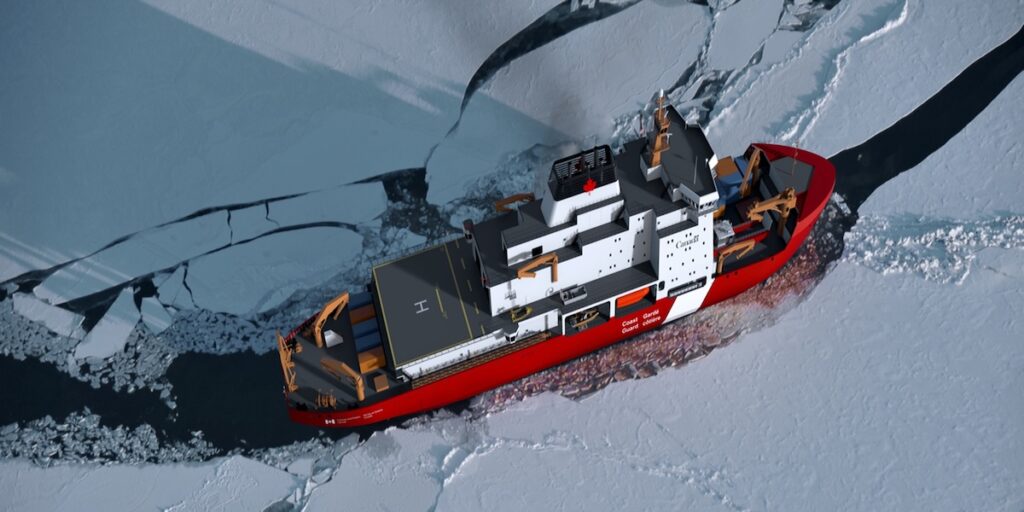
Terma has joined Sperry Marine to provide the SCANTERs 4603 and 6002 to the Canadian coast guard’s MPV and Polar Icebreaker missions, ensuring reliable surface surveillance, air coverage and target tracking

Jul 22, 2025
New Coast Control Radar Launching at IDEX

Saab is introducing its new Coast Control Radar at IDEX 2025, a phased-array, software-defined system designed to enhance maritime security and monitor coastal waterways

Feb 18, 2025
Advanced Sonar Technology Protects Naval Assets

The Sentinel Intruder Detection Sonar transforms maritime security by tracking divers, underwater vehicles, and potential state-sponsored underwater infiltration attempts

Nov 29, 2024
New Radar System for Maritime Reconnaissance & Surveillance

Meteksan Defence has introduced HELRAD at the SAHA EXPO 2024, a helicopter radar developed to enhance maritime security with advanced radar technology and unique features

Oct 23, 2024
Naval Surveillance Radars for European Warfare Frigates

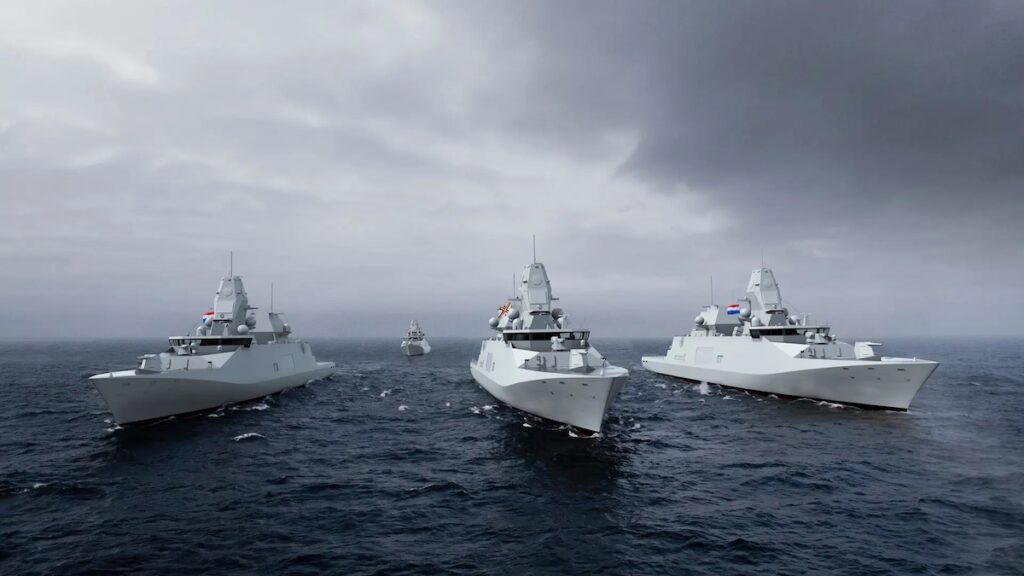
Terma has secured a contract to equip the Belgian and Netherlands Navy Anti-Submarine Warfare frigates with its SCANTER 6002 naval surveillance radars, providing X-band technology, multi-frequency capabilities, and small target detection algorithms

Jun 10, 2024
Advancing Defense Capability Through Strategic Collaboration Defense Advancement works with major OEMs to foster collaboration and increase engagement with SMEs, to accelerate innovation and drive defense capabilities forward.