Military UGV (Unmanned Ground Vehicles) are revolutionizing modern defense strategies, offering unparalleled autonomy and versatility on the battlefield. These unmanned vehicles, engineered for diverse military applications, enhance operational efficiency, reduce human risk, and adapt to challenging environments. Explore cutting-edge systems that are shaping the future of defense.
If you design, build or supply Unmanned Ground Vehicles (UGV), create a profile to showcase your capabilities and connect with visitors who have an active requirement for your solutions.
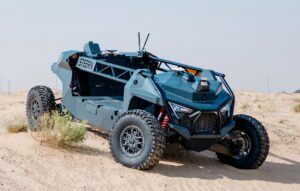
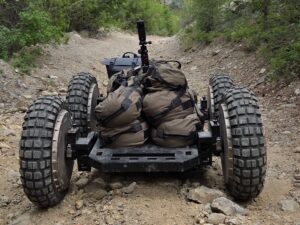
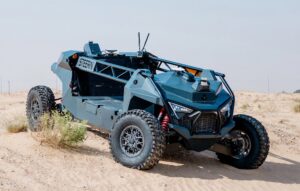
Autonomous multi-mission all-terrain vehicle with 500 kg payload capacity
Autonomous multi-mission all-terrain vehicle with 500 kg payload capacity
...us All-Terrain Vehicle (ATV) engineered for defense missions in contested and infrastructure-limited... ...ng system, the vehicle combines modular hardware with AI-based perception, localization, navigation,...
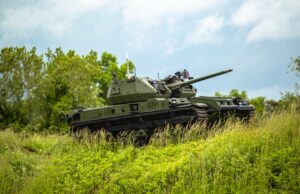
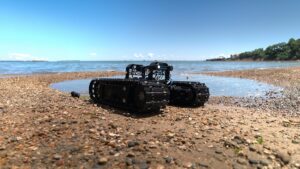
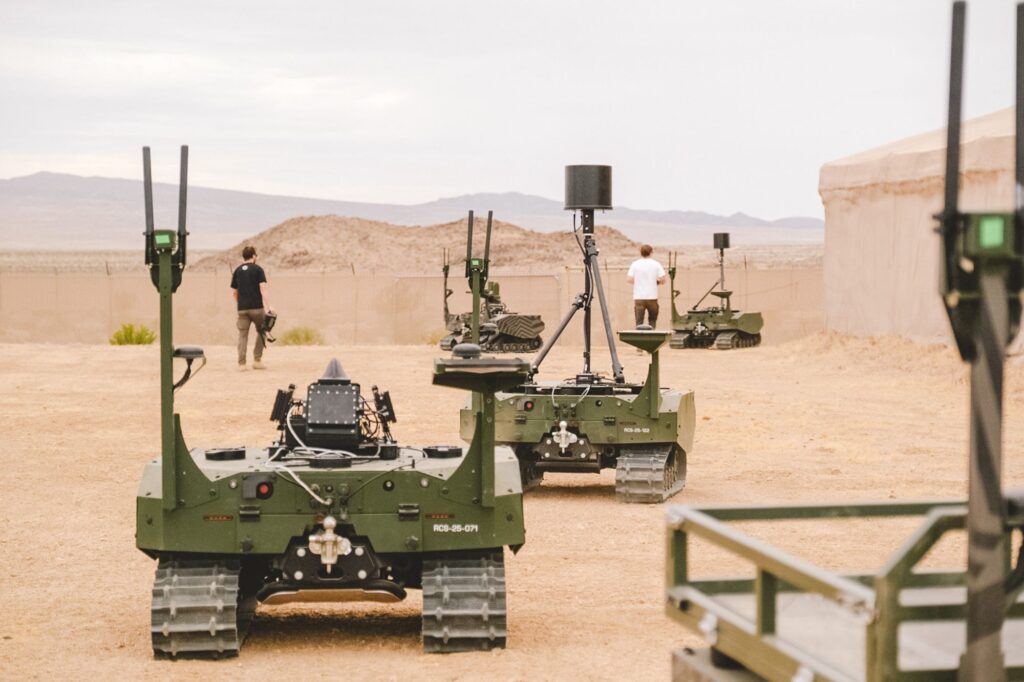
Modular autonomous ground vehicle with scalable armor
Modular autonomous ground vehicle with scalable armor
... experience in unmanned systems and robotics integration to provide a powerful and modular... ...s. The modular vehicle is based around an open architecture design, and can be equipped with a range...
Unmanned ground vehicles (UGVs), also known as ground or land drones, are remotely-controlled or autonomously-operating vehicles that are utilized in battlefield and defense environments for a variety of applications. They may be deployed to enhance situational awareness, protect personnel, enhance logistics, and undertake other roles during ground-based operations.
Integration with Multi-Domain Operations
Military UGVs are increasingly integrated into broader multi-domain operations, working alongside aerial drones, manned vehicles, and naval platforms. This interoperability enhances their strategic value, allowing for coordinated maneuvers and synchronized mission execution. Secure communication systems and shared data links ensure that UGVs contribute effectively to networked warfare, delivering actionable intelligence and operational support in real-time.
Ground Drone Applications for Defense Operations
The applications of land drones in military scenarios are diverse and continually expanding. Designed to perform tasks ranging from reconnaissance to active combat support, UGVs serve as force multipliers, significantly enhancing mission effectiveness while minimizing risks to personnel.
Intelligence, Surveillance, and Reconnaissance (ISR)
UGVs equipped with ISR sensors such as gimbals with high-resolution optical and thermal imaging cameras are ideal for gathering mission-critical ISR data. These vehicles can covertly infiltrate hostile areas, acquiring data on enemy positions, infrastructure, and movements. Their ability to operate autonomously for extended periods ensures that military units have access to up-to-date intelligence with reduced risk to personnel.
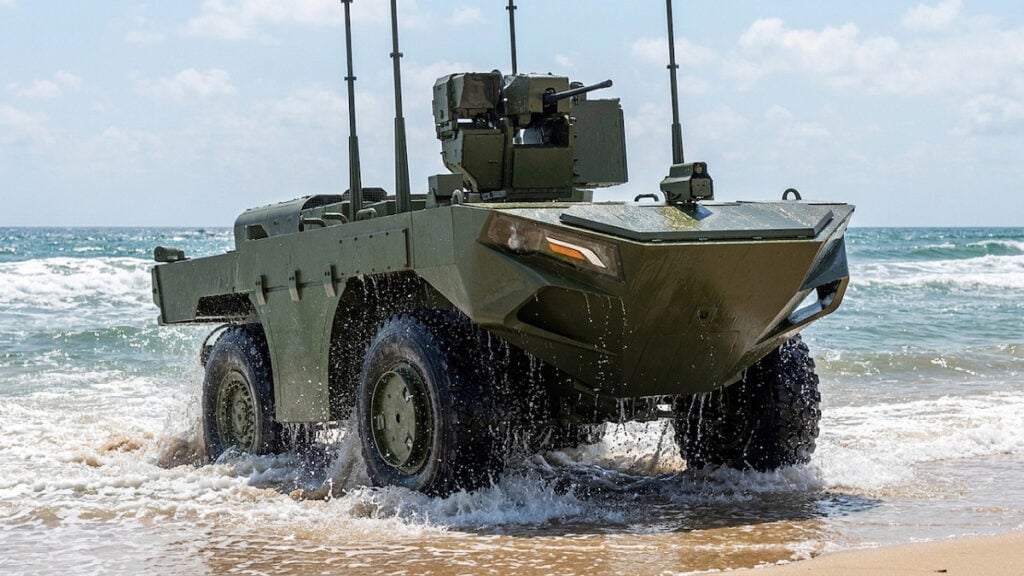
Modern ISR and support missions are also driving demand for compact robotic platforms that can be deployed quickly across complex operational environments. Textron Systems’ M1 robotic vehicle reflects this requirement, expanding the company’s portfolio of compact ground robotic systems for missions where mobility, adaptability and rapid deployment are essential.
The M1 is a wheeled, uncrewed ground vehicle designed to move quickly across contested littoral environments, urban terrain and tight maneuver spaces. Its compact frame and low‑signature profile allow customers to deploy it rapidly for reconnaissance, logistics and force protection missions, helping military teams extend operational reach while reducing risk to personnel.
Explosive Ordnance Disposal (EOD)
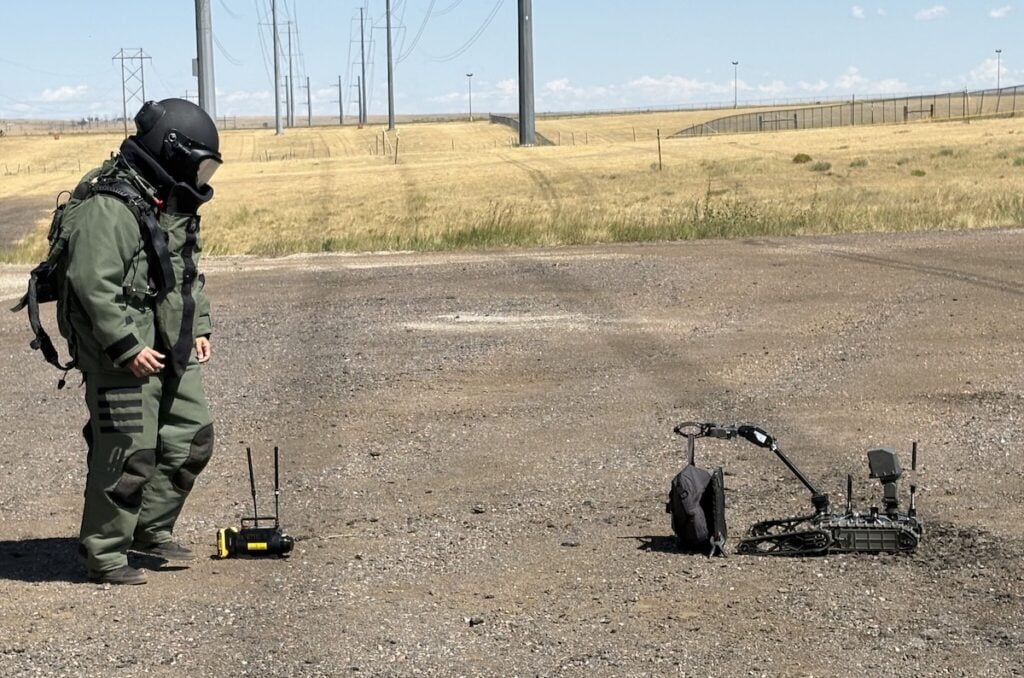
UGV military robots are frequently deployed for EOD missions, leveraging robotic arms and precision tools to neutralize improvised explosive devices (IEDs) and other hazardous materials. These systems ensure thorough and efficient removal of explosive threats while allowing soldiers to stay at safe standoff distances and minimize direct exposure to life-threatening situations.
Combat Support and Firepower Integration
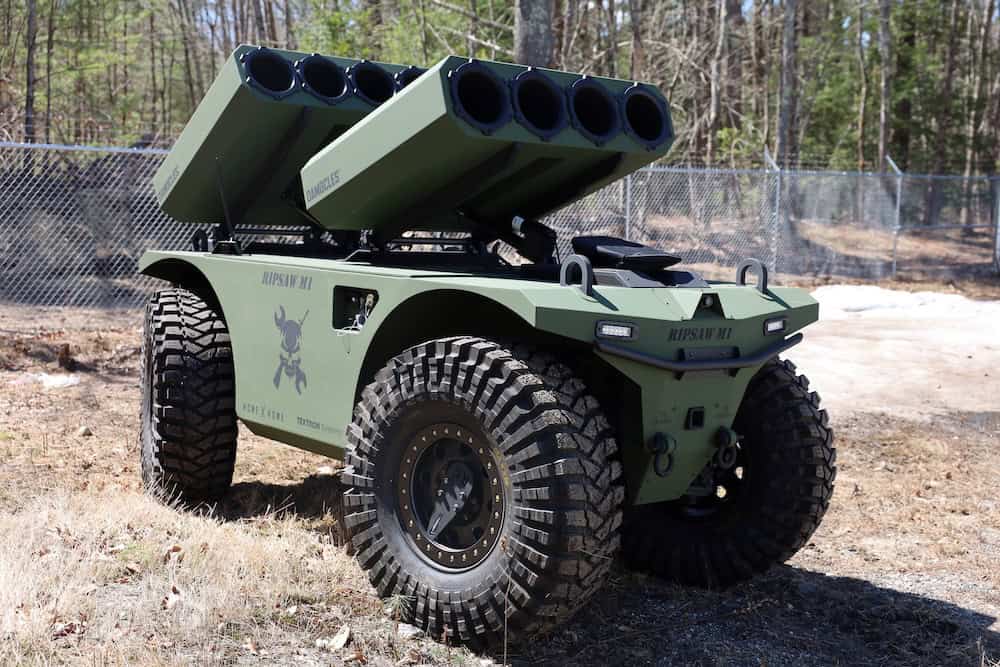
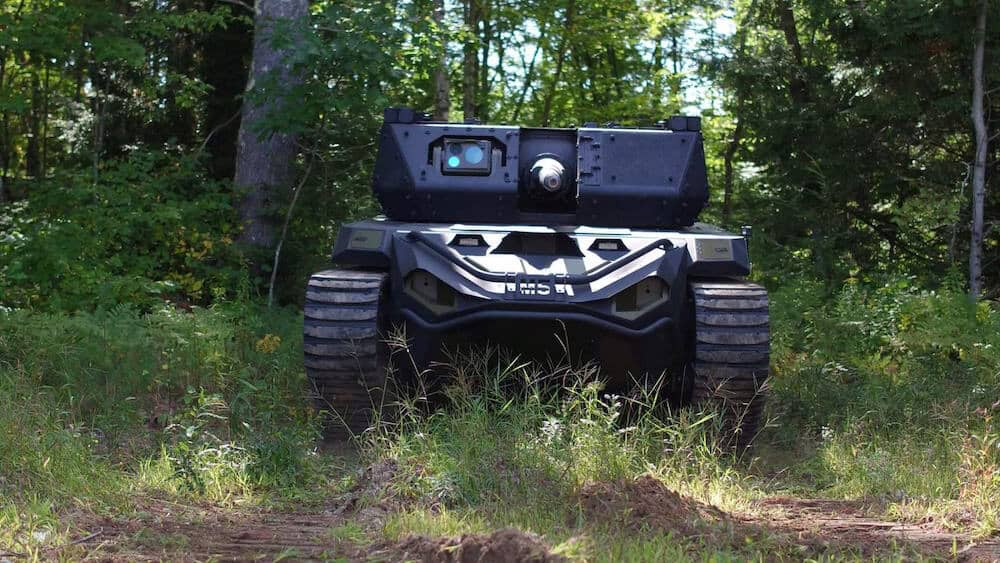
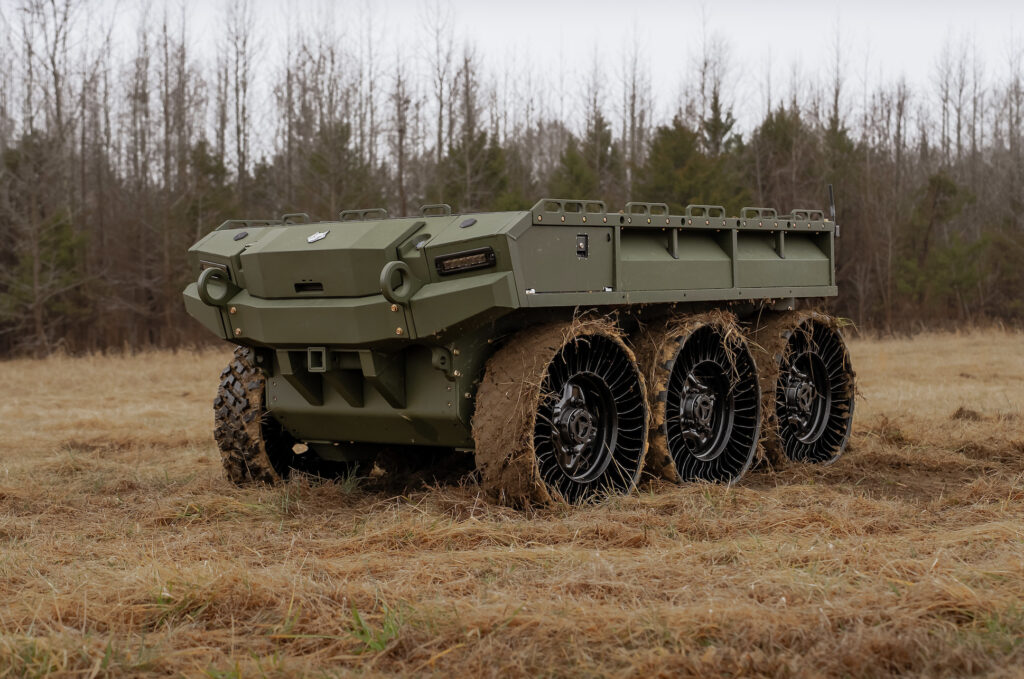
Military UGV Ripsaw® M5 by Textron Systems
UGV drones can be equipped with integrated weapon systems, including machine guns, grenade launchers, and anti-tank guided missiles. These combat-oriented platforms provide remote engagement capabilities, enabling operators to neutralize threats from a safe distance. Additionally, military ground drones can support infantry units by suppressing enemy fire, creating tactical diversions, or serving as mobile shields during urban warfare scenarios.
Logistics and Supply Chain Optimization
Autonomous UGVs are a critical asset in battlefield logistics, delivering supplies, ammunition, and medical equipment to troops in hard-to-reach or high-risk locations. These vehicles reduce the burden on personnel while ensuring timely delivery of essential resources. With modular payload capabilities, military logistics UGVs can transport everything from water and food to specialized mission equipment and spare parts.
Medical Evacuation and Casualty Assistance
Some unmanned ground vehicles are designed to serve as unmanned medical evacuation platforms, capable of retrieving injured personnel under fire and transporting them to safety. These systems can be equipped with life-support equipment to stabilize casualties en route to medical facilities, ensuring faster response times and reducing risks to human medics.
Counter-Insurgency and Border Security
In counter-insurgency operations and border security roles, military ground drones provide persistent surveillance and rapid response capabilities. Equipped with advanced sensors and secure communication systems, these platforms monitor and patrol expansive areas, detect unauthorized activities, and relay critical data to command centers.
Military UGVs are engineered to meet the rigorous demands of combat and support missions. These vehicles are equipped with high-performance mobility systems, including tracked, wheeled, and hybrid configurations, allowing them to traverse challenging terrains such as mud, snow, sand, and rocky landscapes. Some UGVs may even be amphibious tracked vehicles, allowing them to operate in riverine and littoral environments. Their robust construction often incorporates lightweight but durable materials, such as advanced composites or armored steel, ensuring both agility and survivability.
Military UGV Control and Navigation
While some UGVs may be directly remotely controlled by an operator, many are equipped with advanced autonomy capabilities. Integrated with cutting-edge artificial intelligence (AI) and machine learning systems, autonomous UGVs are capable of navigating dynamic environments, detecting obstacles, and maintaining convoy formations or following an operator. Multi-sensor arrays, including LiDAR, infrared cameras, ultrasonic detectors, and GPS, work in tandem to deliver comprehensive situational awareness, enabling seamless operations even in GPS-denied environments.
Autonomous Ground Vehicle Propulsion
military ground drones may be powered by a number of different energy systems. Many platforms utilize hybrid or fully electric propulsion systems, ensuring extended operational range and reduced reliance on traditional fuels while reducing noise signatures. This not only enhances tactical efficiency but also aligns with modern military objectives to reduce logistical vulnerabilities and carbon footprints in deployed environments.
Military UGV Payloads, Sensors & Equipment
Military UGVs may be specialized, or may be designed as modular platforms that can be configured with multiple mission-specific payloads, ensuring maximum versatility. This adaptability enables a single platform to perform multiple roles across different scenarios.
Surveillance Payloads
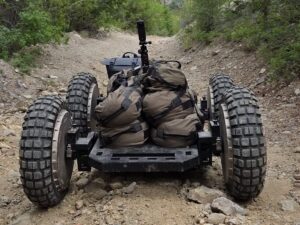
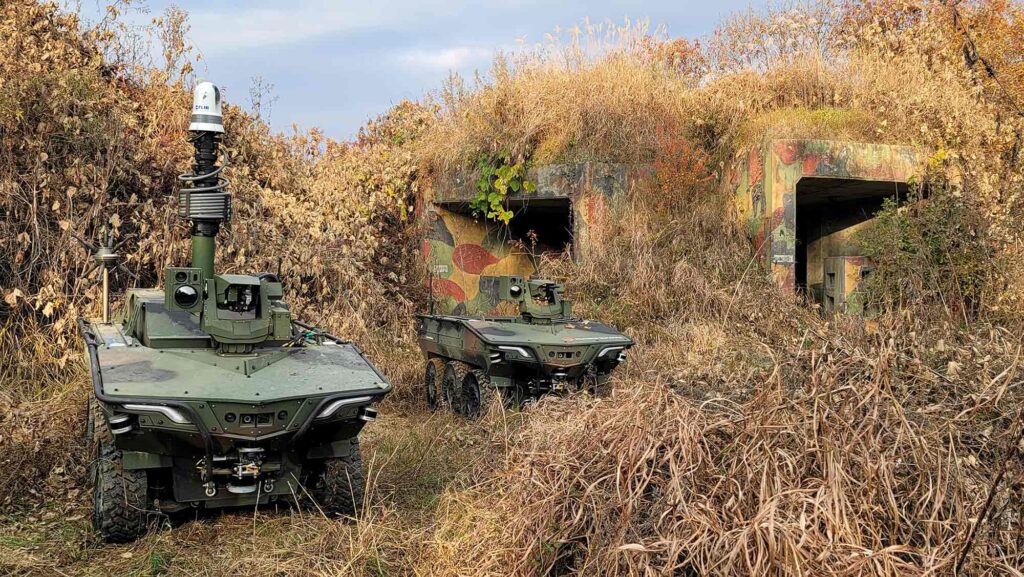
xRift Autonomous Military Ground Vehicle by SteerAI
High-definition cameras, thermal imaging systems, and radar units enable UGVs to gather comprehensive intelligence. These payloads are critical for ISR missions and can be optimized for day-night operations or challenging weather conditions.
Combat Payloads
Armed UGVs may feature integrated weapon mounts for rifles, grenade launchers, and missile systems. Advanced targeting systems ensure precision engagement, while remote operation allows personnel to maintain a safe distance.
EOD Payloads
Robotic arms with high dexterity and specialized tools allow land drones to disarm IEDs, move hazardous materials, or inspect dangerous areas. These payloads often include sensors to detect chemical, biological, radiological, and nuclear (CBRN) threats.
Logistics Payloads
Storage modules and cargo attachments enable UGVs to transport supplies efficiently. These payloads can be tailored to specific requirements, such as refrigerated compartments for medical supplies or secure containers for sensitive equipment.
Communication Relays
UGVs can act as mobile communication hubs, extending the range and reliability of military networks in remote or obstructed environments or those with no existing infrastructure.
Key Selection Criteria for Military UGVs
Selecting a military UGV depends on the intended mission, terrain, payload, endurance, and required level of operator control. Key factors include mobility type, payload capacity, communications range, autonomy level, power source, and ruggedization for harsh operating environments.
Military users should also consider GPS-denied navigation, encrypted command links, field maintainability, transportability, and operator workload. For armed UGVs, human-in-the-loop control, positive target identification, and fail-safe functions are essential for safe and controlled deployment.
Future Innovations for Unmanned Ground Vehicles
Enhancements in battery life, AI reliability, and cybersecurity will further strengthen the capabilities of unmanned military ground vehicles, with the development of full autonomy allowing systems to make quicker and more effective decisions. Additionally, the integration of swarm intelligence will enable multiple UGVs to operate collaboratively, increasing their effectiveness in large-scale operations.
XTEND has successfully deployed its first XOS-powered AtlasROVER to a customer in the Asia-Pacific region, expanding the hardware-agnostic robotics operating system beyond aerial systems into ground domain applications
Designed to absorb the highest-risk initial wave of beach landings, FNSS has introduced an eight-ton modular unmanned amphibious vehicle capable of field swapping ten distinct mission payloads in forty minutes
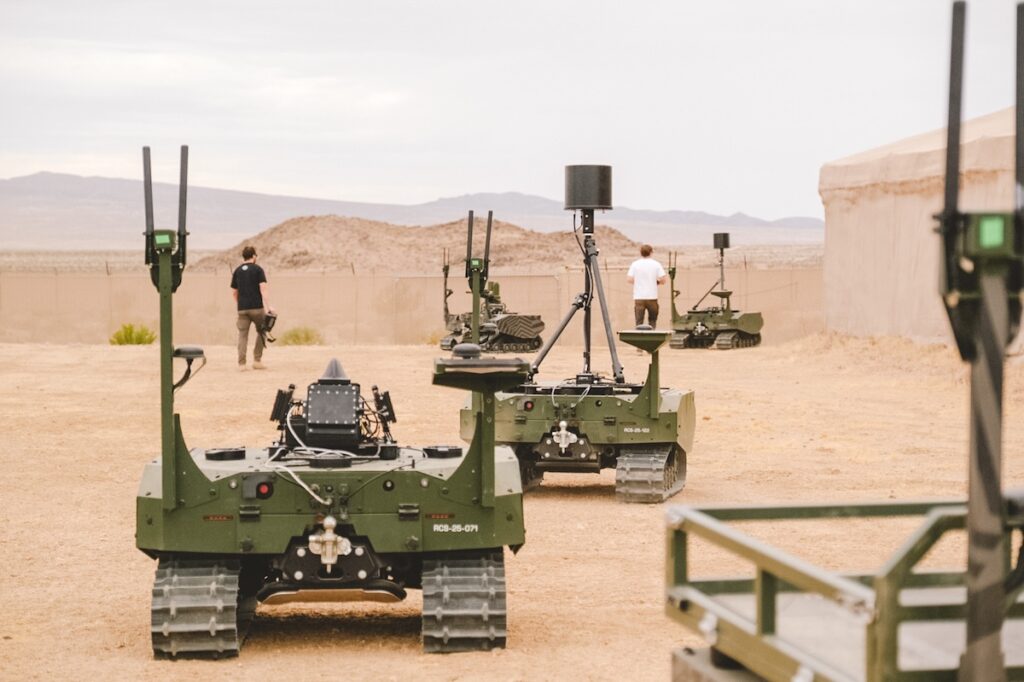
Deploying eight GEREON uncrewed ground platforms alongside British and multinational allied forces in extreme desert conditions, ARX Robotics UK successfully validated multi-mission autonomy and network integration during Project Convergence-Capstone 6
A strategic alliance between NP Aerospace and United Shield International combines advanced blast protection engineering with US-based support infrastructure to deliver certified bomb suits and through-life assistance for law enforcement
Greensea IQ's 3.7 million dollar delivery order from the United States Marine Corps will expand its fleet of amphibious autonomous underwater ground vehicles designed to counter critical subsea littoral threats
VisionWave launches a passive-sensing autonomous ground vehicle designed to navigate heavily jammed and GPS-denied combat zones
Jun 16, 2026
Advancing Defense Capability Through Strategic Collaboration
Defense Advancement works with major OEMs to foster collaboration and increase engagement with SMEs, to accelerate innovation and drive defense capabilities forward.