

Showcase your capabilities
If you design, build or supply Lithium Batteries, create a profile to showcase your capabilities and connect with visitors who have an active requirement for your solutions.




Lithium batteries are central to modern military power architectures, enabling extremely high energy and power density for mission-critical applications across every domain. These advanced power sources, including ruggedized Lithium-Ion (Li-Ion), and high-rate primary cells, deliver efficiency and performance for systems ranging from soldier-worn electronics and UAVs to high-pulse directed energy weapons.
This guide details leading global suppliers of lithium batteries for military use, specializing in custom-engineered, MIL-STD-compliant power solutions that provide the necessary ruggedization, thermal stability, and long-term reliability for demanding defense operations.
Read the Technology Overview



Ultra-High Energy Density Battery Technologies for Military & Government Drones & Unmanned Systems

If you design, build or supply Lithium Batteries, create a profile to showcase your capabilities and connect with visitors who have an active requirement for your solutions.

Lithium battery technologies are essential to modern military power architectures, enabling lighter, more capable, and energy-dense power sources across every domain of defense operations. From soldier-worn equipment and portable electronics to high-altitude UAV propulsion systems and naval platforms, lithium chemistries deliver the efficiency, durability, and high-rate performance required by today’s digitally connected and electrically intensive battlefield. This technical guide is written for defense engineers, integrators, and procurement professionals responsible for specifying rugged military lithium batteries and advanced power systems for mission-critical platforms.
Lithium batteries encompass a family of electrochemical systems that utilize lithium as the active material, capitalising on its lightweight atomic structure to enable exceptionally high gravimetric and volumetric energy density. This results in power packs that are significantly smaller and lighter than those based on legacy chemistries.

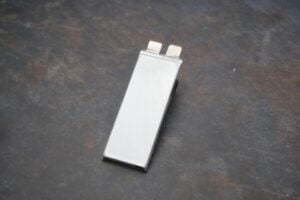
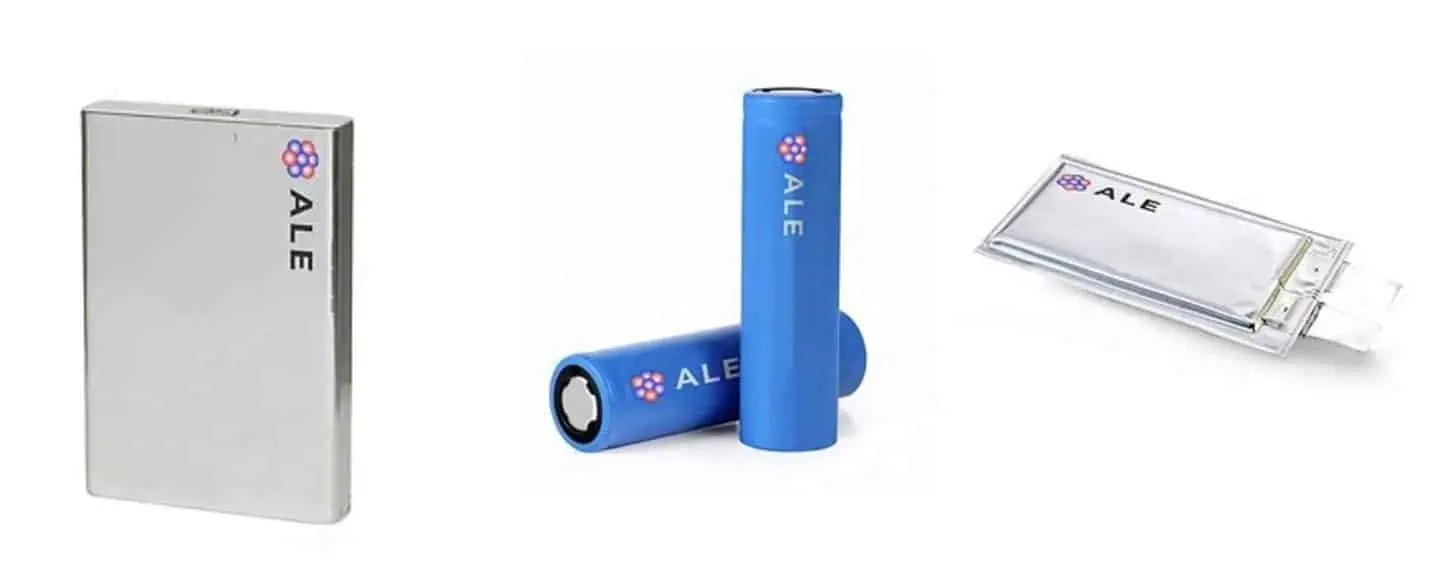
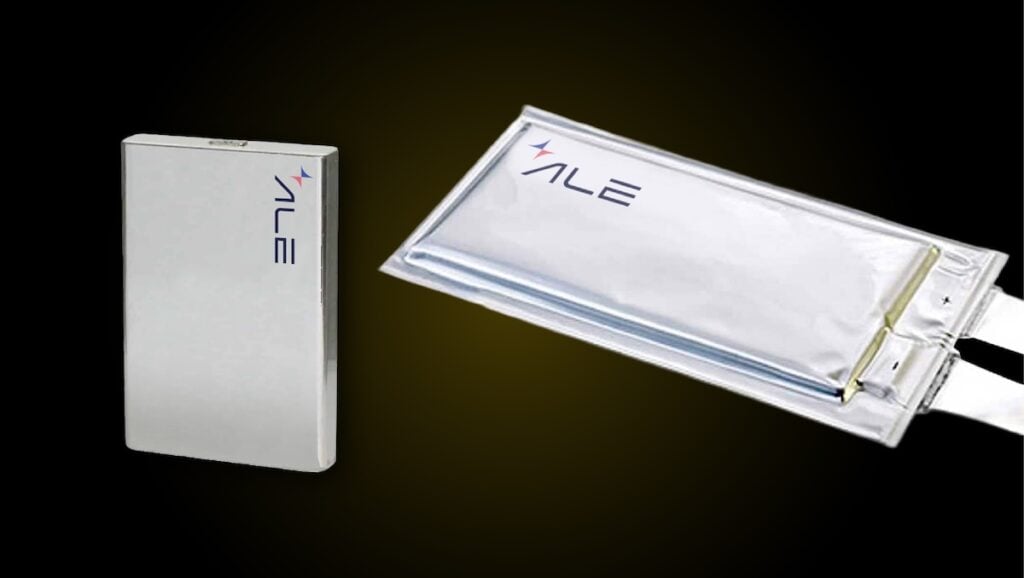
Compact lithium-ion pouch battery by American Lithium Energy.
The defense sector makes sophisticated use of both rechargeable and non-rechargeable systems, with engineers selecting specific chemistries based on mission-critical trade-offs in safety, energy density, discharge rate, and thermal tolerance.
Compared to older systems (nickel metal hydride, lead-acid, and silver-zinc), advanced lithium batteries deliver compelling tactical and logistical advantages:
Military lithium battery systems must be engineered to withstand and perform reliably under conditions far exceeding those found in the consumer market.
Reliability is paramount. Custom lithium batteries for defense demand reinforced internal cell structures, vibration-isolating pack designs, and interconnects engineered to meet rigorous mechanical fatigue requirements, often evaluated via MIL-STD-810 procedures. Furthermore, specialized electrolytes and electrode formulations are required to ensure ion mobility and stability, allowing the systems to maintain performance across the wide temperature ranges found in arctic, desert, maritime, and high-altitude operational environments.
A military-grade Battery Management System (BMS) is far more than a simple charge controller. It incorporates redundant protection circuitry, secure data logging, state-of-charge/health algorithms, and often includes features for EMI shielding and cybersecurity to prevent tampering or system disruption. High reliability under mission-critical loads means the batteries are designed and manufactured to deliver stable voltage under dynamic current demands without compromising thermal stability.
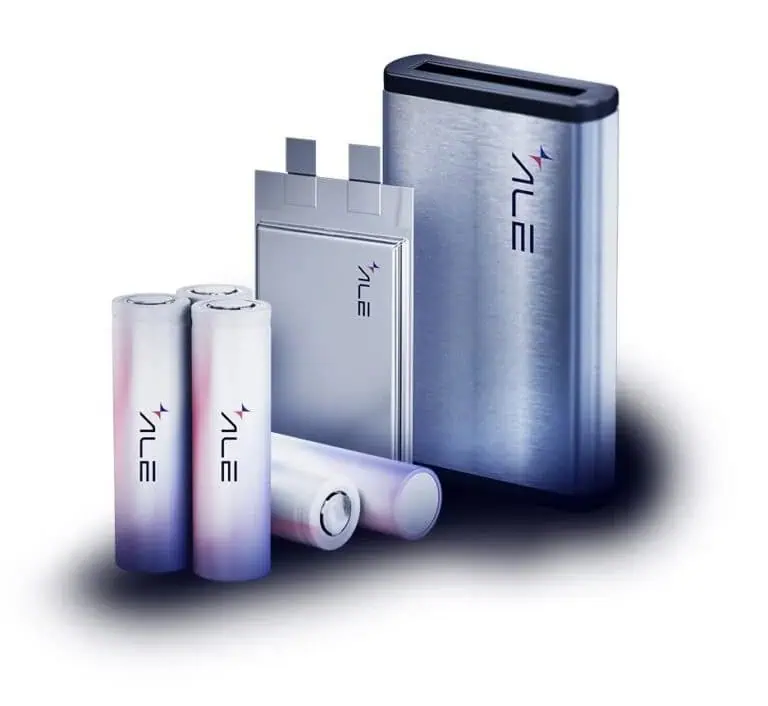
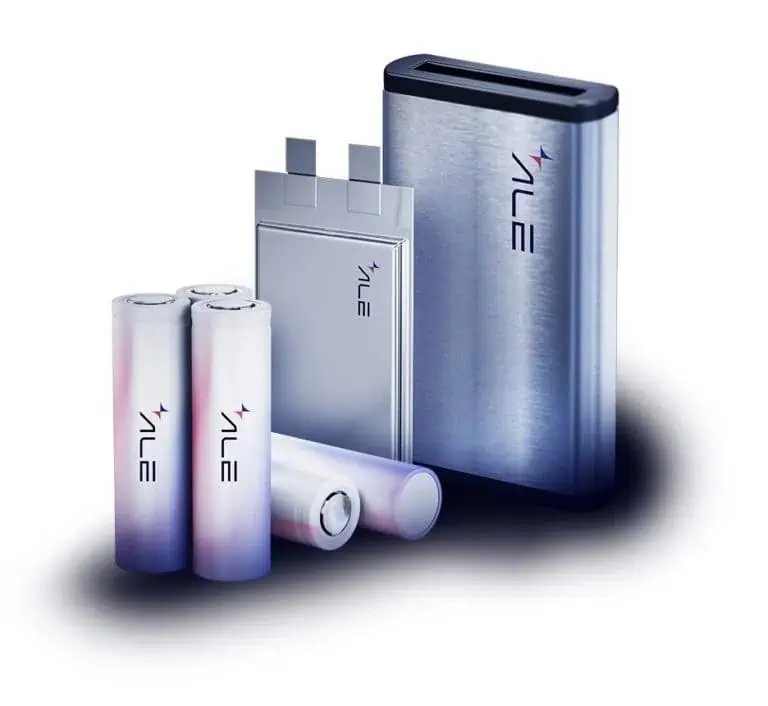
The physical design of the cell is a critical engineering decision, directly impacting the battery pack‘s durability, cooling, and overall energy density. Defense applications rely primarily on three main forms:
Cylindrical lithium ion cell designs are highly favored in rugged environments. Their wound construction and hard metal casing provide excellent structural integrity and a robust resistance to internal pressure, making them the default choice for high-shock applications. Cylindrical lithium batteries are commonly used in soldier radios, weapon systems, and small, high-vibration UGVs.
Prismatic cells offer a rectangular, compact energy storage solution, optimizing volume efficiency for constrained spaces. They are frequently used in large-format power banks and ground vehicle applications where maximizing space utilization is key.

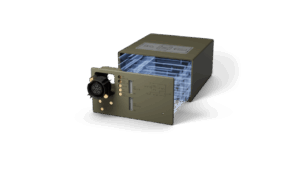
Custom ruggedized lithium power battery solutions for military applications by KT Technical Solutions.
Pouch lithium ion battery cells utilize a flexible, foil-type casing (hence being called a lithium ‘pouch’) that is lightweight and maximizes the internal volume for active materials. This results in the highest gravimetric energy density and allows for conformal battery designs, which are essential for applications like UAVs and wearable systems where mass and flexible form-factors are critical. However, their flexible casing demands careful mechanical protection and dedicated engineered enclosures to mitigate swelling and physical damage. Lithium pouch cell engineering often focuses on optimizing these enclosures for military shock and temperature requirements.
Defense engineers face a key procurement decision: whether to utilize readily available Commercial Off-The-Shelf (COTS) battery packs or engage custom lithium battery manufacturers for a bespoke design.
The primary appeal of COTS batteries lies in their lower initial cost, faster procurement times, and established supply chains driven by commercial volumes.5 High-quality COTS cells are often used as the building blocks for military-grade packs due to their proven reliability, high performance (particularly in energy density), and compliance with baseline safety standards like UN 38.3.
While COTS offers cost advantages, custom lithium batteries provide superior performance and ruggedization tailored to mission-specific requirements, ultimately justifying the higher non-recurring engineering (NRE) costs and longer lead times. Custom solutions are essential when:
| Chemistry | Key Defense Trade-Off | Typical Defense Application |
| Lithium Nickel Manganese Cobalt (NMC) | Excellent balance of energy density, power, and safety. | General purpose, soldier systems, portable electronics. |
| Lithium Nickel Cobalt Aluminum (NCA) | Highest energy density, balanced against safety risk. | Long-endurance UAVs and aerial platforms. |
| Lithium Iron Phosphate (LiFePO4 or LFP) | Exceptional thermal stability and cycle life; highly safe but lower energy density. | Ground vehicles, naval systems, large power banks. |
| Lithium Thionyl Chloride (Li-SOCl2) | Best-in-class shelf life and operating temperature range. | Unattended sensors, emergency location beacons, munitions. |
| Lithium-Sulfur (Li-S) | Superior gravimetric energy density (energy per mass), but limited cycle life. | Ultra-lightweight, long-range platforms (e.g., HALE UAVs). |
The choice between a high-energy lithium-ion battery for military use (like NCA) and a highly stable one is a primary trade-off for engineers, balancing mission endurance against platform survivability and cost.

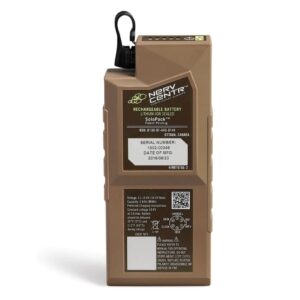
NERV CENTR SoloPack rugged, rechargeable lithium-ion military battery by Galvion.
The defense sector is a key driver for advanced lithium batteries and next-generation power systems.
Lithium batteries for military use span the entire spectrum of defense operations:
For procurement professionals and integrators, compliance and certification are non-negotiable. Defense-grade systems must meet standards that ensure safety, interoperability, and operational readiness:
The lithium battery supplier ecosystem includes established major manufacturers who specialize in providing certified, ruggedized power solutions designed for long-term sustainment and demanding defense program life cycles.


 Searching Companies & Products


 Subscribe to the Weekly eBrief
The latest engineering and technical developments straight to your inbox - join thousands of engineers who receive it.
Subscribe to the Weekly eBrief
The latest engineering and technical developments straight to your inbox - join thousands of engineers who receive it.