


Batteries
Discover cutting-edge solutions from 6 leading global suppliersAmerican Lithium Energy (ALE), a client of KT Technical Solutions, outlines the key considerations involved in selecting battery solutions as power requirements continue to increase across defense, industrial, and commercial sectors.
Battery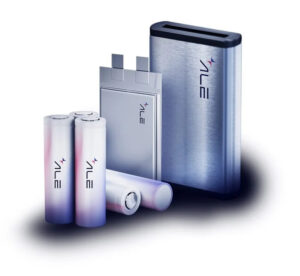 selection plays a central role in system reliability and operational efficiency, particularly for applications where performance, safety, lifecycle, and cost efficiency are critical.
Energy Density and Performance
Energy density directly affects runtime, system weight, and platform size. Lithium-ion batteries remain widely adopted due to their strong energy-to-weight characteristics, while solid-state technologies are emerging with the potential for higher energy storage and improved safety.
High energy density is particularly important for defense, aerospace, and mobile systems where endurance and efficiency are critical.
Safety and Reliability
Battery safety is essential in demanding operational environments. Effective solutions integrate thermal management, electronic protection against overcharge and short circuits, and electrolyte designs that reduce fire risk. Compliance with standards such as UL 1642, IEC 62133, and UN38.3 supports safe deployment in regulated applications.
Cycle Life and Charging Efficiency
Long service life reduces maintenance requirements and overall ownership cost. Chemistries such as lithium iron phosphate are valued for extended cycle performance, while emerging materials aim to further limit degradation. Fast-charging capability also supports high operational availability, allowing systems to return to service with minimal downtime.
Developments such as high C-rate lithium-ion designs, silicon anodes, and hybrid battery-supercapacitor systems continue to improve charging speed without compromising safety or cycle life.
Environmental Resilience and Sustainability
Batteries used in defense and industrial roles must operate reliably across wide temperature ranges, often from extreme cold to high heat. Advanced materials and thermal regulation help maintain consistent output. At the same time, recyclable chemistries, cleaner manufacturing processes, and second-life applications support environmental compliance and sustainability goals.
Scalability and Customization
Battery configuration requirements differ by application, requiring solutions that can be adapted or expanded to support defined performance objectives.
Battery configuration requirements differ by application, requiring solutions that can be adapted or expanded to support defined performance objectives.
- Modular battery packs allow for easy scalability, making it simple to upgrade capacity as required.
- Custom chemistries tailored for specific energy demands provide enhanced efficiency and performance.
- Smart Battery Management Systems (BMS) enable real-time monitoring and optimization of battery usage.
Cost and Compliance
Evaluating total cost of ownership, including lifecycle cost per kilowatt-hour and maintenance demands, provides a clearer measure of long-term value.
Regulatory alignment with ISO, RoHS, REACH, and transportation standards ensures smooth integration into industry-specific systems.
Advancing Battery Technology
Ongoing developments in solid-state, lithium-sulfur, graphene-enhanced, and silicon anode battery technologies are expected to further increase energy density, safety, and system efficiency as these solutions mature.
Selecting an effective battery solution requires balancing energy density, safety, durability, and economic performance. For KT Technical Solution’s client, ALE, applying these criteria supports dependable power delivery across defense, industrial, and commercial applications, while enabling long-term efficiency and operational confidence.