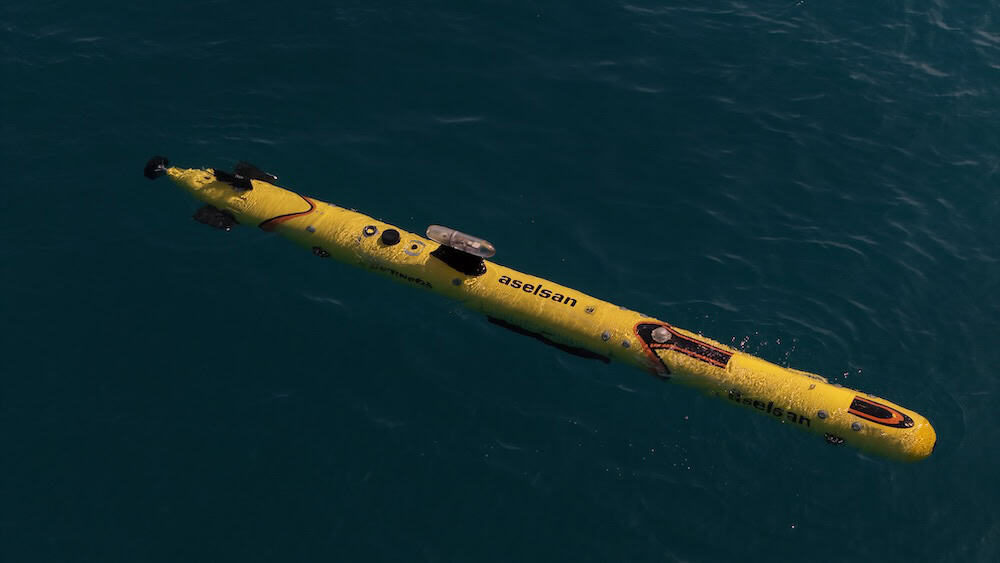
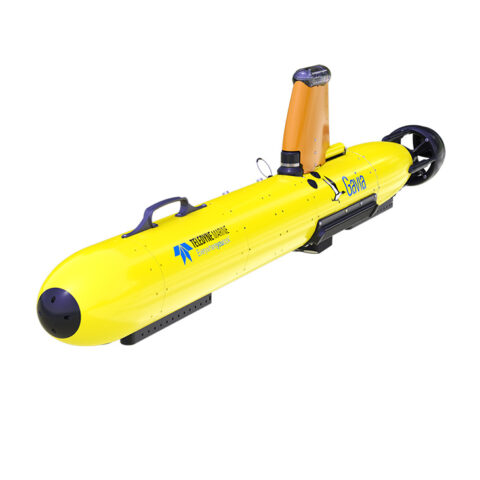
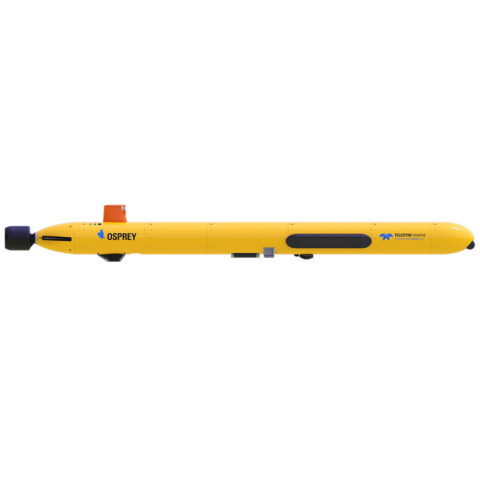
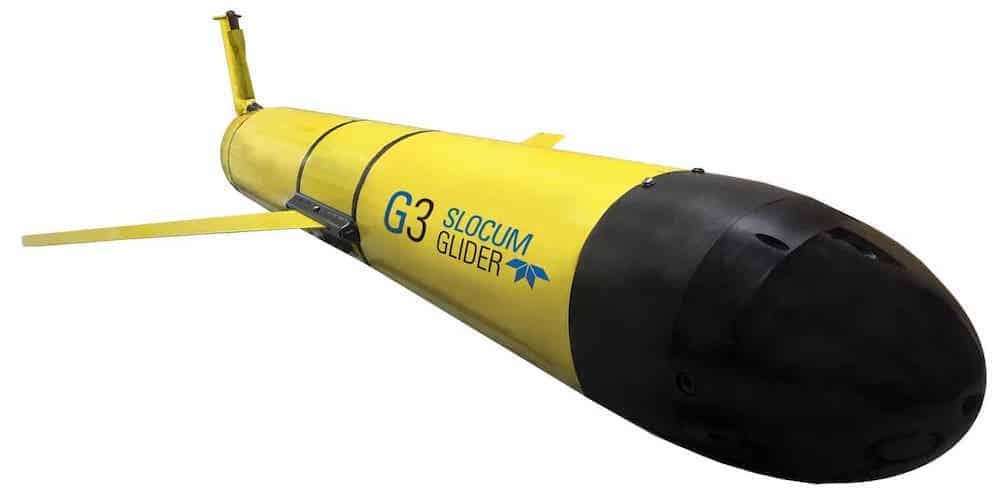
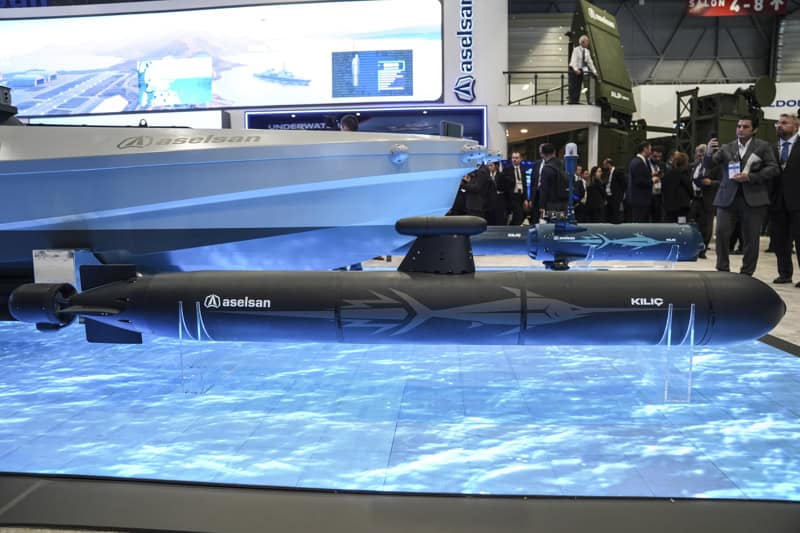
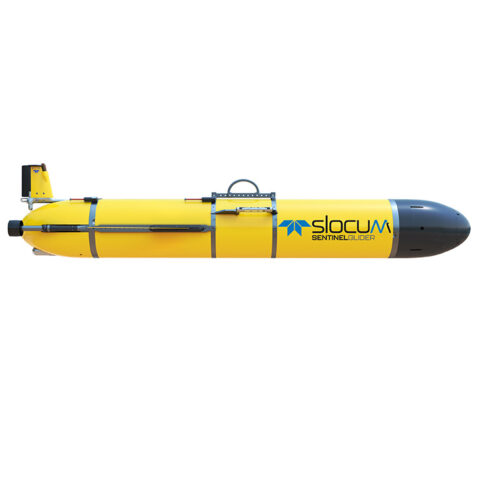
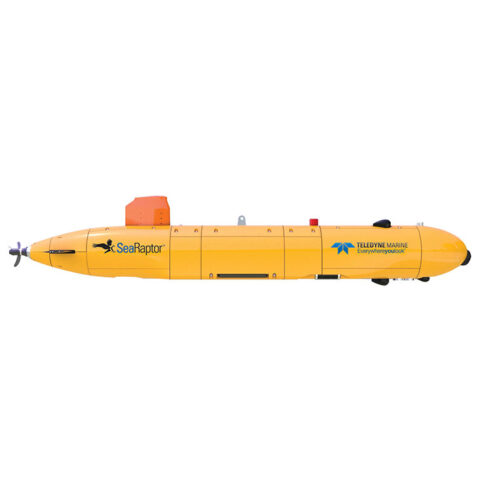
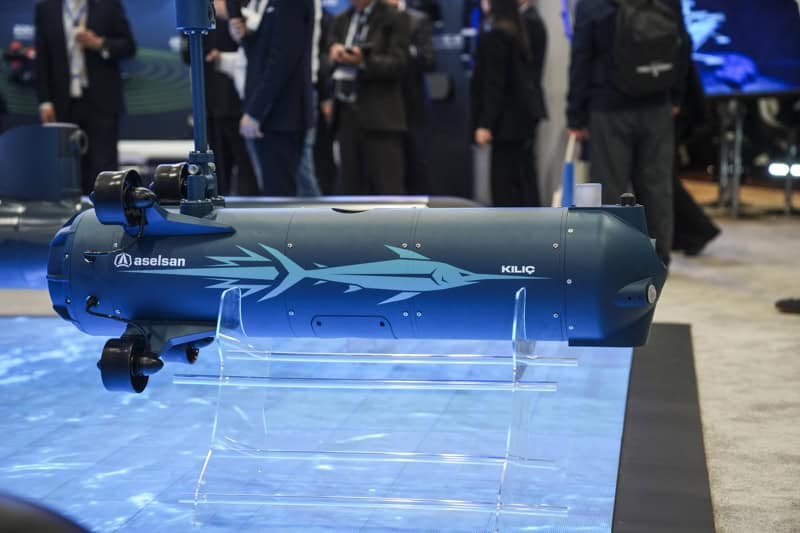
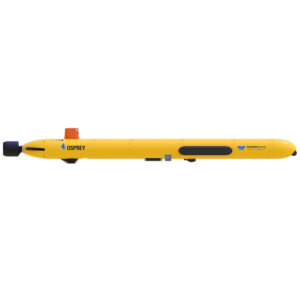
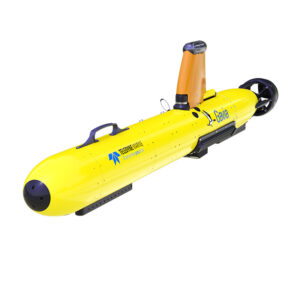
Defense Advancement provides a directory of military AUV manufacturers and suppliers, covering portable AUVs, torpedo-shaped systems, autonomous underwater gliders, and modular platforms for mine countermeasures, ISR, seabed mapping, subsea infrastructure inspection, and other naval defense applications.
If you design, build or supply Autonomous Underwater Vehicles (AUV), create a profile to showcase your capabilities and connect with visitors who have an active requirement for your solutions.
The Technical Guide to Military AUVs for Naval Defense & Underwater Operations
Overview by
William Mackenzie
Updated:
Introduction to Military Autonomous Underwater Vehicles
Military Autonomous Underwater Vehicles (AUVs) are untethered robotic platforms designed to conduct subsea operations without continuous human control. As a subset of Unmanned Underwater Vehicles (UUVs), AUVs combine onboard computing, navigation sensors, propulsion or buoyancy control systems, energy storage, and mission-specific payloads to carry out preprogrammed or adaptive missions.
Military AUVs support naval intelligence gathering, underwater surveillance, mine countermeasures, seabed mapping, and maritime security operations. Platforms range from compact, personnel-deployable underwater drones to large-displacement autonomous undersea vehicles designed for extended missions and the integration of substantial payloads.
Key Configurations of Military AUVs
Military autonomous underwater vehicles are available in a range of configurations, each offering different characteristics in terms of physical architecture, deployment requirements, maneuverability, endurance, and payload capacity. Common AUV configurations and design characteristics include:
Micro and Mini AUVs: Small autonomous subsea vehicles designed for localized surveying, reconnaissance, and underwater inspection, typically with limited payload capacity due to their compact dimensions.
Portable and Lightweight AUVs: Platforms designed to be transported and deployed by individuals or small teams, reducing reliance on dedicated launch and recovery infrastructure.
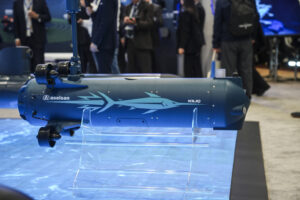
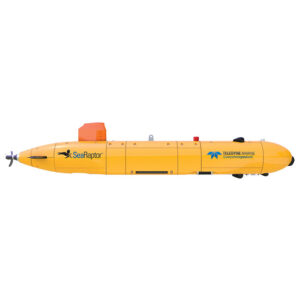
Torpedo-Shaped AUVs: Streamlined underwater vehicles designed to minimize hydrodynamic resistance during sustained forward motion, making them particularly suited to wide-area surveying and extended transit missions.
Hovering AUVs (HAUVs): Vehicles equipped with propulsion and control systems that enable precise low-speed maneuvering, hovering, and station keeping during detailed subsea inspection and surveying operations.
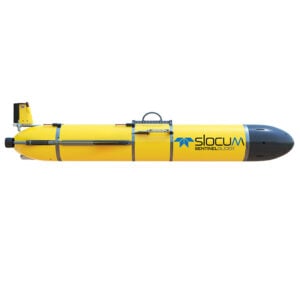
Autonomous Underwater Gliders: Energy-efficient platforms that use variable buoyancy and hydrodynamic lifting surfaces to move through the water column during extended monitoring missions. Some configurations also incorporate supplementary thrusters.
Modular and Reconfigurable AUVs: Platforms featuring interchangeable payloads, vehicle sections, or subsystems that allow the vehicle to be adapted to different mission requirements.
Hybrid AUV/Remotely Operated Vehicle (ROV) Systems: Underwater vehicles that combine autonomous and remotely operated capabilities, enabling transitions between autonomous missions and direct operator control, depending on the vehicle architecture.
These configurations are not mutually exclusive, and AUV manufacturers may incorporate several design characteristics into a single platform, such as a portable torpedo-shaped vehicle with interchangeable sonar payloads.
Military & Naval Applications of AUVs
Subsea Intelligence and Maritime Domain Awareness
Through the collection of acoustic, optical, and environmental data, autonomous underwater vehicles provide naval forces with intelligence on subsea environments. Equipped with mission-specific sensors, these platforms extend maritime situational awareness beneath the surface and support the characterization of underwater environments without necessarily requiring the continuous presence of a crewed vessel.
Mine Countermeasures (MCM) and Harbor Approach Clearance
Military AUVs support underwater mine detection, classification, localization, and seabed surveying. Data collected by acoustic and optical imaging payloads enables specialist personnel to assess submerged objects and potential hazards remotely, supporting mine identification and subsequent clearance operations while reducing the need for personnel to enter potentially hazardous environments.
Anti-Submarine Warfare (ASW) Support and Acoustic Surveillance
Equipped with passive acoustic sensors, AUVs can contribute to underwater surveillance through the collection of acoustic and environmental data. Autonomous underwater platforms also support oceanographic characterization, providing information on the environmental conditions that influence underwater sound propagation and naval acoustic monitoring.
Seabed Warfare and Infrastructure Protection
Autonomous undersea vehicles are used to monitor the seabed and inspect critical maritime infrastructure, including subsea telecommunications cables, pipelines, and offshore installations. The integration of acoustic and optical payloads can help identify physical damage, environmental changes, and unexpected objects in the vicinity of underwater assets.
Naval Hydrographic Surveying and Oceanographic Characterization
Hydrographic AUV systems collect bathymetric, seabed, and water-column measurements to support naval charting and maritime operational planning. Depending on the installed sensor suite, these vehicles can also measure conductivity, temperature, pressure, sound velocity, and other environmental parameters relevant to subsea navigation and acoustic performance.
Subsea Logistics and Tactical Payload Transportation
Military AUV technology is also being developed to support the autonomous underwater transportation of equipment, supplies, and specialist mission payloads. The design of vehicles for subsea logistics must account for payload accommodation, buoyancy management, and the energy storage capacity required to meet transportation and endurance requirements.
AUV Sensors & Mission Payloads
Autonomous underwater vehicle companies integrate a range of acoustic, optical, magnetic, and environmental sensors to accommodate the requirements of different naval and military applications. The selection and integration of mission payloads can influence vehicle dimensions, power consumption, onboard processing requirements, and overall mission endurance.
Sensor / Payload
Primary Function
Military & Naval Applications
Side-Scan Sonar (SSS)
Acoustic imaging of the seabed
Mine detection, seabed surveying, and submerged object classification
Synthetic Aperture Sonar (SAS)
High-resolution acoustic imaging
Mine countermeasures and detailed seabed mapping
Multibeam Echo Sounders (MBES)
Bathymetric measurement and seabed mapping
Naval hydrography and underwater terrain characterization
Forward-Looking Sonar (FLS)
Acoustic sensing ahead of the vehicle
Obstacle detection and underwater navigation
Sub-Bottom Profilers (SBPs)
Characterization of sediment layers beneath the seabed
Marine geophysical surveys and buried object investigations
Passive Acoustic Sensors, Including Hydrophones
Detection and measurement of underwater sound
Acoustic surveillance and environmental monitoring
Magnetometers
Measurement of magnetic fields and anomalies
Detection of ferromagnetic objects and subsea infrastructure surveying
Underwater Cameras and Imaging Systems
Optical imaging and video acquisition
Visual inspection, object identification, and infrastructure assessment
Underwater Light Detection and Ranging (LiDAR) and Laser Scanners
Optical mapping and dimensional measurement
Detailed subsea inspection and three-dimensional reconstruction
Oceanographic Sensors
Measurement of physical and chemical water properties
Environmental characterization and naval oceanographic surveys
Navigation beneath the surface typically relies on an Inertial Navigation System (INS), which may be aided by a Doppler Velocity Log (DVL), depth sensors, and acoustic positioning systems. While acoustic communications can facilitate data exchange during submerged operations, GNSS receivers enable vehicles to obtain position fixes at the surface.
Military Standards & Compliance
Qualification requirements for military autonomous underwater vehicles vary according to the intended operating environment, host platforms, equipment configuration, and contractual procurement requirements. Military standards and interoperability frameworks that may be relevant to AUV systems and their associated equipment include:
MIL-STD-810: Environmental engineering and testing methods tailored to anticipated conditions throughout the equipment lifecycle, including temperature extremes, humidity, vibration, and mechanical shock.
MIL-STD-461: Requirements governing Electromagnetic Interference (EMI) emissions and susceptibility for applicable electrical, electronic, and electromechanical equipment and subsystems.
NATO STANAG 4817: An interoperability framework for the Command and Control (C2) of unmanned systems operating across multiple domains.
MIL-STD-1474: Acoustic noise limits and associated testing requirements for military equipment, which may apply to AUV launch, recovery, and support equipment where specified.
When evaluating military AUV manufacturers, defense procurement teams should review qualification documentation against program-specific requirements. This may include verification of subsea pressure resistance, watertight integrity, and underwater acoustic signature performance, depending on the intended operational application.
Emerging Developments in Military AUV Technology
Continued advances in energy storage, onboard computing, autonomous control, and system interoperability are expanding the operational capabilities of military autonomous underwater vehicles. Areas of ongoing technological development include:
Persistent Subsea Autonomy: The development and integration of underwater docking, recharging, and data transfer technologies to support extended naval deployments while reducing reliance on surface recovery.
AI and Edge Processing: Developments in onboard AI and embedded computing are enabling more sophisticated automated interpretation of sonar data, optical imagery, and environmental measurements, reducing dependence on external processing.
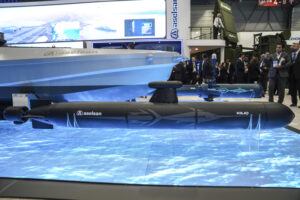
Extra-Large Autonomous Underwater Platforms: The continued development and operational evaluation of Extra-Large Unmanned Underwater Vehicles (XLUUVs), offering increased internal volume, greater payload capacity, and the potential for extended operational range.
Modular Open Systems Approach (MOSA): The adoption of open interfaces and modular hardware and software architectures to simplify subsystem replacement, mission payload integration, and technology upgrades throughout the operational lifecycle of the vehicle.
These developments are shaping how AUV companies approach the design and integration of scalable, interoperable, and adaptable autonomous underwater systems to meet evolving naval requirements.
The latest defense technology news, straight to your inbox.
Get our weekly roundup of technology developments, new products and industry news.
THANK YOU FOR SIGNING UP
Thanks for joining us. Check your inbox.
We've sent you an email. Click the confirmation link to complete your subscription to the weekly eBrief. In the meantime, explore the latest news, suppliers and technologies on DA.
Advancing Defense Capability Through Strategic Collaboration
Defense Advancement works with major OEMs to foster collaboration and increase engagement with SMEs, to accelerate innovation and drive defense capabilities forward.