Showcase your capabilities
If you design, build or supply Underwater Gliders, create a profile to showcase your capabilities and connect with visitors who have an active requirement for your solutions.




Underwater gliders are autonomous underwater vehicles (AUVs) engineered for silent, energy-efficient movement through the ocean. In defense and military contexts, they are critical in surveillance, reconnaissance, and information gathering missions.
Read the Technology Overview
Advanced Naval Defense Solutions & Services for Marine & Submarine Applications

Autonomous Systems, Subsea Sensing & Underwater Technologies for Maritime Defense

If you design, build or supply Underwater Gliders, create a profile to showcase your capabilities and connect with visitors who have an active requirement for your solutions.

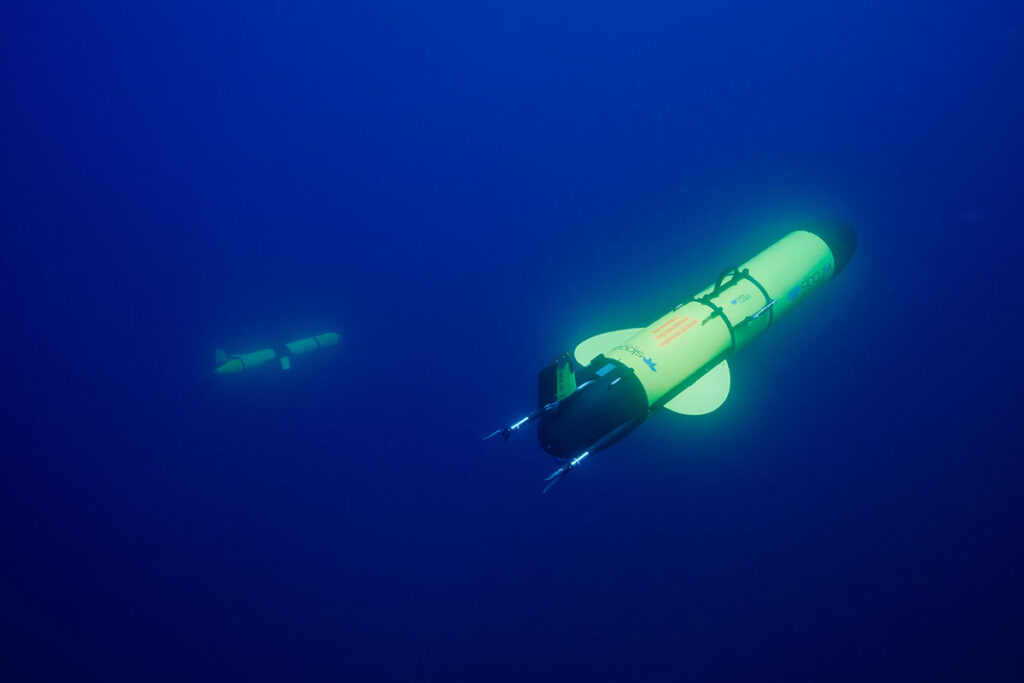
Designed for low-energy, long-duration deployments, underwater gliders operate without propellers by adjusting their buoyancy to move vertically and using wings to glide horizontally. These vehicles carry sensor payloads to support intelligence, surveillance, and reconnaissance (ISR) missions, passive acoustic monitoring, and mine countermeasures. Their stealth and persistence make them indispensable in contested and covert maritime environments.
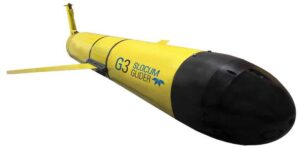
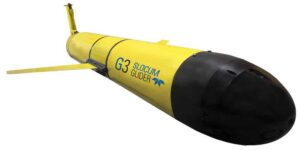
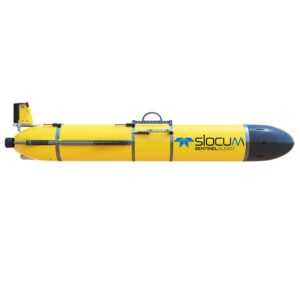
Slocum G3 Glider by Teledyne Marine.
Underwater gliders are specialized autonomous underwater vehicles (AUVs) that rely on a variable buoyancy system and wings to convert vertical motion into horizontal glide. They differ significantly from traditional propulsion-driven AUVs or unmanned underwater vehicles (UUVs) by leveraging minimal energy to traverse large ocean distances over extended durations.
The glider’s movement is facilitated through internal ballast systems, typically driven by a buoyancy engine or piston that modulates density and depth. This motion is guided by control surfaces like rudders and wings, and monitored through sensors such as tilt sensors, pressure sensors, magnetic compasses, and GPS modules. Communications are maintained via satellite communication (satcom) systems, which intermittently relay mission data to command centers.
Underwater gliders are extensively deployed in a range of defense applications. Their long endurance, stealth capabilities, and adaptability make them ideal for:
Defense-grade underwater gliders incorporate a suite of sophisticated technologies:
Military and defense operations deploy various glider models, including:
Each type serves specific mission needs, from persistent oceanographic surveillance to cable monitoring and seabed mapping.
Compared to traditional AUVs and UUVs, underwater gliders:
However, gliders are generally slower and less maneuverable than propeller-driven systems, which may be necessary for rapid-response missions.
Underwater gliders developed for military use often comply with defense standards:
These standards ensure interoperability, durability, and stealth compatibility in complex operational environments.
As maritime conflicts become increasingly sophisticated, underwater gliders continue to evolve in sensor integration, autonomous behavior, and adaptive mission planning. Their low acoustic signature, long endurance, and real-time satcom capabilities make them a preferred tool for navies prioritizing persistent ISR, infrastructure defense, and environmental intelligence gathering.


 Searching Companies & Products