Showcase your capabilities
If you design, build or supply Sonobuoys, create a profile to showcase your capabilities and connect with visitors who have an active requirement for your solutions.




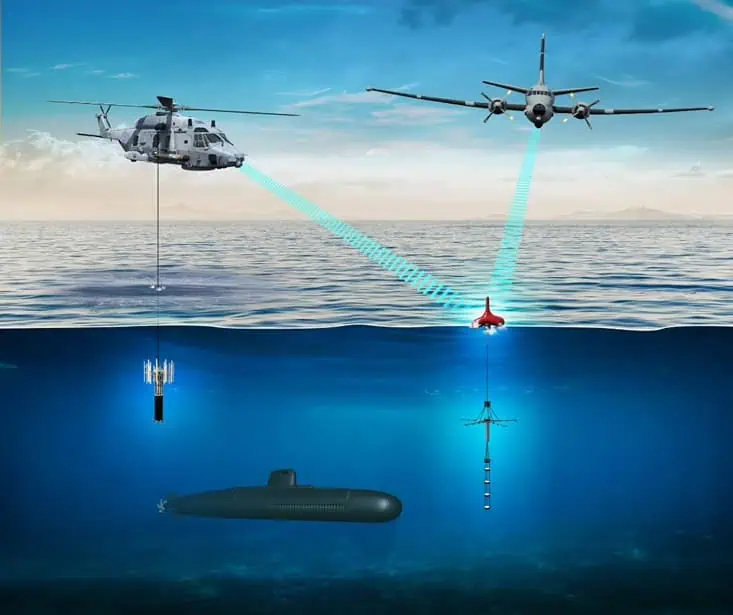
Sonobuoys are expendable maritime sensing devices used to collect acoustic or environmental data and relay it to remote platforms for Anti-Submarine Warfare (ASW) operations. These systems include passive and directional sensors for acoustic detection and bearing estimation, active sonobuoys for echo ranging, multistatic source and receiver configurations, and bathythermograph units for assessing underwater sound propagation.
This page features sonobuoy manufacturers and suppliers whose systems support submarine detection, localization, classification, tracking, target motion analysis, and area surveillance.
Read the Technology Overview
Advanced Mission Systems for Defense Forces Across the Land, Air, Naval & Space Domains

If you design, build or supply Sonobuoys, create a profile to showcase your capabilities and connect with visitors who have an active requirement for your solutions.

A sonobuoy is an expendable sensing device deployed into the ocean to collect acoustic or environmental information and relay it to a remote processing platform. In Anti-Submarine Warfare (ASW), sonobuoys allow maritime patrol aircraft and helicopters to establish distributed sensor fields without placing the aircraft itself in the water. The U.S. Navy describes sonobuoys as air-launched electromechanical sensors used to relay underwater acoustic information to remote processors.
Modern ASW sonobuoy systems combine underwater sensors, signal-processing electronics, radio communications, flotation equipment, power supplies, and deployment mechanisms in a compact package. Different sonobuoy types support passive listening, active echo ranging, multistatic operations, environmental measurement, and specialized missions. Sonobuoy deployment can therefore be tailored to the acoustic environment and the detection, localization, classification, or tracking task.
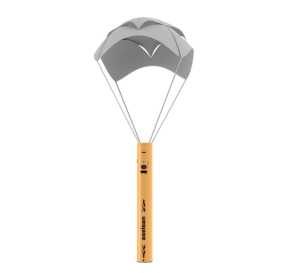
ASELSAN’s sonobuoy, the aselBUOY 100 P.
Passive sonobuoys listen for underwater acoustic energy without transmitting sonar signals. They can detect machinery, propulsion, and other acoustic signatures while maintaining an acoustically passive sensing posture. Traditional LOFAR sonobuoys use omnidirectional hydrophones for Low Frequency Analysis and Recording (LOFAR), with received acoustic information transmitted to the monitoring platform for processing.
Directional passive systems add bearing information to acoustic detection. The DIFAR sonobuoy, or Directional Frequency Analysis and Recording (DIFAR) sonobuoy, combines passive acoustic reception with directional sensing so operators can estimate the bearing of a contact. Multiple directional sonobuoys can support localization and tracking while allowing an aircraft to monitor a wider acoustic field. U.S. Navy documentation identifies the AN/SSQ-53 family as a directional passive sonobuoy.
An active sonobuoy transmits acoustic energy into the water and listens for echoes from submerged objects. Command-Activated Active Sonobuoys (CASS) allow the monitoring platform to control aspects of the active transmission after deployment. The DICASS sonobuoy, or Directional Command Activated Sonobuoy System (DICASS), provides active range, bearing, and Doppler information that can assist with localization and tracking.
Combination sonobuoys integrate complementary acoustic functions within an ASW architecture, allowing active and passive information to contribute to the same tactical picture. Combining sensing modes can provide greater flexibility when environmental conditions, target behavior, or mission requirements make reliance on one acoustic technique insufficient.
Multistatic ASW separates the acoustic source from one or more receivers. Source sonobuoys generate acoustic transmissions while receiver sonobuoys detect resulting echoes at other positions in the field. The ADAR sonobuoy, or Air Deployable Active Receiver (ADAR), is a passive acoustic receiving element used within multistatic active operations rather than an active transmitter itself. This distributed geometry can improve the flexibility of wide-area acoustic search.
Bathythermograph sonobuoys measure water temperature with depth, providing environmental information used to assess underwater acoustic propagation. Temperature gradients and thermoclines can refract sound and substantially influence effective sensor depth and sonar performance. Bathythermograph data therefore helps aircrews select appropriate sonobuoy deployment tactics rather than directly detecting submarines.
Special-mission sonobuoys are configured for requirements outside the core passive, active, multistatic, and bathythermograph roles. Their functions may include environmental measurement, communications, acoustic signaling, testing, or other mission-specific sensing. Individual sonobuoy specifications depend on the intended platform, acoustic mission, operating depth, endurance, and interface requirements.
ASW sonobuoys provide distributed acoustic coverage across an operating area. Passive sensors search for characteristic underwater sounds, while active systems detect reflections generated by transmitted acoustic energy. Sensor type and sonobuoy placement are selected according to the expected acoustic environment and search requirement.
Detection establishes that a potential target is present, while localization determines its position with greater accuracy. Directional bearings, active ranges, and measurements from multiple sonobuoys can be correlated to refine a contact location and reduce positional uncertainty.
Acoustic processing helps operators distinguish submarine contacts from surface vessels, biological noise, environmental effects, and other acoustic sources. Classification may use frequency characteristics, tonal information, broadband signatures, Doppler behavior, and observations accumulated across several sensors.
Once a contact has been localized and classified, successive sonobuoy detections can help maintain a track as the submarine moves. Aircraft may deploy additional sensors along the expected route to preserve acoustic contact and update the tactical picture.
Target motion analysis uses successive observations to estimate a submarine’s course, speed, and position over time. Bearings and ranges from appropriately positioned sensors can improve these estimates, particularly when multiple observations provide geometrically diverse measurements.
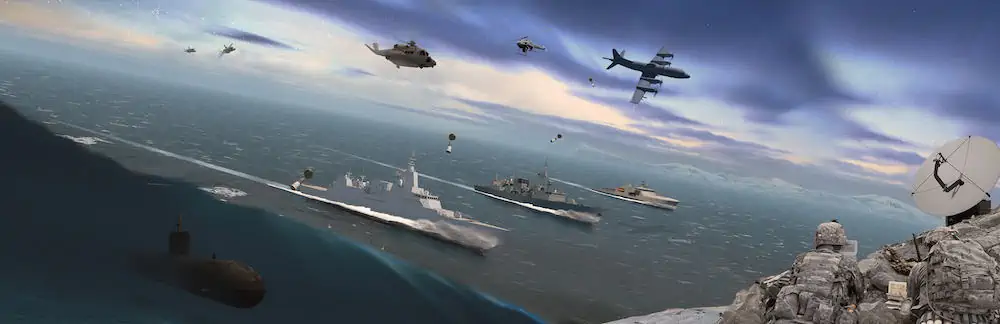
Sonobuoy fields can be arranged across likely transit routes or distributed throughout a designated search area. Barrier patterns emphasize detection across a line or chokepoint, while area-search configurations provide broader coverage. Effective pattern design depends on sensor performance, acoustic conditions, available sonobuoys, and the size of the surveillance area.
Although designs vary substantially, most sonobuoy systems combine several mechanical, acoustic, electronic, and communications elements.
| Sonobuoy Component | Function |
| Hydrophones and acoustic transducers | Detect underwater acoustic pressure, while active-system transducers can also generate acoustic transmissions and receive resulting echoes. |
| Vertical and directional acoustic arrays | Provide directional sensitivity, beamforming, or improved bearing information. |
| Acoustic source assemblies | Generate controlled underwater transmissions for active and multistatic sonar operations. |
| Signal conditioning and onboard electronics | Amplify, condition, encode, and manage sensor outputs before transmission. |
| Radio transmitters and antennas | Transfer acoustic or environmental information to a sonobuoy receiver aboard the monitoring platform. |
| Power supplies and batteries | Supply electrical power for sensing, electronics, communications, and control functions. |
| Flotation systems | Maintain the sonobuoy float and antenna at the required position at the sea surface. |
| Parachutes and descent systems | Where fitted, control air-to-water descent and protect the sensor during sonobuoy deployment. |
| Depth-setting mechanisms | Position hydrophones, transducers, or arrays at the selected operating depth. |
| Environmental and temperature sensors | Measure parameters used to characterize the water column and acoustic environment. |
Interoperability is important because sonobuoys must function with launch equipment, receiving systems, processing hardware, and multinational ASW architectures. Key considerations include:
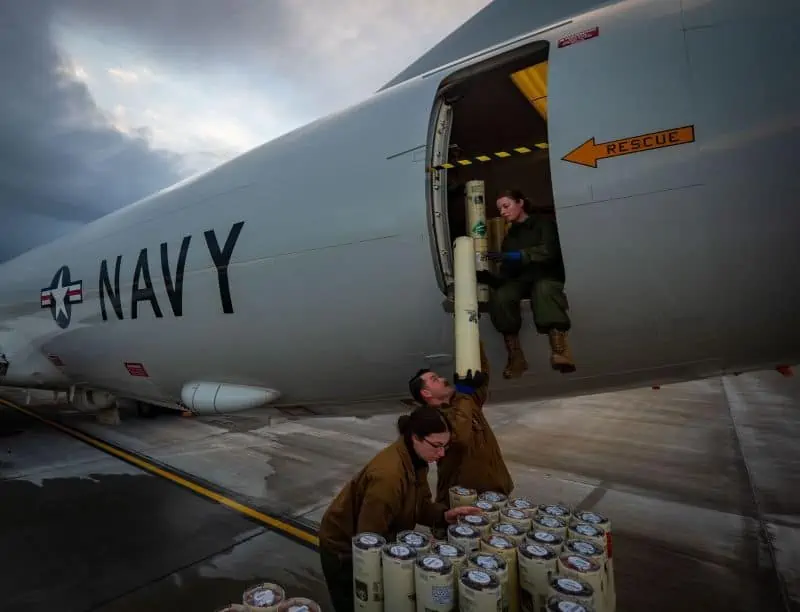
For sonobuoy manufacturers, meeting applicable sonobuoy specifications involves more than acoustic performance alone. Physical interfaces, communications compatibility, storage configuration, and the sonobuoy transport tube or launch container can all affect platform integration.
Development increasingly focuses on improving distributed sensing, processing, communications, and platform integration rather than treating individual navy sonobuoys as isolated acoustic sensors.
NAVAIR is also pursuing improvements to Multi-Static Active Coherent (MAC) ASW, including signal-processing enhancements, increased search capability, clutter reduction, and operator-machine interface development. These developments reinforce the continuing role of sonobuoys as distributed sensing elements within increasingly integrated undersea warfare systems.


 Searching Companies & Products