Radar processing software converts raw radar returns into actionable data for detection, tracking, classification, imaging, and situational awareness across defense systems. Processing functions may include pulse compression, Doppler analysis, CFAR detection, digital beamforming, SAR image formation, MTI and GMTI, multi-target tracking, and target recognition.
This page showcases suppliers of radar processing software supporting applications including air and maritime surveillance, counter-UAS, fire control, navigation, and domain awareness.
If you design, build or supply Radar Processing Software, create a profile to showcase your capabilities and connect with visitors who have an active requirement for your solutions.
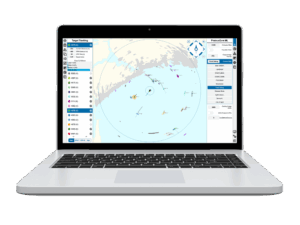
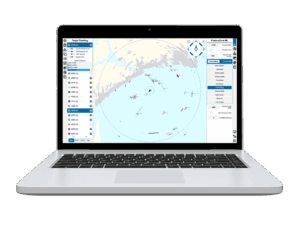
Machine learning-powered radar processing software for enhanced vessel perception
Machine learning-powered radar processing software for enhanced vessel perception
...illion labeled radar images, the ProteusCore software automatically tunes radar gain and adjusts the... ... is a powerful software package that utilizes proprietary machine learning models to provide rapid...
Overview of Radar Processing Software for Military & Naval Operations
Overview by
William Mackenzie
Updated:
Introduction to Radar Processing Software
Radar processing software converts raw radar returns into information that operators, autonomous systems, and command networks can use for detection, tracking, classification, imaging, and situational awareness. Depending on the radar architecture, processing may be distributed across embedded electronics, mission computers, dedicated accelerators, or networked processing nodes.
Modern radar software must handle large data volumes while meeting demanding requirements for latency, accuracy, reliability, and environmental resilience. A radar processor may combine conventional signal-processing algorithms with adaptive techniques, sensor fusion, and increasingly, machine learning to extract useful information from complex or contested electromagnetic environments.
Core Radar Processing Functions
Radar processing chains vary by mission and waveform, but several functions are widely used across military surveillance, targeting, navigation, and imaging systems. Before higher-level detection and tracking, processing commonly includes signal conditioning, calibration, matched filtering or pulse compression, range processing, Doppler processing, clutter suppression, and detection thresholding. Constant False Alarm Rate (CFAR) techniques are frequently used to adapt detection thresholds to changing noise and clutter conditions.
Beamforming and Digital Beamforming
Beamforming combines signals from multiple antenna elements to control reception or transmission in selected directions. Digital beamforming performs much of this processing numerically, allowing radar systems to form multiple simultaneous beams, adjust beam patterns, suppress interference, and support rapid changes in surveillance coverage without mechanically repositioning the antenna. Accurate array calibration, timing, and phase synchronization are important for maintaining beam performance.
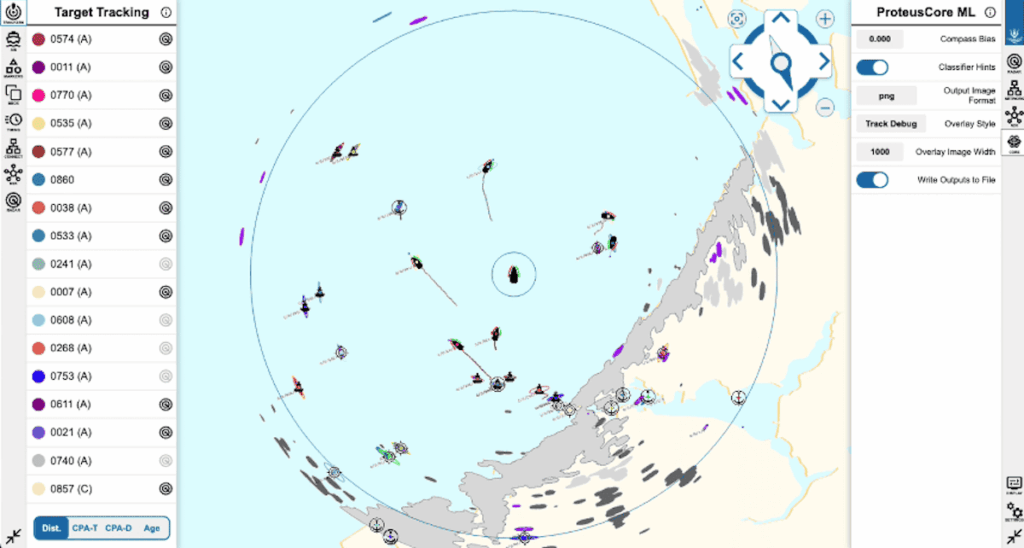
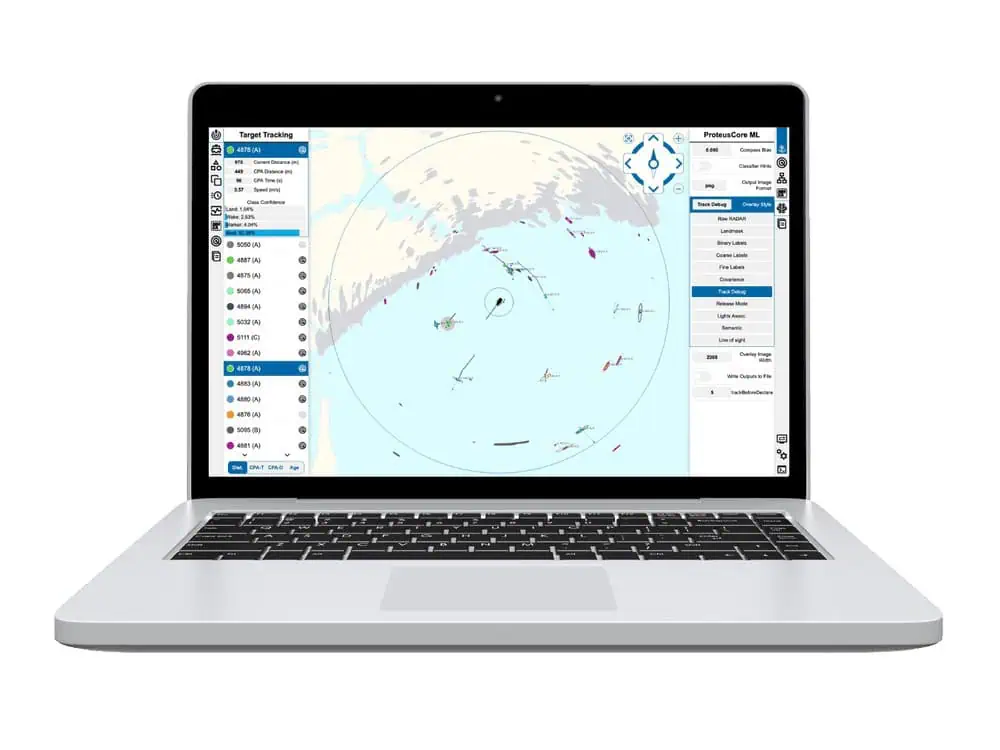
ProteusCore radar processing software by Tocaro Blue
Synthetic Aperture Radar Processing
Synthetic Aperture Radar (SAR) uses the movement of a radar platform to create an effective antenna aperture larger than the physical antenna itself. Radar processing software combines phase-coherent measurements collected along the platform trajectory to generate high-resolution imagery. Processing can include motion compensation, range compression, azimuth compression, and image formation, supporting terrain mapping, reconnaissance, change detection, and target analysis.
Moving Target Indication and Ground Moving Target Indication
Moving Target Indication (MTI) techniques use Doppler information or successive radar measurements to distinguish moving objects from stationary backgrounds. Ground Moving Target Indication (GMTI) applies these principles to moving surface targets such as vehicles and personnel. Effective processing must account for clutter, platform motion, terrain effects, ambiguous velocities, and other unwanted returns while preserving targets with relatively low radial velocities.
Electronic Scanning and Phased Array Processing
Electronically scanned and phased array radars steer beams by controlling the relative phase and amplitude of signals across antenna elements. Radar software coordinates beam scheduling, array calibration, waveform selection, resource management, and signal processing, enabling rapid scanning and supporting multiple radar functions within tightly managed time and processing budgets.
Target Classification and Recognition
Classification algorithms analyze characteristics such as radar cross-section behavior, Doppler and micro-Doppler signatures, motion, range profiles, or image features to differentiate categories of detected objects. More advanced radar analysis software may combine measurements over time or correlate radar information with other sensors to improve classification confidence and support target recognition.
Multi-Target Tracking
Multi-target tracking associates detections with existing tracks while estimating the position, velocity, heading, and other state information of multiple objects. Filtering and estimation techniques are used to predict and update target states. Processing must address missed detections, false alarms, crossing tracks, maneuvering targets, and dense target environments. Track-management logic also determines when tracks should be initiated, updated, confirmed, or deleted.
Radar Image Formation and Visualization
Imaging radar systems require processing to transform complex radar measurements into interpretable representations of terrain, structures, vessels, vehicles, or other targets. Visualization functions may also display detections, tracks, Doppler information, confidence values, and sensor status, allowing operators to interpret radar outputs alongside other mission information.
Military Radar Processing Applications
Radar processing supports missions ranging from wide-area surveillance to precision tracking. The algorithms, compute architecture, update rates, and latency requirements depend heavily on the operational role of the radar.
Air, Ground, and Maritime Surveillance
Surveillance radars monitor large areas for aircraft, vehicles, personnel, vessels, or other objects of interest. Processing software suppresses clutter, detects potential targets, maintains tracks, and can prioritize objects for further investigation. Maritime and naval systems must account for sea clutter and changing surface conditions, while ground radars contend with terrain, vegetation, multipath effects, and other sources of interference.
Air Defense, Missile Detection, and Tracking
Air defense radar processing emphasizes rapid detection, accurate tracking, and consistent updates for potentially fast or maneuvering threats. Missile warning and tracking systems may process high-speed trajectories across wide engagement volumes, supplying track data to command-and-control networks, defensive systems, or other sensors responsible for threat assessment and engagement.
Fire-Control, Weapon-Tracking, and Counter-Battery Radar
Fire-control radar requires precise measurements that can support weapon cueing and engagement. Weapon-locating and counter-battery systems analyze projectile trajectories to estimate points of origin or impact. These applications place particular emphasis on low processing latency, measurement accuracy, track continuity, and reliable performance in cluttered or contested environments.
Counter-UAS Detection and Tracking
Counter-UAS radar software must detect and maintain tracks on relatively small, slow, or low-flying targets that can be difficult to distinguish from birds, terrain, buildings, and other clutter. Classification, micro-Doppler analysis, and track behavior analysis can help separate potential unmanned aircraft from benign objects before information is passed to identification or countermeasure systems.
ISR, Airborne Early Warning, and Battlefield Awareness
Intelligence, Surveillance, and Reconnaissance (ISR) platforms use radar to extend observation across large areas and under conditions where optical sensors may be limited. Airborne Early Warning (AEW) systems can combine long-range radar processing with track management and data distribution, while battlefield systems integrate radar detections with broader command, sensor, and intelligence networks.
Terrain Following, Navigation, and Space Domain Awareness
Radar processing can support terrain-relative navigation, obstacle detection, altitude measurement, and terrain-following functions for aircraft and unmanned platforms. At much greater ranges, specialized radar systems contribute to space domain awareness by detecting and tracking satellites, debris, and other objects in orbit, requiring highly accurate measurement, association, and trajectory processing.
Radar software is commonly integrated into larger defense electronics architectures, so platform requirements can extend beyond the processing algorithms themselves. Relevant considerations may include:
SOSA and OpenVPX: The Sensor Open Systems Architecture (SOSA) Technical Standard uses standards including OpenVPX to support modular, interoperable embedded computing architectures for radar and other sensor-processing systems.
FACE: The Future Airborne Capability Environment (FACE) Technical Standard can be relevant where portable software components and standardized interfaces are required in military aviation.
MOSA: Modular Open Systems Approach (MOSA) principles support interoperability, technology insertion, and reduced dependence on tightly coupled proprietary architectures.
STANAG interfaces: NATO Standardization Agreements (STANAGs) may define interfaces, data formats, or interoperability requirements applicable to particular radar and command systems.
MIL-STD-810: Environmental test methods can be used to assess the processors, storage devices, and electronics on which radar processing software is hosted against relevant operating conditions.
MIL-STD-461: Electromagnetic interference and compatibility requirements can apply to radar electronics operating alongside other RF and electronic systems.
DO-178C and DO-254 considerations: These standards may be relevant when invoked by the applicable airworthiness or certification basis for radar-related software or airborne electronic hardware.
The applicable standards depend on the platform, acquisition program, system architecture, airworthiness basis, and intended operational environment.
Emerging Developments in Radar Processing Software
Advances in compute performance and software-defined architectures are expanding the range of functions that can be performed within radar processing chains. Important developments include:
Cognitive radar: Adaptive processing can alter waveforms, sensing strategies, or resource allocation in response to changing targets, interference, and electromagnetic conditions.
AI-enabled radar processing: Machine learning is being applied to areas such as classification, recognition, clutter characterization, interference mitigation, and operator decision support.
Multi-function RF systems: Shared apertures and processing resources can support combinations of radar, communications, and electronic warfare functions within integrated systems.
Edge processing: More capable onboard computing allows greater volumes of radar data to be processed close to the sensor, reducing network loads and supporting faster local decisions.
These developments are increasing the importance of modular radar processing software that can scale across changing hardware, algorithms, mission requirements, and defense system architectures.
Tocaro Blue explains how its ProteusCore™ radar processing software applies machine learning and proprietary radar data to improve detection, classification, tracking, and automated tuning in maritime environments
Tocaro Blue highlights ProteusCore, advanced marine radar processing software that uses machine learning to enhance situational awareness, enabling developers to transform conventional radars into intelligent perception systems
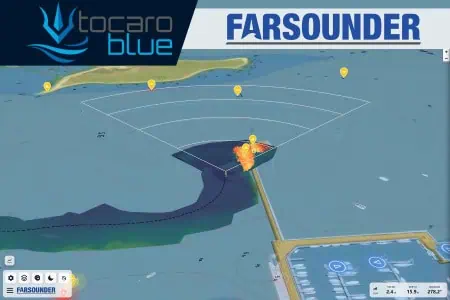
Tocaro Blue outlines how its ProteusCore™ radar perception software enhances real-time situational awareness and radar processing for unmanned and crewed defense platforms using machine learning and CPU-based deployment options
The latest defense technology news, straight to your inbox.
Get our weekly roundup of technology developments, new products and industry news.
THANK YOU FOR SIGNING UP
Thanks for joining us. Check your inbox.
We've sent you an email. Click the confirmation link to complete your subscription to the weekly eBrief. In the meantime, explore the latest news, suppliers and technologies on DA.
Advancing Defense Capability Through Strategic Collaboration
Defense Advancement works with major OEMs to foster collaboration and increase engagement with SMEs, to accelerate innovation and drive defense capabilities forward.