Showcase your capabilities
If you design, build or supply Optical Coatings, create a profile to showcase your capabilities and connect with visitors who have an active requirement for your solutions.




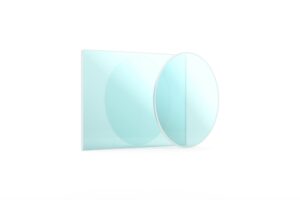
MIL-SPEC optical coatings are thin-film layers applied to lenses, mirrors, windows, filters, and other optical components to control transmission, reflection, wavelength selection, polarization, and surface protection. In defense systems, optical coatings support imaging, targeting, laser, surveillance, fire-control, and EO/IR systems.
This category features optical coating manufacturers offering anti-reflective, high-reflectance, dichroic, filter, polarization, protective, and beamsplitter coatings.
Read the Technology Overview
Precision Optics & Photonics Solutions for Defense Imaging, Sensing & Targeting Systems

If you design, build or supply Optical Coatings, create a profile to showcase your capabilities and connect with visitors who have an active requirement for your solutions.

Optical coatings are thin layers of material applied to lenses, windows, mirrors, filters, and other optical components to control how light interacts with their surfaces. Depending on the design, a coating can increase transmission, reduce unwanted reflection, select particular wavelength bands, control polarization, or protect an exposed optical surface.
In military and defense systems, precision optical coatings are used across imaging, sensing, targeting, laser, surveillance, and fire-control optics, where performance requirements often extend beyond simple transmission or reflectance. Depending on the application, coatings may also need to provide abrasion resistance, moisture resistance, environmental durability, low absorption, and stable performance across changes in temperature and angle of incidence.
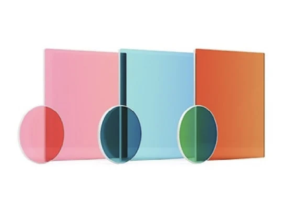
Precision Optical Coatings by Torrent Photonics
Anti-reflective coatings reduce reflection at optical interfaces so that a greater proportion of incident light passes through the component, helping to preserve optical throughput and image quality. Anti-Reflective (AR) coatings are particularly important in multi-element imaging systems, where reflections from numerous surfaces can otherwise reduce transmission and image contrast, while broadband AR coatings may be used where an optical assembly must perform efficiently across a wider spectral range.
Mirror coatings and other reflective thin films are used to redirect light while maintaining the level of optical efficiency required by the system. Optical mirror coatings may use metallic or dielectric materials depending on factors such as wavelength range, required reflectivity, environmental exposure, and laser power, with metal mirror coatings often selected for broad spectral response and dielectric coatings capable of providing very high reflectivity across more tightly controlled wavelength bands.
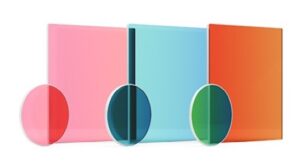
Optical filter coatings control which spectral regions are transmitted and which are reflected or attenuated, allowing sensors and optical systems to isolate wavelengths that are useful for imaging, ranging, target discrimination, or laser detection. Spectral coatings can provide bandpass, long-pass, short-pass, notch, and other filter responses, while dichroic coatings use wavelength-dependent reflection and transmission to separate or combine different spectral bands within the same optical architecture.
Certain optical interference coatings are designed to produce different responses for different polarization states, making them useful in polarizing beam splitters, laser systems, imaging assemblies, and other optical instruments. Their performance depends strongly on the angle of incidence, coating architecture, and wavelength, particularly where controlled behavior for s- and p-polarized light is required.
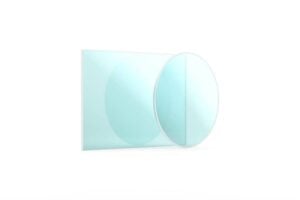
High Laser Damage Threshold Coatings from Torrent Photonics
Hard optical coatings can protect lenses, windows, and other exposed optical surfaces from abrasion, moisture, contamination, and environmental degradation while preserving the required optical performance. Abrasion-resistant coatings are particularly important on external windows exposed to sand, dust, cleaning, handling, and airborne debris, while moisture-resistant coatings can help maintain performance in humid, maritime, and rapidly changing environmental conditions.
Optical coatings can reduce ghost reflections, unwanted scatter, and stray light that would otherwise degrade detector performance or image contrast, while low-absorption coatings help preserve optical throughput and limit heat generated within the coating itself. Carefully designed filter coatings can also control the amount and spectral composition of light reaching sensitive detectors, and in some defense optical systems the coating design may additionally contribute to reducing externally visible reflections from exposed optical surfaces.
Different optical coating technologies are optimized for distinct optical, spectral, environmental, and durability requirements, so the most appropriate design depends on the function of the coated component within the wider system.
| Coating Type | Primary Function | Spectral Behavior | Typical Defense Uses |
| Anti-Reflective Coatings | Reduce surface reflection and increase transmission | Narrowband or broadband transmission enhancement | Imaging lenses, optical windows, sensors, and weapon sights |
| High-Reflectance Coatings | Maximize reflection from an optical surface | Optimized wavelength band or broad metallic response | Mirrors, laser systems, and beam-steering assemblies |
| Partially Reflective Coatings | Divide incident optical power between reflected and transmitted paths | Controlled reflection and transmission | Laser cavities, optical instruments, and beam-control systems |
| Beamsplitter Coatings | Split or combine optical paths | Defined reflection-to-transmission ratio | Targeting systems, imaging assemblies, and laser optics |
| Dichroic Coatings | Separate or combine selected wavelength bands | Reflect selected bands while transmitting others | Multispectral sensors, laser systems, and Electro-Optical/Infrared (EO/IR) optics |
| Optical Filter Coatings | Select or reject defined spectral regions | Bandpass, long-pass, short-pass, or notch response | Sensors, detectors, and imaging systems |
| Polarization Coatings | Control optical response according to polarization state | Different behavior for different polarization states | Laser optics, polarizers, and beam splitters |
| Protective Optical Coatings | Improve surface durability while preserving optical performance | Designed to minimize impact on optical transmission | Windows, domes, and exposed lenses |
| Absorptive and Light-Control Coatings | Reduce unwanted optical energy | Broad or targeted attenuation | Stray-light control and detector protection |
Laser coatings are used on mirrors, windows, lenses, beam splitters, and other laser optic components to control reflection, transmission, and beam routing throughout the optical system. High-power laser coatings place particularly demanding requirements on absorption and laser-induced damage threshold, since excessive absorption can generate heat and increase the risk of optical damage, while the coating itself may be optimized for either a single laser wavelength or a defined operating band.
Imaging systems depend on optical coatings to maintain transmission, suppress unwanted reflections, and isolate useful spectral information before light reaches the detector. Visible, ultraviolet, and infrared optical coatings can be applied to lenses, detector windows, filters, and protective apertures, while IR optical coatings are especially important on materials such as germanium and other infrared substrates where uncoated surface reflection can be substantial.
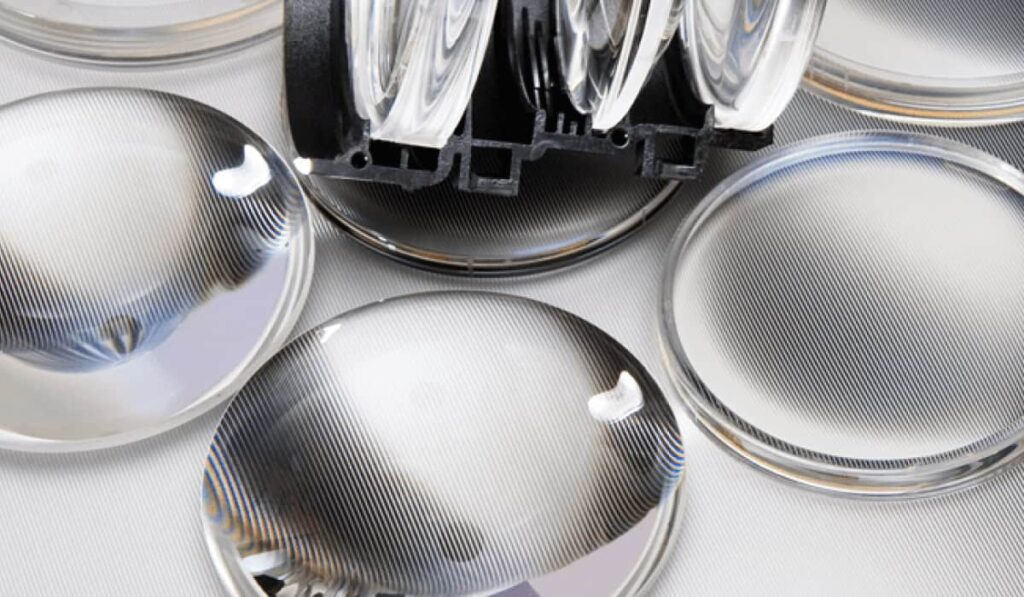
Military lens coatings are used in riflescopes, observation systems, rangefinding optics, sights, and other visual or sensor-assisted equipment to improve transmission and control unwanted reflections. Durable surface treatments can also protect exposed optics against abrasion and contamination, while integrated fire-control systems may use narrow spectral filters, beamsplitter coatings, and laser coatings within combined sighting, ranging, and sensing assemblies.
Airborne electro-optical systems use coatings on sensor windows, targeting optics, laser apertures, and imaging assemblies, where they must preserve the required spectral performance while operating under demanding mechanical and environmental conditions. Depending on the platform, these coatings may need to tolerate vibration, rapid temperature changes, moisture exposure, and high-speed airflow without significant degradation in optical behavior.
Naval optical systems can require high-durability optical coatings capable of maintaining performance in humid and saline environments, particularly where windows or mirrors are exposed to salt contamination and repeated cleaning. Protected gold coatings and other infrared mirror coatings may be used where high infrared reflectivity is required, while exposed optical windows can require additional protection against moisture, surface contamination, and mechanical wear.
Ground-based surveillance, targeting, and fire-control sensors use optical coatings to optimize visible and infrared transmission, spectral filtering, and detector performance across a range of operating conditions. External optical windows may also require hard, moisture-resistant, and abrasion-resistant coatings where equipment is exposed to dust, debris, handling, and other environmental stresses.
High-altitude and spaceborne optical systems place demanding requirements on coating stability, spectral precision, and thermal behavior because optical components may experience wide temperature ranges, vacuum conditions, and prolonged radiation exposure. Multilayer optical coatings can therefore be engineered to retain their intended transmission or reflection characteristics across these operating conditions while maintaining the required spectral response.
Optical coating materials are selected according to refractive index, absorption, operating wavelength, deposition process, durability, and compatibility with the substrate, with combinations of materials often used to achieve a specific spectral or environmental response.
Material selection also influences coating adhesion, environmental resistance, thermal stability, and the manufacturing tolerances that can be achieved across the finished optical component.
Optical coating companies use a range of deposition methods to produce thin films with the density, uniformity, thickness control, adhesion, and optical characteristics required by the finished component.
The chosen optical coating technology depends on the coating materials, component geometry, required spectral tolerances, production volume, and the environmental and durability performance expected from the finished optic.
Development in optical coating technology continues to focus on improving optical efficiency, durability, spectral coverage, and performance under increasingly demanding operating conditions, particularly as defense systems combine more sensing and laser functions within compact optical assemblies.
Together, these developments are supporting increasingly compact, multispectral, and high-performance defense optical systems while placing tighter requirements on coating uniformity, repeatability, durability, and environmental stability across the complete optical assembly.


 Searching Companies & Products