
Showcase your capabilities
If you design, build or supply Optical Prisms, create a profile to showcase your capabilities and connect with visitors who have an active requirement for your solutions.




Optical prisms are precision optical components that control the direction, orientation, or spectral composition of light using refraction, internal reflection, or coated surfaces. In defense systems, they support imaging, observation, electro-optical sensing, infrared optics, laser assemblies, rangefinders, navigation instruments, and compact beam-routing architectures.
This page showcases optical prism suppliers offering right-angle, roof, Porro, penta, Dove, wedge, beamsplitter, dispersive, and corner cube prisms.
Read the Technology Overview
Precision Optics & Photonics Solutions for Defense Imaging, Sensing & Targeting Systems

If you design, build or supply Optical Prisms, create a profile to showcase your capabilities and connect with visitors who have an active requirement for your solutions.

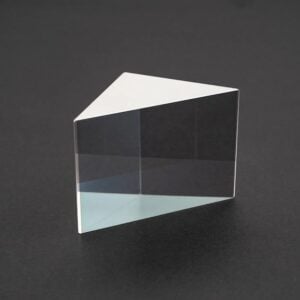
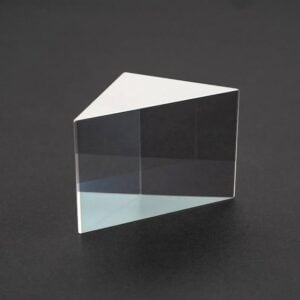
An optical prism is a transparent optical component with multiple flat surfaces arranged at defined angles to control the direction, orientation, or spectral composition of light. Depending on its geometry and material, a prism can redirect a beam through refraction, total internal reflection, or coated reflective surfaces, while other configurations can rotate or invert an image, separate wavelengths, split an optical path, or return light toward its source.
Optical Prisms by Torrent Photonics
In defense optical systems, precision optical prisms are used in observation equipment, electro-optical sensors, infrared imaging systems, weapon sights, rangefinders, laser assemblies, and navigation instruments. The required prism geometry, optical glass or crystalline material, surface quality, angular tolerance, and coatings are selected according to factors such as the operating wavelength, beam path, image requirements, available space, and environmental conditions of the system.
Prisms can redirect light through accurately controlled angles, allowing designers to fold an optical path without relying entirely on separately mounted mirrors. Right angle optical prisms, penta optical prisms, rhomboid optical prisms, and similar configurations can therefore route light between lenses, detectors, eyepieces, and other components while helping to maintain a compact mechanical layout.
Prism assemblies are widely used to control image orientation within visual and imaging systems, with different geometries providing inversion, reversion, rotation, or image erection as required. Porro, roof, Amici, Schmidt-Pechan roof, Abbe-Koenig, and image rotation Dove prism configurations are particularly useful in binocular optics, periscopes, scopes, and other direct-view instruments where the image must reach the observer in the correct orientation.
A beamsplitter prism divides incident light between two or more optical paths, typically using a partially reflective coating applied at an internal interface. Designs include dichroic beamsplitter prisms and non-polarizing cube beamsplitters, while dichroic and trichroic prism assemblies can separate or combine different spectral bands for multi-channel imaging, sensing, and other wavelength-selective optical systems.
Dispersive prisms separate light because the refractive index of an optical material varies with wavelength, causing different wavelengths to leave the prism at different angles. Equilateral, Littrow dispersion, and Pellin-Broca prism designs can therefore be used where spectral separation or wavelength selection is required, with the resulting angular separation determined by both the material dispersion and prism geometry.
A laser prism can deflect, fold, split, or return a laser beam within an optical assembly, providing controlled beam routing in rangefinding, designation, alignment, calibration, and sensing equipment. Corner cube configurations can also serve as laser retroreflectors because their three mutually perpendicular reflective faces return incoming light approximately toward its source over a range of incident angles.
Prisms can incorporate several optical functions within a relatively small volume, making them useful where beam paths must be routed through tightly constrained housings. Micro optical prisms and compact prism assemblies can redirect light within limited spaces, while multifunction components may combine reflection, beamsplitting, image orientation, or spectral separation within the same assembly.
Optical prism geometry determines how light travels through the component and therefore influences which designs are best suited to particular imaging, laser, observation, or sensing applications.
| Prism Type | Geometry | Primary Optical Function | Typical Defense Applications |
| Right-angle prism | Triangular, 45°-45°-90° | Provides 90° beam deviation or 180° reflection, depending on how the prism is used. | Imaging systems, laser optics, and compact beam-folding assemblies. |
| Equilateral prism | Three 60° angles | Separates wavelengths through spectral dispersion. | Spectrometers and wavelength-sensitive sensor systems. |
| Dove prism | Truncated right-angle form | Rotates an image according to the angular orientation of the prism. | Optical tracking and image-orientation systems. |
| Porro prism | Right-angle reflecting prism | Combines image erection with optical path folding. | Binocular and observation optics. |
| Roof prism | Two intersecting reflective roof surfaces | Supports image erection while folding the beam path. | Compact sighting and observation systems. |
| Penta prism | Five-sided prism | Provides a fixed 90° beam deviation. | Alignment, sighting, and metrology systems. |
| Half-penta prism | Reduced penta geometry | Provides beam deviation within a more compact geometry. | Restricted-space optical assemblies. |
| Schmidt prism | Multi-reflection prism | Combines beam folding with image orientation. | Compact imaging and observation optics. |
| Pechan prism | Compact multi-reflection prism | Controls image orientation within compact prism assemblies. | Viewing and imaging systems with restricted optical path length. |
| Schmidt-Pechan prism | Paired prism assembly | Erects an image within a relatively short optical path. | Binoculars, scopes, and observation systems. |
| Amici prism | Roofed prism configuration | Provides image erection and orientation. | Direct-view and sighting optics. |
| Rhomboid prism | Parallelogram geometry | Produces parallel displacement of a beam without substantially changing its direction. | Beam routing and optical alignment. |
| Wedge prism | Small angular difference between faces | Provides fine angular deviation of an optical beam. | Alignment and beam-steering systems. |
| Corner cube prism | Three mutually perpendicular reflecting faces | Returns incoming light approximately toward its source through retroreflection. | Laser ranging, tracking, and alignment systems. |
The material used for an optical prism affects its transmission range, dispersion, refractive index, environmental durability, thermal behavior, and compatibility with optical coatings, so material selection must be considered alongside prism geometry and the intended spectral band.
Other prism materials include quartz, silicon, zinc sulfide, and a range of additional optical glasses and crystals. The most appropriate material therefore depends on the required wavelength band, transmission characteristics, environmental conditions, and compatibility with the selected prism geometry and coatings.
Optical prisms are used throughout visual and imaging assemblies because they can fold relatively long optical paths into compact housings while also maintaining or correcting the required image orientation. Porro and roof optical prism systems are common in binocular-style optics, while periscope prisms, scope prisms, rifle scope prisms, and related configurations can redirect and erect images within observation, sighting, and fire-control equipment.
Electro-optical systems use prisms to route light between objective optics, filters, detectors, and multiple sensor channels, often within tightly packaged assemblies. Glass and fused silica components are commonly associated with visible and near-infrared systems, while an Infrared (IR) prism manufactured from materials such as germanium, ZnSe, silicon, or other infrared-transmitting media can support Short-Wave Infrared (SWIR), Mid-Wave Infrared (MWIR), or longer-wavelength optical architectures where the chosen material provides suitable transmission.
Laser optics prisms provide controlled beam folding, deviation, splitting, and alignment within rangefinders, target designators, illuminators, and other electro-optical equipment. Beamsplitter, dichroic, and corner cube retroreflector prism designs can distribute laser energy between different optical channels, separate selected wavelengths, or provide controlled return paths for ranging and alignment functions.
Prisms are also incorporated into optical tracking, navigation, measurement, and reference equipment where accurate beam routing or controlled angular deviation is required. Precision prism geometries can establish defined optical axes, while corner cube prisms and other prism reflectors provide retroreflection for laser tracking and measurement systems, and compact prism assemblies can support optical reference and sensing architectures where space and alignment are tightly controlled.
Several functions performed by prisms can also be achieved using other optical components, although the resulting optical behavior, packaging, alignment requirements, and manufacturing considerations can differ significantly.
The most suitable approach depends on factors including operating wavelength, required beam quality, available system volume, alignment sensitivity, environmental conditions, and whether functions such as image orientation or spectral separation are also required.
Advances in optical manufacturing, materials, coatings, and system integration continue to expand the design options available to custom optical prism manufacturers and suppliers.
Together, these developments allow custom optical prism designs to combine multiple optical functions while addressing demanding constraints on size, weight, alignment, wavelength coverage, and overall system performance.


 Searching Companies & Products