Showcase your capabilities
If you design, build or supply Backplanes, create a profile to showcase your capabilities and connect with visitors who have an active requirement for your solutions.




Backplanes are passive or semi-active circuit boards that provide a central backbone for interconnecting electronic modules within high-reliability defense systems. Designed to withstand extreme environmental and electromagnetic stress, they support high-speed data transfer and power distribution across embedded components, with emphasis on signal integrity, thermal performance, and ruggedization for military platforms.
This guide outlines suppliers of rugged backplanes, including VME, VPX, and custom configurations aligned with standards such as SOSA and OpenVPX.
Read the Technology Overview
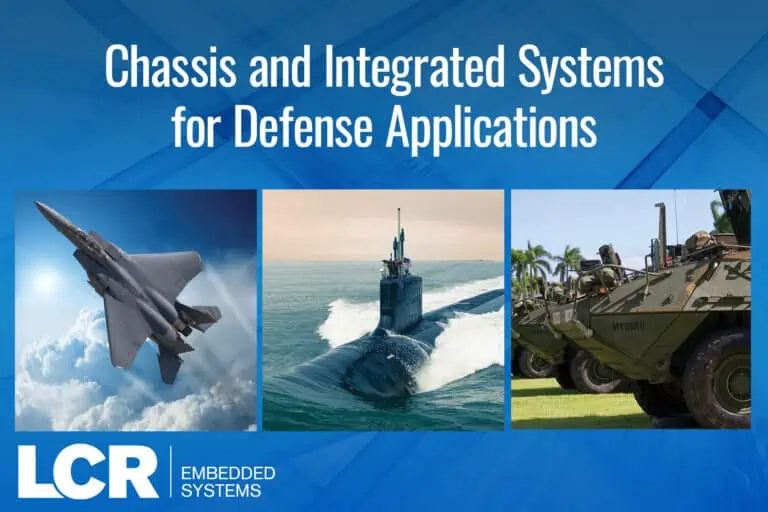
Rugged Electronic Enclosures, Backplanes & Full Systems Integration for Defense & Aerospace Applications

Mission-Critical Integrated Systems, Chassis & Backplanes For Military Systems Operating In All Domains

If you design, build or supply Backplanes, create a profile to showcase your capabilities and connect with visitors who have an active requirement for your solutions.

Backplanes form the structural and electrical core of a wide variety of military, defense, and aerospace electronics and computing systems, serving as the critical interconnection framework between processors, power modules, communications interfaces, and mission-specific sensors and payloads.
In military environments, ruggedized backplanes need to provide levels of reliability, modularity, and maintainability that make the difference between mission success and system failure.
Engineered to operate under extreme conditions, defense-grade backplanes must combine robust mechanical design with precise electrical performance. They provide the high-speed data pathways and stable power distribution necessary for advanced avionics, electronic warfare, radar systems, C4ISR systems, and weapons platforms. Backplanes act as the backbone of mission electronics in a wide variety of military applications, including unmanned vehicles, ground combat vehicles, aerospace platforms, naval systems, and satellite communications.
Defense systems employ a variety of standardized and custom backplane form factors to accommodate different signal speeds, power requirements, and space constraints. The choice of architecture depends on bandwidth needs, upgrade flexibility, and system interoperability requirements.
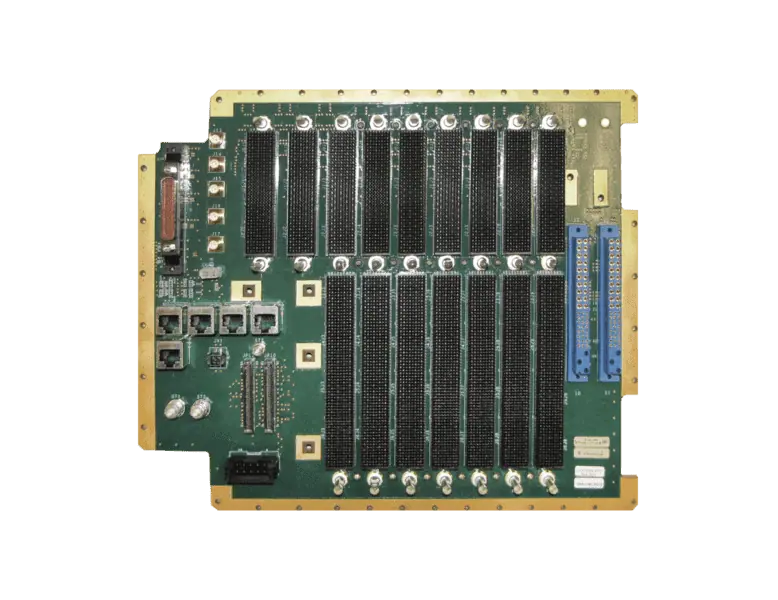
VPX backplanes offer high-speed serial fabrics such as PCI Express, RapidIO, and 10/40 Gigabit Ethernet. They are one of the main standards for modern high-performance embedded computing in military applications, supporting modular payloads in radar systems, electronic warfare systems, and C4ISR platforms. SOSA-aligned VPX backplanes conform to the Sensor Open Systems Architecture Technical Standard, enabling cross-platform hardware interchangeability and reducing lifecycle costs.
A long-established parallel bus architecture still in use for legacy military systems and incremental upgrades. VME64x adds improved connectors and higher pin counts for more functionality. VME backplanes are common in long-service naval and aerospace systems.
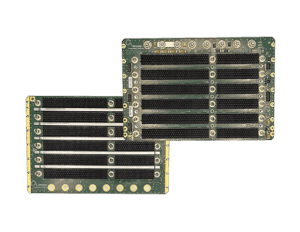
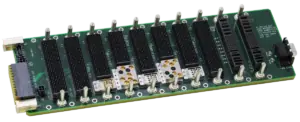
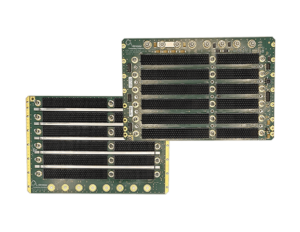
Mil-Spec Backplane, Gen-4/5 OpenVPX Series, from Atrenne.
A ruggedized industrial standard based on the PCI bus, CPCI backplanes are favored for their reliability and hot-swap capability. Used in command and control systems, naval platforms, and ground vehicles, CPCI offers a good balance between performance and legacy compatibility.
Originally developed for telecommunications, ATCA backplanes are increasingly used in defense data centers and SATCOM ground stations. Their large board area and high-bandwidth switching fabrics make them ideal for processing-intensive applications.
PXI and PXIe backplanes are used in military test and measurement systems to provide standardized mechanical, power, timing, and data interconnects between modular instrumentation cards. PXI backplanes are based on PCI signaling, while PXIe backplanes incorporate PCI Express fabrics to support higher data bandwidth.
VXI backplanes implement a VME-based architecture defined for modular instrumentation systems. They provide slot-to-slot connectivity, timing distribution, and trigger lines for coordinated operation of instrument modules in specialized and legacy military test equipment.
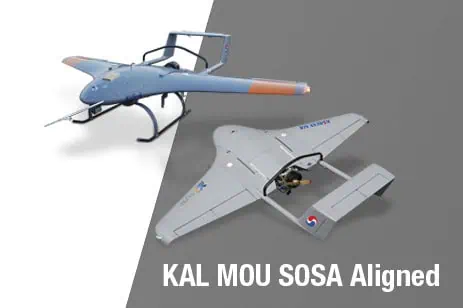
SOSA (Sensor Open Systems Architecture) is a framework that specifies standardized slot profiles and connectivity to maximize interoperability among sensor and processing modules across different platforms. A SOSA-aligned backplane can be deployed in airborne, maritime, and ground systems with minimal modification, supporting unmanned platforms, surveillance systems, and missile guidance processors.
Passive backplanes provide only the physical connection between cards, with no active components. Ideal for high-reliability systems where minimal failure points are desired, they are common in military robotics and ruggedized surveillance platforms.
Active backplanes include features such as switching, signal conditioning, or management circuitry, enabling higher data throughput and integrated diagnostics. These are common in defense electronics requiring real-time data aggregation from multiple sources.
Rugged backplanes are used to interconnect flight control computers, mission processors, navigation systems, and communications modules within avionics computing architectures. VPX and SOSA-aligned backplanes provide standardized high-speed serial fabrics and power distribution while supporting low-latency data movement between modules. These backplanes are qualified to maintain electrical continuity and signal integrity under airborne vibration profiles, wide operating temperature ranges, and altitude-related pressure variation.
Electronic warfare systems use ruggedized backplanes to support high-speed serial interconnects between RF front ends, processing modules, and control cards. VPX backplanes provide deterministic data paths required for time-aligned movement of digitized RF data into processing elements. The backplane functions as the interconnect infrastructure that supports real-time detection, analysis, and countermeasure execution performed on installed payload modules.
Radar and C4ISR platforms require backplane architectures capable of supporting multiple high-bandwidth data channels and tightly synchronized processing pipelines. Military-grade backplanes provide slot-to-slot connectivity, clock distribution, and expansion capability for sensor interface cards, processing cards, and memory resources. Modular backplane layouts allow system scaling by increasing channel count or processing density without architectural redesign.
Naval surface and submarine systems continue to deploy ruggedized VME, CompactPCI, and ATCA backplanes for shipboard and submerged electronics. These backplanes are designed using materials, finishes, and connector systems suitable for high humidity, salt exposure, pressure variation, and sustained mechanical shock. Long service life and interface stability are key considerations in naval backplane selection due to extended platform lifecycles.
Ground vehicle and robotic systems use rugged and industrial backplanes to interconnect mission computers, vehicle control electronics, and sensor processing modules. Passive and hybrid backplane designs are commonly selected to reduce active failure points and improve tolerance to shock and vibration. Backplane-based architectures support modular electronics layouts that align with vehicle upgrade and sustainment requirements.
Unmanned aerial, ground, and surface platforms rely on compact backplane architectures to support onboard processing, communications, and autonomy payloads within constrained size, weight, and power budgets. VPX backplanes, including SOSA-aligned variants, are used to provide standardized electrical and data interfaces while accommodating platform-specific mechanical and thermal constraints. Backplane selection supports scalability and interoperability across evolving unmanned system designs.
Unlike their commercial counterparts, it is typically essential for military backplanes to meet stringent MIL-spec and MIL-STD requirements, ensuring reliable performance in defense and battlefield environments that may impart high levels of stressors such as moisture, sand and dust, chemical exposure, vibration, thermal extremes, electromagnetic interference, and mechanical shock.
Key military standards for electronic and computing backplanes include:
MIL-STD-810: Governs environmental engineering considerations, including resistance to shock, vibration, humidity, sand and dust ingress, high and low temperature extremes, and salt fog. A backplane built to this standard can withstand long-term deployment in military vehicles, ships, and aircraft.
MIL-STD-461: Defines limits and test procedures for controlling Electromagnetic Interference (EMI) and ensuring Electromagnetic Compatibility (EMC). Backplanes must integrate precise ground planes, power planes, and shielding features to comply.
MIL-STD-275: Addresses printed wiring design requirements, ensuring conductor spacing and insulation integrity for long-term reliability.
MIL-STD-1553: Specifies a time-division multiplexed serial data bus, often supported via mezzanine or backplane integration for mission-critical avionics.
MIL-STD-1773: Fiber optic implementation of 1553, used for secure and interference-immune data transfer.
MIL-STD-1397: Governs Navy Tactical Data System interfaces, relevant for naval and marine applications.
MIL-STD-202: Relates to environmental testing for electronic components, applicable to connectors and passive elements on the backplane.
Compliance with these standards is foundational to ensuring interoperability, safety, and mission survivability. Many defense procurement programs will only consider backplanes that are fully documented with compliance data and verified through military-grade qualification testing.
The physical robustness of a backplane is key to ensuring its mission readiness. Engineering a backplane for ruggedization may address a range of different factors, including:
Rugged enclosures, mounting brackets, and hardware mounts ensure the backplane remains securely integrated into chassis enclosures across aircraft, shipboard, and ground vehicle applications.
Defense integrators often require custom backplanes that go beyond the capabilities of COTS offerings in order to accommodate unique mission payloads, mixed-signal environments, or hybrid legacy-modern systems. Customization may involve:
In military and aerospace electronics and computing systems, the backplane acts as a core structural element as well as the nerve center of the platform. Compliance with military standards, robust ruggedization techniques, and the adoption of modern modular architectures such as SOSA-aligned VPX ensure that backplanes can meet the evolving demands of military and defense missions.


 Searching Companies & Products