Showcase your capabilities
If you design, build or supply XMC Carrier Cards, create a profile to showcase your capabilities and connect with visitors who have an active requirement for your solutions.




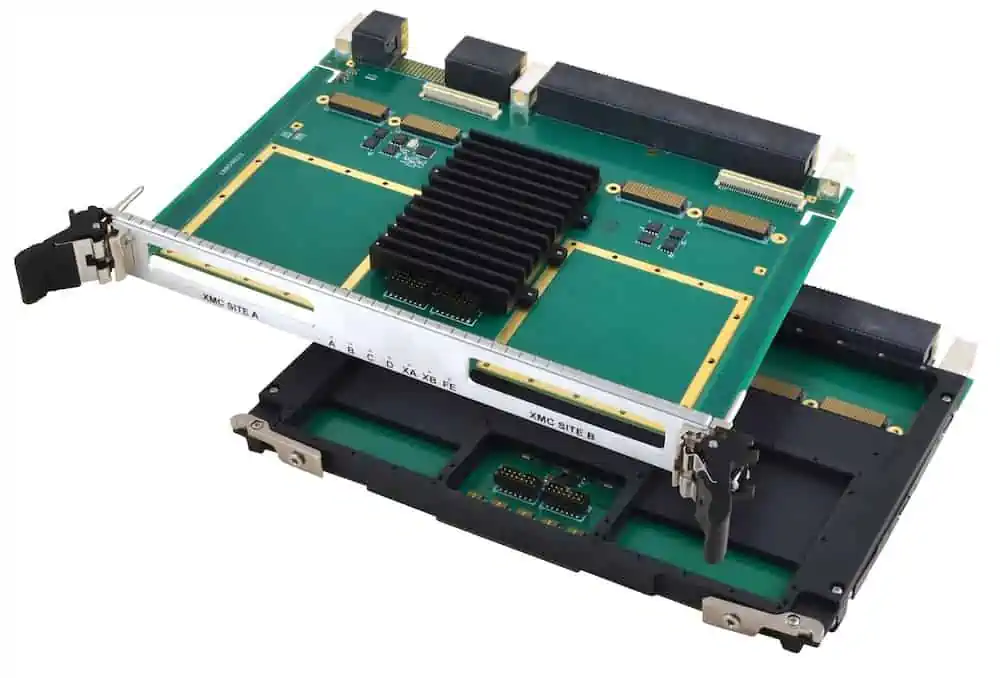
XMC Carrier Cards are essential bridging components that allow high-speed, specialized mezzanine modules (like FPGAs, GPUs, and high-resolution I/O) to be integrated into standardized rugged architectures such as VPX, VME, and CompactPCI. These carriers manage the critical high-speed fabric routing while ensuring mechanical and thermal integrity for defense applications requiring strict MOSA, SOSA, and MIL-STD compliance.
This guide features leading global suppliers of XMC carrier boards engineered for maximum bandwidth, ruggedization, and modularity in mission-critical ISR, EW, and mission computing systems.
Read the Technology Overview

An XMC carrier board allows the integration of a specialized XMC module (Switched Mezzanine Card) into a larger, standardized system architecture, such as VPX or VME. The XMC standard, codified in VITA 42, fundamentally leverages PCI Express (PCIe XMC carrier) as its primary high-speed interconnect fabric, distinguishing it from its PMC (PCI Mezzanine Card) predecessor which relied on parallel PCI.
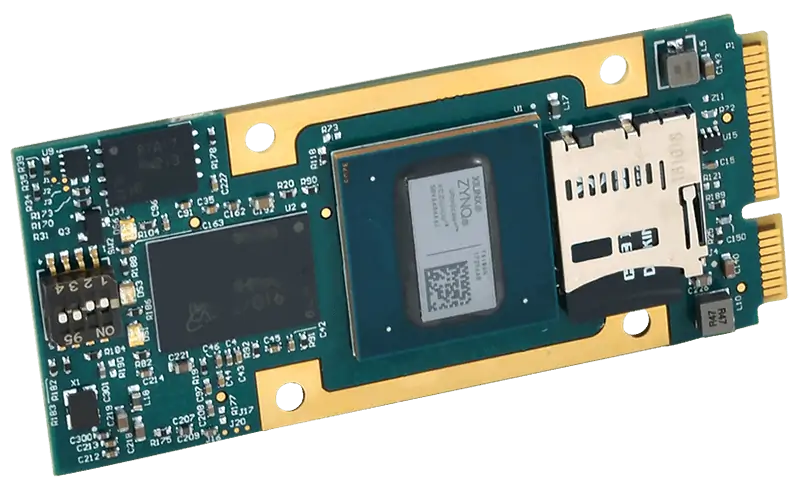
This capability is vital for modern, data-intensive defense and aerospace applications where speed and bandwidth are paramount. Essentially, the XMC carrier takes the high-density, often proprietary capabilities of an XMC module – like an A/D converter, a high-performance FPGA, or a GPU – and maps its electrical and mechanical interfaces to the robust backplane of a host system.
In defense and aerospace, system designers constantly balance performance requirements with size, weight, and power (SWaP) constraints, all while maintaining extreme ruggedization. XMC carrier cards are indispensable for this task. They provide a standardized, modular way to introduce specialized functions into mission-critical compute platforms. This allows integrators to select the best-in-class processing or I/O module globally and integrate it into a domestic, often custom-built, rugged chassis. Whether it’s for Electronic Warfare (EW) systems, Intelligence, Surveillance, and Reconnaissance (ISR) platforms, or advanced fire-control computers, the carrier acts as the reliable, ruggedized foundation for the mission-specific XMC payload.
The inherent modularity of the XMC standard, facilitated by the carrier card, offers several compelling advantages for engineers.
The specific form factor of the XMC carrier board is dictated by the host computer’s architecture.
The most prevalent and rapidly growing architecture in modern defense is VPX, as defined by VITA 46. Accordingly, VPX XMC carrier cards are now the most critical category.
While VME is an older architecture (VITA 1), its established install base means that VME XMC carrier cards remain essential for platform sustainment and modernization efforts. These carriers bridge the modern PCIe-based XMC module back to the parallel VMEbus or, more commonly, to a VME-based SBC via a local PCIe switch.
For industrial, ground-based, or non-military rugged applications, CompactPCI (CPCI XMC carrier) and its modern, faster serial counterpart are still used. The 3u CPCI XMC carrier is a common choice for smaller, rack-mounted systems. These carriers translate the XMC’s PCIe lanes to the relevant CPCI or CPCI Serial backplane connectors.
Some legacy systems require the continued support of PMC modules while also introducing new XMC capabilities. Combination carriers feature slots for both formats, offering a pragmatic pathway for technology insertion into existing platforms without a complete system overhaul.
Designed for high-performance computing clusters, multi-slot carriers can accommodate two, three, or even four XMC modules on a single host board (often a 6U VPX or larger custom form factor). This density is particularly valuable for applications requiring massive parallel processing, such as multi-channel radar processing or high-channel count Software-Defined Radio (SDR) systems.
The true performance of an XMC carrier card lies in its electrical design and how it routes high-speed signals.
The defining characteristic of XMC is its use of switched fabrics. Modern carriers must support the latest high-speed standards. The core interconnect is typically PCI Express, with current defense designs demanding compliance with PCIe Gen3 (8 GT/s) and increasingly PCIe Gen4 (16 GT/s) to avoid data bottlenecks. The carrier design meticulously handles signal integrity across this pathway, routing the lanes from the XMC connector to the host backplane or local switch. While Serial RapidIO (SRIO) and embedded Ethernet (10/40 Gigabit) are fabric options within VITA standards, PCIe dominates the landscape today, particularly for demanding data pipelines in sensing and processing.
The deployment environment dictates how the XMC module’s raw I/O signals (e.g., clock synchronization, analog data) are exposed.
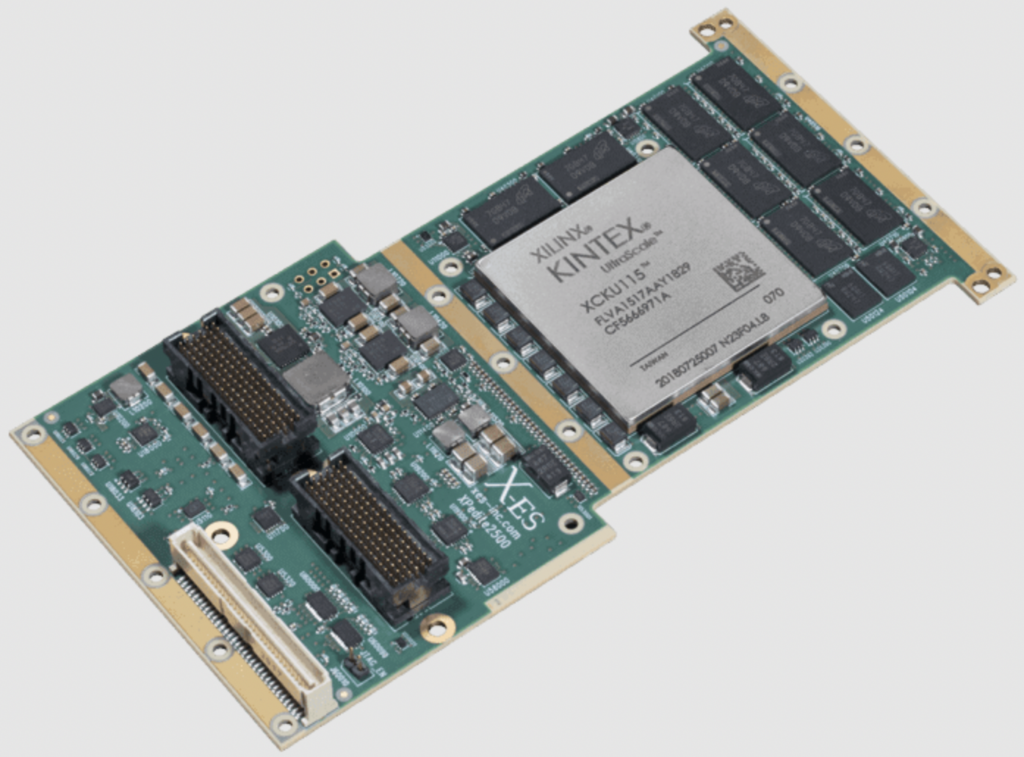
Advanced XMC carriers often incorporate an on-board FPGA. This serves multiple functions:
For defense applications, the mechanical design of the XMC carrier is as important as its electrical capabilities.
A robust carrier must withstand extreme mechanical stresses.
Modern FPGAs and specialized processors on XMC modules can dissipate significant heat. Effective thermal management is critical. The carrier design must incorporate materials and structural elements such as thermal pads or custom heat spreaders to efficiently move heat from the XMC’s hot spots to the conduction-cooled edges, preventing thermal throttling and ensuring sustained performance throughout the mission profile.
Adherence to mandated standards is a non-negotiable requirement for defense contractors.
Modern US defense procurement is driven by the principles of Modular Open Systems Approach (MOSA). This has led to the development of specific standards where the XMC carrier card plays a crucial role:
Engineering teams must specify XMC carriers that explicitly meet these profiles to ensure eligibility and ease of integration into next-generation defense platforms.
Several VITA standards govern the design and use of these boards:
All deployed XMC carrier-based systems must meet strict military standards:
The core strength of the XMC carrier is its ability to facilitate specialized processing functions.
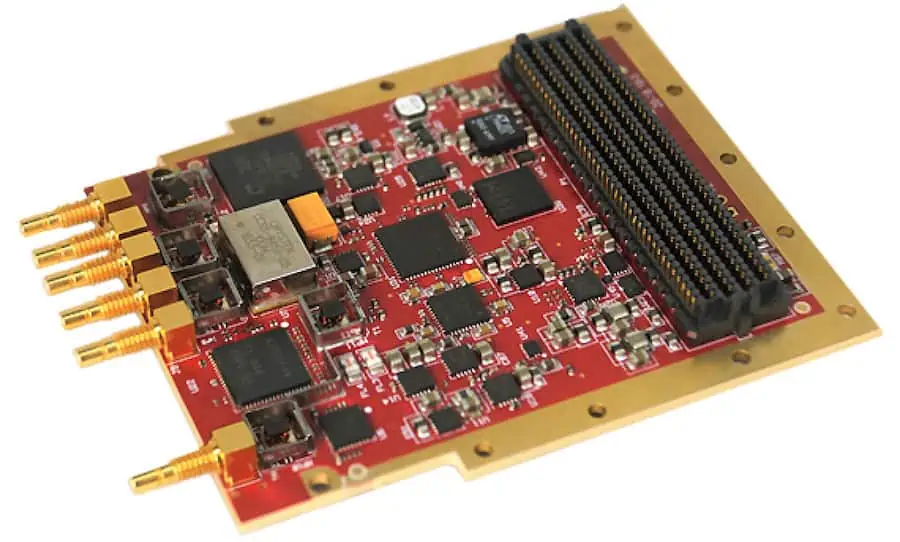
The majority of XMC use is centered on sensor processing. High-speed XMC modules with advanced Analog-to-Digital (A/D) and Digital-to-Analog (D/A) converters, combined with powerful FPGAs, are integrated via carriers into ISR (Intelligence, Surveillance, and Reconnaissance) payloads on drones and aircraft. The carrier ensures the rapid, high-bandwidth transfer of raw sensor data (e.g., radar, SIGINT) to the host system for analysis.
Electronic Warfare (EW) and communication systems heavily rely on SDR technology. An XMC carrier card allows for the integration of SDR modules that feature wideband tuning and exceptional dynamic range. The modularity supports rapid hardware updates to counter emerging threats, where a quick swap of the XMC module can introduce new frequency bands or processing capabilities.
As the defense sector integrates more Artificial Intelligence (AI) and Machine Learning (ML) for autonomous systems and real-time threat detection, XMC carriers are being used to host compact, high-performance GPU or specialized AI accelerator modules. This provides the necessary compute density and high-speed PCIe bandwidth essential for on-platform, low-latency inferencing.
XMC is utilized to integrate specialized network functions. Carriers can host XMC modules that function as managed Ethernet switches, Fibre Channel interfaces, or custom high-speed network endpoints, significantly expanding the I/O and connectivity capabilities of a mission computer system.
At the heart of any major defense platform is the mission computer. XMC carriers provide the essential expansion slots to tailor this computer with the exact I/O required for the mission, from MIL-STD-1553 and ARINC-429 avionics buses to high-resolution video capture boards, all integrated into a single, rugged backplane.
If you design, build or supply XMC Carrier Cards, create a profile to showcase your capabilities and connect with visitors who have an active requirement for your solutions.


 Searching Companies & Products