Showcase your capabilities
If you design, build or supply VME Chassis, create a profile to showcase your capabilities and connect with visitors who have an active requirement for your solutions.




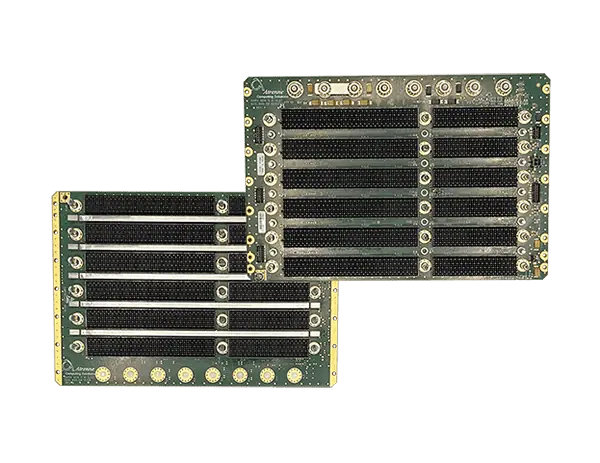
VME Chassis and VME64x Chassis, is a ruggedized enclosure utilized in defense applications for housing and interconnecting VMEbus-based electronic modules. These chassis provide a standardized framework for integrating various processing, communication, and control modules, ensuring compatibility and interchangeability across military systems.
Read the Technology Overview
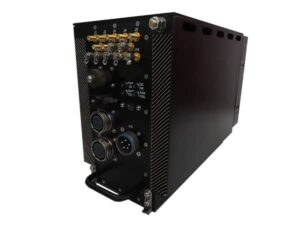
Rugged Electronic Enclosures, Backplanes & Full Systems Integration for Defense & Aerospace Applications

If you design, build or supply VME Chassis, create a profile to showcase your capabilities and connect with visitors who have an active requirement for your solutions.

Rugged VME chassis and VME64x chassis are commonly used for embedded computing applications in military and aerospace environments, particularly where multiple processors, shared memory and varied I/O are required.
Their adaptability and modular design make them ideal for a wide range of use cases, from ground vehicle command systems to naval radar platforms and airborne surveillance systems.
These enclosures protect sensitive electronics and enable seamless integration of single-board computers (SBCs), I/O modules, and power supplies. Typically designed to provide robust thermal management, electromagnetic shielding, and scalable configurations, rugged VME chassis ensure longevity and performance in the most demanding operational environments.
VME (Versa Module Europa) is a well-established computer bus standard developed to handle computing tasks requiring multiple processors, shared memory, and diverse I/O requirements. Originating in the 1980s, VMEbus has been a trusted solution for mission-critical defense and aerospace systems due to its reliability and flexibility.
The VME standard supports modularity by allowing 3U or 6U boards to be inserted into a chassis and connected through a shared backplane. These 3U VME chassis and 6U VME chassis configurations can vary in size, supporting anywhere from rugged single slot VME chassis designs to large 21-slot systems capable of accommodating extensive computing resources.
VME64x represents an evolution of the original VME standard, expanding its capabilities to meet the needs of modern defense systems. VME64x features a 64-bit bus that enhances data throughput and allows the use of more powerful processors and expanded memory capacities. This extension significantly boosts system performance, making VME64x ideal for high-speed data acquisition, radar processing, and complex sensor fusion applications.
One of the most notable advancements introduced with VME64x is hot-swap capability. This feature enables the replacement or upgrading of individual boards without powering down the entire system, ensuring continuous operation and rapid maintenance—a critical requirement for military systems that must maintain mission readiness at all times. This innovation not only reduces downtime but also minimizes logistical challenges in the field.
VME and VME64x chassis come in a variety of sizes and form factors, including rackmount, portable, and benchtop configurations. Heights range from compact 1U and 2U systems to larger 9U or 12U enclosures, accommodating the diverse space constraints and integration needs of defense and aerospace platforms. VME chassis dimensions can range depending on the specific application and system requirements.
The ruggedizing of VME and VME64x chassis is essential for ensuring reliable operation in harsh military environments. Defense applications expose electronics to extreme temperatures, heavy vibrations, electromagnetic interference (EMI), and electrostatic discharge (ESD). Without proper protection, embedded systems risk failure, compromising mission success and operational safety.
VME enclosures designed for unmanned military vehicles, aircraft, and naval vessels must endure constant vibrations and sudden shocks. To address this, manufacturers incorporate reinforced mounting systems, vibration-dampening materials, and floating shock isolation platforms. This ensures that the electronics inside remain operational even under intense mechanical stress, preserving data integrity and system functionality.
High-performance embedded systems generate significant heat, which can degrade component performance and lead to system failure if not managed properly. Rugged VME chassis utilize advanced cooling techniques, including conduction and convection cooling.
In VME conduction cooled systems, a specialized module fits into a card slot, transferring heat from computing components to the chassis, which acts as a heat sink. Convection cooled VME chassis leverage forced-air fans to dissipate heat, while hybrid designs may combine both methods to optimize thermal performance.
Defense electronics are often deployed in environments saturated with electromagnetic signals, such as radar systems and military communications arrays. To prevent interference, rugged VME and VME64x chassis incorporate EMI shielding through conductive gaskets, specialized coatings, and grounding strategies. This shielding protects sensitive electronics from external disruptions while ensuring the chassis itself does not emit signals that could interfere with nearby equipment.
In addition to mechanical and thermal protection, rugged enclosures may feature environmental sealing to safeguard against dust, moisture, and corrosive agents. Sealed enclosures with ingress protection (IP) ratings ensure that systems can operate in arid deserts, humid jungles, or saltwater environments without risk of contamination or corrosion.
The versatility and durability of rugged VME and VME64x chassis make them indispensable across a broad spectrum of demanding defense and aerospace applications.
VME64x chassis are commonly employed in radar processing and electronic warfare platforms, where high-speed data acquisition and signal processing are crucial. The 64-bit bus and increased memory capacity allow these systems to handle large volumes of data with low latency, providing critical situational awareness and threat detection.
Ground vehicles, naval ships, and aircraft rely on VME-based embedded systems to manage communications, navigation, and weapons control. Ruggedized VME chassis house the processors and I/O interfaces that enable real-time command and control, ensuring operational efficiency even in hostile environments.
VME64x systems are often deployed in sensor fusion applications, aggregating data from multiple sources such as infrared sensors, cameras, and radar arrays. This consolidated data provides enhanced battlefield intelligence, improving decision-making and response times during operations.
Rugged VME chassis play a critical role in avionics systems, where reliable operation under extreme altitude, vibration, and temperature variations is essential. VME-based solutions such as flight control computers and mission data recorders provide uninterrupted functionality throughout the mission lifecycle.
On board naval vessels, VME chassis support sonar, radar, and missile defense systems, providing robust embedded computing platforms that can withstand harsh marine environments. Saltwater-resistant coatings and sealed enclosures protect electronics from corrosion and environmental damage, ensuring long-term operational reliability.


 Searching Companies & Products


 Subscribe to the Weekly eBrief
The latest engineering and technical developments straight to your inbox - join thousands of engineers who receive it.
Subscribe to the Weekly eBrief
The latest engineering and technical developments straight to your inbox - join thousands of engineers who receive it.