Honeywell Aerospace HGuide i700
Trillium Gimbals
Wolf Advanced Technology
Leading Global Suppliers

Rugged VPX Chassis / OpenVPX Chassis

VPX chassis are rugged embedded computing enclosures designed to support high-performance processing, networking, storage, RF, and signal-processing modules across defense and aerospace platforms. Built around VPX and OpenVPX architectures, these systems support mission computers, radar, electronic warfare, SIGINT, C4ISR, autonomous systems, and other applications requiring high-speed data transfer and reliable operation in demanding environments.

This page showcases VPX chassis manufacturers offering 3U and 6U systems, rugged VPX enclosures, VPX development chassis, and high-speed backplane solutions.

Read the Technology Overview

VPX Solutions Manufacturers

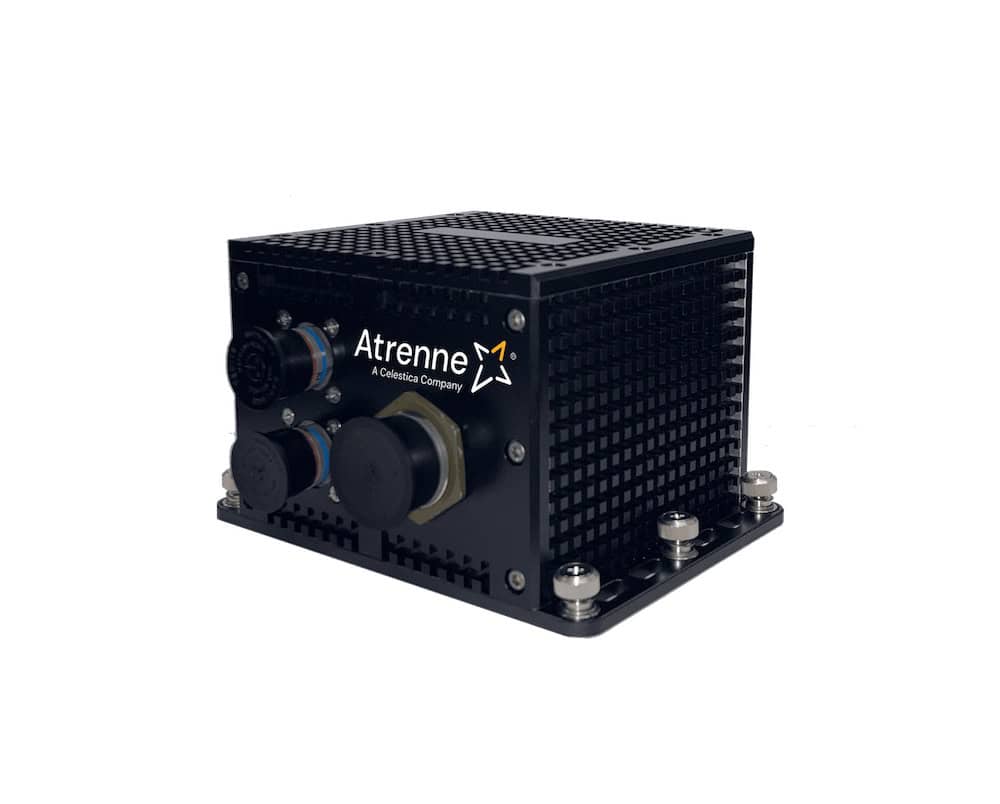
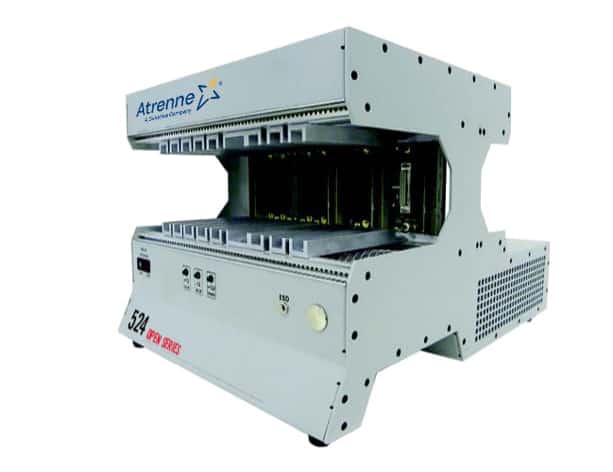
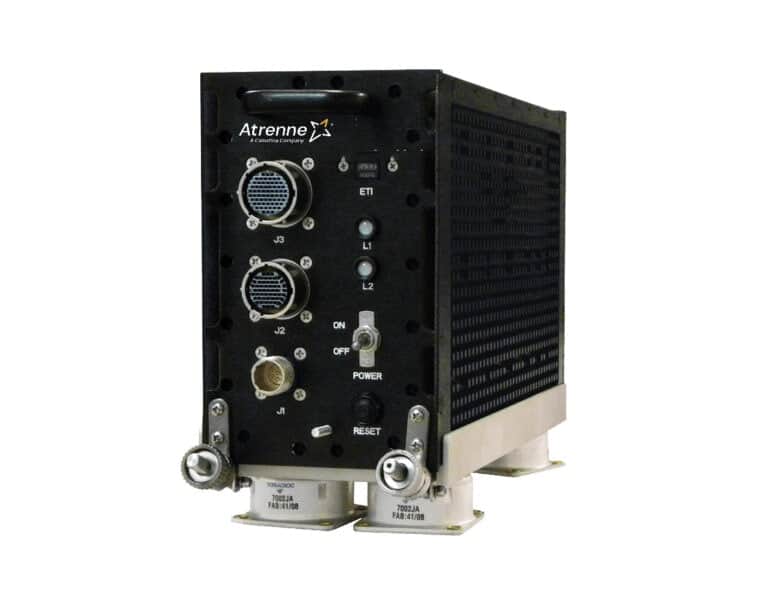
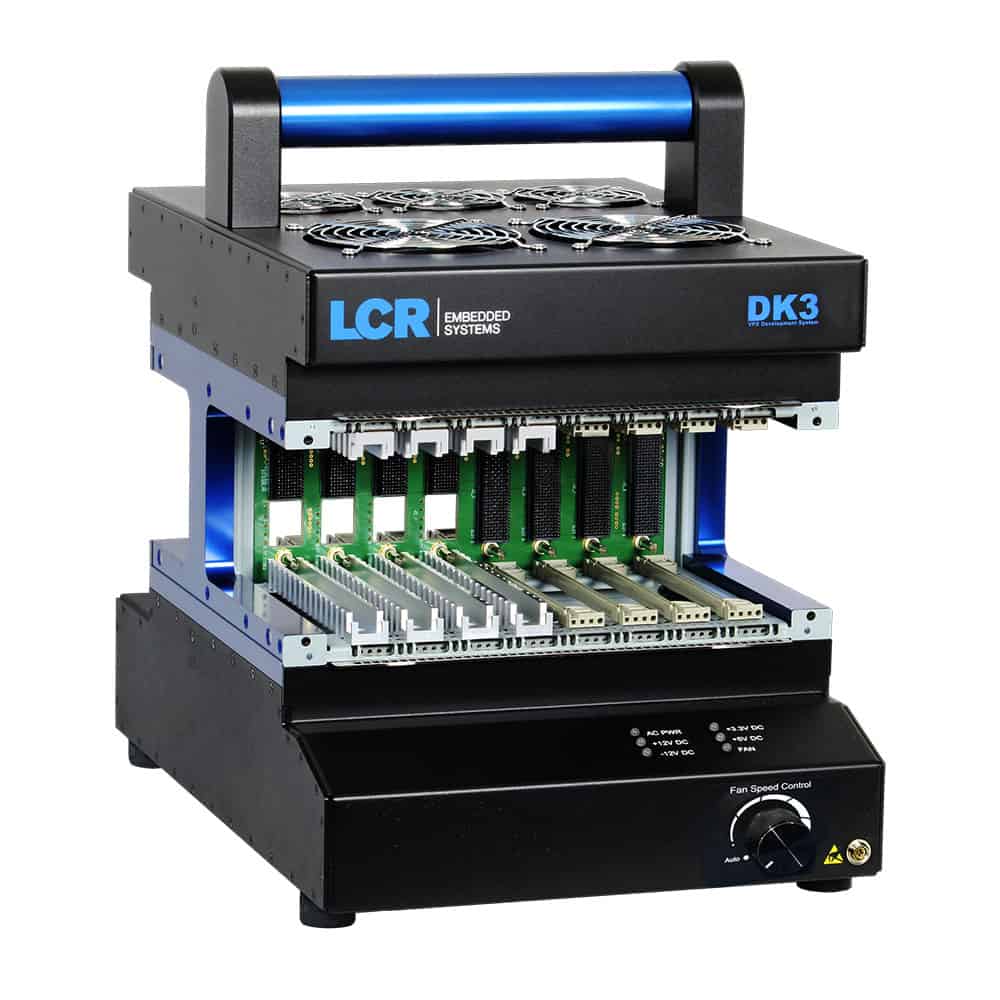
Atrenne, A Celestica Company

Rugged Electronic Enclosures, Backplanes & Full Systems Integration for Defense & Aerospace Applications

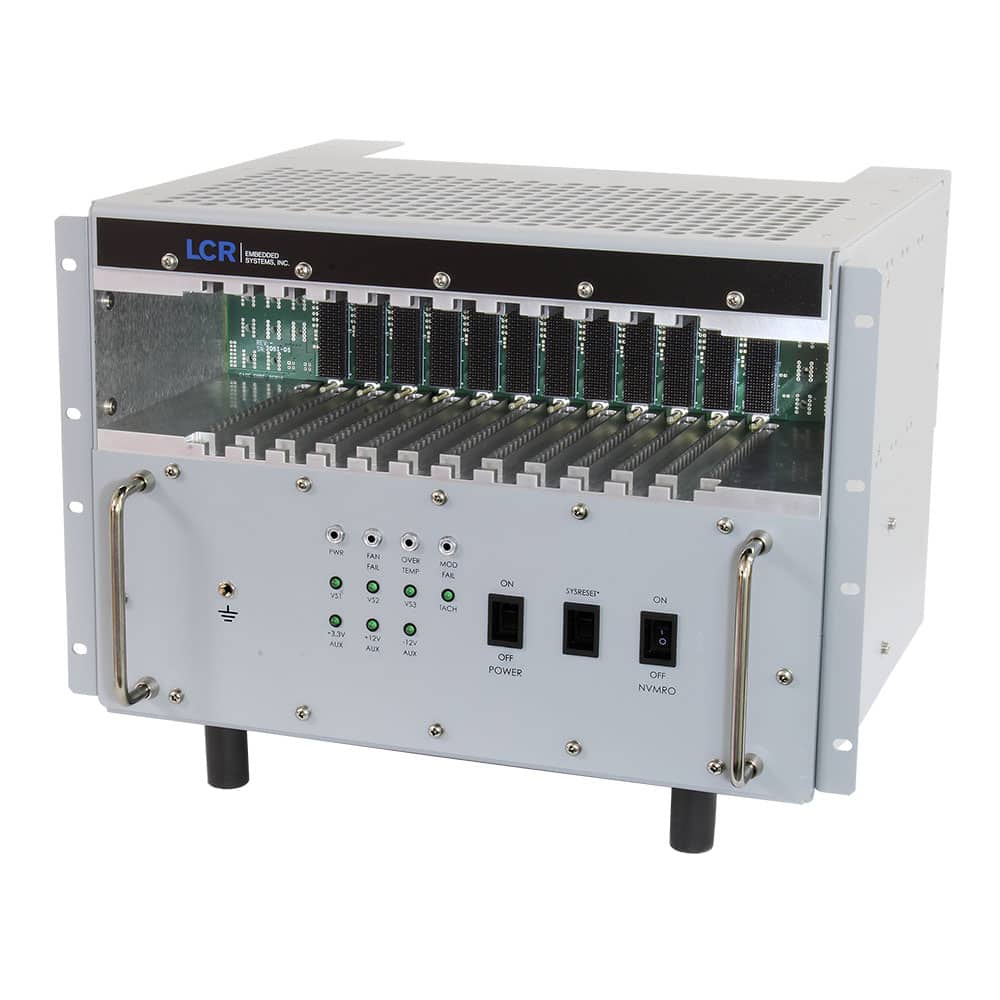
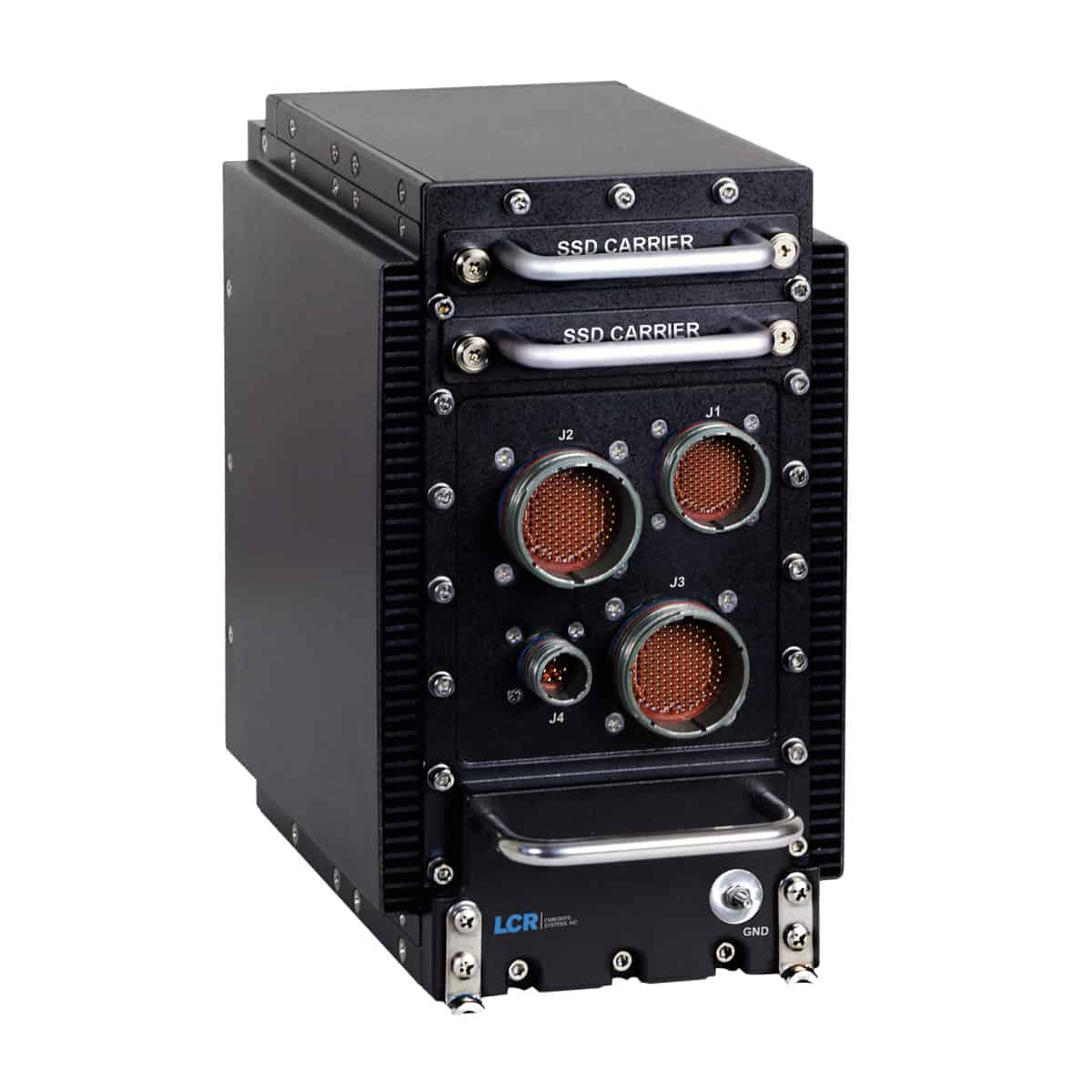
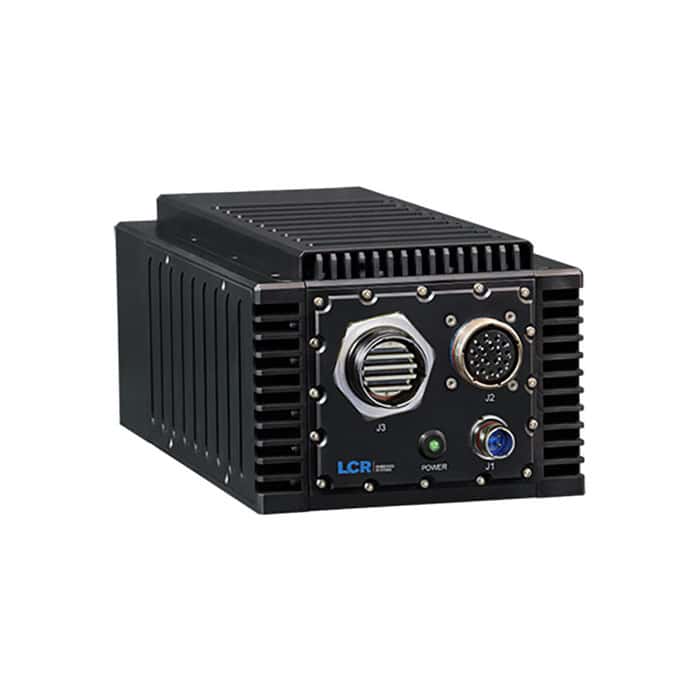
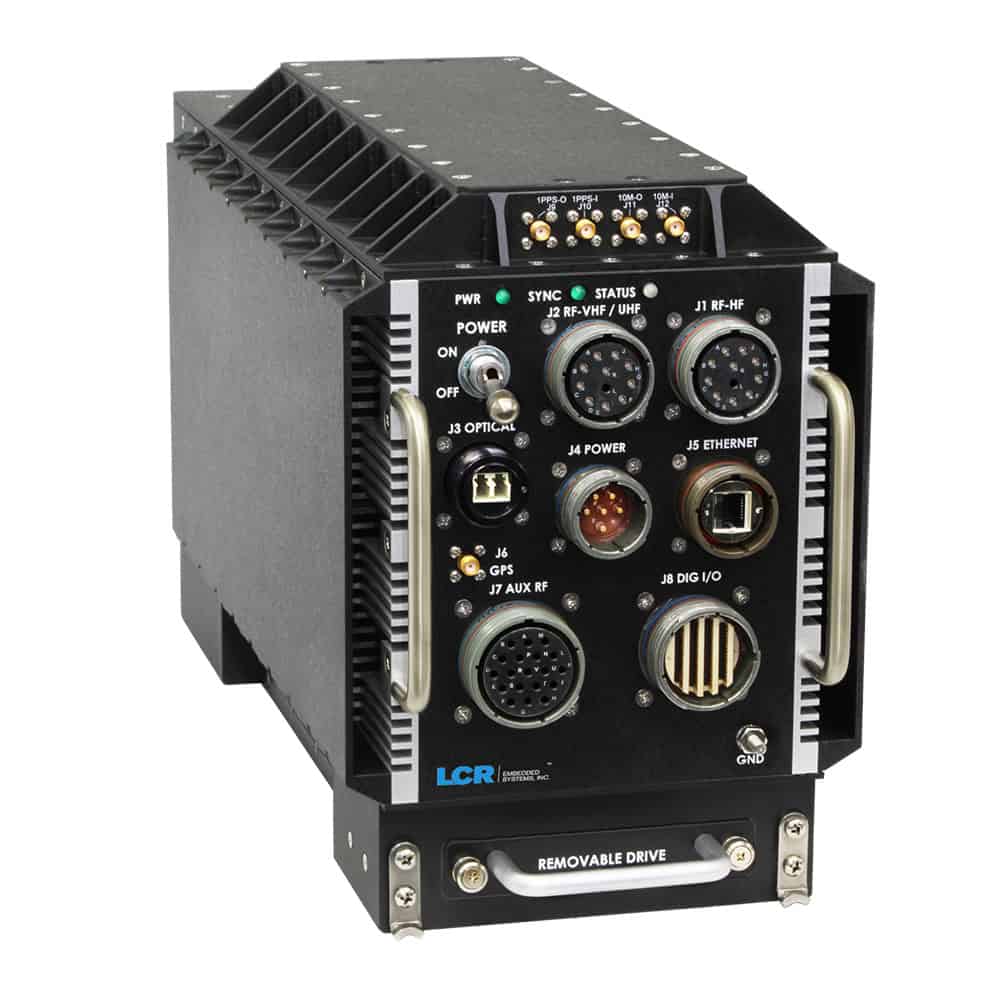
LCR Embedded Systems

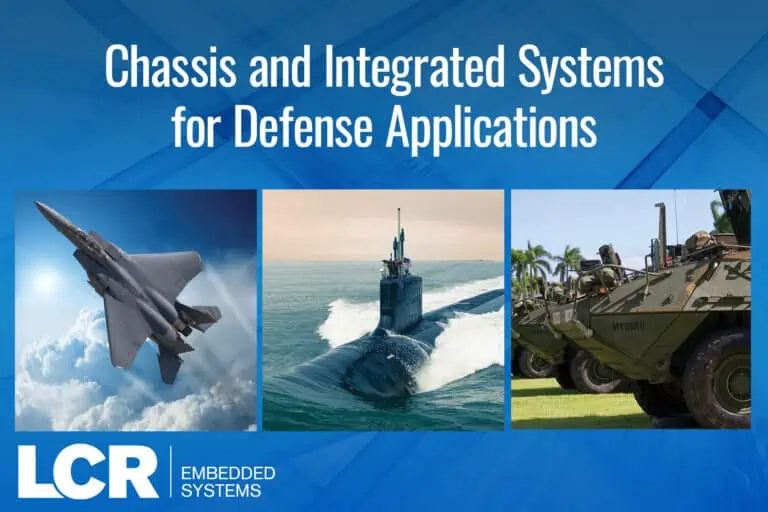
Mission-Critical Integrated Systems, Chassis & Backplanes For Military Systems Operating In All Domains

Showcase your capabilities

If you design, build or supply VPX Chassis, create a profile to showcase your capabilities and connect with visitors who have an active requirement for your solutions.


Create Supplier Profile

VPX Chassis & Enclosures

8 Cutting-edge Solutions
Add your solutions
726 Series
726 Series

Compact rugged VITA 90 - VNX+ computing platform for defense systems

Compact rugged VITA 90 - VNX+ computing platform for defense systems
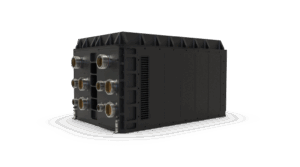
...s VITA 90-VNX+ chassis from Atrenne delivers a modular, conduction-cooled computing architecture... ...26 Series VNX+ chassis ensures operational resilience across a wide temperature range and meets...
716 Series
716 Series

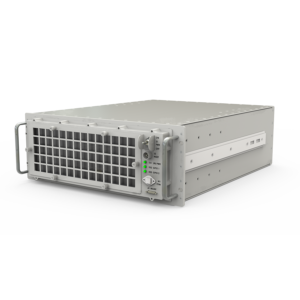
3U & 6U ATR chassis designed for maximum airborne cooling

3U & 6U ATR chassis designed for maximum airborne cooling
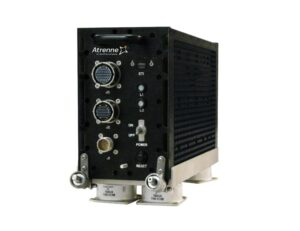
...duction-cooled chassis support a wide range of architectures, including VPX, VME, VME64x, VXS, and... Rugged enclosures for avionics and computing requirements for applications such as ISR, electronic...
582 Series
582 Series

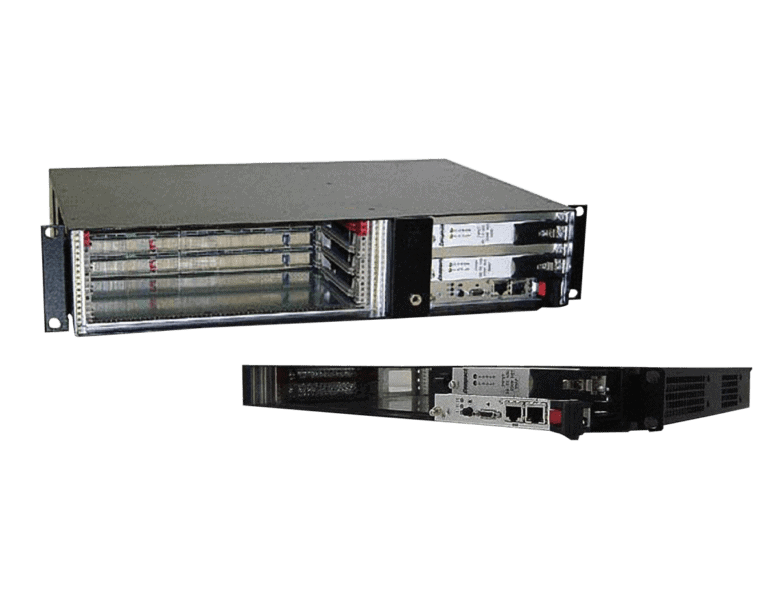
Ultra-thin rackmount enclosure in 1U or 2U form factors

Ultra-thin rackmount enclosure in 1U or 2U form factors
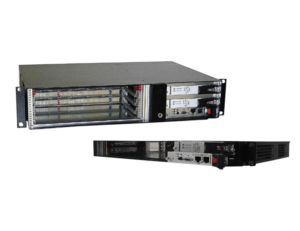
...e, with VME or VPX options also available. Cooling systems are hot-pluggable, and alarming is...
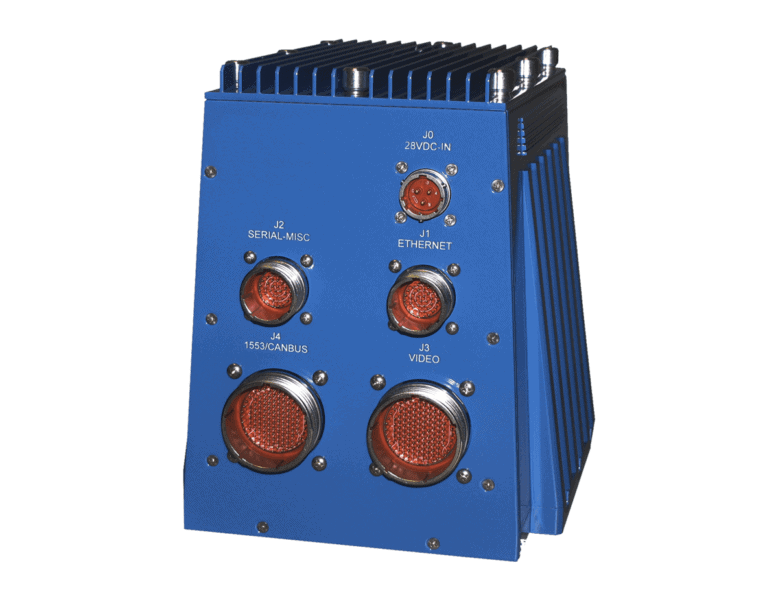
Chassis SFF-4
Chassis SFF-4

Lightweight and compact conduction-cooled chassis for airborne and ground vehicles

Lightweight and compact conduction-cooled chassis for airborne and ground vehicles
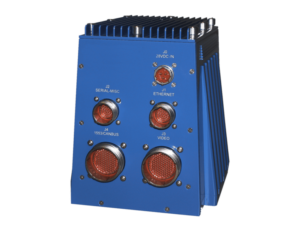
...ctor ATR-style chassis designed to provide maximum strength and cooling for military vehicle... ...duction-cooled chassis is engineered with extended temperature, shock and vibration tolerance, and...
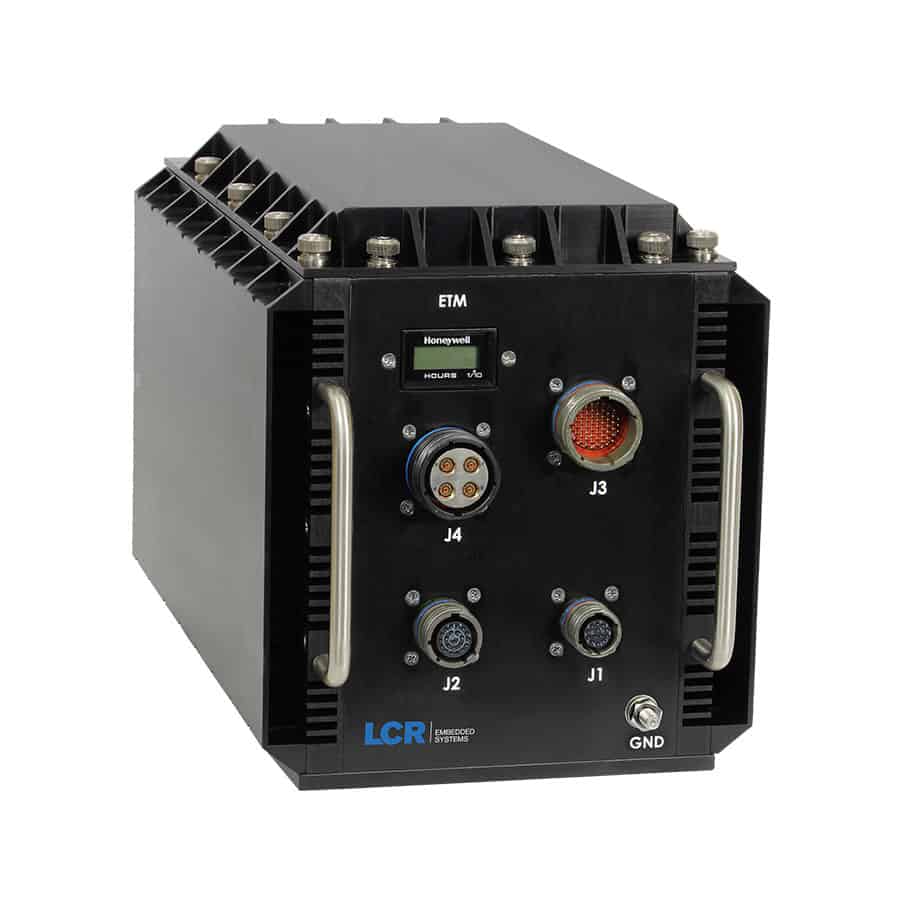
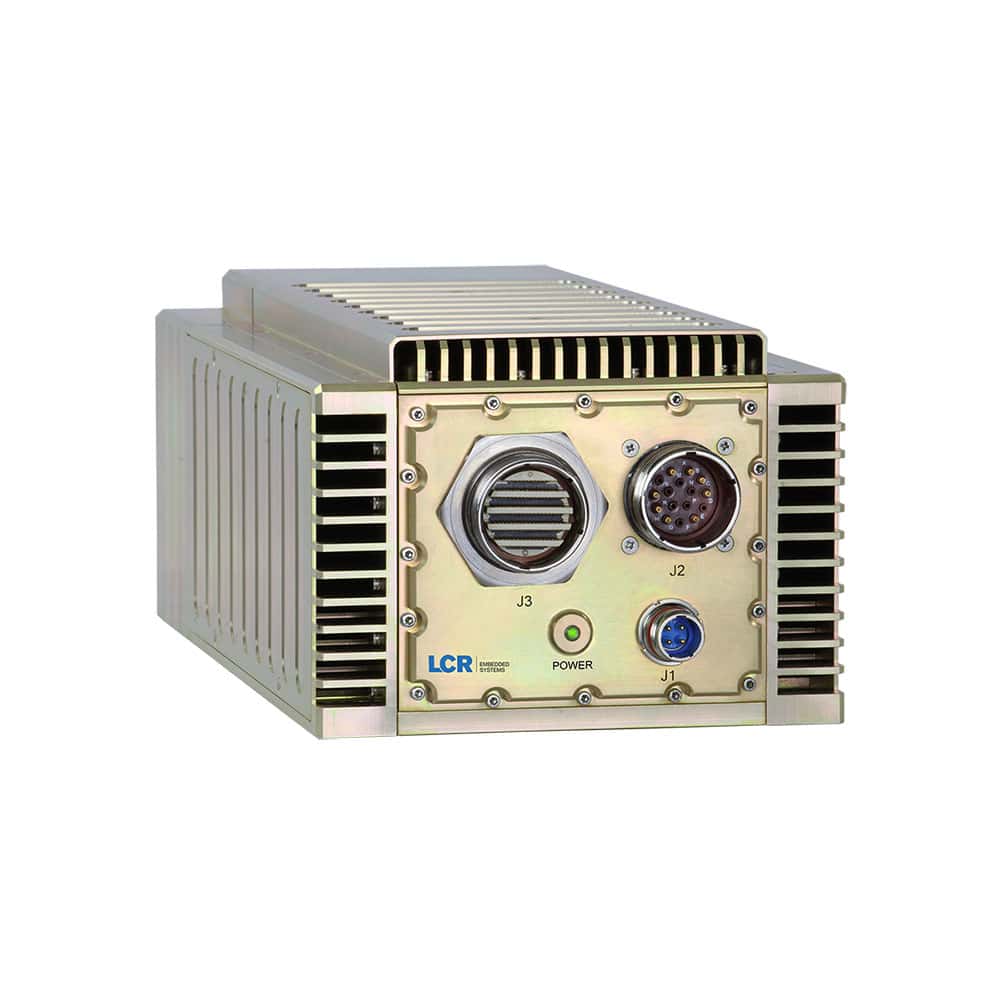
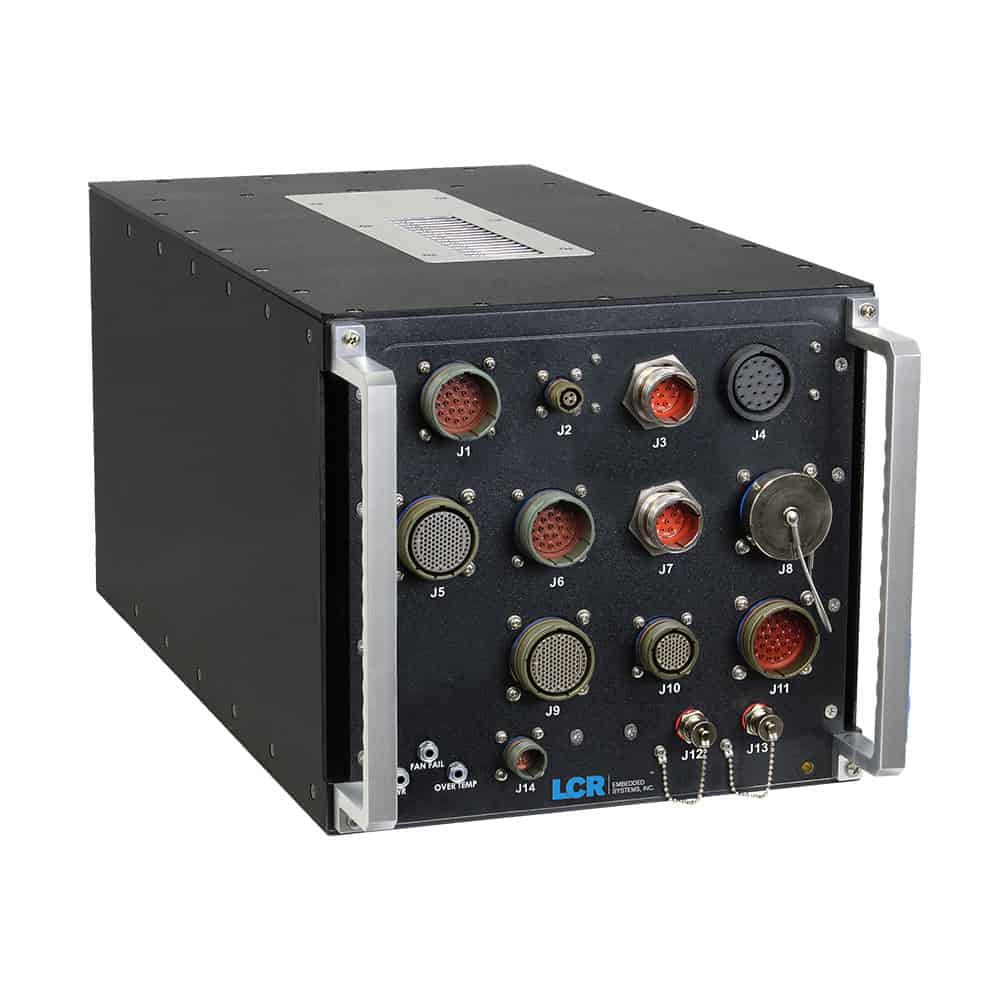
18 Slot Rugged Test and Deploy System

High-Density Test System Engineered for Airborne and Mobile Defense Platforms

High-Density Test System Engineered for Airborne and Mobile Defense Platforms
The 18 Slot Rugged Test and Deploy System is a high-capacity modular test platform built for... The 18 Slot Rugged Test and Deploy System from LCR Embedded Systems is a mission-ready platform...
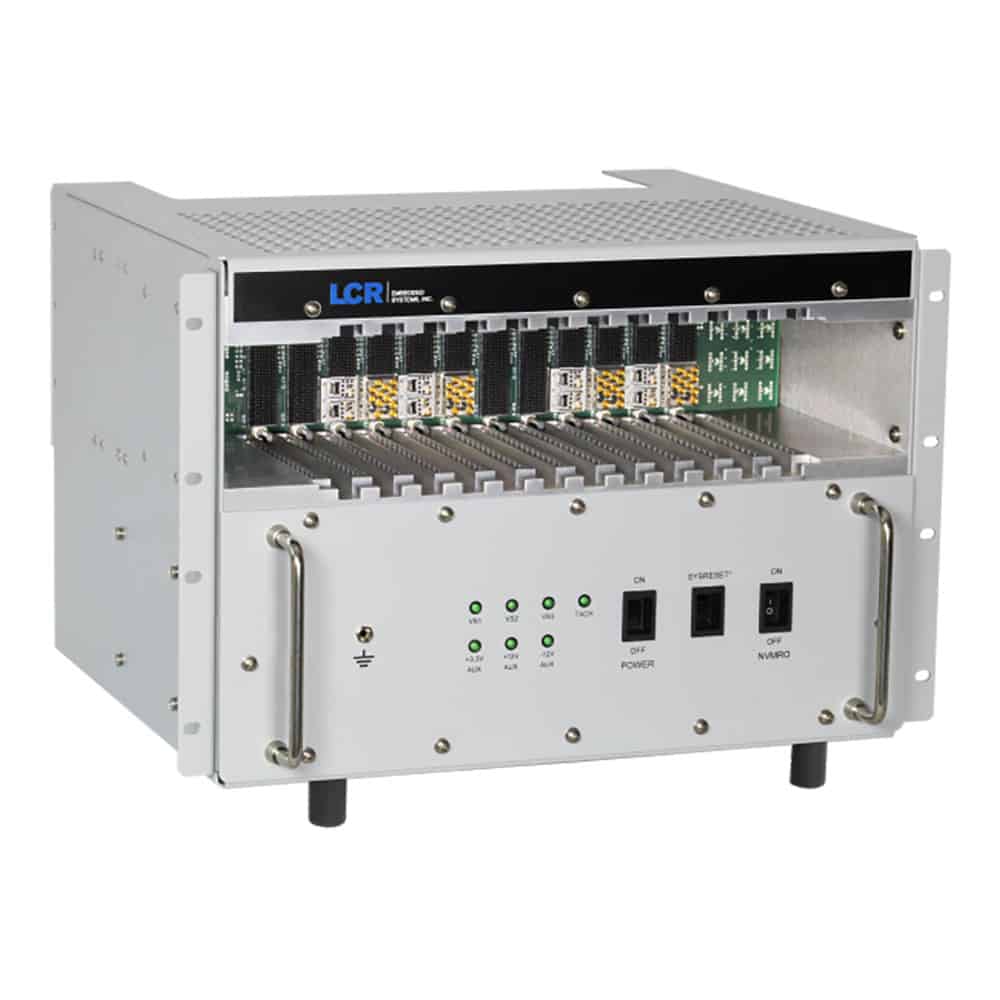
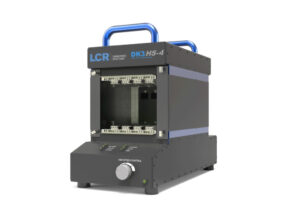
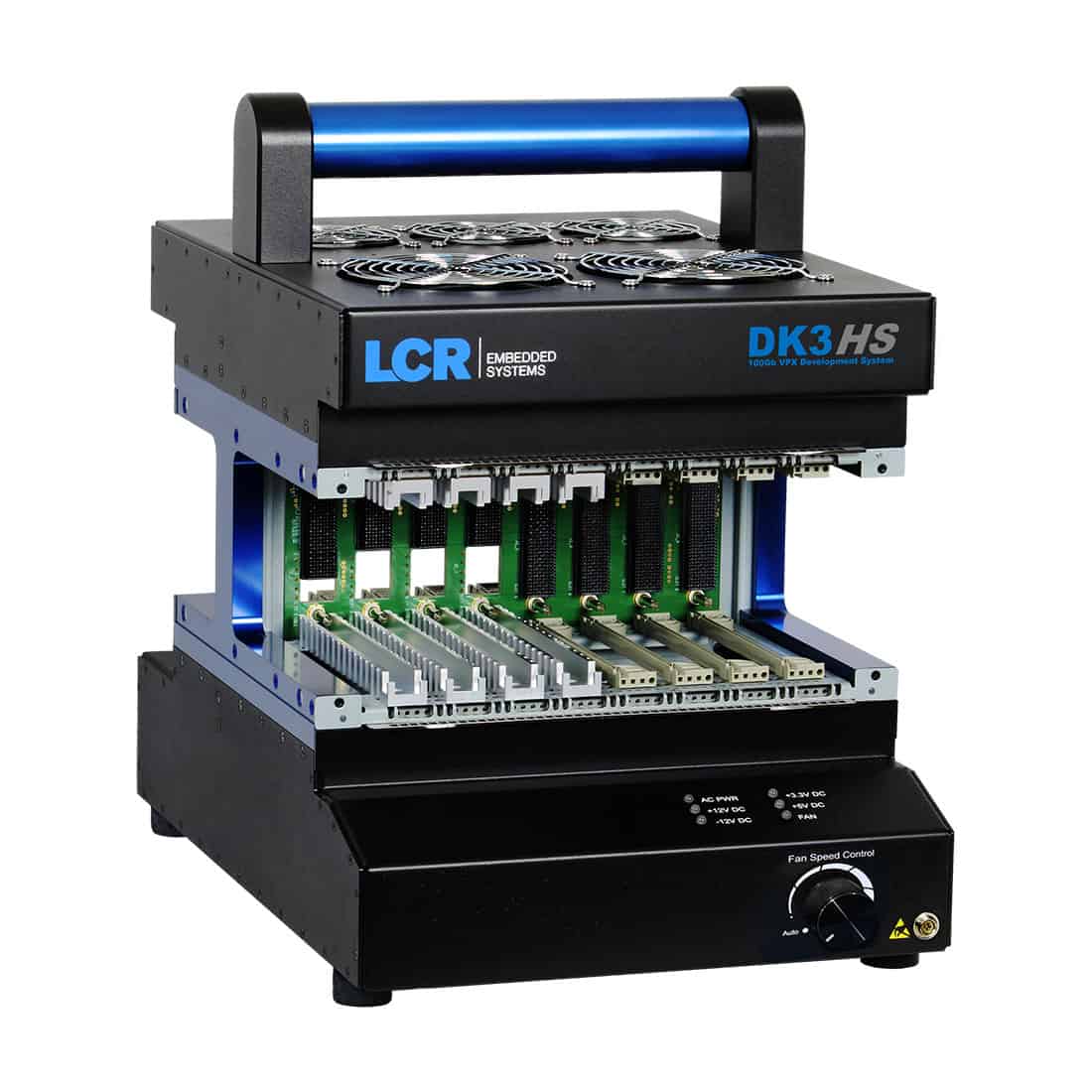
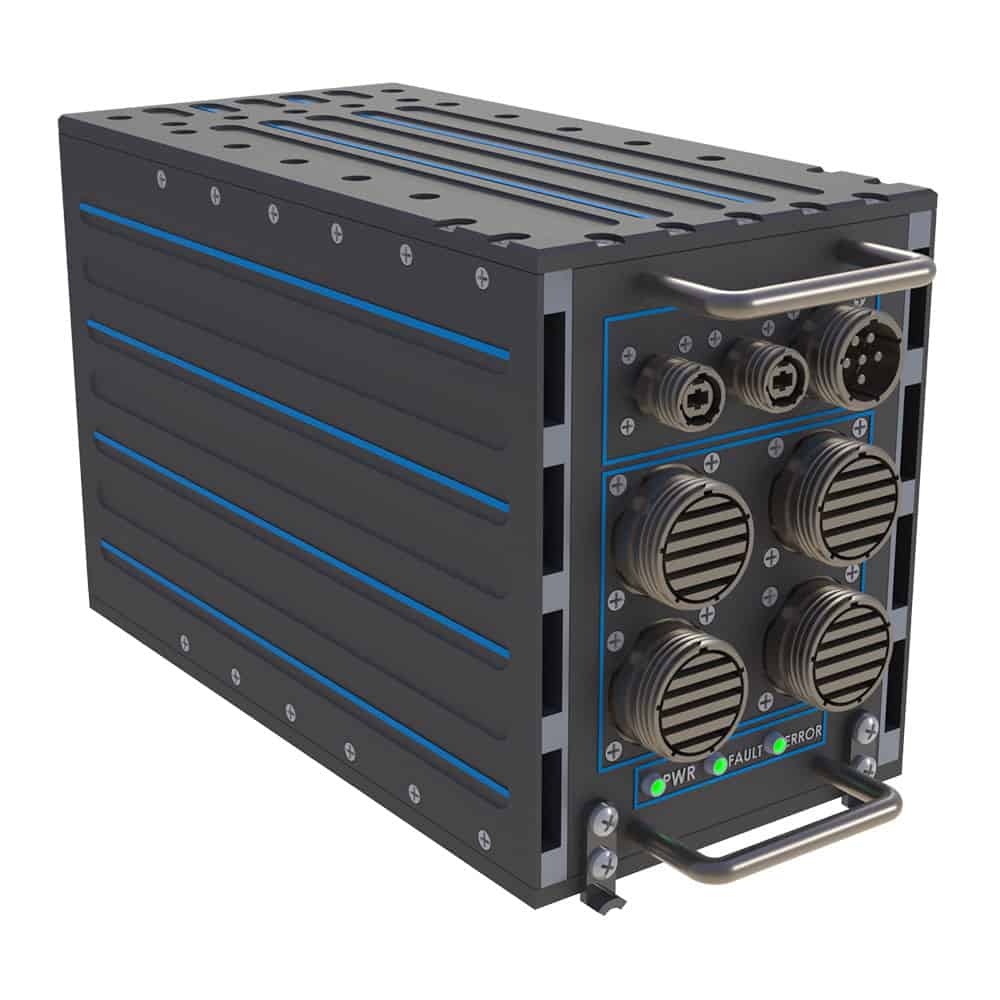
4 Slot 100Gb SOSA Aligned 3U VPX System Development

Compact 3U VPX Development Chassis Enabling Rapid Prototyping and Validation of SOSA-Aligned Defense

Compact 3U VPX Development Chassis Enabling Rapid Prototyping and Validation of SOSA-Aligned Defense
...OSA Aligned 3U VPX Development Chassis from LCR Embedded Systems is a rugged, lab-grade platform... ...OSA Aligned 3U VPX Development Chassis is engineered for high-throughput prototyping and lab...
RMC3-160 3U VPX Chassis

16-slot 19” rackmount chassis for 3U VPX and SOSA aligned payloads

16-slot 19” rackmount chassis for 3U VPX and SOSA aligned payloads
... RMC3-160 is a rugged 19" rackmount chassis designed to host 3U VPX and SOSA aligned payloads. With...
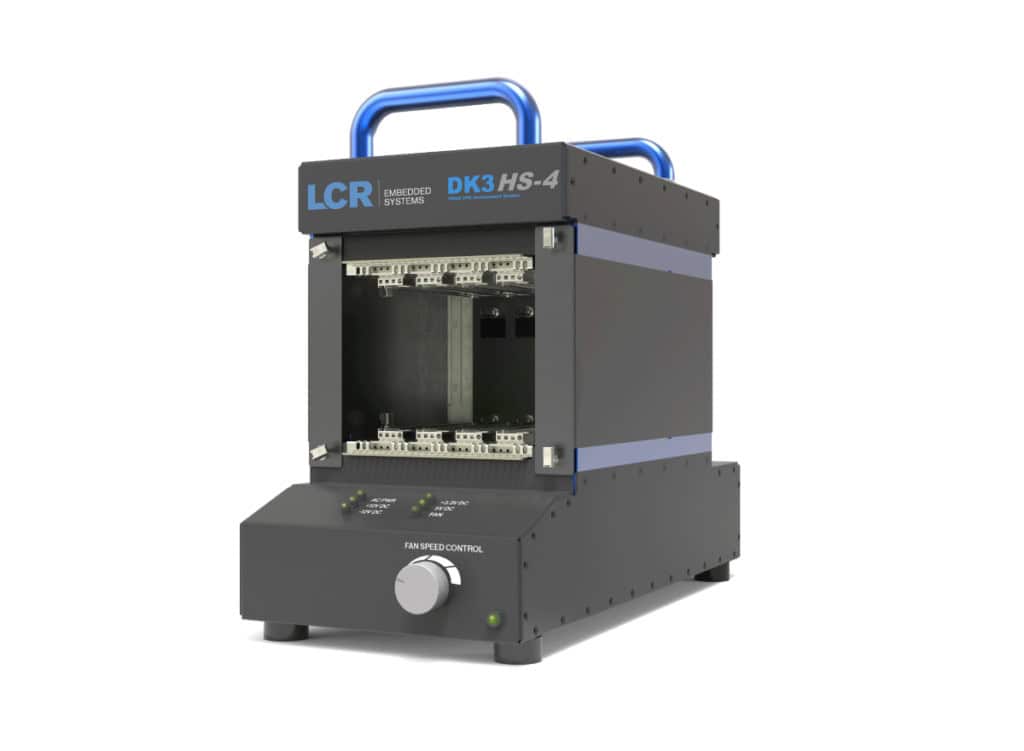
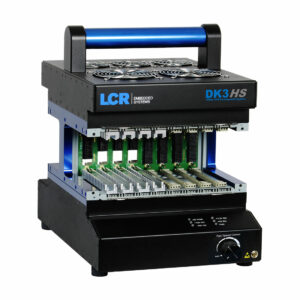
DK3HS Development Platform

Development platform for high-speed modules with 100Gb data rates

Development platform for high-speed modules with 100Gb data rates
...b SOSA Aligned VPX systems. ...

Rugged VPX Chassis / OpenVPX Chassis

Mike Ball

Updated:

Introduction to VPX Chassis

What is a VPX Chassis?

A VPX chassis is the mechanical, electrical, thermal, and power infrastructure that hosts VPX plug-in modules within a rugged embedded computing system. It provides the physical and structural framework that allows processor cards, networking switches, storage modules, FPGA accelerators, RF interfaces, and other payload cards to operate together as a unified mission system.

Military platforms are increasingly dependent on the real-time processing of sensor, communications, navigation, electronic warfare (EW), and mission-management data. Modern mission computers, sensor fusion systems, and C4ISR architectures require processing infrastructures capable of handling massive data streams while maintaining deterministic performance and high reliability. A rugged VPX enclosure provides the physical and electrical environment needed to sustain these advanced workloads across land, air, maritime, space, and unmanned platforms, providing functions such as distribution of power, management of intense thermal loads, high-speed serial communications, and protection of sensitive electronics from extreme environmental abuse.
The VPX Ecosystem

3U & 6U rugged VPX chassis

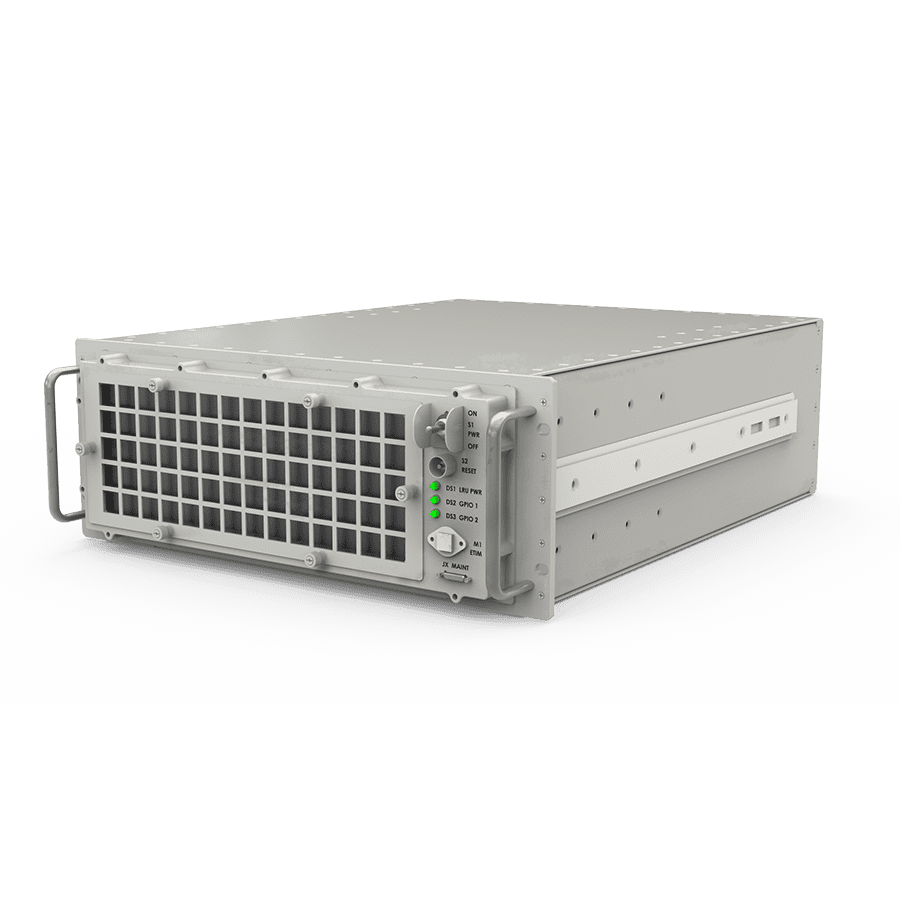
716 Series 3U & 6U ATR chassis by Atrenne

OpenVPX was developed to standardize VPX implementations and solve the early interoperability challenges between different vendors. It defines specific slot profiles, module profiles, backplane topologies, and development configurations that ensure predictable system integration. By reducing ambiguity in pins and protocols, OpenVPX allows defense integrators to combine commercial off-the-shelf (COTS) components from multiple suppliers while dramatically minimizing integration risk.

VITA Standards Governing VPX Systems

The evolution of the ecosystem is driven by the VITA (VMEbus International Trade Association) working groups, which continuously publish standards to keep pace with commercial technology:

  • VITA 46 (VPX): The foundational specification defining the mechanical formats, rugged RT2/RT3 connectors, and pinouts for high-speed serial communications.
  • VITA 65 (OpenVPX): The governing architectural framework that defines interoperable module and backplane profiles.
  • VITA 66 (Optical Interconnects): Introduces blind-mate optical connectivity within systems for ultra-high-bandwidth, EMI-immune data paths.
  • VITA 67 (RF Interconnects): Supports direct, blind-mate RF and coaxial routing through the backplane, eliminating messy internal cabling.
  • VITA 48 (REDI): The crucial standard governing ruggedized enhanced design implementation, defining mechanical outlines for advanced cooling techniques.
  • VITA 78 (SpaceVPX): Extends these concepts into radiation-tolerant, fault-tolerant, and space-qualified orbital systems.
  • VITA 90 (VNX+): An emerging small-form-factor standard designed to bring high-performance capability to extremely tight, SWaP-constrained applications.

How VPX Supports MOSA and Open Systems Initiatives

Open architectures are now mandatory across major Western defense procurement strategies. Much like how OpenVPX, SOSA (Sensor Open Systems Architecture), FACE, and CMOSS define the modular software and hardware frameworks, the underlying physical infrastructure makes long-term upgradeability and multi-vendor interoperability achievable in the real world.

VPX Chassis Architecture and Construction

Core Components of a VPX Chassis

Card Cage
Precision-engineered aluminum frames that provide mechanical support, alignment, and secure retention for modules using heavy-duty wedge locks.

VPX Backplane
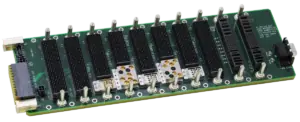
The multi-layer printed circuit board (PCB) that acts as the physical and electrical high-speed communications backbone.

Power Distribution
Heavy-duty bus bars or power backplanes that route conditioned, clean power to all installed modules.

Cooling Infrastructure
Fans, heat exchangers, or liquid cold plates engineered to pull thermal energy away from high-power components.

Chassis Management Functions
Dedicated hardware that monitors system health, power rails, temperatures, and fault conditions.

Slot Configurations and System Scalability

VPX chassis capabilities range from small, tactical 3-slot enclosures deployed on unmanned platforms up to massive 20+ slot rack-mounted systems used in surface ship command centers. Within these configurations, systems are segmented into payload slots for processing and storage and switch slots, which handle centralized network routing and data plane aggregation. This modular layout allows integrators to easily future-proof systems by leaving empty slots for future capabilities.

3U vs. 6U Form Factors

Choosing between form factors is primarily a trade-off between SWaP limitations and raw processing density:

  • 3U VPX Chassis: Widely deployed where size, weight, and power restrictions are severe. These compact enclosures are common within UAVs, tactical ground vehicles, man-portable mission gear, and tight aerospace bays.
  • 6U VPX Chassis: Offers a larger board real estate, allowing for massive payload density, dual-node processors, and complex routing. These are favored for high-channel-count radar processing, airborne electronic warfare, SIGINT, and heavy mission computing.

Mechanical Design Considerations

Defense deployments subject hardware to incredible physical abuse. To prevent structural failure or signal degradation, a VPX enclosure must feature extreme shock and vibration resistance, often utilizing rugged milled-aluminum structures and isolation mounts to handle vehicle impacts, weapon firing, and intense flight profiles.

Furthermore, high-speed connectors must maintain microscopic signal alignment under these conditions. Maintainability is also key; the chassis mechanics must support rapid field deployment and two-level maintenance concepts, allowing technicians to swap modules quickly without specialized tools.

Thermal Management Technologies for VPX Chassis

Modern silicon runs exceptionally hot. With advanced multi-core CPUs, high-end FPGAs, and power-hungry GPUs packed into tight spaces, thermal performance is often the main bottleneck limiting processing performance at the tactical edge.

Air-Cooled VPX Chassis

Air-cooled systems rely on forced air blown directly across the surface of the plug-in modules. While cost-effective, simple to design, and highly efficient for benchtop development, they are poorly suited for dusty, humid, or corrosive environments because the ambient air makes direct contact with the internal circuitry. Air-cooled systems are generally restricted to air-conditioned command shelters, fixed ground installations, or lab environments.

Conduction-Cooled VPX Chassis

In rugged military environments, conduction cooling is the gold standard. The internal electronics are completely sealed from outside contaminants like salt fog, sand, and humidity. Heat generated by the chips travels through localized metal conduction plates on the card, moves into heavy aluminum wedge locks, and dissipates directly into the chassis frame walls. From there, the heat is radiated or cleared away via external chassis cooling fins. This method is the primary choice for tracked combat vehicles, jet aircraft avionics bays, and tactical unmanned systems.

Liquid-Cooled VPX Chassis

When processing demands push power dissipation beyond the limits of conduction metal, liquid cooling takes over. These systems feature internal liquid cold plates or cooling channels routed directly through the chassis walls or backplane infrastructure. By circulating specialized coolants or polyalphaolefin (PAO) oils, liquid-cooled solutions can handle extreme thermal loads from stacked GPU or RF arrays. They are commonly integrated into naval surface ships, submarine combat systems, and heavy fixed-wing ISR platforms where platform-level liquid loops are already available.
Air-Flow-Through (AFT) Cooling

Rackmount 3U VPX Chassis

RMC3-160 3U VPX Chassis by LCR Embedded Systems

Governed by VITA 48.7, Air-Flow-Through cooling offers a smart hybrid approach. AFT isolates the sensitive circuit board inside a sealed protective shell, but routes rugged cooling air directly through an internal heat exchanger built right into the module’s mechanical frame. This allows systems to leverage the weight advantages of air cooling without exposing critical electronic components to external debris or moisture.

Power Architecture and System Management

Power Distribution Within VPX Chassis

Ensuring steady, clean power under extreme operational swings is crucial for mission success. VPX chassis solutions utilize robust power conversion stages to step down platform voltages into the standard +12V and +5V system rails mandated by OpenVPX and SOSA standards.

  • AC Input Systems: Typically tailored for fixed command centers, ground stations, or large naval installations running 115VAC or 230VAC power grids.
  • DC Input Systems: The standard configuration for mobile defense platforms, converting 28VDC vehicle power or 270VDC aircraft power into stable system voltages.
  • Vehicle Power Integration: Military power lines are notoriously noisy. A rugged chassis must incorporate specialized power conditioning modules to comply with strict transient protection standards, ensuring that engine cranks or generator spikes do not reset or damage the internal computers.

Redundancy and High Availability Architectures

For critical applications such as flight control, weapon targeting, and mission computers, system downtime must be eliminated. High-availability enclosures integrate dual, hot-swappable power supplies operating in N+1 configurations, parallel dual-star management buses, and redundant network switch slots. If a power rail fails or a switch slot drops offline, the system automatically fails over to the backup line in milliseconds without interrupting mission operations.


Related Articles

Managing SWaP-C Constraints in High-Performance System Design

WOLF Advanced Technology explores how Size, Weight, Power, and Cost considerations influence system design decisions across defense, aerospace, robotics, and edge AI applications operating within strict size, thermal, and power constraints

Jul 22, 2026
Precision Engineering of Custom Backplanes for Rugged Embedded Systems

Atrenne, a Celestica Company, examines how custom backplane design addresses trace routing, signal integrity, and thermal considerations to support high-performance operation in rugged embedded systems for defense, aerospace, and industrial applications

Mar 04, 2026
Atrenne’s Rugged VNX+ Chassis Recognized for Innovation at AUSA 2025

Atrenne earned “Best of Show” honors at AUSA 2025, recognizing its innovative rugged computing solutions and collaborative achievements in defense and aerospace technology

Nov 13, 2025
New Multifunction Controller for Resilient Tactical Communications

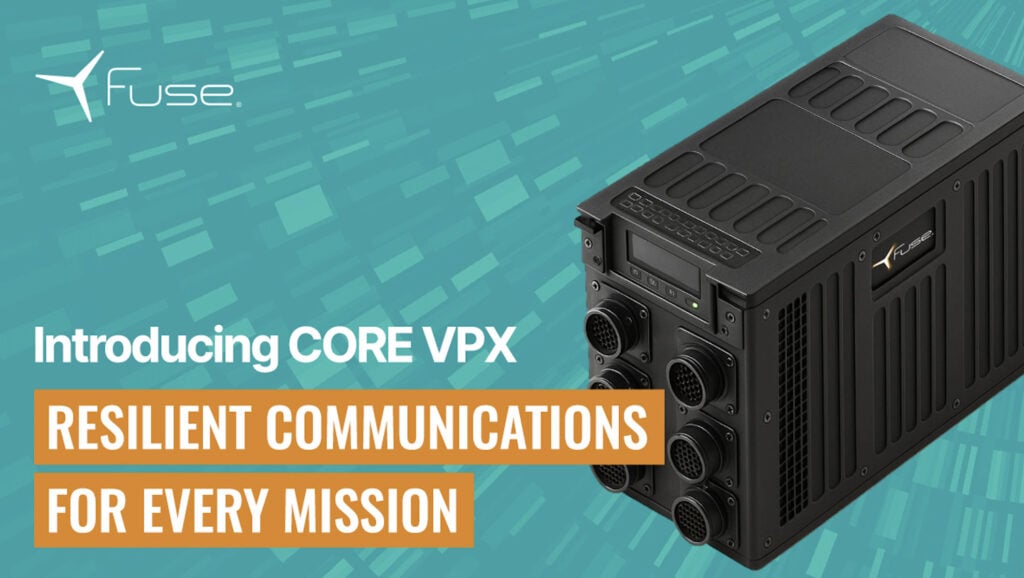
Fuse Integration's new 3U VPX multifunction controller is designed to support secure, reliable communications for mission-critical military systems across air, sea, and land domains

Sep 30, 2025
BittWare Launches Early Access Program for 3U VPX Cards

New cards powered by next-generation AMD Ryzen Embedded processors and Versal Adaptive SoCs aim to enhance performance for aerospace and defense systems.

Aug 20, 2025
The Importance of VPX Development Chassis for Defense Platforms

LCR explains how VPX development chassis support high-power payloads with advanced cooling options, while accelerating application development for critical embedded systems

Jun 13, 2025
Integrated Systems & Chassis for Military Systems

Defense Advancement showcases LCR Embedded Systems' integrated systems, chassis and backplanes for military aircraft, vehicles and systems operating in all domains

Jan 16, 2025
Accelerating Military Intelligence with 100Gb Networks

LCR Embedded Systems' highlights 100Gb connectivity VPX Systems, which enable lightning-fast data transmission, enhanced intelligence, and unprecedented operational effectiveness across complex defense environments

Nov 20, 2024
Shock & Vibration Effects on Military Applications

LCR Embedded Systems delves into the advanced protection methods keeping military systems operational under intense battlefield conditions

Oct 28, 2024

THE WEEKLY eBRIEF

The latest defense technology news, straight to your inbox.

Get our weekly roundup of technology developments, new products and industry news.

By subscribing, you agree to receive the weekly DA eBrief newsletter from EchoBlue Ltd. Unsubscribe at any time using the link in every email. See our Privacy Notice.

Advancing Defense Capability Through Strategic Collaboration Defense Advancement works with major OEMs to foster collaboration and increase engagement with SMEs, to accelerate innovation and drive defense capabilities forward.