Showcase your capabilities
If you design, build or supply Data Recorders, create a profile to showcase your capabilities and connect with visitors who have an active requirement for your solutions.



Mission data recorders capture and preserve synchronized data from military aircraft, vehicles, sensors, mission computers, communications systems, and other defense platforms for operational analysis, testing, training, maintenance, and system development. These systems may record avionics buses, radar and EW signals, EO/IR imagery, audio, navigation data, network traffic, and analog or discrete inputs.
This category features manufacturers of rugged data recorders, supporting airborne, ground, naval, ISR, and test applications while consolidating multiple data sources.
Read the Technology Overview
Rugged Image Processing & Mission-Critical Electronics for Defense Systems

State-Of-The-Art Flight Control & GNSS-Denied Navigation Technologies for Tactical UAV Platforms

If you design, build or supply Data Recorders, create a profile to showcase your capabilities and connect with visitors who have an active requirement for your solutions.

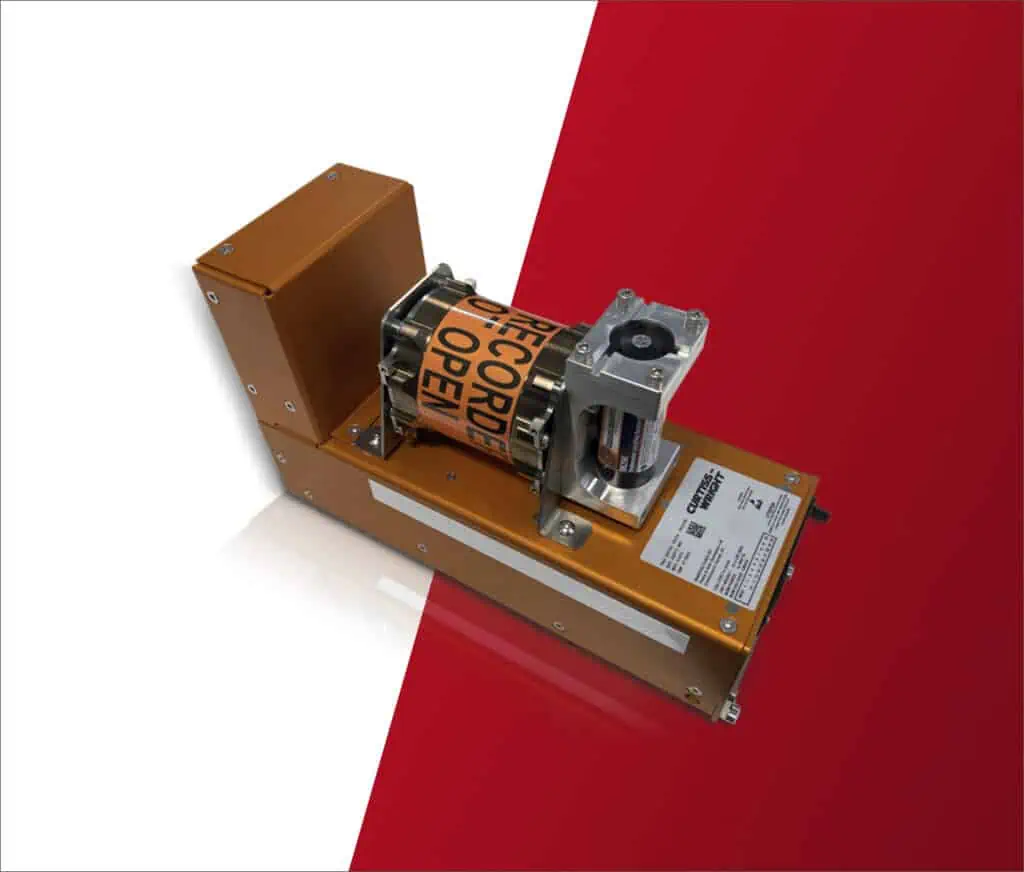
Mission data recorders capture and preserve information generated by aircraft, vehicles, sensors, mission computers, communications equipment, and other defense systems. Unlike a conventional flight data recorder that is primarily associated with safety and accident investigation, other mission data recorders may support operational analysis, intelligence exploitation, test and evaluation, maintenance, training, and system development. They are not inherently crash-protected unless specifically designed and qualified for that role.
Modern military platforms can generate multiple high-rate data streams simultaneously, making recorder bandwidth, interface compatibility, timing accuracy, storage capacity, data integrity, and environmental resilience important design considerations. A rugged data recorder may therefore capture avionics, sensor, telemetry, video, and other high-speed data within a single integrated system.
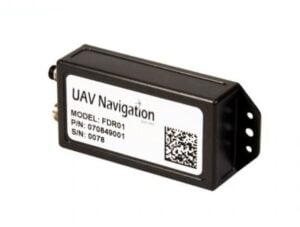
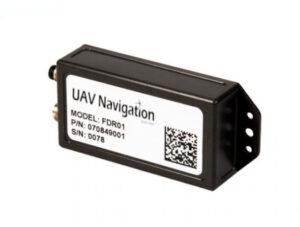
FDR01 flight data recorder by UAV Navigation-Grupo Oesía
An aircraft data recorder can capture traffic from avionics buses to provide a synchronized record of aircraft state, system behavior, commands, and subsystem communications. Depending on the platform, recorded sources may include MIL-STD-1553, ARINC 429, ARINC 717, CAN, Ethernet, and other vehicle networks. Similar vehicle data recorder architectures are used on military ground platforms.
Radar, electronic warfare, and signals intelligence systems can generate high-bandwidth digital data that places significant demands on storage throughput. An RF data recorder or RF signal recorder may capture digitized RF or in-phase/quadrature (I/Q) signal information for later processing, while mission recording systems can preserve associated control, timing, and metadata needed to reconstruct an operational event.
Electro-Optical and Infrared (EO/IR) payloads can produce continuous video, imagery, targeting data, and sensor metadata. Recording these streams allows operators and analysts to review sensor performance, reconstruct missions, assess targets, and correlate imagery with other platform information. High-resolution payloads can require substantial sustained write performance and storage capacity.
Mission data recorders may capture digital communications, radio traffic, intercom audio, network packets, and data-link information. Recording communications alongside sensor and platform data can provide valuable context during mission analysis, testing, training, and troubleshooting, particularly when information from several systems must be reconstructed against a common timeline.
Navigation sources such as Global Navigation Satellite System (GNSS) receivers, Inertial Navigation Systems (INS), and platform mission computers provide position, velocity, attitude, and timing information. Recording this data allows sensor observations and system events to be associated with platform location and orientation. Accurate timing is especially important when multiple independent data sources are being analyzed together. Timing may be derived from GNSS, IRIG time codes, or IEEE 1588 Precision Time Protocol (PTP), depending on the platform architecture.
Military test and operational platforms may also require analog voltage inputs, discrete states, serial channels, and other digital signals to be recorded alongside network traffic. A digital signal recorder or rugged data logger can consolidate these sources, reducing the need for separate instrumentation devices and simplifying post-mission correlation. Sampling rate, resolution, signal conditioning, and timestamp accuracy influence the fidelity of captured analog data.
Mission data recorder interfaces should be selected according to the platform architecture, data rate, signal type, and required level of synchronization. Common interfaces include both established military and aerospace buses and newer high-bandwidth network technologies.
| Interface | Typical Data | Typical Role | Integration Considerations |
| MIL-STD-1553 | Avionics bus traffic | Military aircraft and vehicle systems | Deterministic dual-redundant bus with relatively low data rates |
| ARINC 429 | Avionics parameters | Aircraft subsystem communications | Point-to-point architecture and defined transmission rates |
| ARINC 717 | Flight parameters | Flight data acquisition and recording | Commonly associated with flight data systems |
| Ethernet / Gigabit Ethernet | Network and sensor data | Mission computers, sensors, video | Requires sufficient sustained recording bandwidth and packet handling |
| 10 Gigabit Ethernet and higher | High-rate digital data | Radar, EO/IR, ISR and network recording | Storage, buffering, and processor performance become critical |
| CAN / ARINC 825 | Vehicle and avionics data | Ground vehicles and aircraft subsystems | Message filtering and timestamping may be required |
| RS-232 / RS-422 | Serial data | Legacy equipment, control and instrumentation | Baud rate and electrical interface compatibility must be checked |
| Fibre Channel | High-speed digital data | Aerospace and instrumentation systems | Requires suitable interface hardware and data handling |
| sFPDP | High-rate sensor streams | Radar, EW and instrumentation | Designed for deterministic high-speed serial transfer |
| Analog and discrete I/O | Voltages and state changes | Test instrumentation and subsystem monitoring | Sampling rate and input conditioning affect recorded fidelity |
The correct interface mix depends on both present platform requirements and anticipated upgrades, particularly where legacy buses must operate alongside higher-rate Ethernet and sensor networks.
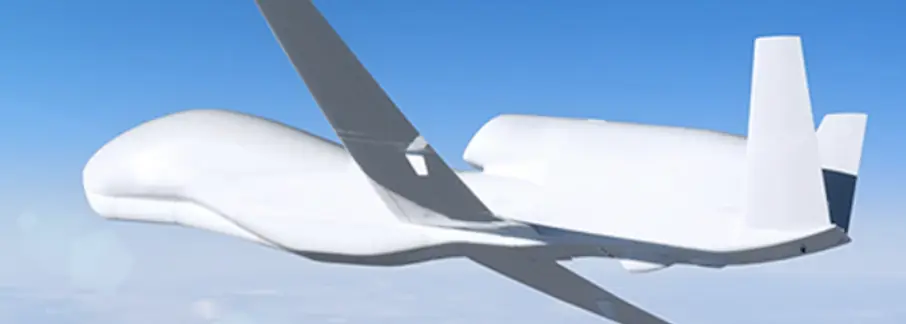
Military aircraft may use an airborne data recorder to capture avionics, mission computer, payload, communications, and navigation information. On unmanned platforms, a drone flight data recorder can record both aircraft health and mission payload information, supporting development, operational review, maintenance, and system verification.
Intelligence, Surveillance, and Reconnaissance (ISR), Electronic Warfare (EW), and Signals Intelligence (SIGINT) aircraft frequently generate large quantities of sensor and signal data that must be retained for later exploitation. Mission data recorders can capture these streams together with platform timing and navigation information, allowing analysts to correlate detected signals, sensor activity, aircraft position, and mission events.
A rugged data logger installed on an armored, tactical, or Unmanned Ground Vehicle (UGV) can capture CAN bus traffic, Ethernet data, navigation information, powertrain parameters, sensor outputs, and mission system activity. Recording can support trials, fault diagnosis, autonomy development, vehicle health assessment, and after-action analysis.
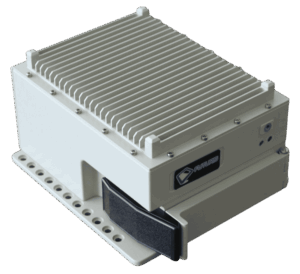
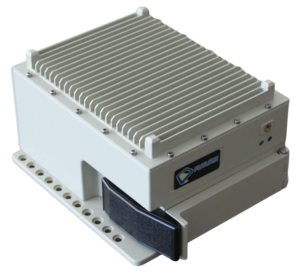
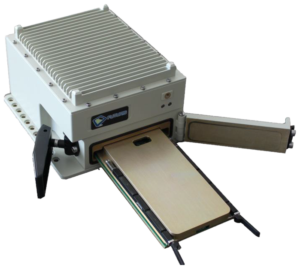
Avionics-Grade Data Recorder Unit by Futuris Electronic
A vessel data recorder used in a defense environment may collect navigation, machinery, communications, combat system, and sensor information. Naval installations also introduce environmental requirements associated with vibration, humidity, salt exposure, electromagnetic compatibility, and integration with shipboard power and network architectures.
Standalone or embedded recorders can capture radar, EO/IR, acoustic, RF, and other payload outputs during operational missions and system trials. A high-speed data recorder is particularly important where raw or minimally processed sensor data must be preserved without dropping information during sustained periods of high throughput.
Mission recorders are extensively applicable to developmental testing, flight test, weapons evaluation, and subsystem qualification. A flight data logger, telemetry data recorder, portable data recorder, or field data recorder can preserve engineering data for post-test reconstruction when transmitting every measurement through telemetry is impractical or unnecessary.
Applicable requirements depend on the platform, installation, acquisition program, and intended recorder function. Relevant standards and guidance can include the following:
Qualification should therefore be based on the actual platform environment and recorder role rather than assuming that every mission recorder requires the same certification or test profile.
Selecting a mission data recorder requires consideration of the complete acquisition chain, from signal interfaces through storage and post-mission exploitation.
Whether the requirement is for a military flight recorder, Ethernet data recorder, CAN bus data recorder, serial data recorder, or integrated mission recording system, the most suitable architecture is determined by the platform’s data sources, environmental conditions, Size, Weight, and Power (SWaP) constraints, security requirements, and post-mission workflow.


 Searching Companies & Products