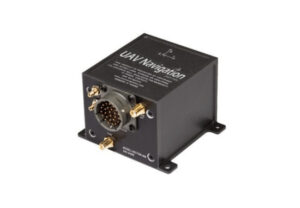
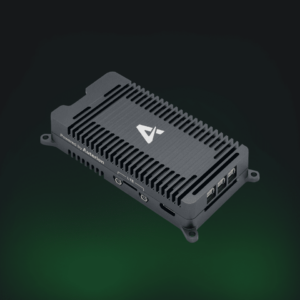
Showcase your capabilities
If you design, build or supply Flight Controllers, create a profile to showcase your capabilities and connect with visitors who have an active requirement for your solutions.




Military-spec drone flight controllers execute navigation, stabilization, and mission tasks within hardened, redundant architectures designed to withstand electronic warfare, environmental extremes, and long-duration deployments.
Read the Technology Overview


State-Of-The-Art Flight Control & GNSS-Denied Navigation Technologies for Tactical UAV Platforms

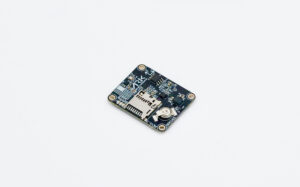
State-Of-The-Art NDAA-Compliant Electronic Hardware Components for Mission-Critical Drone & Robotics Platforms. Made in the USA.

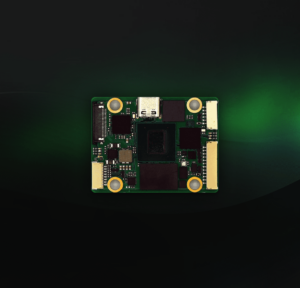
NDAA-Compliant Software-Defined Ecosystem For Next-Generation Robotics & Autonomous Vehicle Platforms

If you design, build or supply Flight Controllers, create a profile to showcase your capabilities and connect with visitors who have an active requirement for your solutions.

Military drone flight controllers are built for precision and survivability. They coordinate input from GNSS, RTK modules, inertial navigation systems (INS), and inertial measurement units (IMUs), while managing mission-critical communication links and payload interfaces. Unlike commercial units, they operate under defense-specific standards such as MIL-STD-810, MIL-STD-461, and NATO STANAG 4586, ensuring interoperability and compliance. Their design prioritizes redundancy, fault tolerance, and real-time performance, enabling autonomous navigation, secure command and control (C2), and mission adaptability in contested environments.
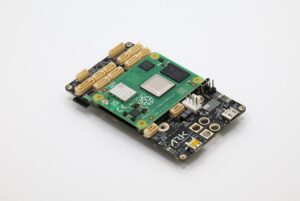
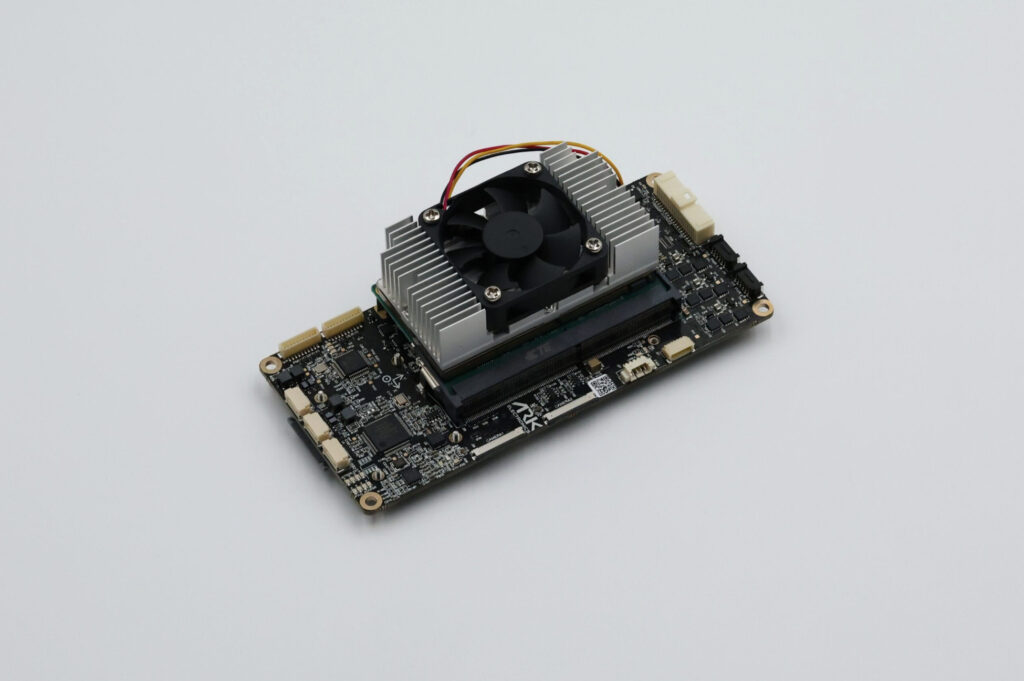
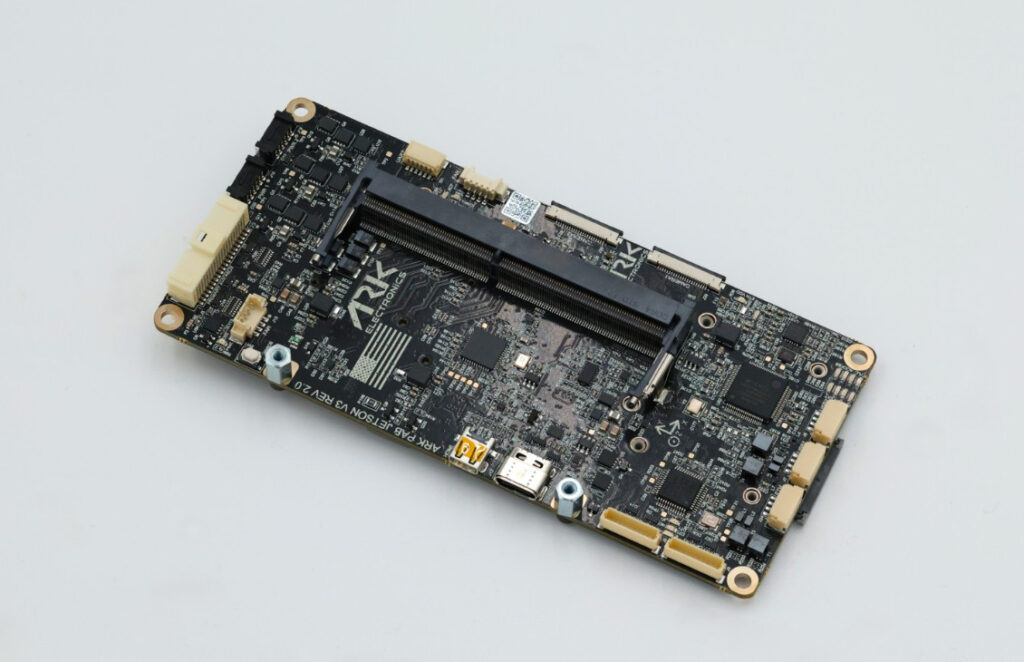
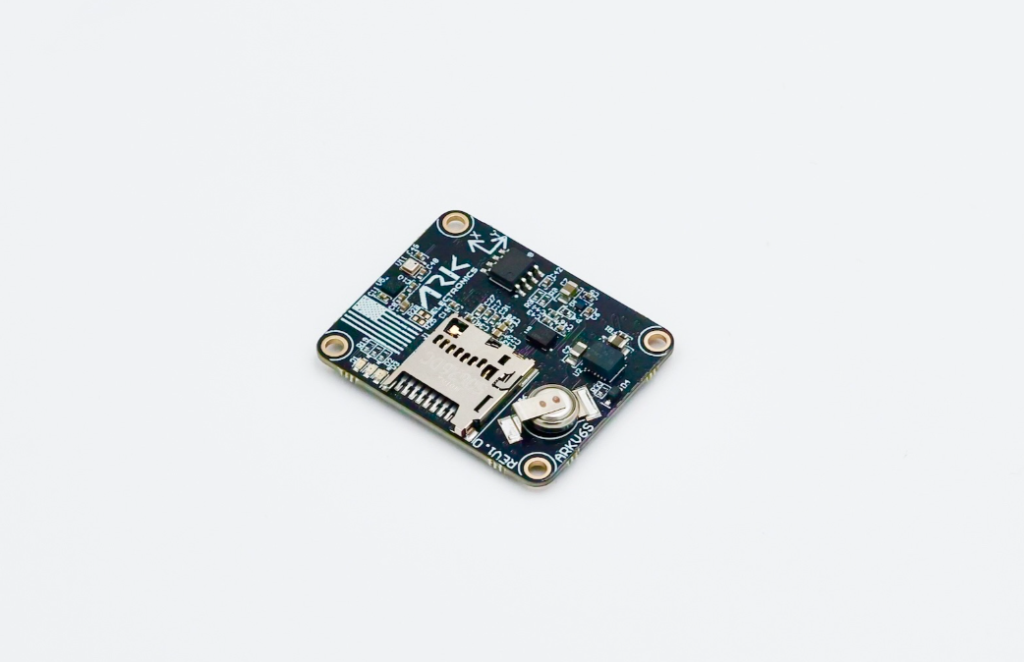
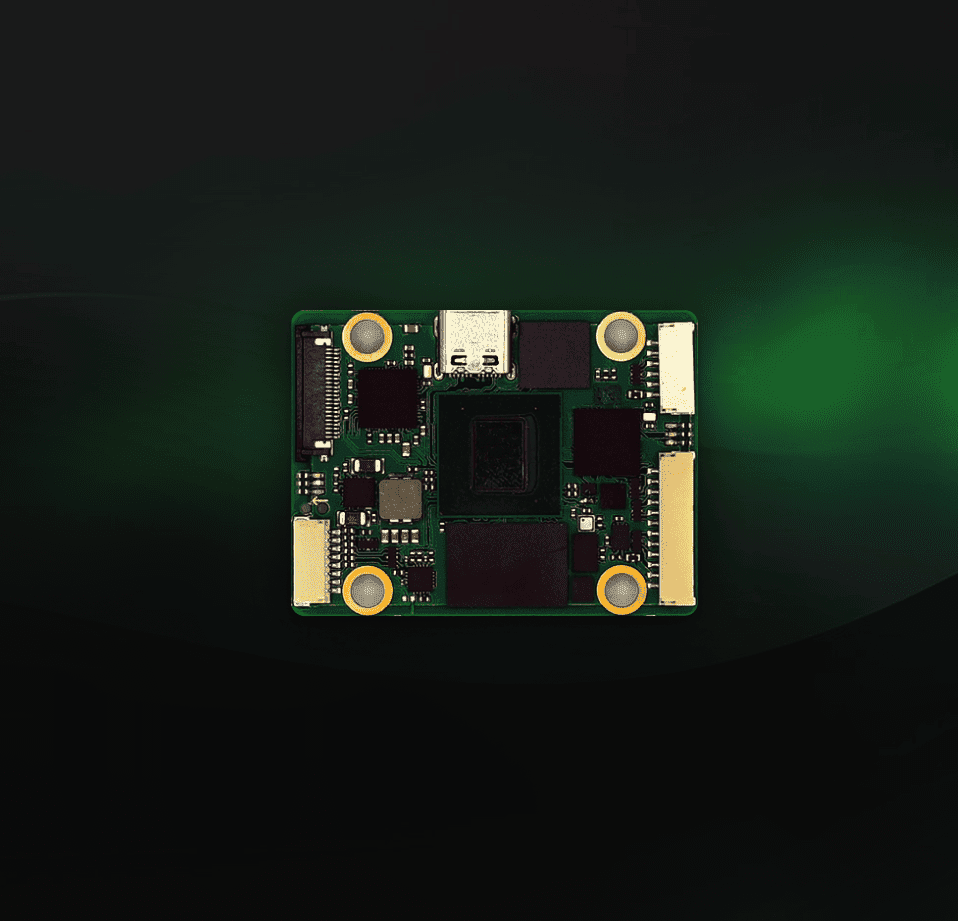
ARK Pi6X Flow by ARK Electronics.
At the core of every military drone flight controller is the execution of flight control laws that stabilize the aircraft and maintain precise handling. These controllers continuously process high-rate data from gyroscopes, accelerometers, and magnetometers through sensor fusion algorithms. Low-latency control loops ensure that actuator outputs are adjusted in real time, allowing drones to remain stable in turbulence, during aggressive maneuvers, and when carrying heavy or asymmetrical payloads. Unlike commercial-grade solutions, military systems are optimized for deterministic response, ensuring stability even under extreme vibration or shock conditions defined by MIL-STD-810.
Navigation assurance is critical for military UAS, particularly in GPS-denied or spoofed operational theaters. Flight controllers integrate GNSS and RTK positioning with high-grade inertial navigation systems, providing continuous position estimation even when external signals are disrupted. Advanced blending algorithms monitor sensor health and cross-validate inputs, ensuring accurate position fixes. Some architectures incorporate redundant GNSS receivers, barometers, and magnetometers, enabling the drone to maintain controlled flight during prolonged signal loss.
Secure and resilient command and control (C2) is a defining function of military drone flight controllers. Controllers manage multiple communication pathways, including encrypted telemetry radios, satellite uplinks, and line-of-sight data links. These links are designed with redundancy and automatic failover to prevent mission loss during electronic warfare attacks. Hardware watchdog timers and dedicated C2 processors provide additional layers of assurance, ensuring the aircraft remains responsive to operator input or can execute predefined autonomous recovery procedures.
Military UAS must be capable of executing complex missions with minimal operator intervention. Flight controllers coordinate directly with flight management systems (FMS) to manage waypoints, altitude profiles, and terrain-following maneuvers. They support dynamic mission updates, adaptive path planning, and integration with mission planning software, allowing real-time re-tasking. This capability is essential for reconnaissance, target acquisition, and intelligence-gathering missions where operational parameters change rapidly.
Flight controllers also act as central nodes for payload integration and synchronization. They manage sensor packages such as electro-optical cameras, synthetic aperture radars, environmental sensors, and targeting systems. Time synchronization across payloads and navigation systems ensures mission data can be fused accurately. Additionally, controllers regulate onboard power distribution through power management units and voltage regulators, ensuring the uninterrupted performance of critical avionics and mission hardware.
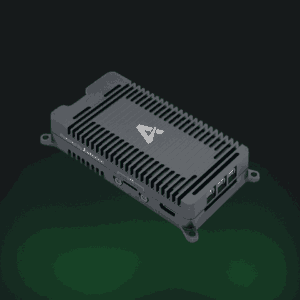
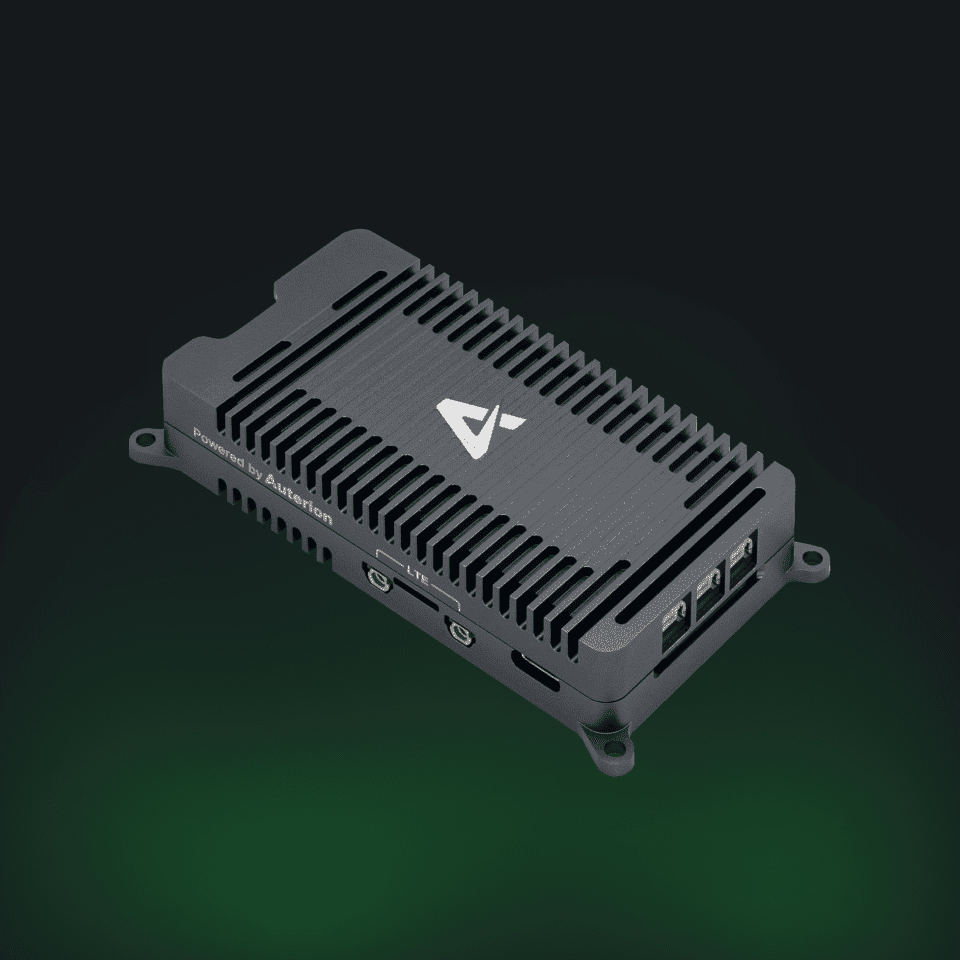
Skynode GX by Auterion Government Solutions.
Military flight controllers incorporate features tailored to survivability and precision. Deterministic processing environments ensure mission-critical control loops cannot be preempted. Redundant architectures with dual or triple flight computers and safety monitors provide fault tolerance. Integrated IMUs with tactical-grade gyroscopes and accelerometers, combined with RTK positioning, achieve sub-decimeter navigation accuracy. Resilience against electronic warfare includes anti-jam GPS, inertial bridging, and hardened communication interfaces. Safety features such as failsafe recovery and autonomous return-to-base modes are embedded at the hardware level. Scalable communication interfaces allow seamless integration with mission payloads, autonomy modules, and C2 systems.
Flight controllers in defense applications typically fall into four categories:
Compared to civilian UAV controllers, military-grade systems emphasize certification, interoperability, and ruggedization. They meet MIL-STD-810 and MIL-STD-461 requirements, integrate with NATO STANAG 4586-compliant ground stations, and incorporate conformal coatings, vibration damping, and thermal protections for environmental durability. Secure telemetry links and redundancy across navigation and C2 ensure continuity in adversarial conditions. Lifecycle management and modular upgrade pathways further distinguish them from commercial counterparts.
Military drone flight controllers must adhere to:
Next-generation flight controllers are advancing toward AI-enabled autonomy for dynamic re-tasking, quantum and optical gyroscopes for assured navigation, and cybersecurity features including secure boot and embedded intrusion detection. SWaP-C optimization remains a focus, producing lighter, more power-efficient systems without compromising tactical-grade precision. Multi-domain interoperability is also emerging, with controllers designed to coordinate across air, land, and maritime unmanned platforms.


 Searching Companies & Products