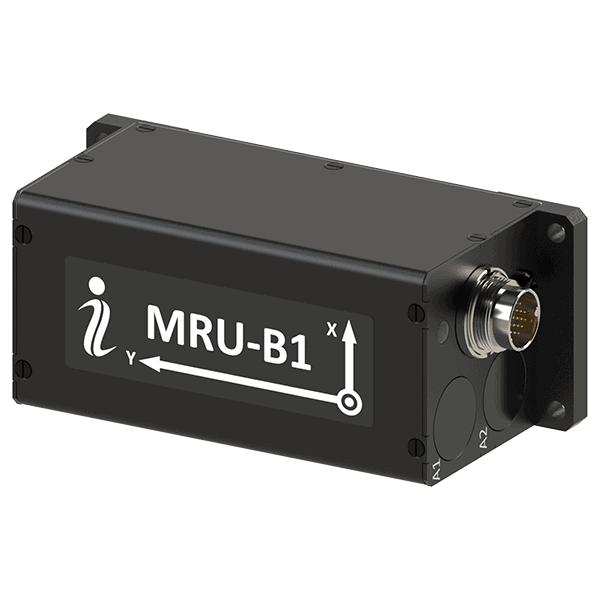
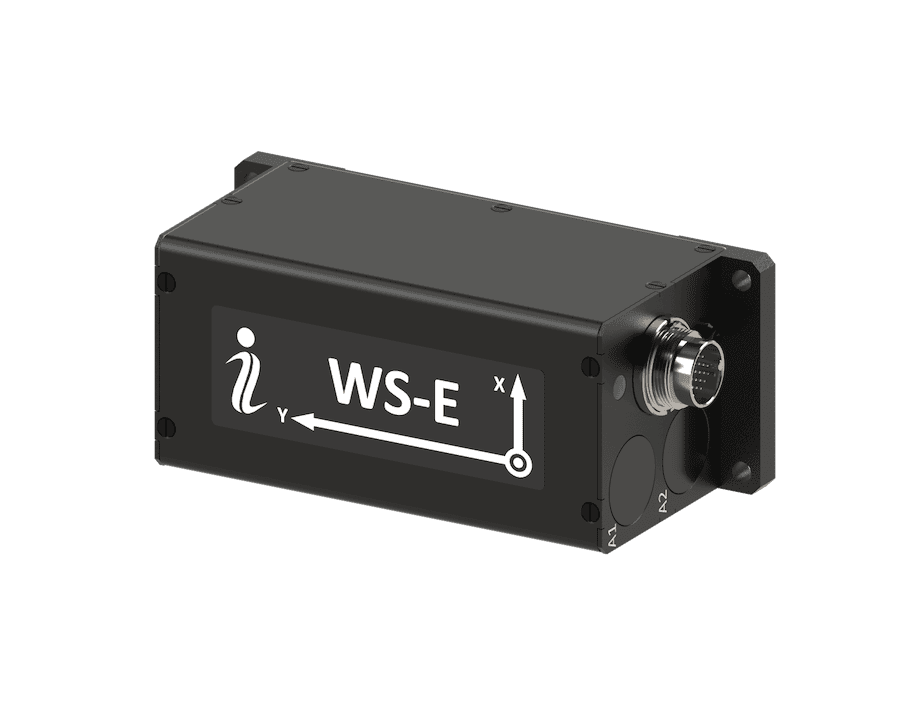
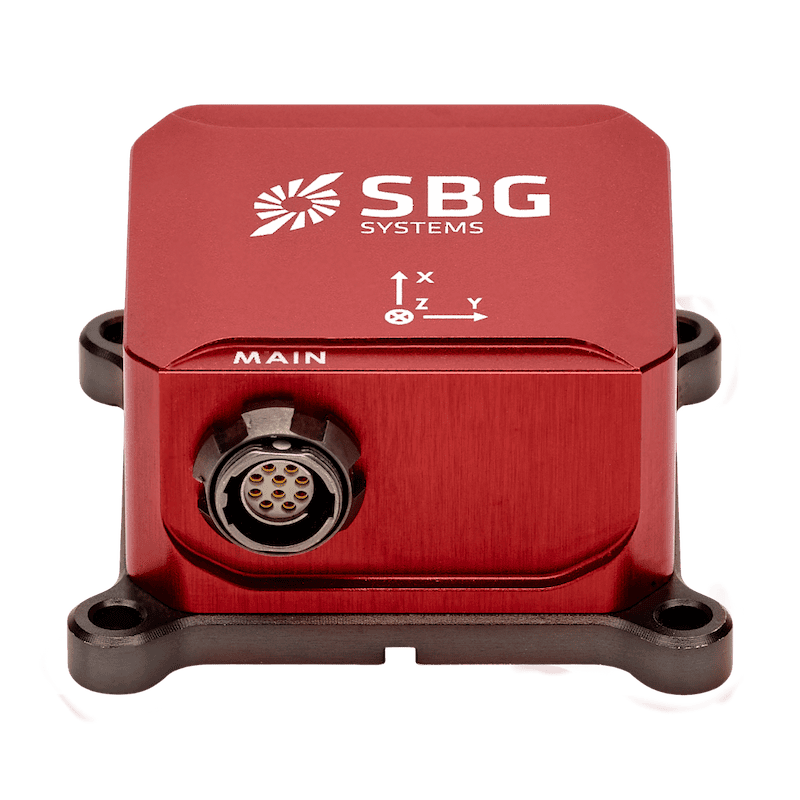
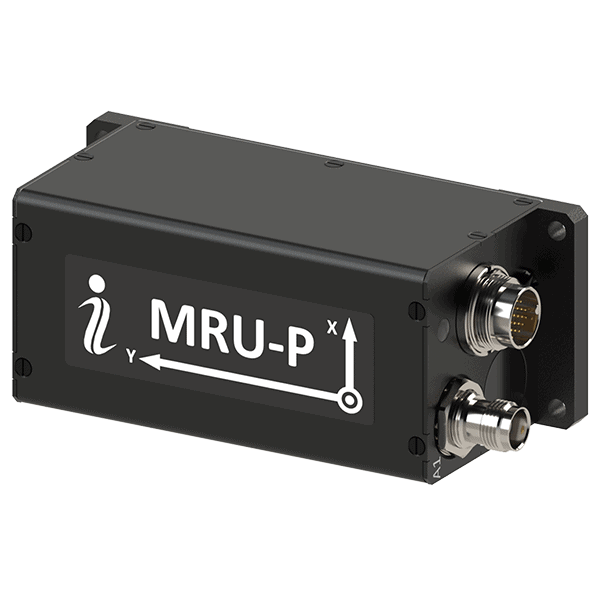
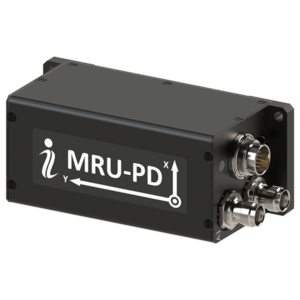
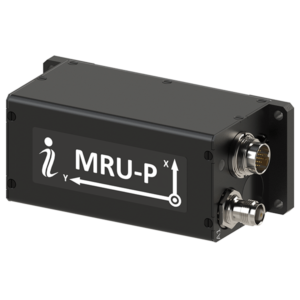
Motion Reference Units (MRU) are precision inertial sensing systems that measure vessel or platform motion, typically including roll, pitch, heave, angular rate, and acceleration. These sensors are used across naval vessels, unmanned platforms, stabilized payloads, subsea systems, and survey equipment.
This page features leading MRU manufacturers supporting navigation, dynamic positioning, radar and EO/IR stabilization, active heave compensation, and launch or recovery operations.
If you design, build or supply Motion Reference Units (MRU), create a profile to showcase your capabilities and connect with visitors who have an active requirement for your solutions.
Overview of Motion Reference Units (MRU) for Naval & Defense Applications
Overview by
William Mackenzie
Updated:
Introduction to Motion Reference Units
A Motion Reference Unit (MRU) is a precision inertial sensing system used to measure and estimate the movement and orientation of a vessel, vehicle, or stabilized platform. In naval and defense applications, MRUs typically provide roll, pitch, heave, angular rate, and acceleration data, with some systems also supplying heading, velocity, or position-related outputs. This data allows navigation equipment, sensors, weapons, antennas, and mission payloads to compensate for platform movement in real time.
Modern MRUs may incorporate Global Navigation Satellite System (GNSS) aiding, heading sensors, lever-arm compensation, and sensor fusion. An MRU differs from an Inertial Measurement Unit (IMU), Inertial Navigation System (INS), or Attitude and Heading Reference System (AHRS) in its primary role: an IMU measures acceleration and angular rate, an AHRS estimates attitude and heading, and an INS estimates navigation states such as position and velocity.
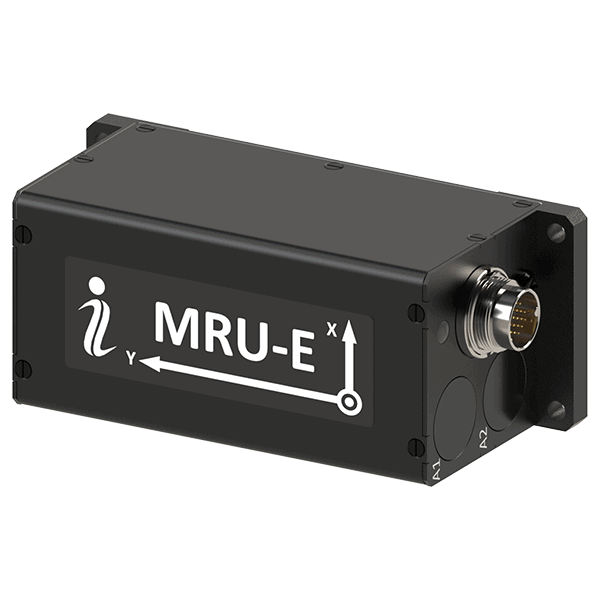
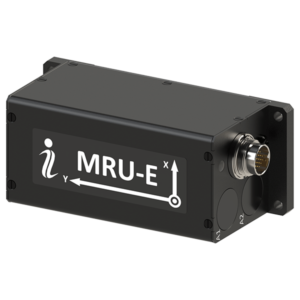
MRU-E Motion Reference Unit by Inertial Labs, a VIAVI Solutions Company
Types of Motion Reference Unit
MEMS-Based Motion Reference Units
Microelectromechanical Systems (MEMS)-based motion reference units use compact accelerometers and gyroscopes to detect linear and angular motion. Their low size, weight, and power requirements suit surface vessels, unmanned platforms, portable systems, stabilized payloads, and space-constrained installations. Performance depends on sensor grade, calibration, thermal compensation, vibration resistance, filtering, bias, and noise.
Fiber Optic Gyroscope MRUs
Fiber Optic Gyroscope (FOG) systems measure angular rotation using the Sagnac effect without a mechanically rotating rotor. FOG-based MRUs can provide high angular stability and low drift, making them suitable where navigation, survey, stabilization, or weapon-system performance requires tighter motion-reference accuracy or longer unaided stability.
GNSS-Aided Motion Reference Units
A GNSS-aided MRU system combines inertial measurements with satellite navigation data to constrain longer-term errors and improve heading, velocity, or position estimates. Multi-antenna GNSS can provide true heading without relying on the Earth’s magnetic field. Performance depends on antenna geometry, satellite visibility, interference, installation quality, and inertial behavior when GNSS is degraded, jammed, spoofed, or unavailable.
Subsea and Pressure-Rated MRUs
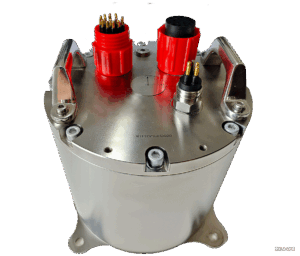
A subsea MRU packages inertial sensing and processing electronics in an enclosure designed for operation at depth. These units can support Remotely Operated Vehicles (ROVs), Autonomous Underwater Vehicles (AUVs), subsea survey equipment, sonar systems, and other payloads. Selection also requires consideration of pressure rating, corrosion resistance, connectors, mounting rigidity, temperature, power, and data interfaces.
Naval & Defense Applications
Navigation and Dynamic Positioning
MRUs provide vessel attitude and motion information to navigation, control, and Dynamic Positioning (DP) systems. Roll, pitch, heave, and rate measurements help control systems distinguish platform motion from commanded movement, while integration with GNSS, heading sensors, Doppler Velocity Logs (DVLs), or other navigation sources can improve the overall solution. Low latency and accurate time synchronization are particularly important in real-time control loops.
Radar, Antenna, and EO/IR Stabilization
Ship motion can rapidly change the pointing direction of radar antennas, communications terminals, and Electro-Optical/Infrared (EO/IR) payloads. An MRU sensor provides a reference for compensating platform dynamics. Update rate, latency, mounting alignment, coordinate-frame definition, and time synchronization are essential because errors can translate directly into pointing error.
Weapon and Fire-Control System Referencing
Naval weapon and fire-control systems may require precise platform attitude and angular-motion data when calculating pointing or engagement solutions. MRU data can contribute to stabilized reference frames used by directors, sensors, and mission equipment. Performance should be assessed within the complete error budget, including alignment, structural flexure, timing, navigation data, and associated sensor or effector characteristics.
M5000 Subsea INS/MRU by Micro Magic
Sonar and Survey Systems
Sonar, hydrographic survey, and bathymetric mapping systems can be highly sensitive to vessel movement. Roll and pitch change acoustic beam orientation, while heave changes transducer height. A marine motion reference unit allows processing systems to compensate observations for vessel motion. Survey performance also depends on timing, sensor offsets, lever arms, sound velocity, positioning accuracy, and calibration. Delayed or post-processed heave can improve results where strict real-time output is not required.
Active Heave Compensation
Active heave compensation systems use vessel-motion estimates to reduce vertical movement transmitted to loads handled by cranes, winches, and subsea deployment equipment. An MRU can provide real-time heave and vertical acceleration information. Sensor location and lever-arm effects are important because motion at the MRU may differ from motion at the crane tip, moonpool, overboarding point, or suspended payload.
Launch, Recovery, and Helideck Motion Monitoring
Motion data can support launch and recovery of boats, unmanned systems, subsea equipment, and aircraft. On aviation-capable vessels, motion monitoring can provide deck roll, pitch, heave, and associated rates for operational assessment. The MRU should represent motion at the relevant handling or landing point, using coordinate transformation and lever-arm compensation when installed elsewhere.
Standards, Testing & Defense Qualification
The standards applicable to an MRU depend on platform, function, installation, procurement specification, and qualification requirements. Common references include:
IEC 60945: Covers general requirements, test methods, and required test results for applicable maritime navigation and radiocommunication equipment and systems. IEC 60945:2002 is Edition 4.0.
IEC 61924-2: Sets requirements, test methods, and required results for modular integrated navigation systems. IEC 61924-2:2021 is Edition 2.0 and may be relevant where an MRU forms part of an integrated navigation architecture rather than as a standalone MRU qualification standard.
IHO S-44: Establishes standards for hydrographic surveys and is relevant where MRU accuracy and motion compensation contribute to overall survey uncertainty. Edition 6.2.0 is dated October 2024.
MIL-STD-167-1A: Specifies mechanical vibration testing requirements for applicable shipboard equipment, including Type I environmental vibration and Type II internally excited vibration.
MIL-DTL-901E: Covers high-impact shock testing requirements for applicable shipboard machinery, equipment, and systems.
MIL-STD-461G: Sets requirements and test methods for controlling electromagnetic interference emissions and susceptibility in applicable defense equipment and subsystems.
Qualification should be assessed against the actual naval or defense program rather than assuming every MRU requires the same test regime.
Emerging Motion Reference Unit Technologies
Development of MRUs increasingly focuses on improving motion accuracy, resilience, and integration while reducing size, weight, and power. Important areas include:
Higher-performance MEMS inertial sensors: Improvements in bias stability, noise, thermal compensation, and calibration are extending the applications addressable by compact MEMS-based systems.
Advanced real-time heave processing: Improved estimation and adaptive filtering are extending useful heave performance across different sea states and longer motion periods, while delayed heave can support higher-accuracy survey processing.
Multi-sensor navigation aiding: Combining inertial data with GNSS, velocity sensors, heading references, acoustic navigation, or other measurements can improve robustness and constrain inertial errors.
Improved GNSS-denied performance: Higher-grade inertial sensors and alternative aiding can preserve useful attitude and motion information during GNSS interference or loss, although heading, velocity, and position performance depends on sensor architecture and outage duration.
These developments are increasing the role of motion reference technology in resilient navigation, precision stabilization, autonomous maritime operations, and integrated naval mission systems.
The latest defense technology news, straight to your inbox.
Get our weekly roundup of technology developments, new products and industry news.
THANK YOU FOR SIGNING UP
Thanks for joining us. Check your inbox.
We've sent you an email. Click the confirmation link to complete your subscription to the weekly eBrief. In the meantime, explore the latest news, suppliers and technologies on DA.
Advancing Defense Capability Through Strategic Collaboration
Defense Advancement works with major OEMs to foster collaboration and increase engagement with SMEs, to accelerate innovation and drive defense capabilities forward.